 Home
Home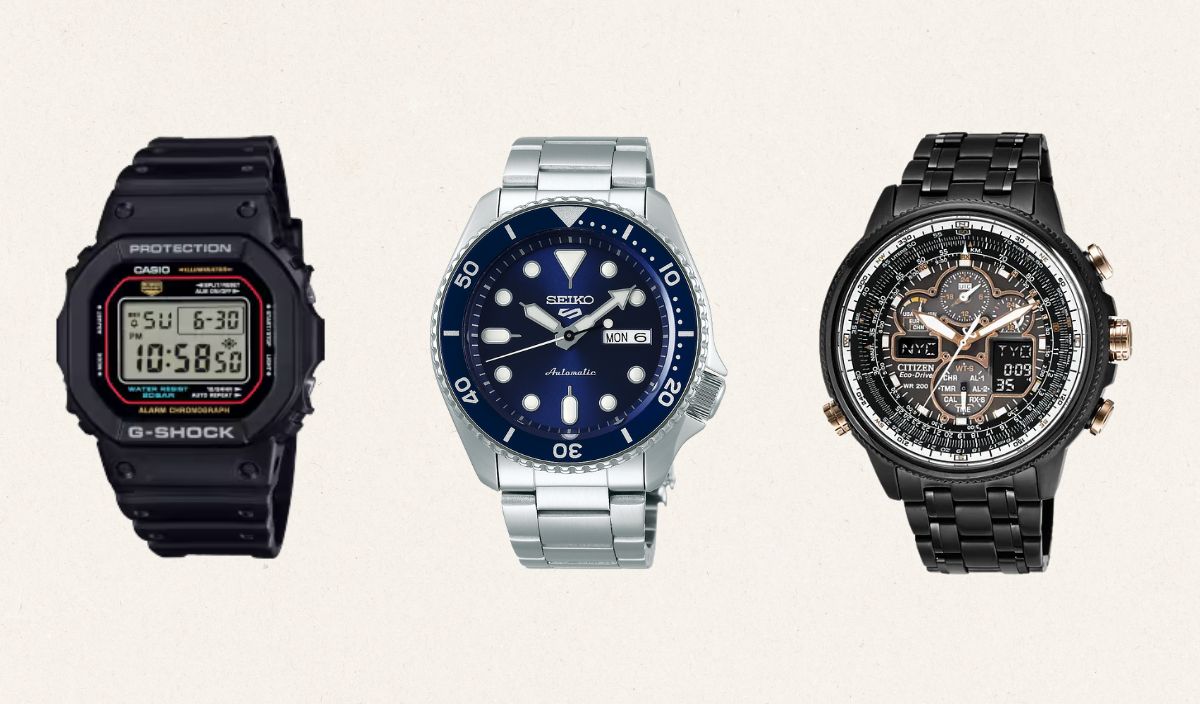


There is no denying the dominant force of the Swiss watch industry. For centuries, Swiss craftsmanship has been synonymous with precision, heritage, and uncompromised luxury. These special techniques and age-old processes hark back to the 16th century and have evolved throughout the years, from the intricate art of clock making to the sophisticated pocket watch and, finally, the era of classic wrist-worn timepieces. But beyond the Alps and the river Rhine lies a story of unique design philosophy rooted in nature and minimalism that often goes unspoken of.
Beneath the shadow of some of the world’s greatest Swiss titans are revered Japanese watchmakers, some of whom have quietly flourished, others of whom have rivalled even the most dominant forces on Swiss soil. Japanese watchmaking is a culture of profound artistry and relentless innovation. This special Asian craft occupies the space between revolutionary solar-powered technology and cutting-edge mechanical precision.
Forget what you think you already know about watchmaking, because if you have only ever known the beauty and quality of Swiss watches, your appreciation for Haute Horlogerie is about to get a whole lot more interesting. We’re going to look at some of the world’s best Japanese watch brands and the designs that have made them the ultimate heavyweights they are today. Here is your guide to Japanese watchmaking…
The history of Japanese watchmaking
Far beyond the well-trodden path of Swiss horology lies a different kind of precision. The Japanese set sail on this voyage during the late 19th century. Mechanical clocks were introduced much earlier than this, of course, but Japan really put itself on the map when it began honing in on mass-produced mechanical and quartz wristwatches. One landmark moment in the history of watchmaking was the year 1881, when Kintaro Hattori founded the company that would later become Seiko.
Seiko began by selling and repairing imported watches and clocks, and eventually, this led to the opening of the Seikosha factory. Here, the first pocket watches were produced, followed by the brand’s first wristwatch, the Laurel, in 1913. Citizen, however, is another watchmaker that entered the scene around a similar time, tracing its origins back to the Shokosha factory in 1918. The brand pioneered domestic production of watches and focused on making watches that were loved by “citizens” and made accessible to them (you can guess where it took its name). Suffice to say, both of these brands deserve a great deal of recognition for shaping the history of Japanese watchmaking throughout the centuries.
In essence, though the Swiss were associated with some of the most classic-looking timepieces ever made, and had already acquired patents for some of the world’s most impressive mechanical complications, Japan was driven by a focus on national modernisation and began laying the groundwork for the global powerhouse that it later became.
Why buy a Japanese Watch
There is a strong argument for a Japanese-crafted watch. Led by the expertise of Seiko, Japan was able to revolutionise the watch industry when it introduced the first quartz-powered watch. The Seiko Aston was released in 1969 and brought unprecedented accuracy to the wrists of those open to the idea of a more affordable alternative to the traditional Swiss wristwatch. Pretty soon, these watches began turning watch collectors’ heads.
The transition from the Swiss watch to the quartz watch is what we now call the “Quartz Crisis,” and it changed the landscape of timekeeping forever. Today, quartz watches are still a preferred option for many, particularly for their affordability and their unbeatable accuracy. Since the launch of those first quartz watches, Japan has continued to innovate to thrive.
Hybrid movements then began to emerge. The Spring Drive movement developed by Seiko combined the efficiency of the mechanical mainspring with the precision of the quartz movement, resulting in a beautifully sweeping seconds hand and an accuracy that surpasses the quartz movement. In addition to the appeal of the quartz movement and the more accurate Spring Drive hybrid movement, Japan is a leader in solar-powered technology, and this continues to attract those looking for a more economical wristwatch with little to no maintenance. Seiko’s GPS-synchronised wristwatches demonstrate a clear focus on practicality and have led the way forward with environmentally friendly timekeeping.
Although Swiss watchmakers uphold an unsurpassable reputation in crafting wristwatches with beautiful hand finishes, Japanese watches will always reign supreme when it comes to affordable precision. The latter advantage, combined with values like high performance and durability, makes Japanese watches accessible to a much broader audience.
Don’t let all the talk of affordability fool you into thinking that Japanese watches aren’t good quality, however. Brands like Grand Seiko and Credor represent the corners of the industry associated with emerging luxury. These names and their innovative designs give audiences looking for something a little more indulgent and refined an array of high-end options to peruse. Credor, for example, produces its own in-house movements, while the finish of a Grand Seiko case can be picked out for its meticulous Zaratsu polish.
In Summary, Japanese watches offer the collector much more than just a cheap quartz watch. You can still find some absolute steals on the market, outfitted with superior movements and boasting designs that don’t feel mass-produced. Add quality materials, in-house movement production, and a wide range of styles to this mix, and it becomes easy to see why Japanese watches are such a highly attractive choice.
Best Japanese Watches
Now that we know what makes a Japanese watch so appealing, let’s take a look at some of the best designs on the market right now and the manufacturers behind them.
Casio
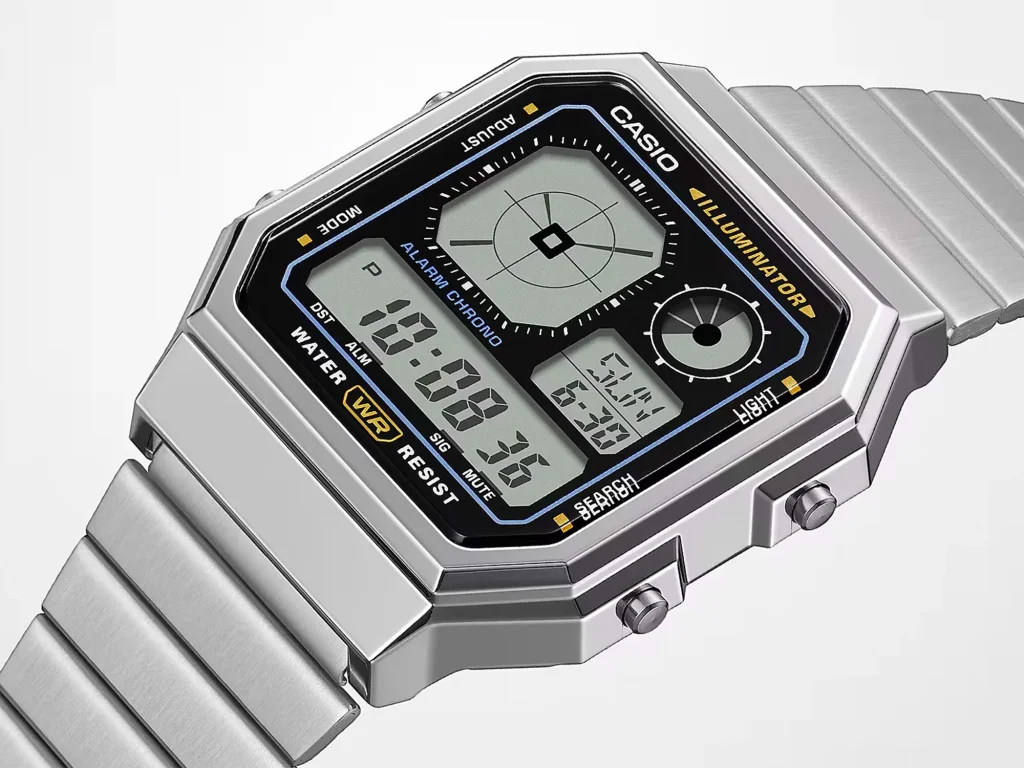
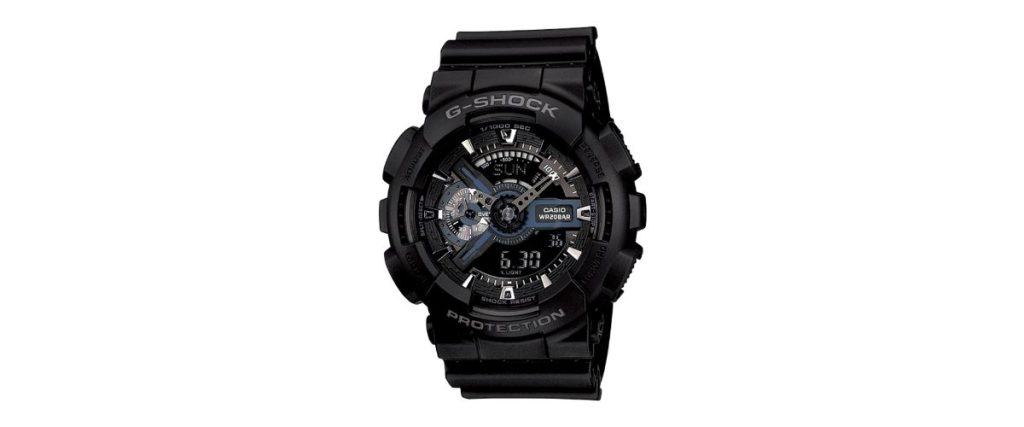
Chances are, your first watch was a Casio. The brand is by far one of the largest and most prominent names across the Japanese watch industry and can lay claim to several seriously cool innovations, namely those from the G-Shock collection. The series stands for absolute toughness in a watch, many designs of which combine analogue features with digital technology.
Casio was founded in 1946 and began with a revolutionary release, named the Casiotron, powered by a quartz movement. Unsurprisingly, the watch took off, spurring Casio to make varied models equipped with many different styles and functions. As mentioned, Casio is most prominently represented by its G-Shock collection today. The brand has evolved this collection vastly since the 1980s, many models of which have grown to become cultural icons.
Our Favourite Casio Watch: The Casio G-Shock DW5600
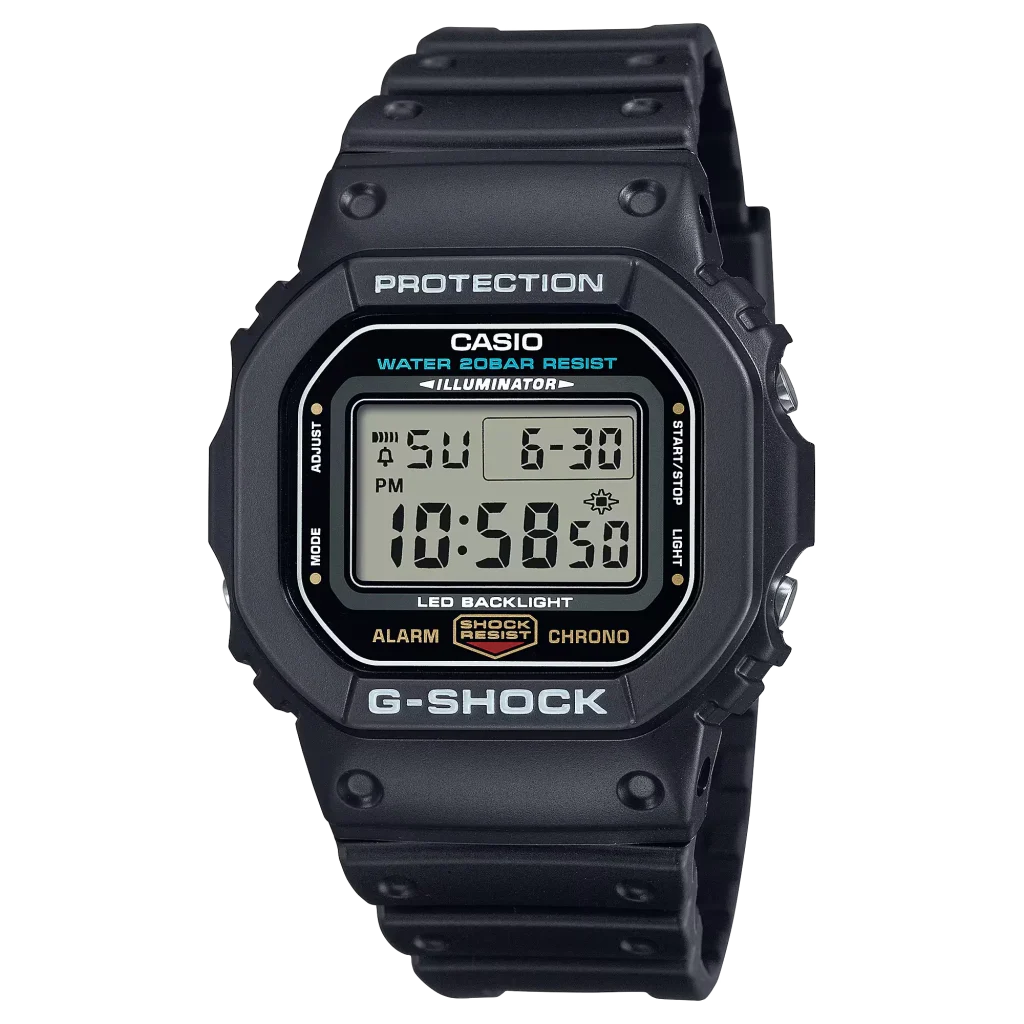
The Casio G-Shock DW5600 is one of the brand’s most well-known G-Shock watches. In fact, it has become somewhat of an icon and is so appealing because of its rugged architecture and its digital features. It takes on the classical square design and is reminiscent of the very first G-Shock watch (the DW 5000C).
G-Shock watches were born out of a vision shared by Casio watch designer and engineer Kikuo Ibe, who accidentally dropped his watch, irreversibly damaging it. As a result, he formed a team of experts named “Team Tough” and formed the project “Triple 10”. The mission was to develop an unbreakable watch that could withstand water depths of 10 bar, heights of 10 meters, and offer a battery power of 10 years.
The DW 5000C was the first official watch to follow a total of 200 prototypes. It featured a hollow core guard structure to suspend the internal module within it. Since then, many designs have followed, including ones made from resin, steel, and carbon fibre. The Casio G-Shock DW-5600 has earned somewhat of a cult-like following since its release two years after the inaugural first G-Shock watch and is still part of the brand’s current collection. It has been the watch of choice for many an athlete, adventurer, and casual wearer thanks to its wide range of versatile features.
Above all, the G-Shock DW-5600 is respected for its shock resistance technology, which lies at the core of every watch from this collection. Casio pairs this with a water resistance of 200 meters and equips it with a digital display with an LCD display for improved visibility during the night (or when caught in low light).
The DW-5600 is not as feature-packed as some G-Shock models in the brand’s lineup, but it does feature all the basics required for the outdoorsy type. These features include a 1/100th of a second chronograph with a 24-hour timer, a multi-function alarm, a calendar that is accurate up to the year 2099, the option to switch between a 12 and 24-hour format, and a flash alert feature for things like the alarm, the timer feature, and the hourly signal.
Aside from the module being an affordable and highly robust digital watch, it has bags of retro appeal and promises a long battery life.
Citizen
Citizen was only officially named Citizen after a group of Japanese and Swiss investors founded it. The company began mass producing quartz watches during the 1970s before taking the quartz technology further in 1976 with the release of the world’s first ever solar-powered watch. This innovative milestone paved the way for the brand’s famous Eco-Drive Technology, which now powers many of Citizen’s current watches.
Citizen is predominantly known for its use of quartz-powered technology. This concept was spearheaded further with the launch of the Eco Drive Calibre 0100 in 2019, which the brand claims is the most accurate watch ever made. Able to keep time to an accuracy of +/- 1 second per year, the innovation is one of the brand’s proudest to date.
If you’ve ever purchased a watch powered by a Miyota movement, Citizen is also behind this name. The brand produces and supplies movements to other third-party watch companies through its movement manufacture, Miyota. Calibres like the 8215 and 9016 are just as respectable and famous as the most well-used ETA movements like the ETA-2824 or the Sellita SW200. Citizen also acquired Bulova in 2007 and purchased movement maker La Joux Perret, as well as Arnold & Son, in 2012.
Our Favourite Citizen Watch: Citizen Promaster Navihawk A. T
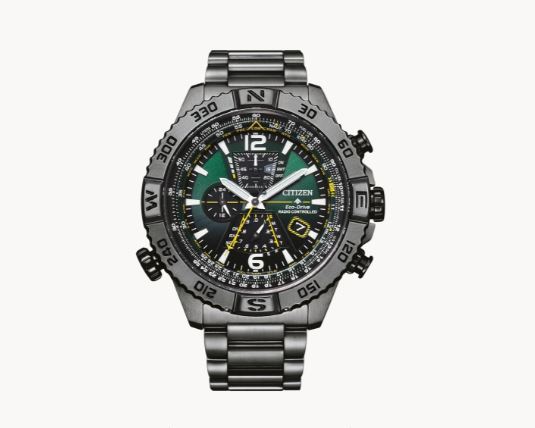
The Citizen Promaster Navihawk A.T. had to make it to our list of top Japanese watches because it offers practically everything you need in a modern pilot’s watch. Those who aren’t keen on the classic look of the analogue pilot’s watch may find the sophisticated features and distinctive aviation-inspired design a particular draw in this watch.
The model is powered by the brand’s Eco-Drive solar-powered technology, converting any light source into hours of power and eliminating the need for any battery changes. On top of this, the Citizen Promaster Navihawk A. T watch has atomic timing (abbreviated to A. T in its name). This core value proves invaluable in terms of accuracy, synchronising with various atomic clocks all over the world via radio signals. Often, there is only an error margin of around one second in 100,000 years! It’s an unfathomable level of accuracy, enabling the watch to adjust and update the time and date overnight so that daytime performance is not affected.
The Citizen Promaster Navihawk A.T. watch has a rotating navigational bezel that can assist with sophisticated tasks like calculating fuel consumption, speed, and distance. A perpetual calendar and world time function also serve to ensure you stay as organised and as punctual as possible whilst navigating the rigours of daily life. This 200m water-resistant watch is leveraged by quality materials, too. It features a sapphire crystal glass front, a robust steel construction, and though the dial is busy, it certainly delivers on that all-important “cockpit instrument” aesthetic.
Credor
Credor is a Japanese watch brand that stands out for several reasons. It has its very own micro artist studio where its high-end “Masterpieces Collection” watches are crafted. It is home to some of the world’s most talented watchmakers and artisans. Philippe Dufour’s influence over these artisans was paramount during the company’s training. His level of knowledge and skill has impacted the many finishing techniques of a high-end Credor watch.
To own a Japanese watch with a high level of hand finishing is a rather unique and special thing, since many Japanese watch brands mass-produce timepieces. Frequently, a Credor watch will boast a design inspired by traditional Japanese art. Maki-e lacquer work, for example, is present in some dials. This is where watchmakers at the company’s design studies use a sprinkling of gold powder upon a wet urushi lacquered dial, creating an intricate design.
Credor also differentiates its watches by using precision tools and unique materials like Raden, a thinly sliced piece of abalone shell used for the dial, and the brand’s porcelain dials that require a painstaking process to bring them up to a finishing standard.
Since Credor is part of Seiko, it can utilise the brand’s Spring Drive technology. It sits above Grand Seiko – known for its grandeur and hand-applied techniques. Credor, on the other hand, is revered for its Japanese artistic craftsmanship and operates on a different level as a distinct brand with a different philosophy.
Our Favourite Credor Watch – Eichi II
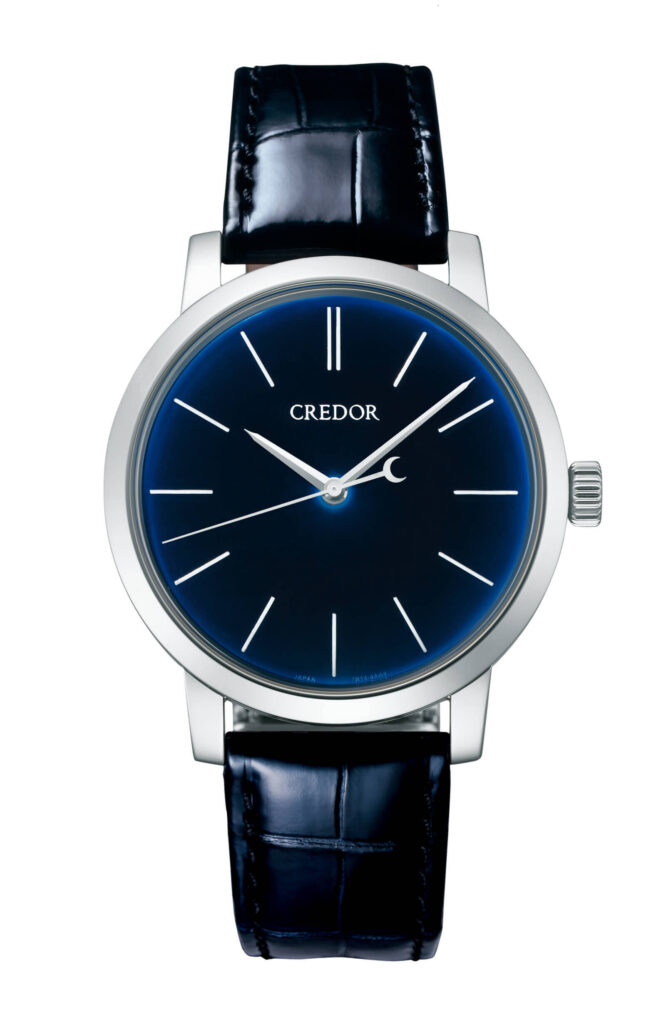
The Eichi II gives the impression of an incredibly simple watch, though its execution is a blend of artistry and complexity. The watch is produced in the brand’s Micro Artist studio in Shiojiri. It is fitted with the Spring Drive Calibre 7R14, exceeding COSC standards and boasting a distinctive speeding seconds hand. A clever innovation within this movement is its Torque Return System, which reclaims excess energy and uses it for rewinding the mainspring.
It has a porcelain dial, however, which has to be its most striking feature. The Credor Eichi II is usually made from platinum and features either a striking bright white or a deep blue ”ruri” dial colour, imparting the time with elegantly hand-painted hour markers applied by a master Credor artisan.
The company also adds its own meticulous finishes to its movements, adorning elements of the Spring Drive engine with Zaratsu polishing techniques and hairline finishes, while the open-worked barrel is crafted into the shape of a bellflower.
Seiko
Seiko can be broken into several subcategories, but for the purposes of keeping this guide simple, we’ll look at the brand as a whole. The brand was founded in 1881 and began as a small workshop repairing and selling watches and clocks, but soon grew into an industry giant.
More specifically, the 1960s became an important era for Seiko. During this time, the brand gained international recognition for performing beyond expectations compared to some Swiss manufacturers, and also birthed its first dive watch. In 1969, Seiko became one of the first brands to develop the automatic chronograph. It also launched the first quartz watch – the Aston, changing the timekeeping landscape forever.
Seiko is a vertically integrated watch manufacturer, offering a broad range of dress watches, sports watches, and solar-powered models that promise value for money. It also innovated the famous Spring Drive movement mentioned earlier – a hybrid electro-mechanical movement with a mechanical gear train and electro regulator. Such features give the watch its instantly recognisable gliding seconds hand.
Our Favourite Seiko Watch – the 5KX SRPD51
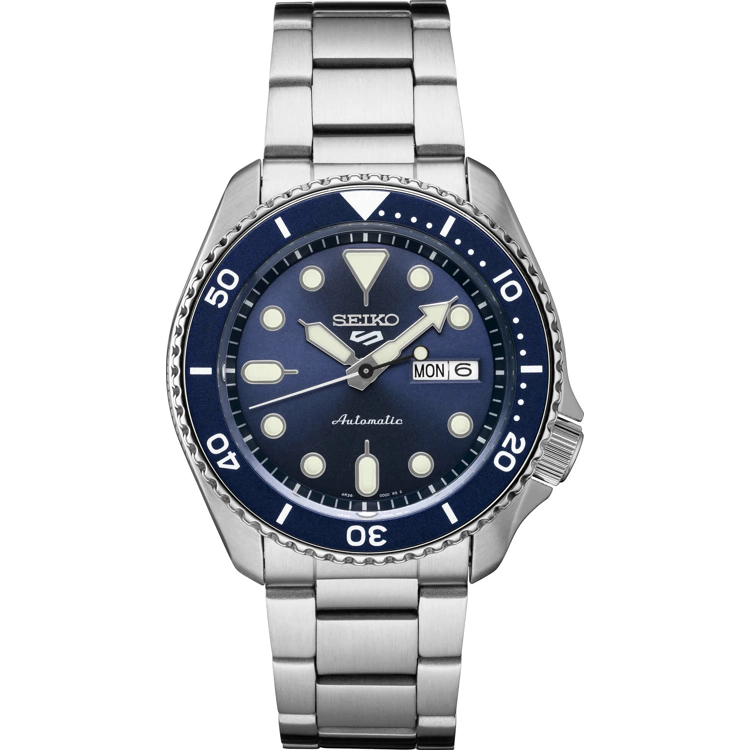
It was always going to be tough to pick out any single watch from Seiko’s catalogue and call it the ultimate Seiko watch of all time. But the Seiko 5KX SRPD51 is a good contender, as it seems to offer practically everything you need in a daily beater, plus it trades the no-nonsense dive watch aesthetics for something a little more “everyday” and versatile-looking.
The 42.5mm diameter of the case is a familiar size for a Seiko watch and has been crafted from stainless steel with a 100M water resistance. This is a solid companion but also features the exhibition caseback, giving the wristwatch a more refined feel and enabling you to admire the movement as it performs through the rear of the watch. In fact, the movement itself is an updated module, which allows for manual winding and hacking, unlike the former SKX models.
Seiko also offers a load of dial colours for this model, so you won’t struggle to find something you like. But the reference SRPD51 is an excellent option, imparting time with a deep sporty blue dial. The Seiko SRPD51 took over from the SKX range back in 2019 but retains much of its beloved aesthetic. It sports a Hardlex crystal (Seiko’s own mineral crystal glass) and a recessed crown at 4 o’clock (carried over from the SKX line and designed to reduce the risk of snagging). The applied indexes are also primed for expert legibility, featuring Lumibrite surfaces to accompany a clear day-date feature.
Orient
Orient is a subsidiary of the Seiko Epson Corporation, along with the Seiko Watch Corporation, yet they both operate under completely different entities. The Japanese watchmaker as we know it today was launched in 1950 and, since then, has experienced great success with some of its highlight models – one of which is the Bambino.
This brand is a true in-house movement manufacturer. Instead of sourcing movement components from third parties, it builds them from the ground up, giving the brand incredible control over the quality of its designs and its impressive pricing. While the brand does offer some models in quartz versions, the majority of the company’s focus is on perfecting mechanical watches and offering that all-important “bang for your buck” factor. Some of the brand’s most popular models feature domed sapphires, giving them a notable vintage presence on the wrist. Others are bold in design or more premium, like the “Orient Star” range. With higher gear movements and a more refined finish, the more elite circles of collectors tend to appreciate these models for their Zaratsu-style case polishing and complex features.
Some of the most popular Orient watches are those that feature open heart complications, affording a view of the movement from the dial side of the watch, as well as models that feature a power reserve indicator. Orient even offers a multi-year calendar watch and has experienced most success with models such as the Mako, Ray, Kamasu, and Neptune models.
Our Favourite Orient Watch – Bambino 38mm
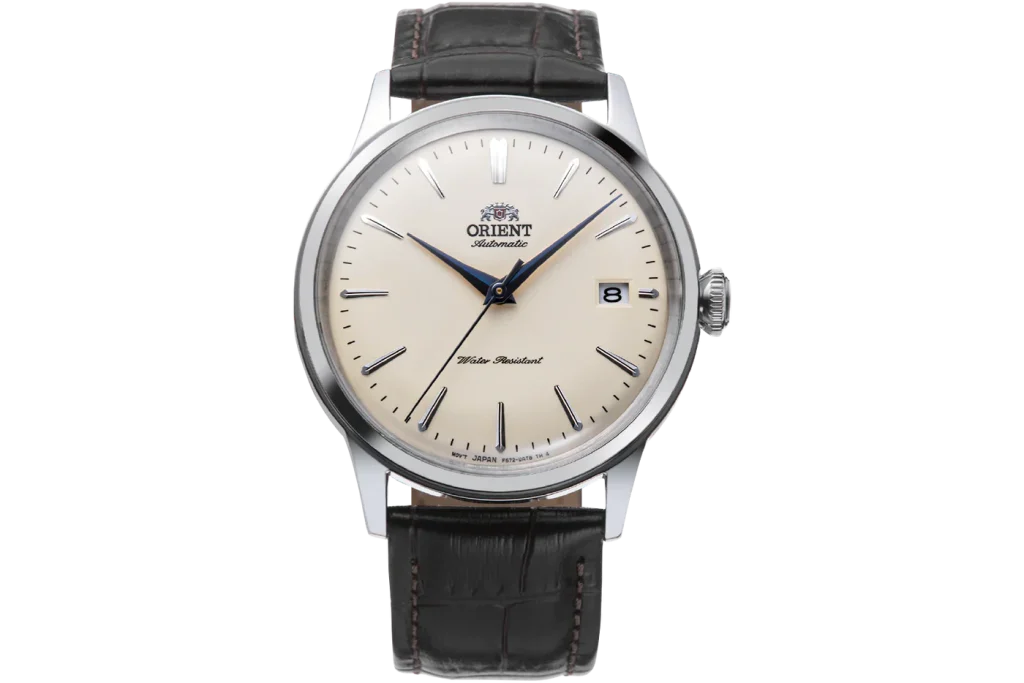
The Bambino has to make it onto our list of best Japanese watches. It is arguably the most iconic Orient watch of all, loved by watch enthusiasts of all ages and experiences. It has an alluring vintage charm, promising an appealing blend of affordability and solid mechanical performance.
Above all, it is the vintage aesthetics of Bambino that is the model’s primary draw. Its key features include a domed crystal, an in-house movement, and a domed dial. There are several variants of the line, too – each one slightly different. Aside from the hallmark feature of the domed crystal, the Bambino watch typically features dauphine-style hands, a date window, and minimal text on the dial to keep it in line with its clean and simple character.
The 38mm Bambino Orient is one of the most recent renditions of the Bambino, signifying the current trend for smaller wristwatches. The domed mineral crystal houses a white dial underneath its surface, with slenderly carved hands that are propelled around the display via a powerhorse movement – the Calibre F672, whose architecture is also put on show through an exhibition caseback.
I have to say, of all the Japanese watches out there, this has to be the best starter mechanical. Primarily worn as a dress watch, it still has the versatility of a Monday-to-Friday watch.
Conclusion
Japanese watch brands offer a compelling range of designs at all price points and levels of complexity. Whether you’re looking for something tradition-oriented or resolutely contemporary, Japan’s relentless pursuit of innovation has played host to some incredibly interesting and exciting brands, both old and new.
While the big five are most certainly Seiko, Casio, Orient, Citizen, and Credor, this list is by no means extensive. Continue to explore the world of Japanese watch brands and you are bound to unearth some more horological gems wedged between the more famous names within the industry, many of which focus on radical innovation, meticulous craftsmanship, and a unique design philosophy.