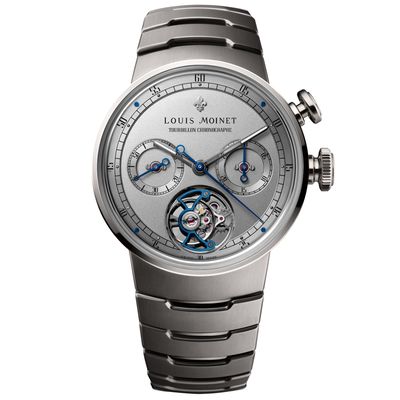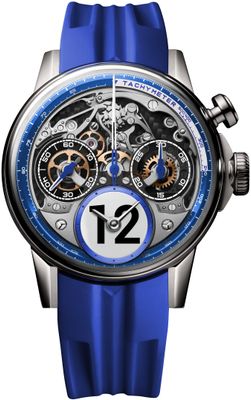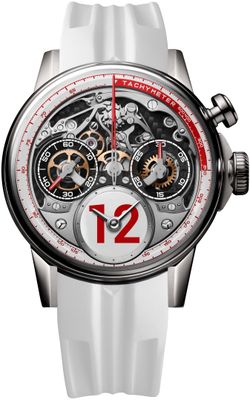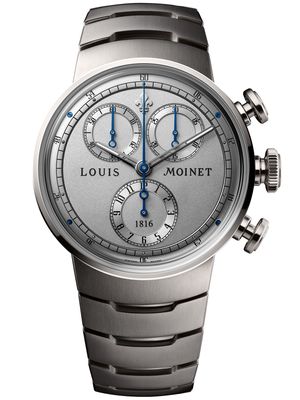

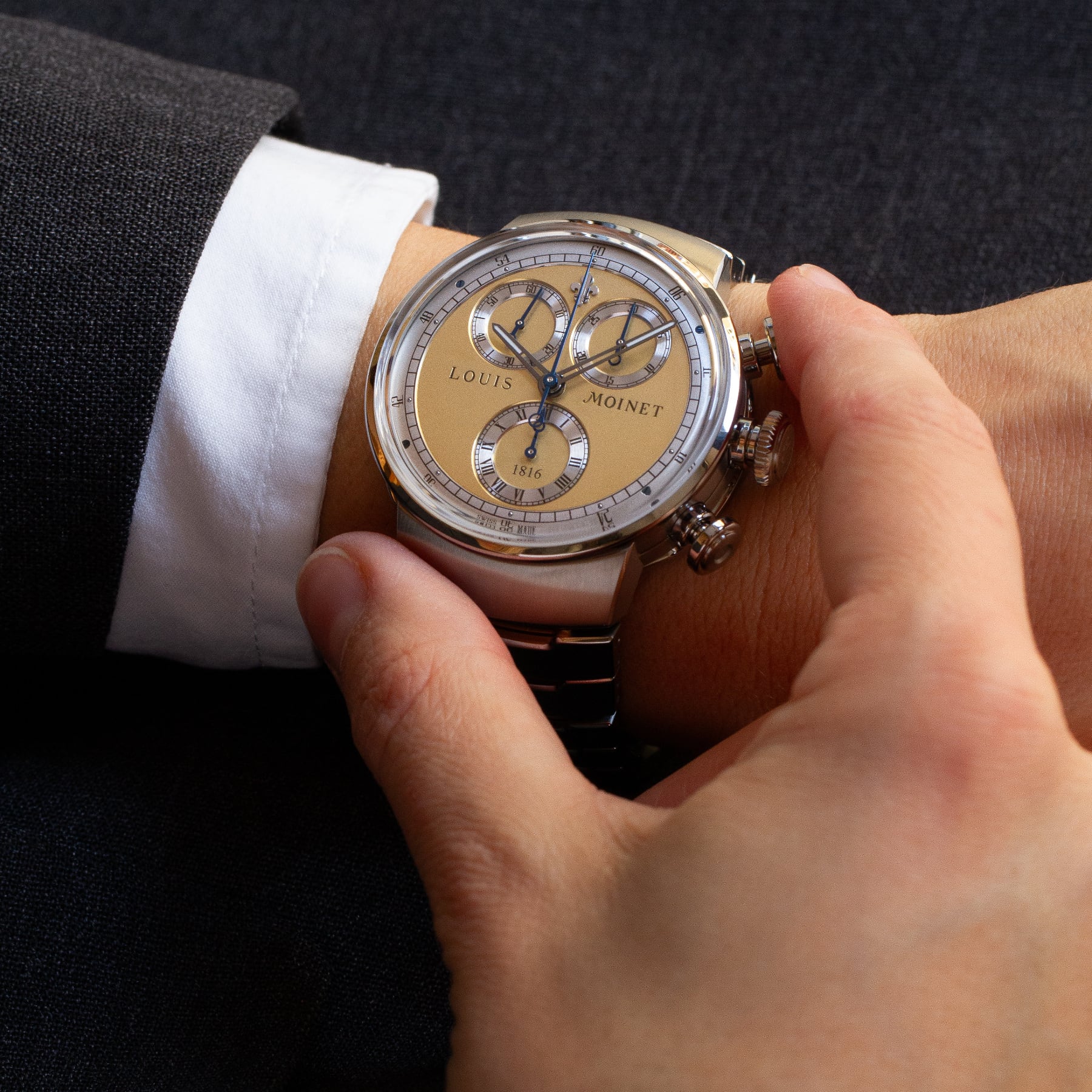
1816, an icon reborn
1816 was one of the major turning points in watchmaking history. It is the year in which the great watchmaker Louis Moinet completed the world's first chronograph.
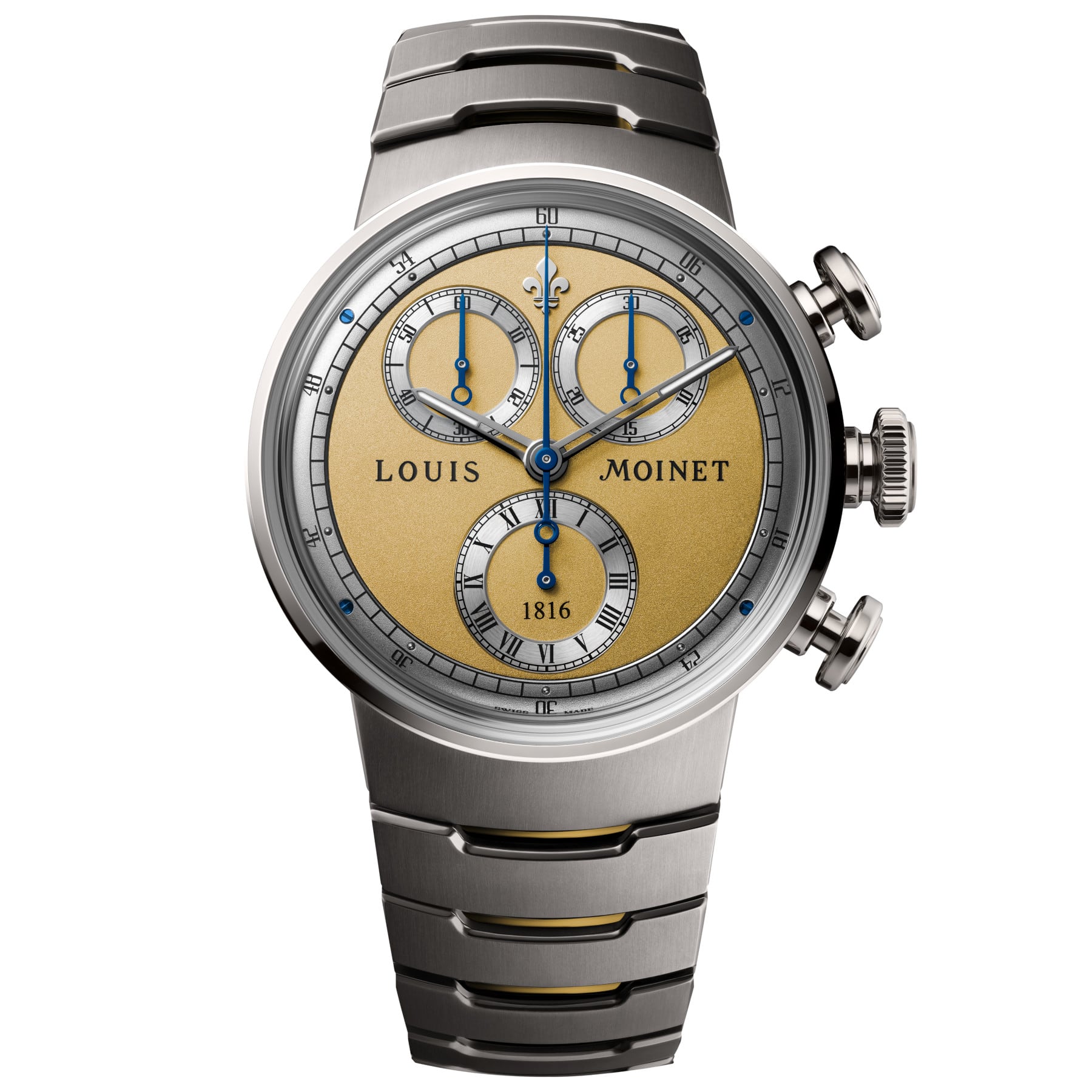
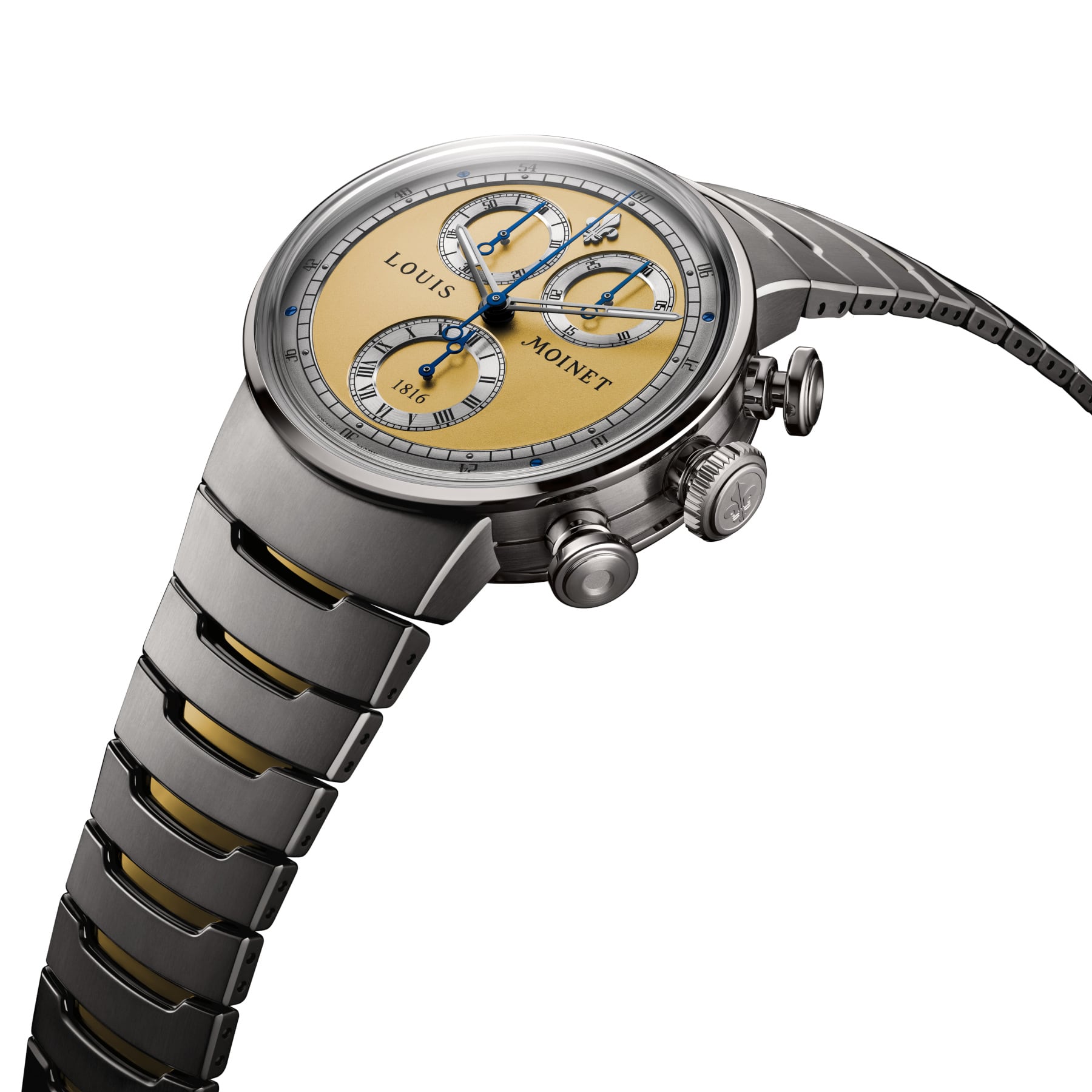
Today, the 1816 made by Les Ateliers Louis Moinet shines the spotlight onto the legacy of this pivotal masterpiece. The watch remains true to the essence of its original model and is now ready to write the next chapter in its history.
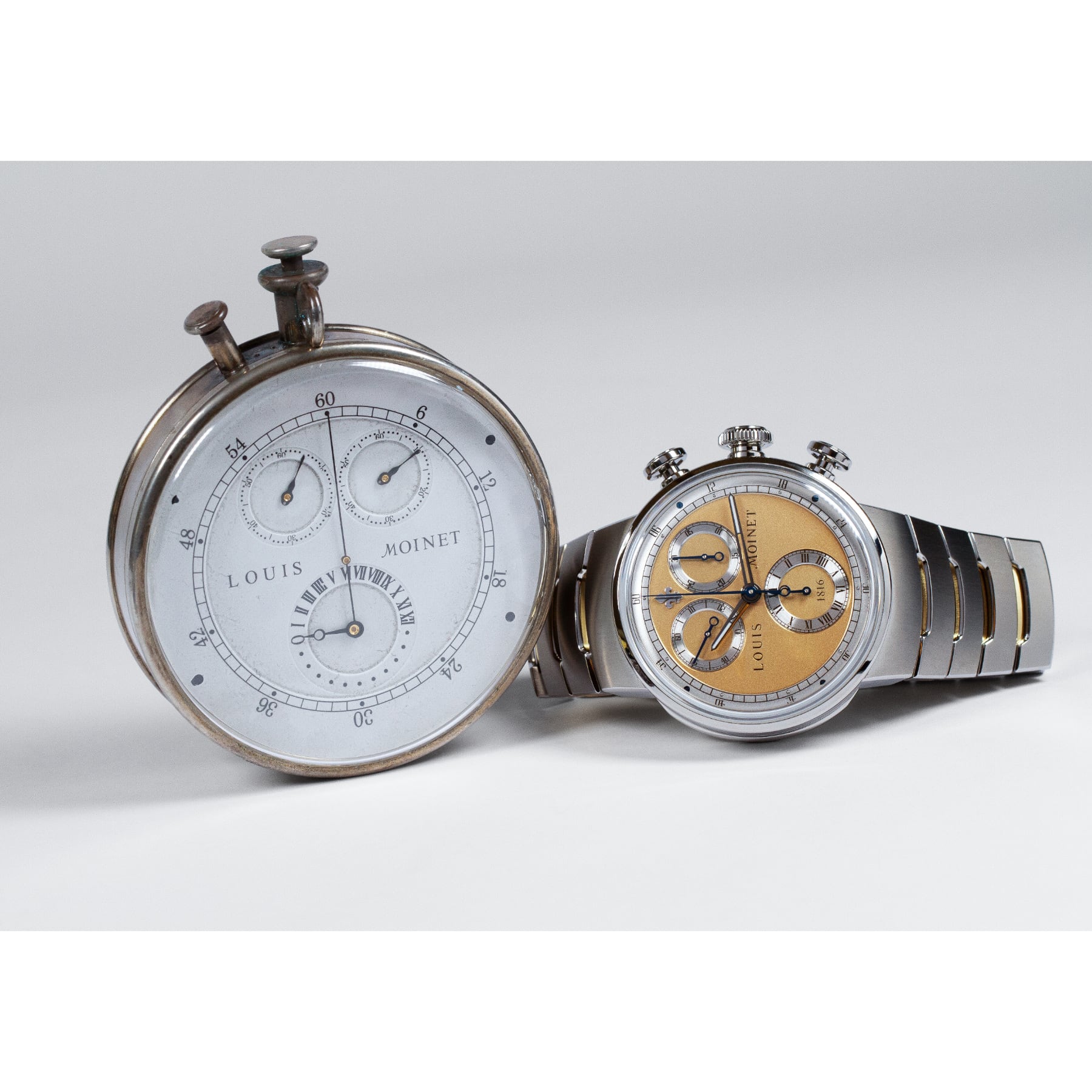
Louis Moinet originally designed his novel instrument to carry out celestial observations, which required precise calculations of the speed at which the stars moved. This "thirds counter" (compteur de tierces) was the first of its kind and a testament to the genius of its creator. Moreover, it was the first chronograph ever built. Louis Moinet’s brilliant creation incorporated numerous innovations, some of which would not be repeated until a century later. Today, this historic timepiece is carefully preserved in the Louis Moinet Museum in Saint-Blaise.
Reinventing heritage The 1816 chronograph
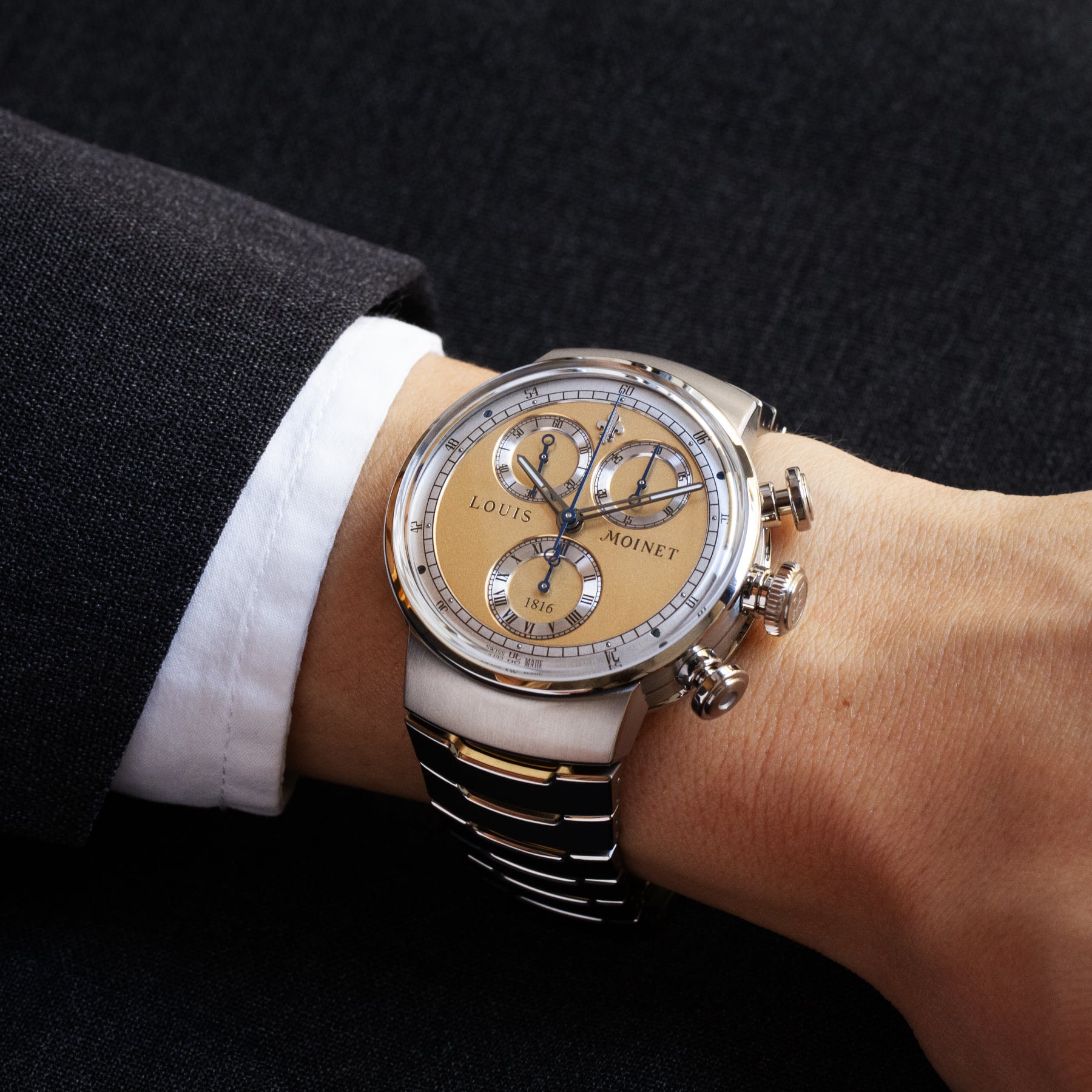
A closer look at Les Ateliers Louis Moinet’s new 1816 chronograph means taking a deep dive into over 200 years of history through a timepiece exhibiting a resolutely contemporary style. The DNA of Moinet’s compteur de tierces, which with its sober, functional, and, for its time, avant-garde design, emerges in every detail. The aesthetic codes of the original model have been given a totally new interpretation but one that is always in keeping with traditional haute horlogerie.
The whole ensemble forms a timeless haute-horlogerie timepiece. It is aimed at connoisseurs who want to wear a timepiece with strong evocative power.
Louis Moinet’s avant-garde vision and the 1816 dial
From the end of the 18th century, as watch mechanisms became more precise, master watchmakers paid increasing attention to the aesthetics and legibility of their creations. Louis Moinet was no exception. The layout of the subsidiary counters on his compteur de tierces already anticipated the modern configuration of 20th-century chronographs. It established the perfect balance between functionality and design as a genuine measurement interface.
The instantaneous minute counter prevents reading errors
The jumping minute counter precisely measures short intervals of time. Unlike a trailing counter, where the hand moves slowly and continuously, the jumping minute counter permits error-free reading since its hand jumps instantaneously from one gradation to the next at the sixtieth second. In other words, it displays the number of minutes elapsed directly and without scrolling. This enables time to be read off immediately. The hour counter, on the other hand, works in the traditional way, displaying the time as it passes sequentially.
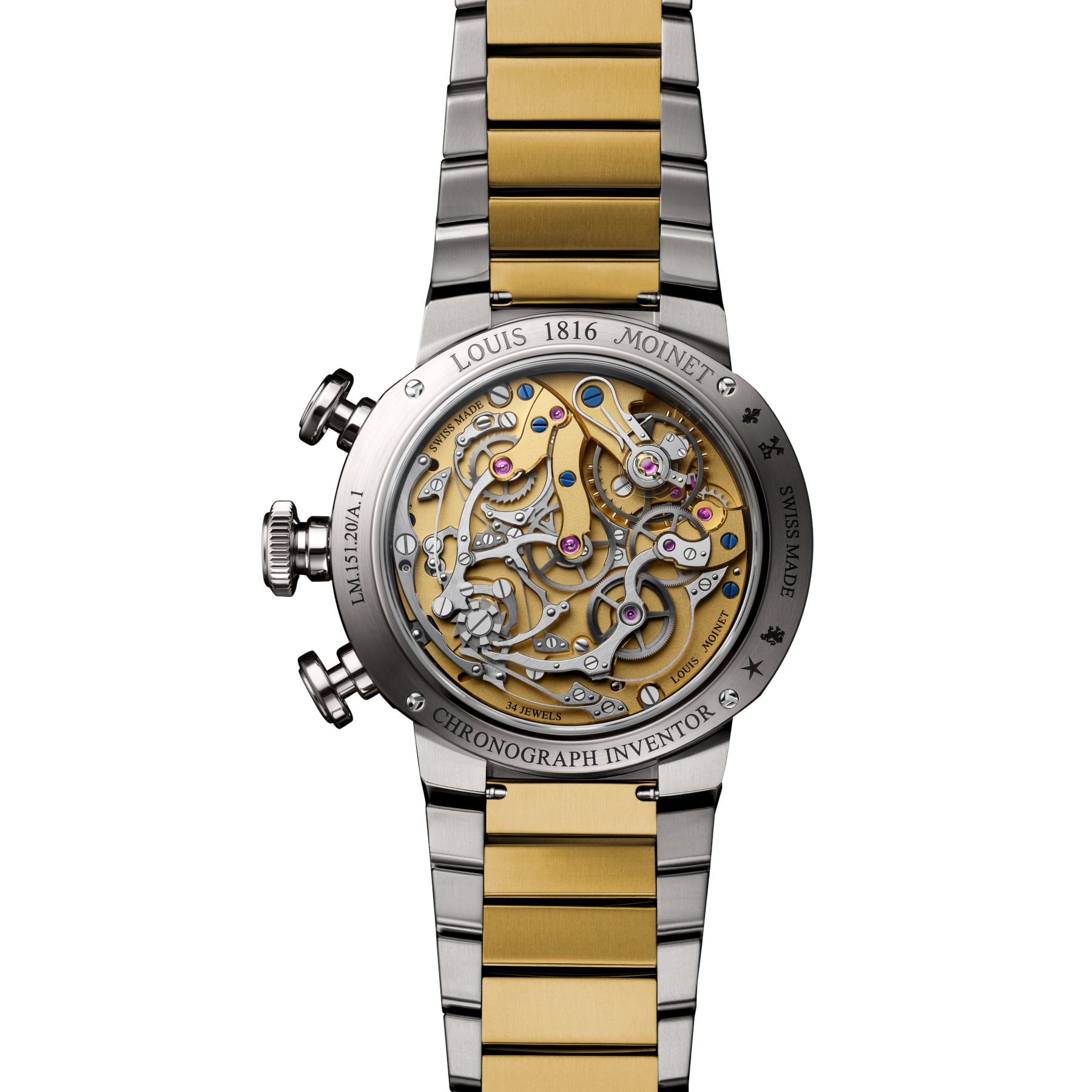
The column wheel, the special component of high-end chronographs
First used in 1878, the column wheel is a kind of ratchet wheel with six or nine triangular teeth or columns set at right angles to each other. It turns in one direction only and smoothly coordinates the start, stop, and reset phases of the chronograph.
The swan-neck regulator an ever-popular setting standard
The swan-neck regulator is a device consisting of a spring curved around the lever, which is acted upon by a micrometre screw allowing the fine adjustment of the watch’s rate. It was invented and patented in 1867 and is still highly prized for its sleek, elegant shape.