

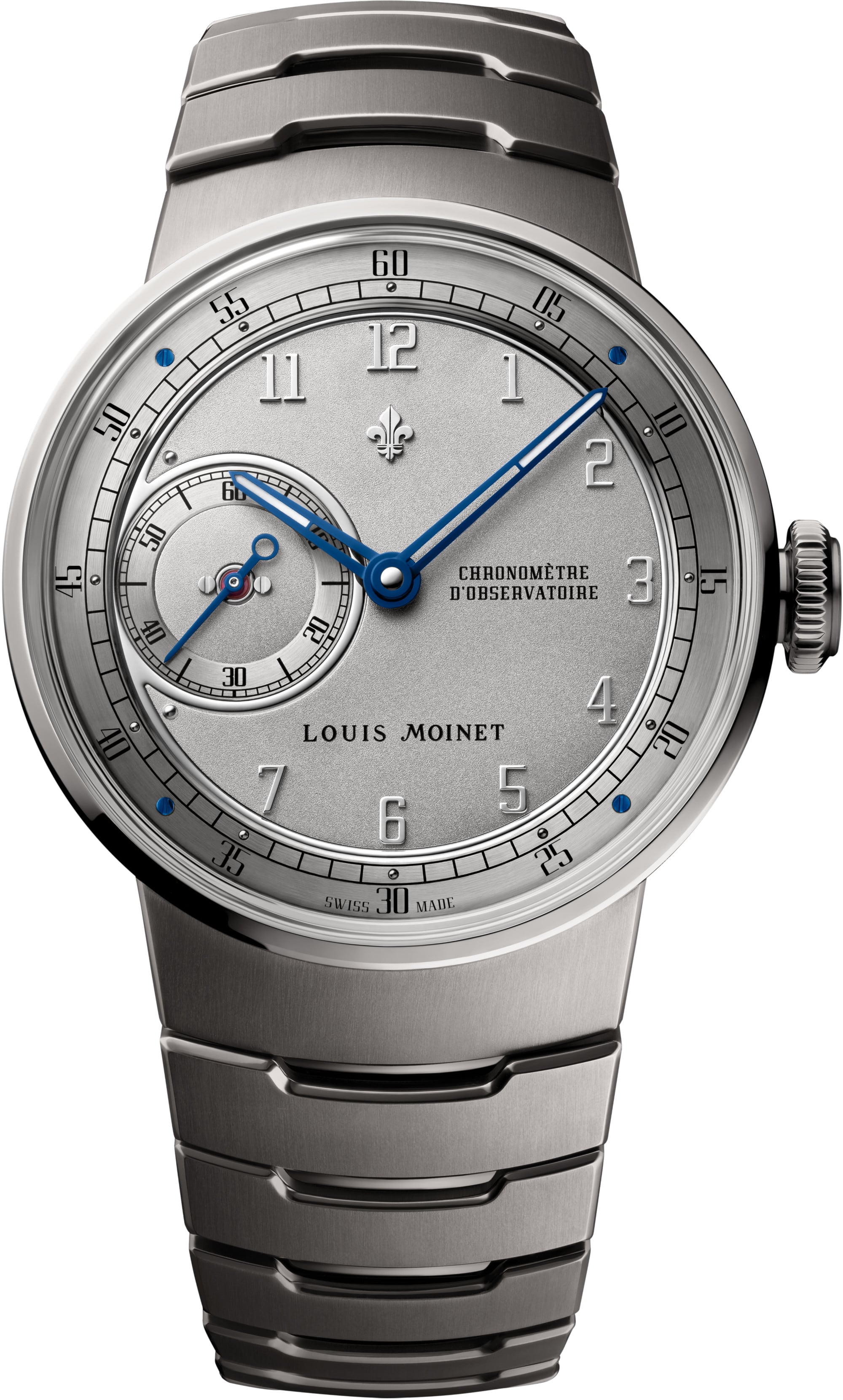
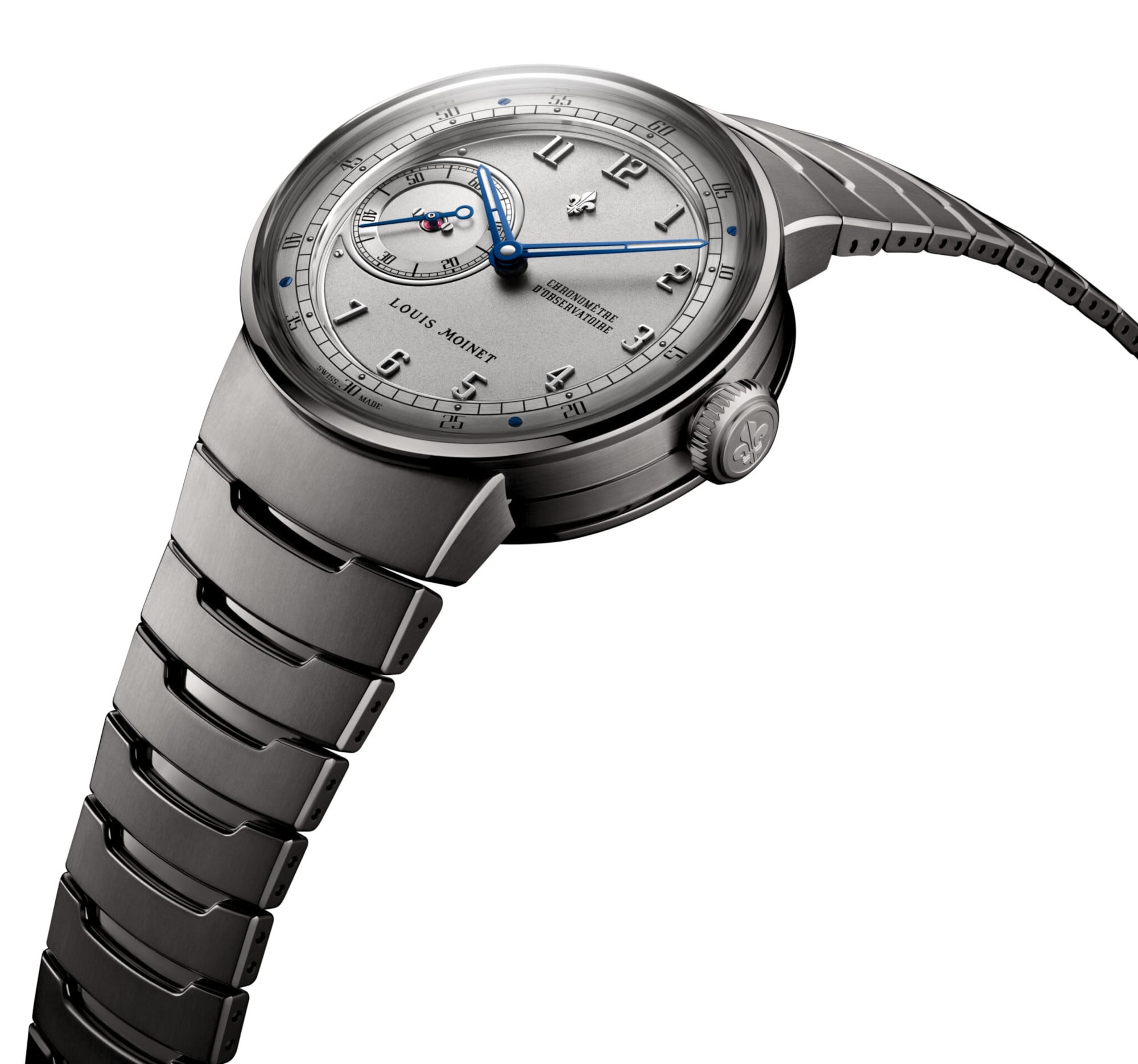

Louis Moinet Lm-160.20.60 Chronomètre D'observatoire
Homage to a pioneer of chronometry
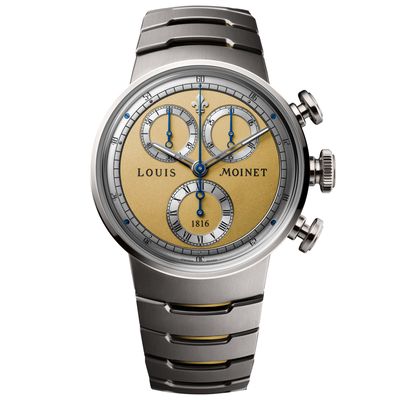
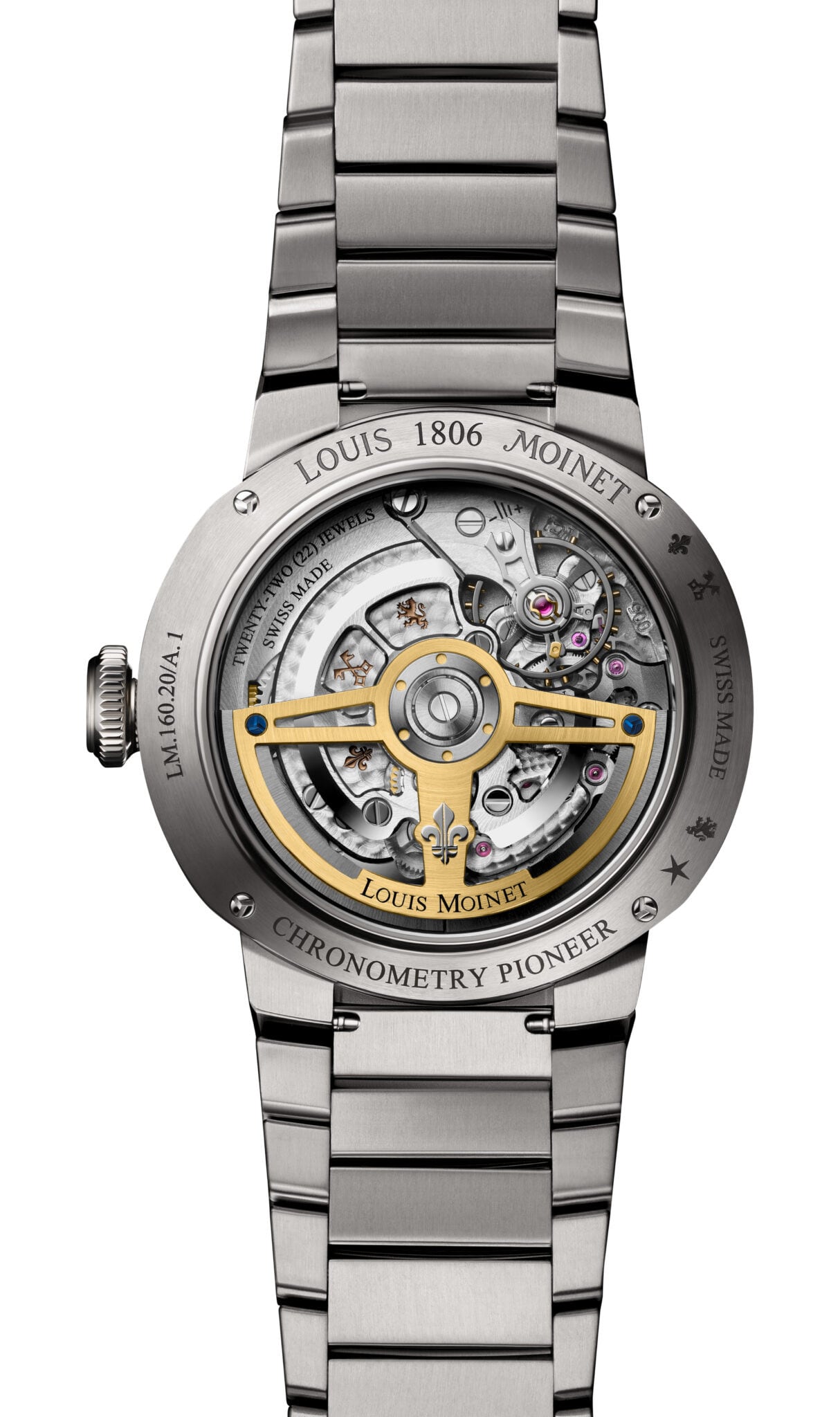
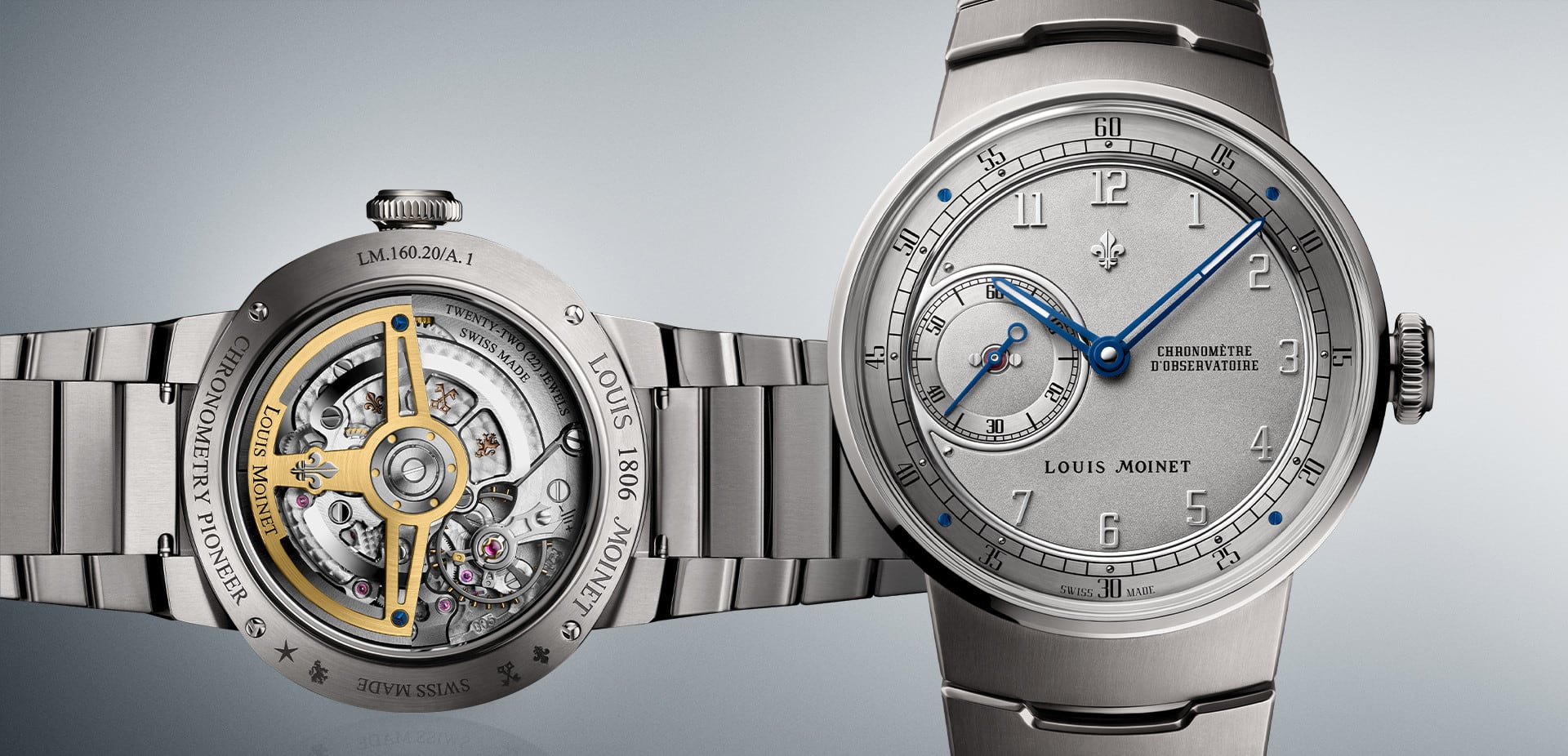
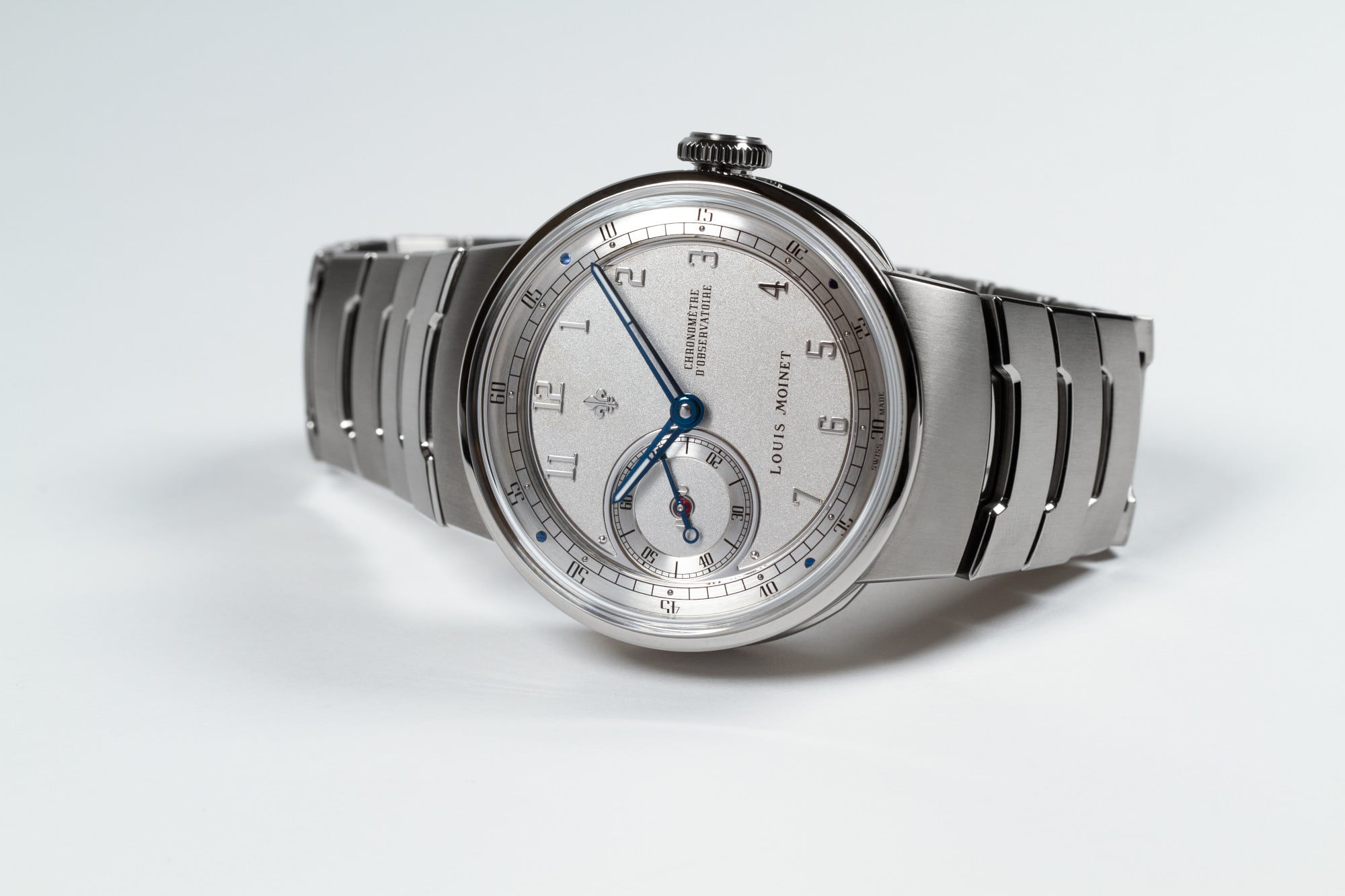
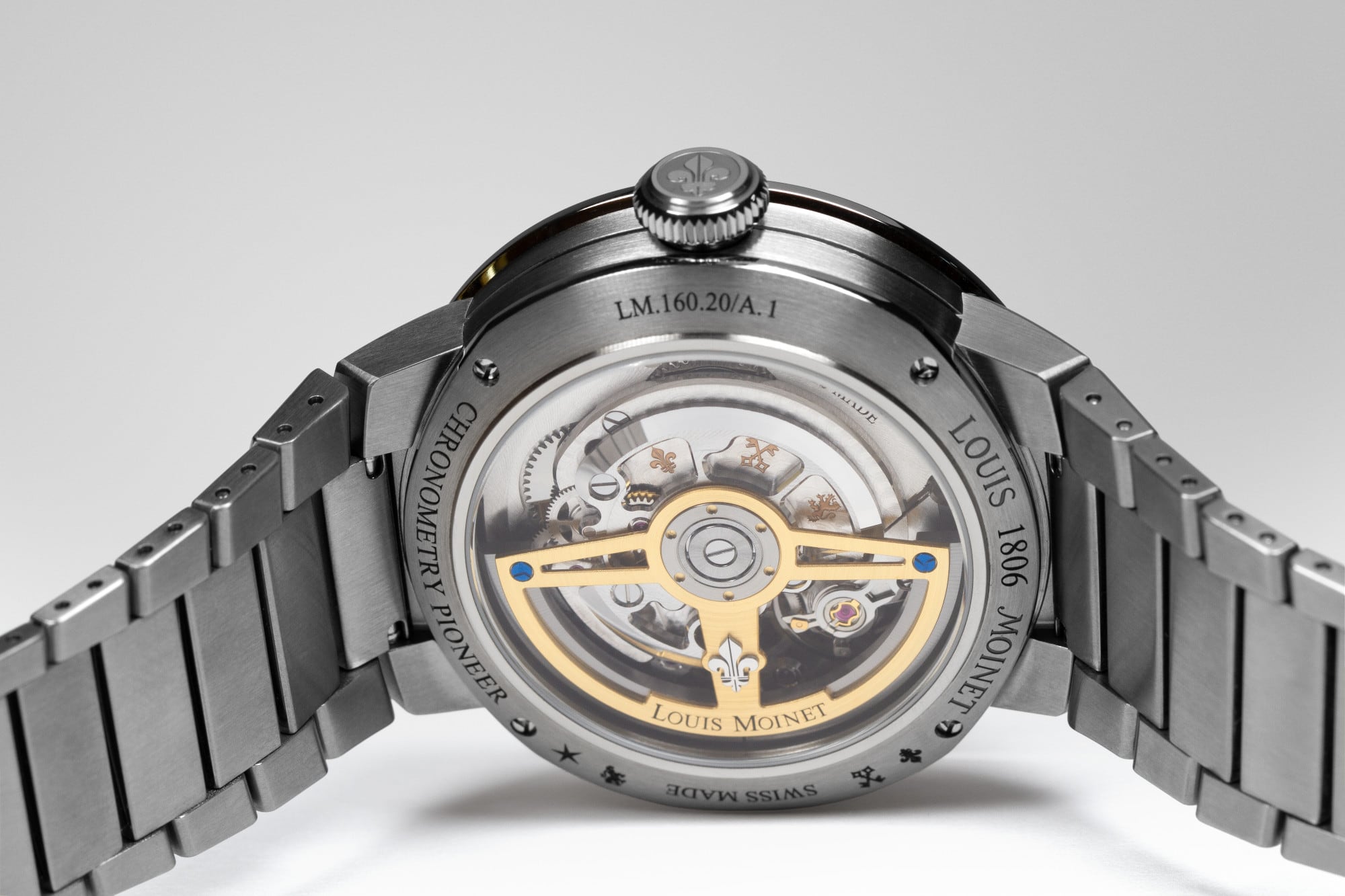
Certified by the Geneva Observatory, the 1806 chronometer combines accuracy with reliability. It boasts a resolutely modern aesthetic and also pays homage to horological history through subtle design cues that recall the world's first chronograph. It comes with Louis Moinet’s first ever titanium bracelet.
L'essentiel est de ne pas s'écarter du vrai
"It is essential not to depart from genuine"
The birth of modern chronometry
Louis Moinet dedicated his life and talent to a very ambitious goal: the precise, scientific measurement of time. His invention of the first-ever chronograph ushered in the era of high frequency, achieving a phenomenal rate of 30 Hz, which was essential for measuring the tierce, or 60th of a second. As president of the Chronometric Society in Paris, he brought together the era's greatest scientists and watchmakers in their shared pursuit of precision. He later crowned his achievements by presenting a chronometer with several important complications at the 1851 Universal Exhibition in London.
Thus, guided by the quest of exact measurement, Louis Moinet laid the foundations of modern chronometry and became its most illustrious pioneer.
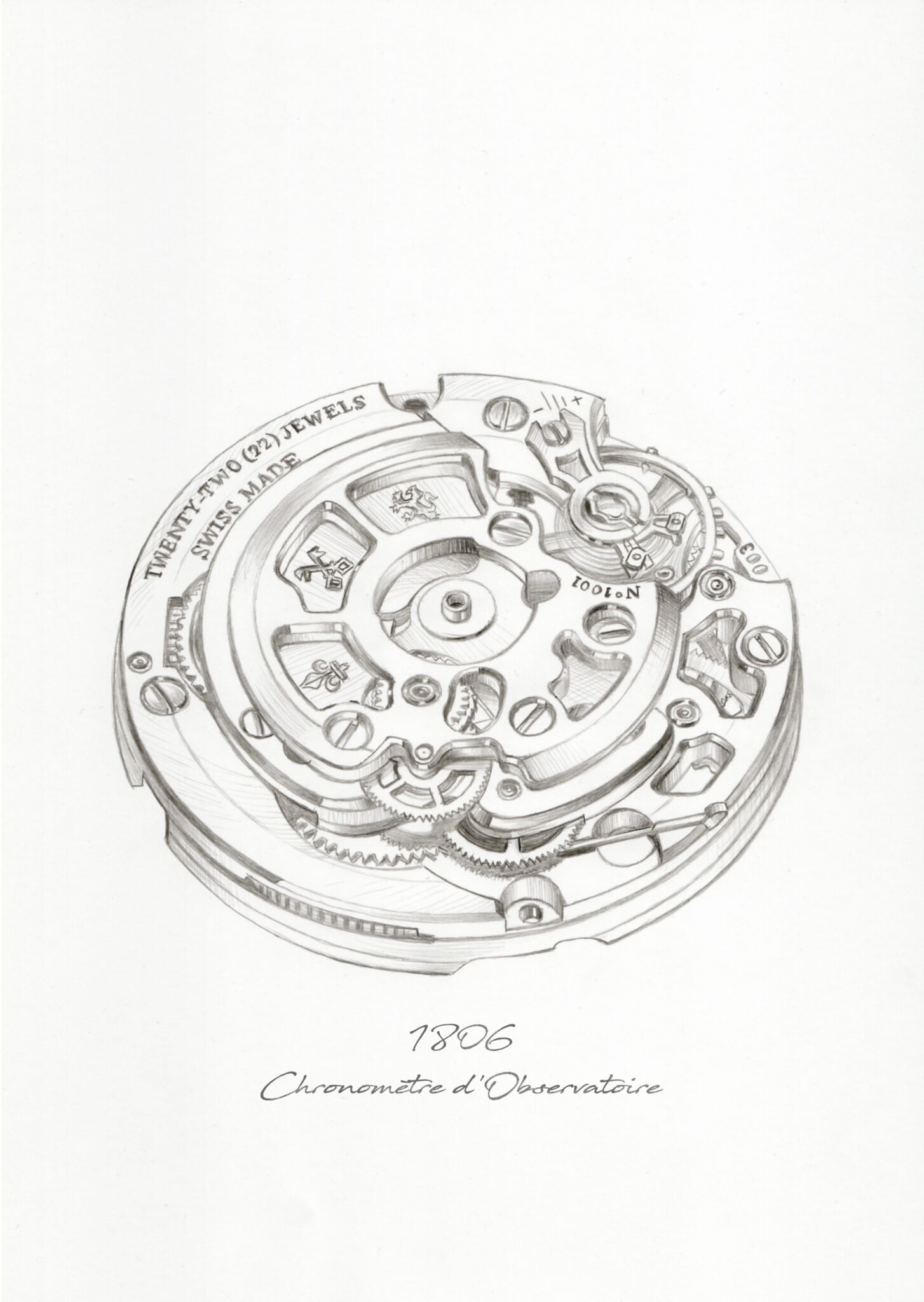
1806
Chronomètre d’Observatoire
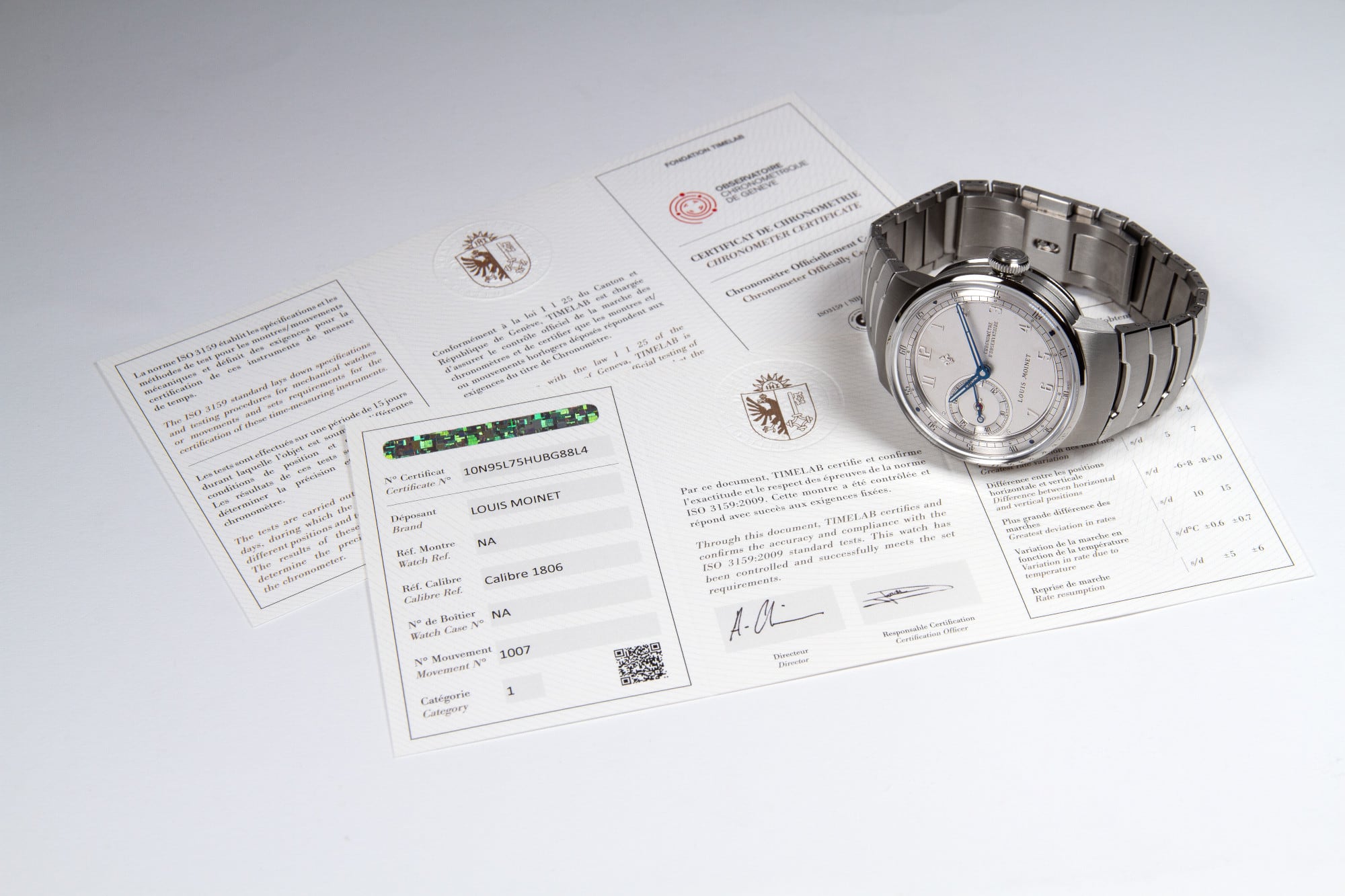
Since its founding in 1772, the Geneva Astronomical Observatory has been the historic home of Swiss chronometric certification. It perpetuates the tradition of precision contests that marked the nineteenth century.
The new Louis Moinet timepiece, the 1806, has been certified as an observatory chronometer and is thus a part of that tradition. To obtain this designation, each 1806 movement undergoes fifteen days of trials, during which it is tested in different positions and subjected to various temperature variations. The results of these tests provide proof of the chronometer's precision and reliability.
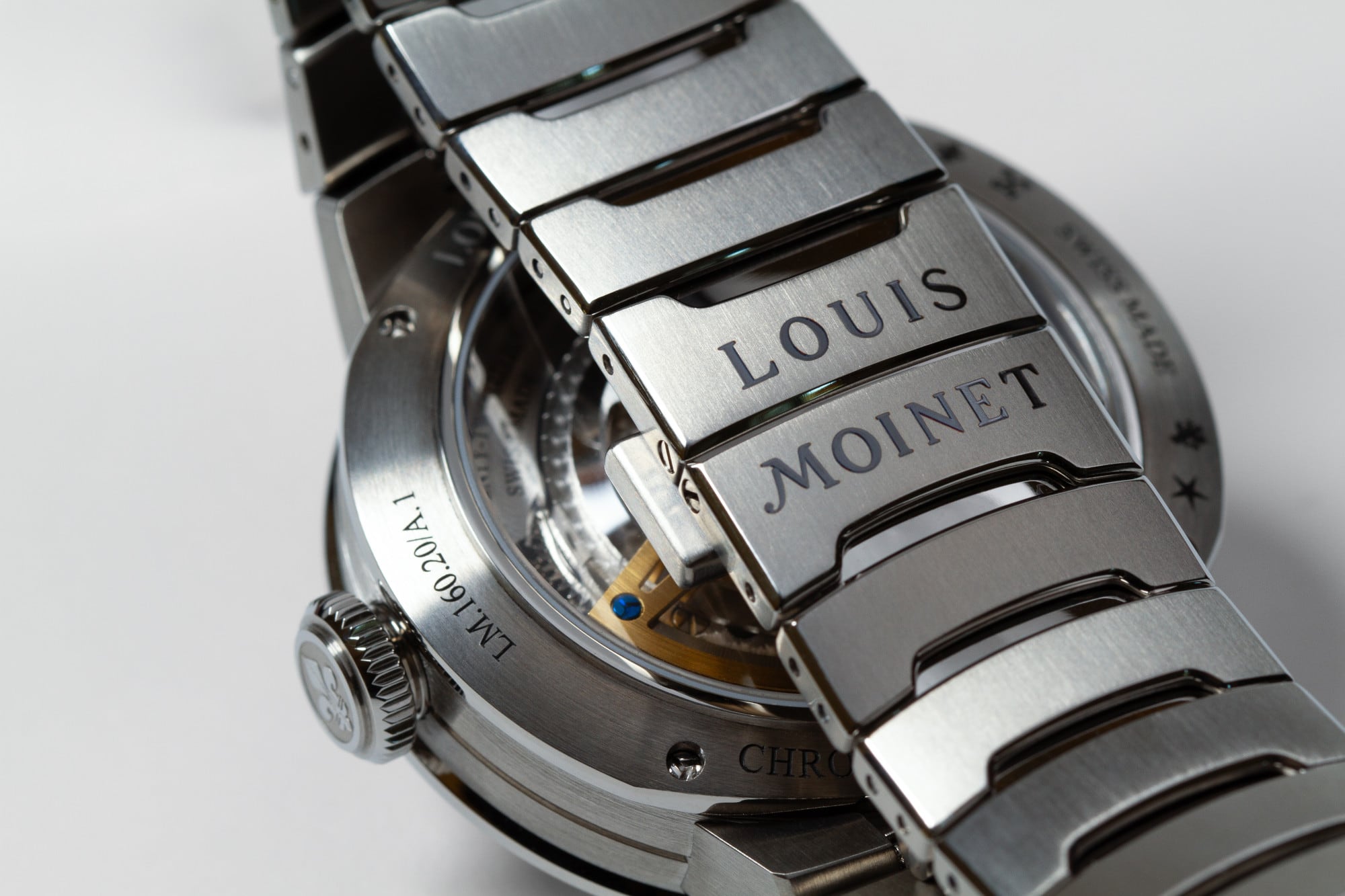
Louis Moinet’s first ever titanium bracelet
As for the bracelet, it was given the name “BRIDGE project.” It is the first grade 5 titanium bracelet by Louis Moinet and takes its name from the distinctive wide links that recall a stylised bridge. It is resolutely contemporary, thanks to a unique design, and was conceived as a seamless extension of the case.
Each link seems to flow fluidly into the next, enabling the bracelet to hug the wrist naturally without disrupting the watch's balance. The alternating satin-finished and polished surfaces create a sculptural ensemble that is both graceful and ergonomic.