Nina S, Author at Exquisite Timepieces - Page 3 of 9

Author: Nina S

cheapest perpetual calendar watches

I shall start by saying that this isn’t an easy guide to compile. Not by any stretch of the imagination. Why? Because perpetual calendars don’t come cheap.

So, if you happen to have an unshakable penchant for expensive things and a perpetual calendar is next on your list, you’re in trouble. Long-suffering wives can’t know about this guide. It’s strictly between you and me. You’re only browsing, anyway (clears throat).

The trouble is, what would you say when she finds a watch like this stashed in the back of your wardrobe? “What, this old thing? I’ve had it for yonks, darling”. Agreed, it’s a tactic that works better for a watch than it does trying to conceal a new sports car.

But for the majority of us, guilty pleasures as small as a watch can soon become harder to hide the better your other half becomes at using her special impulse buy-antenna. Perhaps the only way to go is a trade-off. You get a new watch, and she can order a new handbag.

Still, like everything, there are more affordable alternatives to even the most expensive lifestyle products. And that’s kind of what a perpetual calendar is. A lifestyle product. It’s no longer an essential tool.

But you can certainly imagine how groundbreaking and indispensable a tool like this was when it arrived, right? This thing could keep you punctual. Could keep you organised. It told the rest of the world you could afford expensive, sophisticated things.  

Not much has changed since then, even by today’s standards. These watches still convey a sense of wealth, good taste, and a degree of horological expertise. But just know this: there are reasonably priced perpetual watches available if you’re serious about owning one and you know where to look.

The History of the Perpetual Calendar Watch

Before we delve into what a perpetual calendar is, it’s essential to examine the calendar itself. Before the Gregorian calendar that we use today, we followed what was known as the Julian calendar (pre-1582).

It was divided into 365 days (each with 24 hours) and 12 months (each with 30 or 31 days), with February comprising just 28 days. There was a problem, however. It didn’t align with the solar year (the time it takes for the Earth to complete one full revolution).

The solar year comprises 365 days, 5 hours, 49 minutes, and 16 seconds. Therefore, Pope Gregory XIII added an extra day to February every four years, which led to the creation of the Gregorian calendar.

Oh, also – to balance the math out – this extra day is left out every 100 years but then added back every 400 years – confusing, I know!  

Hopefully, now you’re getting an idea of how complicated a watch like the perpetual calendar is, as this intricately engineered instrument accounts for all of this for you. The guy behind this revolutionary concept was Thomas Mudge.

He created the first perpetual calendar in pocket watch form in 1762, which was later acquired by the horological giant Patek Philippe, who obtained a patent for it in 1889.

The first Patek Philippe perpetual calendar pocket watch arrived soon after, followed by the first perpetual calendar watch in 1925. The brand also developed the first retrograde perpetual calendar 12 years later and the first series dedicated to the complication a further four years after that.

That same year, it launched a chronograph version. The brand also achieved another milestone in 1962 with the introduction of the first automatic-powered perpetual calendar.

Indeed, Patek Philippe was leaps and bounds ahead of its competition when it came to specialising in this complication. It smashed out several firsts that out-performed many other manufacturers of its time by a country mile!

What Is a Perpetual Calendar?

If you’re serious about owning an affordable perpetual calendar but unsure how it works, keep reading. I promise to keep it brief and to the point.

The Perpetual calendar watch is one of the most sophisticated timepieces out there. For a start, it has a mechanical memory that spans 1,461 days. The watch displays the days of the week, months of the year, and date without requiring manual adjustment.

It takes into account leap years and accounts for the days of the month, regardless of whether they’re 28, 30, or 31 days long. This highly complex mechanism won’t need adjusting as long as you keep it running, whether by a manual wound movement or a self-winding one (or even a quartz movement).

Because there are many different types of perpetual calendar watches on the market, their movements may vary in terms of how they operate. Most are engineered to track the time and date accurately to the year 2100.

These horological works of art comprise a date wheel, a day wheel, a date change lever, and a day-of-the-week lever, as well as month wheels and racks that ensure all parts work in harmony together. Additionally, those watches featuring a moon phase indicator will feature yet another disk.

The ticking machine inside the perpetual calendar, no larger than your big toenail, comprises hundreds of tiny parts all working synergistically together, their performance of which can be admired for a fleeting moment through an exhibition caseback in most designs.

The Difference Between a Perpetual Calendar and an Annual Calendar Watch

If you already own an annual calendar, you’ll know that it works similarly to a perpetual calendar by displaying the day, date, and month alongside the main minutes, hours, and seconds of the day.

However, an annual calendar watch requires adjustment once a year, typically at the end of February, depending on whether it features a 28- or 29-day cycle.

An annual calendar works via 12 teeth to account for the months and five teeth that are longer in size to account for those months with 30 days. These cause the mechanism to rotate an additional time during these months, to skip past the 31st day when not needed.

The perpetual calendar, as mentioned earlier, does all the hard work for you, requiring no adjustments until the year 2100; however, it does come with a higher price tag.

Why Do You Need a Perpetual Calendar Watch?

Despite the market for smartwatches becoming increasingly oversaturated, the allure and appeal of a watch like the perpetual calendar seem to be as prominent as ever.

Of course, you can access the day, date, leap year, and current time with the swipe of a screen on your mobile phone (or other digital device), but perpetual calendar watches look incredibly sophisticated, offering many practical applications in day-to-day life.

This complication is incredibly useful, as it saves you from all the unnecessary hassle of making adjustments like you would with an annual calendar. This is especially true if you own a watch that doesn’t already have the quick-set feature, which allows you to adjust the date without interfering with the hands.

For example, if you accidentally set the date one day too far on an annual calendar watch, you’d have to correct your mistake by winding your crown through an entire cycle until you reach the correct date again.

This can be a hassle if you’re in a hurry. A perpetual calendar takes care of this for you. Moreover, there are numerous designs and manufacturers to explore when shopping for one. Let’s take a look at some affordable perpetual calendar watches…

Some Affordable Perpetual Calendar Watches

Due to the extensive work involved in crafting a perpetual calendar watch, these beautiful instruments often command a higher price tag than most other complications.

Although no perpetual calendar watch can really be classified as “affordable”, we can at least look at some “relatively affordable” ones. Here they are, in no particular order.

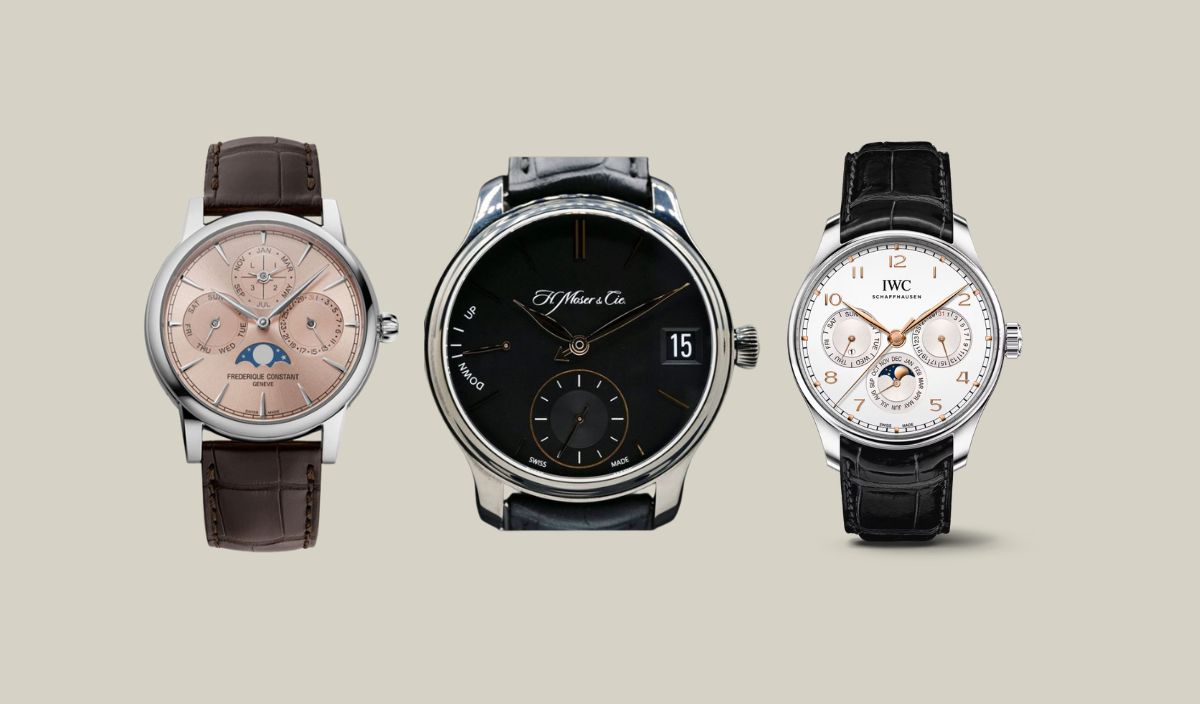
IWC Portugieser Perpetual Calendar IW344203

IWC Portugieser Perpetual Calendar IW344203

Considering perpetual calendars by IWC can reach the $60k mark (and let’s not even mention the $180k ultra-precise Eternal Calendar, accurate to 45 million years!), the reference IW344203, for around the $30k mark, is a reasonably priced offering. For the materials, features and design that you get for its price, you can’t overlook this option.

The Portugieser is one of IWC Schaffhausen’s oldest collections, so it makes sense for the brand to cement something as classic as the perpetual calendar into a cornerstone collection like this.

If you prefer a more understated approach, this design is modest yet incorporates Kurt Klaus’ work on the perpetual calendar from the 1980s.

It recognises the different lengths of the months and leap years, presenting the information concisely and with clarity against a silver-plated dial. The 42mm model features the date at 3 o’clock, the month at 6 o’clock, and the days of the week at 9 o’clock.

This is all thanks to the IWC-manufactured 82650, which offers a 60-hour power reserve. Meanwhile, the gold-plated hands add a nice luxurious touch to this design, as does the classic black alligator leather strap.

Frederique Constant Manufacture Perpetual Calendar
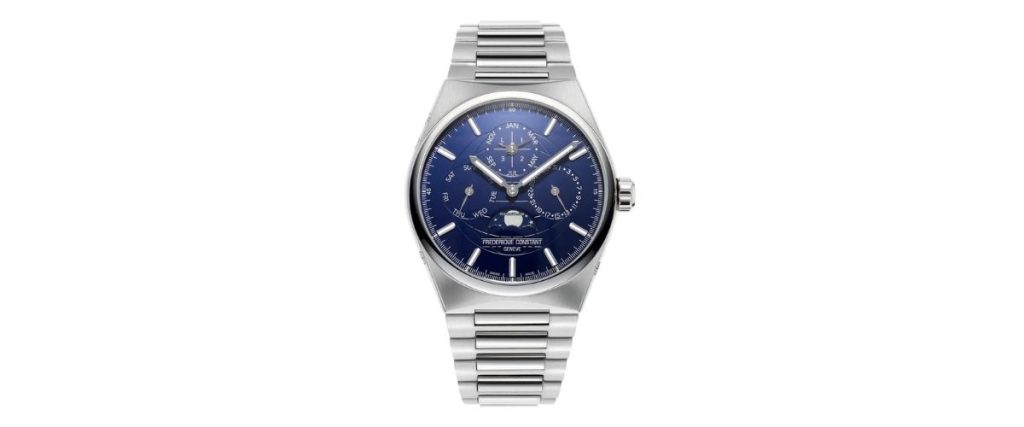
Frederique Constant Manufacture Perpetual Calendar

If you’re starting your quest to find an affordable but solidly built perpetual calendar, you need to take a look at the Frederique Constant Manufacture ref. FC-776SAL3H6, priced at just under $10,000.

It’s the no-brainer option for those looking to enjoy the qualities of the sophisticated calendar complication alongside compact case proportions.

The Manufacture Perpetual Calendar is a special watch because it’s powered by Frederique Constant’s 34th in-house movement – the Calibre 776. It boasts a three-day power reserve and showcases its performance via a soft silvery sunray salmon dial.

As one of the most affordable perpetual calendar watches on the market today, this model even offers a glimpse into the performance of the movement via an exhibition caseback.

It’s not the most highly finished movement. Still, the basic perlage and circular Côtes de Genève decoration bring together the traditional elements of a Swiss-made movement, complete with a 72-hour power reserve for occasions where you may want to alternate it with another watch.

H. Moser & Cie Endeavour Perpetual Calendar Black Edition
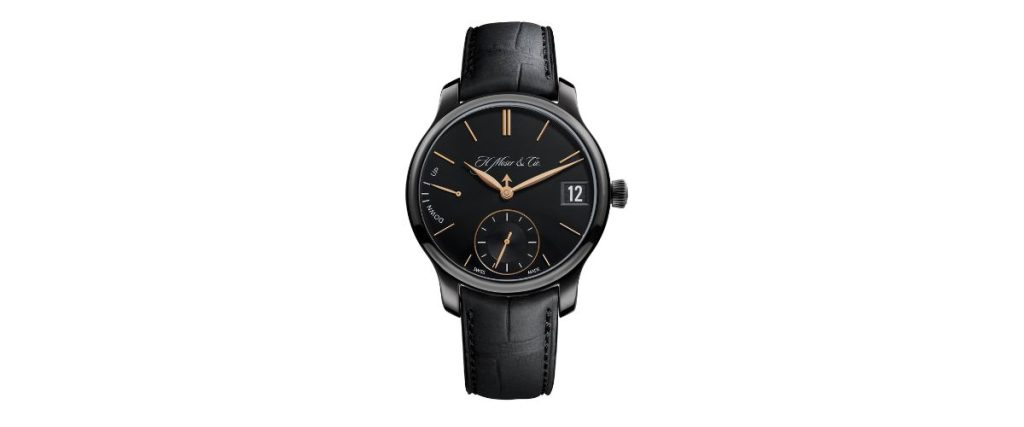
H. Moser & Cie Endeavour Perpetual Calendar Black Edition

Here’s the thing with the H. Moser & Cie Endeavor watch. It makes something so incredibly complex look as simple as possible with a contemporary, minimalist display.

Those less familiar with this complication could easily underestimate the movement working away inside its 40.8mm titanium case. But don’t be fooled…

This lightweight H. Moser & Cie Endeavour watch features a dial colour that’s closer to anthracite than black. Elegant leaf-shaped hands help perpetuate the flowing curvature of the case and the smooth finish of the rose gold details.

Suffice to say, the brand transforms this highly complex wristwatch, giving it an entirely new platform to showcase its qualities.

Even better value for money, the Endeavour Perpetual Calendar is powered by an in-house manual-winding movement, which displays a date window at 3 o’clock, a small seconds counter at 9 o’clock, and a power reserve indicator on the west side of the dial.

A closer look at the dial reveals a much smaller arrow hand, which is the tell-tale sign of something much more complex happening in the background. The arrow hand points to the month in the same way as you would typically read the hours. So clever and so worth its sub-$30k price tag.

Glashutte Original Senator Excellence Perpetual Calendar
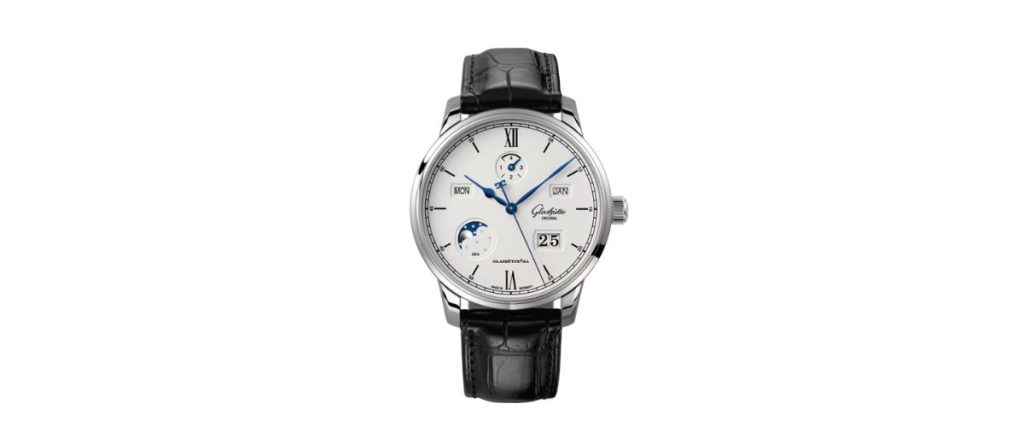
Glashutte Original Senator Excellence Perpetual Calendar

If you like Frederique Constant’s style of watch, the Glashutte Original Senator Excellence ref 1-36-02-01-02-71, priced at $23,800, may appeal to you for several apparent reasons. It features beautifully sculpted blue hands, needle-fine hour markers, and a legible railroad minute scale encircling the dial.

A moon phase display is located at 8 o’clock, represented in beautiful blue and silver tones, while on the opposite side of the display, you can access the month and a double-window date.

The Glashutte Original Senator Excellence Perpetual Calendar watch features classic Roman numeral hour markers at 12 and 6 o’clock and is powered by the Calibre 36-02 – a Glashutte Original manufactory in-house movement, complete with an impressive 100-hour power reserve.

Keeping track of the passing days of the month is made effortless thanks to the design of this perpetual calendar watch. The fact that Glashutte Original equips it with a robust stainless steel bracelet is another bonus since it can add a much-needed dressy finish to a suit or professional attire.

Breitling B19 Chronograph 43 Perpetual Calendar

Breitling B19 Chronograph 43 Perpetual Calendar

If you’re a fan of pilot watches, you’ll already be acquainted with the iconic Breitling Navitimer watch – the professional pilot’s wrist-worn computer from the 1940s and 1950s.

As is true with any revolutionary watch complication, the slide rule bezel has stood the test of time, and in this design, it combines the ability to calculate fuel consumption and average descent speeds with the ability to account for all days of the year, all for under $35,000.

The calendrical functions of the Breitling Navitimer B19 Chronograph 43 Perpetual Calendar are presented on an ice-blue canvas in a sunray effect.

The slide rule bezel is presented in a contrasting black hue, while the silver-coloured hour markers and hands have received a good dose of Super-LumiNova, allowing you to utilise the watch, even in light-limiting conditions.

The piston-style push pieces that control the chronograph functions, however, are what give this perpetual calendar a truly unique edge over anything else on the market.

Combined with that slide rule, this model, complete with a classic black alligator leather band, remains entirely unmatched thanks to its precision and subtly retro aesthetic.  

Tissot Tradition Perpetual Calendar

Tissot Tradition Perpetual Calendar

You can’t mention the name Tissot without thinking of its many affordable wristwatches. If you’re working on a strict budget, then the Tissot Tradition has to be your gateway into affordably luxury watch collecting, whether you’re looking for a perpetual calendar or not.

This is the perfect beginner’s timepiece, combining a robust 42mm stainless steel case, a clean white dial, and a quartz movement – yes, I said quartz! Only a few countries still stock this absolute steal, so your best bet is to find a preowned model in mint condition for around $500 or less.

To the left of the dial, you can track the months in a retrograde-style aperture. The same goes for the days of the week on the opposite side.

Meanwhile, the date is presented in a reversed arc, leaving a slender, faceted minutes hands to stretch right out to the edge of the dial, where an Arabic numeral sits at 12 o’clock.

Models from Tissot’s Tradition collection are all inspired by the brand’s earlier 1950s timepieces, which makes this perpetual calendar and its accompanying brown leather band a completely classic companion to pair with casual attire at the weekend or something more sophisticated by night.

Some of the most attractive details of this affordable perpetual calendar watch include a subtle guilloche decoration on the dial surface and a gently curved case with sculpted lugs.

Citizen Chronograph with Perpetual Calendar: BL5403-03X
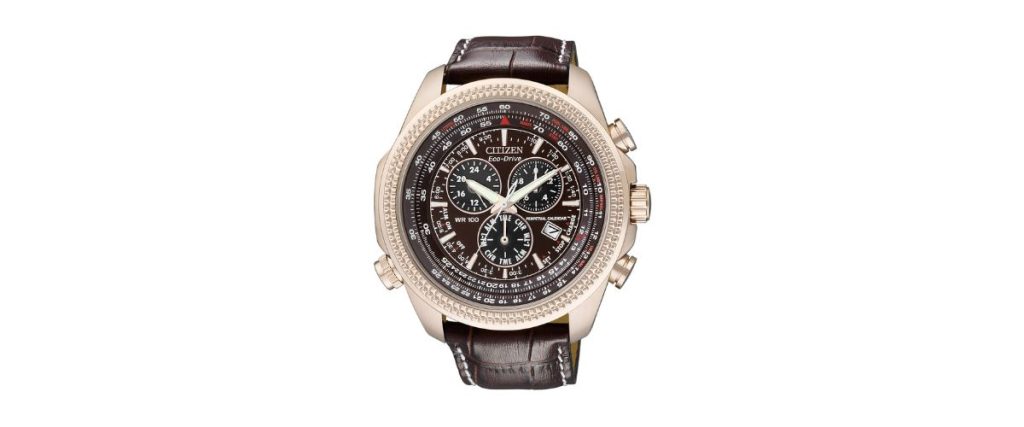
Citizen Chronograph with Perpetual Calendar BL5403-03X

The Citizen Perpetual Calendar reference BL5403-03X is not the simplest looking of watches. In fact, it could be too cluttered for some.

However, you can’t deny that Citizen makes some of the most functional and affordable tools on the market, and the brand is synonymous with accuracy, thanks to its solar-powered Eco-Drive technology.

The watch is designed by Citizen experts with one theory in mind – to obtain maximum information at a quick glance. A 100-meter water resistance makes this watch suitable for most outdoor activities, while the brown dial features splashes of red to aid legibility.

This watch is not just a perpetual calendar. It’s also a chronograph with a 1/20th of a second function and an alarm with a power reserve indicator displayed under its mineral glass.

Other features include a gold-coloured stainless steel case with a fluted bezel and an enduring brown leather strap featuring white contrast stitching along the edges. As one of the most affordable options on the list, it will cost you no more than $700.

Habring² Chrono Felix Perpetual

Habring² Chrono Felix Perpetual

There must be a link between salmon-coloured dial watches and affordable perpetual calendars because this is another option that won’t break the bank.

The Habring² Chrono Felix Perpetual is a tribute to some of the horological world’s most remarkable feats, including the work of Patek Philippe and Audemars Piguet.

The Austrian watchmaker has already achieved significant success with its Perpetual-Doppel, launched to commemorate the brand’s 15th anniversary, featuring a rattrapante movement.

The appeal of the Chrono Felix Perpetual watch, however, is the fact that it can house the complex calendrical features of the perpetual in compact dimensions of just 38.5mm.

Aside from a double-sealed crown to protect the movement, Harbing equips the watch with an exhibition caseback, allowing you to enjoy the engine in action. Even more enticing, the Habring² Chrono Felix Perpetual is a juxtaposition of two important elements.

One, the Dubois-Depraz-developed perpetual calendar module, and two, Habring’s hand-wound, mono-pusher chronograph movement, with components entirely sourced within Austria.

Conclusion

One would certainly hope that as your affluence grows, so too does your interest in more expensive watches and, thus, your thirst for horological knowledge. But things don’t always happen in the order you want them to. The heart wants what it wants.

If you’ve found yourself toying with the idea of a perpetual calendar but the price is holding you back, you at least have some of the most realistic and achievable options in this list to consider.

These high-end goodies of the watch world can become outrageously out of reach if you don’t hone in on your expectations a little. It’s the nature of the perpetual calendar’s complex design.

The intricate mechanisms inside these watches are nothing short of astounding, and many true horologists would argue that they are worth every penny.

But once you’ve bitten the bug, it becomes hard to ignore the urge to explore the perpetual calendar in different ways, shapes and…prices. My advice would be to set a budget of no more than $30k.

In doing so, you can enjoy all the wonder and allure of this complication along with a reputable brand name, but without overstretching yourself financially. If you find that the perpetual calendar is everything you need in a watch, there’s certainly a much higher level of craftsmanship to explore later down the line.

how to wear a watch

Your Watch, Your Way: How To Wear a Watch

Nina S

July 21, 2025

It wasn’t just a silly-ass fad like so many skeptics believed at the time. Wearing bracelets with clocks attached to them began as a joke, but by 1916, it had become obligatory for soldiers to wear a watch on their wrist, having realized the convenience of fob watches on leather straps.

It freed up the hands of military personnel, enabling them to coordinate their maneuvers more precisely whilst readily ascertaining the time on the frontline.

After all, rummaging through your pockets for a watch whilst navigating the chaos of the trenches never made sense. God forbid it may even have cost a few lives. 

Today, wristwatches sit on the wrists of most men. At least those who have good taste. In fact, I’d even go as far as to say that no men’s fashion accessory better perpetuates endless style than a wristwatch. No element of menswear inspires such intense passion and cultural following, either.

Indeed, there is a dedicated fan base for luxury wristwatches. They epitomize class and masculinity. And the history and complexity of these small but mighty instruments are subjects of great interest, too.

The hobby of watch collecting and, more specifically, the art of watch-wearing is an all-around mystifying, mesmerizing, bemusing, and highly complex subject. And it garners a lot of debate.

Off the back of all this are topics like “How should you wear a watch?” which we’ll cover today.

Why Wear a Watch? 

Good question. When we have instant access to the time with the swipe of a touchscreen or a quick voice command, why would anyone choose to wear a watch? Technology has certainly come a long way since man’s first-ever wristwatch.

There’s also no denying that wristwatch sales began declining when the smartwatch arrived in the 2000s.

By 2009, sales had reached such a low it led many naysayers to believe the wristwatch could ever make a comeback. But very gradually, they have been on the rise ever since.

I say steadily. Lockdown brought about a boom in watch sales, where a resurgence in designs like the integrated sports watch had those with the dispensable income practically throwing their money at collectible Cartiers and Rolexes left, right, and center.

At the end of the day, watches are one of those things in life that people will always attach sentimental value to. They serve a functional purpose.

And regardless of whether we spend a large proportion of our day with our phones in our hands or not, tilting our wrist to read the time is just about the most natural and instinctive thing to do.

Traditional wristwatches will continue to keep time and never lose power unless you take them off and leave them to run their power reserves down. You don’t need to plug them in. You don’t need to recharge them.

Perhaps that’s one of the reasons they’ve stood the test of time so well. They’re one of the few men’s accessories out there that can be worn and utilized every single day, regardless of the occasion. 

As well as all the obvious points above, wristwatches are often worn as status symbols. The earliest designs were expensive and reflected a high level of craftsmanship; for the most part, that remains true today.

One of the key developments in detecting social status amongst the human race was the switch from gauging wealth on physical characteristics like height and physique to determining status based on clothing and jewelry.

The emergence of pocket watches catapulted into a powerful social signal at a ridiculous rate, and only the rich could afford them.

Luxury timepieces are expensive pieces of jewelry still today, but in most cases, you get what you pay for. Nothing communicates “I’ve made it big” than a Rolex.

Even the more affordable watches on the market reflect a hint of personality and individual taste. Even with the mass production of watches driving prices down, quality wristwatches are still seen as the ultimate token of success and have maintained their status cache. 

Above all, because the history of the wristwatch is deeply routed in pursuits like flying, diving, and racing, some evocative designs just feel so important to wear in today’s society.

A good quality timepiece will look and feel timeless, constituting a perfect heirloom, not to mention pairing well with a range of clothing styles. 

How To Wear a Watch

So, now you know why people wear watches; the only thing left to do is master how to wear one correctly. And while, for the most part, there are no hard and fast rules based on how you should rock your favorite timepieces, there are some things to pay attention to, especially if you’re a beginner. 

Figure Out Your Preferences 

There are two basic facets to finding the right watch for your wrist. One is movement, and one is type. The movement relates to the mechanism that powers your watch. There are quartz-powered watches and mechanically driven ones.

Of the latter, there are two further sub-categories: manual winding and self-winding. The first requires you to manually wind the watch by hand each day, while the latter refers to a mechanism that relies on the movement of your wrist to give power to the watch.

The quartz movement is an entirely different movement altogether and generates power via a quartz crystal and battery. Either way, both types of movement require considerable research before taking the plunge.

If you’re looking for an easy, no-fuss timepiece, you may be more drawn to the more affordable quartz option. Alternatively, if you think you’d appreciate the complexity of the mechanical movement, there are many options on the market that range from affordable to high-end.

One of the advantages of the mechanical watch is that it’s often designed with an exhibition caseback, enabling you to view the movement whilst it performs. 

Watch type is an even broader category to explore. Dress watches sit in the more elegant category and often feature a simplified, pared-back dial layout comprising a two or three-handed format with a date window.

Some feature a small running seconds complication instead, while others may be crafted from precious metal or feature a gold coating to achieve a more exuberant and refined finish.

The sports category is diverse, with designs ranging from the dive watch to classic chronographs and even pilot watches. Pilot watches also run into the field watch category.

These wristwatches are developed for combat use, featuring a practical, legible dial and fabric straps made from nylon or the popular NATO Strap.

Dive watches offer the advantage of better water resistance, so you may opt for this genre of watch if you work closely with water or tend to do a lot of swimming or snorkeling in your spare time.

Likewise, the chronograph design is rather diversified. You can opt for anything from an elegant flyback complication to the sporty racing watch type.

Figuring out the correct type of watch is the lengthiest part of the process. Once you know what you like, there are just a few other things to consider. 

Sizing 

Like anything you wear, whether it be a shirt or a belt, a watch strap should fit you correctly and comfortably. Focus on two things here: the diameter of the watch (and, therefore, the size of the dial) and the watch strap.

There’s a simple and easy way to figure out your wrist size. Wrap a piece of tape around your wrist and measure your circumference.

A small wrist is anything measuring around the 6 inches mark. If you have a small wrist, stick to case diameters of around 34-36mm.

Tricky, I know, as there aren’t all that many watches for men sitting in this size range! Field watches, however, tend to offer the best scope for this case size. You could even stretch to around 38mm. 

Anything in the middle bracket will measure around 7-7.5 inches. This is the most common wrist size and is able to carry case sizes of around 39mm, 40mm, or 41mm. An 8-inch wrist is large and should be able to carry off a case size of around 44-46mm or even 47mm! 

For band sizes? You don’t want your watch strap or bracelet to be too loose on your wrist. Metal bracelets and the watch dial itself can become damaged if your bracelet is swirling around on your wrist while you move.

Likewise, a leather or rubber strap that fits too tight will leave indentations on the skin and can even cause your wrist to swell.

Always ensure you can fit at least two fingers down the side of your strap. This will allow your skin to breathe when you get hot and allow for any necessary expansion. 

Be Aware of Water Resistance 

I mentioned earlier that dive watches are best suited to those who frequently take to the water. But even if you’re not planning on swimming with your watch, you should be aware of the watch’s water-resistant rating.

Submerging your watch into water can cause damage to the internal mechanics of the watch. And water resistance doesn’t work how you’d imagine it to, anyway.

A water-resistant watch of 100 meters doesn’t necessarily mean you can take it to depths of 100m. Moreover, the water-resistant rating of a watch refers to the pressure it can withstand underwater.

For the most part, a 50-100M water-resistant watch will suffice for general day-to-day tasks. For anything water-related, you need to look for watches with at least a 200M+ water resistance. 

Which Wrist? 

Here’s the bottom line. You can wear a watch on your left or right wrist. Tradition has had us believe for far too long that there are set-in-stone rules about which wrist you can wear a watch on. In this day and age, anything goes. People can wear a watch on the left wrist, the right wrist, or both simultaneously.

Most connoisseurs advise that you should wear your wrist on your less dominant hand, and to an extent, this makes some practical sense.

A watch worn on the less dominant hand will avoid the most impact and damage. But really, it’s more about what feels more comfortable for you. Nobody will judge you, whatever wrist you decide to wear your watch on. 

Variation

If you can afford to expand your wristwatch collection to at least a couple of different styles, that’s great. While not all budgets will allow for it, building up a more diversified watch collection will allow you to easily tailor the right watch for a specific outfit.

If you only own one special watch, acquiring a daily beater to wear throughout the week and for everyday tasks like yard work is a good idea. And giving your favorite watch a break every so often may preserve it for longer since it won’t be exposed to as much damage.

In an ideal world, you’d have a watch for dining out, the gym, sporting events, and work. Either way, a small collection of reputable brands can be more beneficial than owning one ultimate gold Rolex. 

Pairing Watches with Outfits 

It’s important to find the right watch to match your outfit if you want to up your sartorial game. Luckily, there is no shortage of styles, as I mentioned earlier. 

You wouldn’t want to wear your favorite elegant dress watch on a choppy boat out at sea, just like you wouldn’t necessarily wear a dive watch with a suit (yes, James Bond did it, but it doesn’t mean you have to!).

Try to match your watch to the occasion in question. Think durable sports watches with athletic attire and something like a classic three-hander or calendar watch for the office. 

Lighter dials are also nicer for summer or for wearing during the daytime, while a dark dial will complement evening attire nicely. It also pays to match your metals with your materials.

If you can match the case material of your watch with your belt buckle or the hardware on your shoes, you’ll inevitably create a more cohesive look.

It’s thinking about all the extra special touches that make the difference, like pairing yellow gold with yellow gold or wearing a watch on a leather strap to match your leather shoes.

In the meantime, a discreet diamond dot hour track can add a touch of class and style to a formal outfit, but bear in mind that flashy diamond-set cases and large, gaudy gemstones can look like a cry for attention. Everything in balance is key. 

One way to add a whole load of variation to your collection is to have a supply of straps to rotate your watches with…

Wearing Watches with a Leather Strap

Leather straps are the most common type of watch strap. They give a wristwatch a timeless and elegant look. This organic, durable material finishes a timepiece off perfectly, especially the high-end dress watch.

There are three types of leather bands: genuine, full grain, and faux. The latter is made from plastic but resembles the look and feel of real genuine leather.

Genuine leather, however, is still affordable, while full-grain leather is the finest of all, promising a finish and a toughness that will last longer than any other. 

Wearing Material Straps on a Watch 

A material strap on a watch can transform aesthetics rather drastically. Take, for example, a classic-looking chronograph watch on a leather band.

Switching the leather band out for a material one like a striped NATO Strap or something similar can give the watch a strong field watch style in minutes.

However, the beauty of making these strap changes quickly and effortlessly is to opt for a watch with a quick-release strap option, which irradiates the need for using any strap removal tools. 

Wearing a Watch on a Metal Bracelet 

A metal bracelet is a complete class. It can elevate a sports watch or a chronograph in the simplest ways. Steel, of course, is the most affordable option, while platinum, gold, and silver can add a premium price tag to a watch.

Nevertheless, it’s all about what you prefer in a watch. If you want an ultra-refined statement piece to pair with your best attire, a gold or platinum bracelet will communicate that high-end feel effortlessly. However, a steel bracelet is incredibly corrosion-resistant and great for wearing daily. 

Wearing Watches on Rubber Bands 

Rubber watch straps are made from silicone or polyurethane. The former is the more expensive option and the one you’ll likely see on luxury dive watches.

Robust and supple, it’s a perfect option for wearing with sporty attire and for utilizing whilst partaking in outdoor pursuits. A rubber band will dry quickly and is perfect for those with athletic lifestyles. 

The Social Implications of Wearing a Watch 

You should be aware of social etiquette when wearing a wristwatch. Although a lot of traditions have very little relevance in our modern world, checking the time regularly on a watch can be seen as rude and impatient. After all, if you’re attending a special occasion, you should have no need to check the time.

Without even realizing it, you could give the host the impression you have somewhere more important to be. Some would even argue that you shouldn’t pair a dress watch with black tie attire, while others disagree and believe an elegant wristwatch finishes an outfit perfectly.

At the end of the day, it’s much more tactful to glance discreetly at your watch while tiling your wrist to sip a drink than to blatantly lift your jacket sleeve to check the time. 

Some FAQs: How to Wear a Watch 

If you’re still unsure whether you’re wearing your watch properly, these FAQs questions may help! 

Where Should a Watch Sit on the Wrist? 

You can typically feel your way to comfort when positioning a watch on your wrist. It’s common sense to position it slightly above the wrist bone but also in a way that it’s not too close to the hand or too far up the arm. 

What is the Etiquette for Wearing a Watch? 

The general rule of thumb for watch etiquette when attending a social event is not to check the time frequently on it. As functional as wristwatches are, there are some situations when using a watch to keep track of the time isn’t a good idea. 

Should You Wear a Watch Over Your Cuff? 

In short, no. You shouldn’t wear a watch over the cuff of your shirt or jacket. It’s the crime of all fashion crimes. And whilst I have expressed in this article that your own personal style is what you make it, there are some exceptions. And wearing a watch over your cuff is a complete no-no. 

Conclusion 

In recent times, the advent of the smartwatch, not to mention the use of laptops and the latest gadgets and gizmos, has made many of us believe the wristwatch may have met its demise. Yet, the timeless appeal of the luxury wristwatch persists. If anything, it’s more popular than ever.

While smartwatches combine the cutting-edge convenience of a color touchscreen with real-time health and wellness metrics and a host of GPS features, nothing beats the classic wristwatch. Luxury watches symbolise an age-old craft and have played a huge role in the evolution of timekeeping.

In addition to all the advice I’ve provided in this guide on how to wear a watch, the secret to enjoying your watch collection is simply wearing what makes you happy and wearing it with conviction.

The pointers above are just guidance. It will always be your prerogative on how you wear your watch, where you wear it, and what you wear it with! 

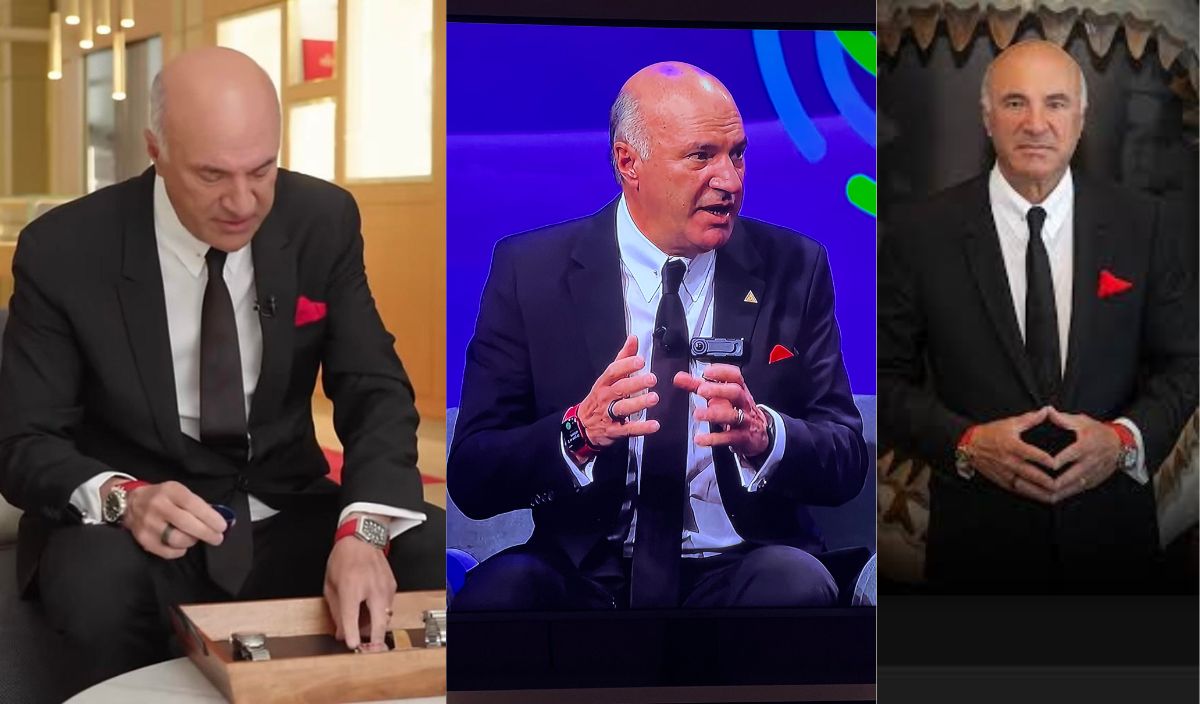
why does kevin o'leary wear two watches

Why Does Kevin O’Leary Wear Two Watches? 

Nina S

July 20, 2025

If only we all had deep enough pockets to afford a dream watch whenever we fancied. Budget would be of no concern, and our watch collection would be virtually bursting at the seams – a timepiece for every scenario, every outfit, every day. 

That’s a reality for stars like Kevin O’Leary, successful Shark Tank investor and TV presenter (with a net worth of around (ah-hem) $400 million).

The Canadian businessman can splurge on random luxury timepieces whenever his heart desires, rocking the two-watch-wearing trend and outright owning it. But why?

Kevin O’Leary doesn’t beat around the bush. Watch collecting is a disease, did you know? And once it gets under your skin, you have to live with it.

There’s no cure. At least, that’s how he describes his unapologetic addiction to flaunting some of the world’s most covetable timepieces against the sleeve of his $2,800 Yves Saint Lauren denim jacket. It’s simply not his fault. 

Watch addiction is an unimaginable force that sucks you down the horological rabbit hole at unstoppable speed, at least, if you have the budget for it in the first place. 

But despite the financial capacities that separate the business entrepreneur from people like you and I, he still has some great advice for enthusiasts from any walk of life, whether that be about which brands to invest your money in, the beauty of owning historically important watches, or avoiding buying crap. 

He even has his own views on watch etiquette and why he feels that wearing two watches is actually OK.

Who is Kevin O’Leary? 

Perhaps what acquainted Kevin O’Leary with the world of watches was the fact that he was a well-travelled child.

Thanks to his stepfather’s job, O’Leary got the chance to hop from one country to another, experiencing a diverse range of cultures, including Geneva’s watchmaking roots, whilst visiting the United Nations offices in Switzerland. 

By the time O’Leary landed back home from his world tour, the horological seed was already well and truly planted.

It also seemed the man was destined to make a ton of money, which conveniently coincided with his love of watches, enabling him to explore his passion for watchmaking to levels many people could only dream of. 

The man has always had a sixth sense for identifying areas of increasing value, seizing opportunity after opportunity, and the same can be said for his ability to collect watches, too.

First and foremost, Kevin O’Leary is a successful business investor. His first big break came when he invested $10,000 in an educational software company. That company went on to sell for $4.2 billion. Enough said. 

Then, there is O’Leary’s cheffing skills, which he puts to use on his YouTube channel, garnering a huge following for his role as “Chef Wonderful”, where he brings to life cuisines from all over the world through his love and knowledge of cooking.

Aside from being passionate about photography and knowing a thing or two about fine wines, you can also find O’Leary submerged in his love of music. 

He’s a keen collector of guitars and, over the years, has become an accomplished musician. As far as I’m aware, he can’t play more than one instrument at any one time, but he can certainly wear two watches.

Kevin O’Leary Is a Big Watch Fan

Kevin O’Leary is a keen watch collector with a fair few opinions to share on all things horology. His watch collection is very sacred to him. In fact, he has expressed wishes to be buried alongside his watches (it seems you can take it with you!). 

He doesn’t view his watches as assets, either. (Could he be the only loaded celebrity who actually sees the art and meaningful sentiment behind a watch for what it really is?).

His collection, which comprises novelties from the likes of Audemars Piguet, Grand Seiko, Patek Philippe, and Rolex, to name just a few examples, is split across several safes all over the world, and he won’t promote a single thing when filming Shark Tank. 

Even more endearing is that he claims he’ll never sell a watch, not that he’ll ever need to!

Kevin O’Leary spends his time sniffing out unique collectibles, the rare gems that only the affluent folk of society can afford, but he also has a lot of respect for brands like Seiko, which churn out large quantities of watches year by year. Indeed, it’s merely about a particular brand, as such. 

Moreover, it’s whatever watch conjures an emotive response within him and triggers a connection. Suffice to say, this man has been collecting luxury wristwatches for over 50 years, and lives by some important rules.

One, of course, is his right to wear two watches at the same time. Other advice includes buying watches to celebrate the small wins in life, no matter how insignificant. If you can, do it, he says. 

Any watch you buy to mark one of life’s milestones is a watch with sentiment and will therefore evoke some level of emotion when you wear it. Another piece of O’Leary’s advice is to invest in a big brand, if you can. That way, you can move up the horological ladder to where you eventually want to be.

According to the successful business person, you should also aim to diversify your watch collection wherever possible. In doing so, you can experience the whole gamut that the horological industry offers.

And, if you have the know-how and skill to understand the context behind a watch, you can use this experience when selecting historically significant watches. 

Lastly, his view on wearing two watches at any one time runs much deeper than simply owning too many watches. More specifically, his decision to do so stems from his need to keep in direct contact with his many investors.

He uses his watches to retain open communication channels and uphold meaningful connections with his overseas teams. But you’re wondering which watches could possibly sit side by side with one another and still look good, right?

A Glimpse Inside Kevin O’Leary’s Watch Collection

It’s safe to say at this point that Kevin O’Leary doesn’t buy into hype watches. Moreover, he has a deep understanding of the world of horology.

He knows what makes him tick and prefers to spend his money on meaningful designs that either play a significant role in his day-to-day life as one of the world’s most successful business people, or those he has grown up with. 

Vacheron Constantin, for example, is a brand that has been in his life since the young age of just 14, hence he’s now the proud owner of the blue-dialed Overseas watch, which he loves very much. 

And the thought process behind putting two watches on in the morning does seem to follow some sort of method, too, usually starting with the “should I wear gold or steel” deliberation and working outwards from there (dial colour, strap material, and so on and so forth).

O’Leary wears everything from the Omega Speedmaster to the F.P. Journe Chronomètre Bleu. When pairing watches together, combinations including the Patek Philippe Nautilus and the Audemars Piguet Royal Oak often make an appearance as a duo. 

Both are highly covetable sports watches with mass appeal and a huge wrist presence. It has become imperative to O’Leary, particularly over the last few years, to restore the utility of a wristwatch to its full potential, especially following the advent of the smartwatch. 

O’Leary still considers watches a piece of art, but the fact that they can help keep track of New York time and Dubai time makes them even more indispensable when juggling multiple time zones like he does.

Why Are Watches So Important to Kevin O’Leary That He Wears Two?

Back in 2023, Kevin O’Leary garnered a lot of attention when he rocked up at the Benzinga Fintech Deal Day & Awards wearing two watches. When quizzed on the decision to do so, he simply replied that if you don’t wear a watch, it loses its soul. 

Clearly, the TV star has many watches to rotate within his collection, and this is one guaranteed way to ensure each one gets some wrist time.

But since then, we’ve discovered a lot about the man as a watch connoisseur and have come to understand that his watches mean much more to him than simply finishing off an outfit. 

New York and Dubai are where all the money is, so it makes sense that Kevin needs to juggle time zones in order to conduct important business meetings abroad, and part of that process is to navigate multiple time zones. So why not just wear a GMT, you ask?

Well, O’Leary is not the only one wearing two watches. The “double wristing” trend has been taken up by the likes of Richard E Grant and Prince William.

It’s not exactly a new concept. In fact, it’s been around for quite some time, with historical figures such as politician Fidel Castro and NASA Dr Edgar Mitchell among those who have adopted the trend. 

For all of the above, wearing two watches has been about managing two times at once. Fidel Castro wore a Submariner alongside a GMT, enabling him to track three time zones at once easily.

Likewise, Richard E Grant wore the Cartier Santos and a Breitling Navitimer at the 2023 BAFTAs to memorialize his late father, setting one watch to Eswatini time.

Is It OK To Wear Two Watches?

And here’s where one of the biggest disagreements amongst the watch-collecting community exists – is it OK to double wrist? It’s a practice more commonly seen when combining a smartwatch with a traditional analogue.

This way, a collector can still enjoy their classic timepiece while taking advantage of an entire suite of smartwatch apps and features. 

The divisive argument for whether you should wear two watches or not simply lies in whether one is broadminded enough to accept that it looks OK.

For some double wristers, wearing a smartwatch and a traditional wristwatch is not even the same thing, since one is more of a high-tech wrist-worn computer, and the other actually displays the time. 

Those people would argue that they’re simply wearing one watch.

Whatever way you look at it, wearing two watches is a personal choice, and the opinion on this topic varies from one collector to another. One thing is for sure, however. It’s not a common fashion choice, and a larger portion of watch enthusiasts are not doing it than doing it.

Reasons for opting out of the trend include the belief that wearing two watches can be cumbersome and will undoubtedly leave one watch redundant, since you only need to check the time on one dial.

Still, it’s a style choice for some, and it just so happens that some of the most devoted and affluent collectors are doing it.

Reasons Why People Wear Two Watches at the Same Time and How to Double Wrist Stylishly

As mentioned earlier, those who double wrist have their own personal reasons for doing so, just as some will prefer to wear their wrist on their right hand, rather than their left. 

The majority of evidence in favour of wearing two watches seems to lean towards the ability to track two or three time zones at once, while other reasons could be down to a collector owning too many wristwatches.

Either way, if you were seriously contemplating wearing two watches like Kevin O’Leary does, there are things to consider and ways to do it…

It makes sense that wearing two watches of the same size can feel a little odd, almost like you’re trying to quell some OCD urge to balance weight and proportions out across both wrists. The often-desired way to double wrist is to wear two watches of different sizes. 

That way, one can dominate the other and become the main focal point of your attire, celebrating diversity. Others would argue that wearing two watches of the same size is better, since it’s pretty normal for one particular size to sit well on a person’s wrist. And since both wrists measure the same size, why should one wrist be unhappier than the other?

Before we move on, another argument for wearing two watches springs to mind whilst I write this. Creating contrast when double wristing is one thing, but you may require the use of two complications at the same time. Yes, this also circles back to O’Leary’s use of wearing two watches for timezone-tracking. 

He likes to be able to use a classic three-hander and a GMT watch at the same time. But suppose you’re measuring laps at the 24 Hours of Le Mans, but also need to know when to call home and wish the kids “goodnight”? If you don’t happen to own a watch that combines your two most important complications, there’s certainly an argument for wearing two watches at once.

So, Why Does Kevin O’Leary Wear Two Watches?

If you’re Kevin O’Leary, you believe that watches serve very functional purposes, even in today’s society. Yes, complications like the classic GMT allow you to track up to three time zones simultaneously (depending on the model), but if you have as many luxury timepieces as he does, why wouldn’t you utilize them simultaneously? 

He’s also a passionate watch collector, and no amount of convincing a connoisseur that they don’t need to wear a watch when they’re determined to, will sway them not to. 

He’s Kevin O’Leary – he can do what he likes! Being a passionate watch collector, he sees the value in supporting manufacturers that resonate with his values, and sometimes that may spark the urge to promote a brand if he likes them hard enough.

The businessman knows how to look cool and stylish, and let’s face it, he owns some of the most iconic watch designs in history. 

Lastly, O’Leary believes that you run the risk of your watches “losing soul” if you don’t wear them regularly enough. If anything, it’s nice to see someone as successful as him willingly getting the wear out of his watches, rather than buying a hype watch to wear as a one-time statement piece.

Conclusion    

Say what you will about Kevin O’Leary, but the man sure has good taste in watches, from elegant Vacheron Constantin complications to bold status symbols like the Royal Oak and Nautilus.

But his deep-rooted passion for intricate in-house design and authentic craftsmanship seems to set the Shark Tank star apart from other millionaires. 

For O’Leary, a watch has to tell a story or serve as an emotional link to his past endeavours to deserve a place in his ever-growing collection.

And if you were expecting to see some of his most prized possessions fetching thousands of dollars at auction one day, think again. He’s taking them with him, and he’ll be wearing two!

best field watches under 1000

Mission: find field watches under $1000 that don’t look like cheap trash on the wrist. Easy-peasy. If you’ve been typing things into your Google search like “affordable field watches” or “What are the best cheap field watches on the market?”, you’ve stumbled upon this blog post by no mistake.

Accessible field watches are everywhere on the market; you just need to know where to look. The problem is that there’s still a huge stigma circulating in the watch world that budget watches are no good. It simply isn’t true.

Yes, buying a high-end luxury field watch will ensure a premium look and feel, offering a blend of superior materials, better resistance to the elements, and an overall better quality build.

But what if I were to tell you that you can still find good resistance, legibility, performance and reliability in a budget field watch that will cost you no more than $1000?

If you’re scoffing at the idea, stick with me for another couple of minutes. I’m going to prove that affordable field watches are out there, that they’re a thing, and that you can have one for less than a rack.

Why Everyone Needs a Field Watch

The very essence of a field watch is its simplicity. This watch style has a rugged charm and no-frills design that makes it perfect for quickly glancing at the time, no matter where you are or your situation.

In fact, it’s easy to see the qualities that both a pilot’s watch and a field watch share. Both are robust and highly legible, focusing on the essentials while retaining a disciplined aesthetic.

Above all, field watches make for great everyday watches because their designs focus on reliability and consistency. They’re often made from high-grade materials like steel, titanium or ceramic and are fitted with mechanical, quartz and solar-powered movements, giving modern-day collectors lots of variation.

Although we often think of the fundamental basics of a field watch as having an Arabic numeral hour track, modern-day iterations can include sector dials, stick indexes, and even California dials.

Above all, however, field watches should live up to the demanding scenarios they may find themselves in, so toughness, luminosity and a suitable level of water resistance are all important.

Now that we know what field watches should be, let’s take a look at what we can get for under $1000. Here are my top 11 in no particular order…

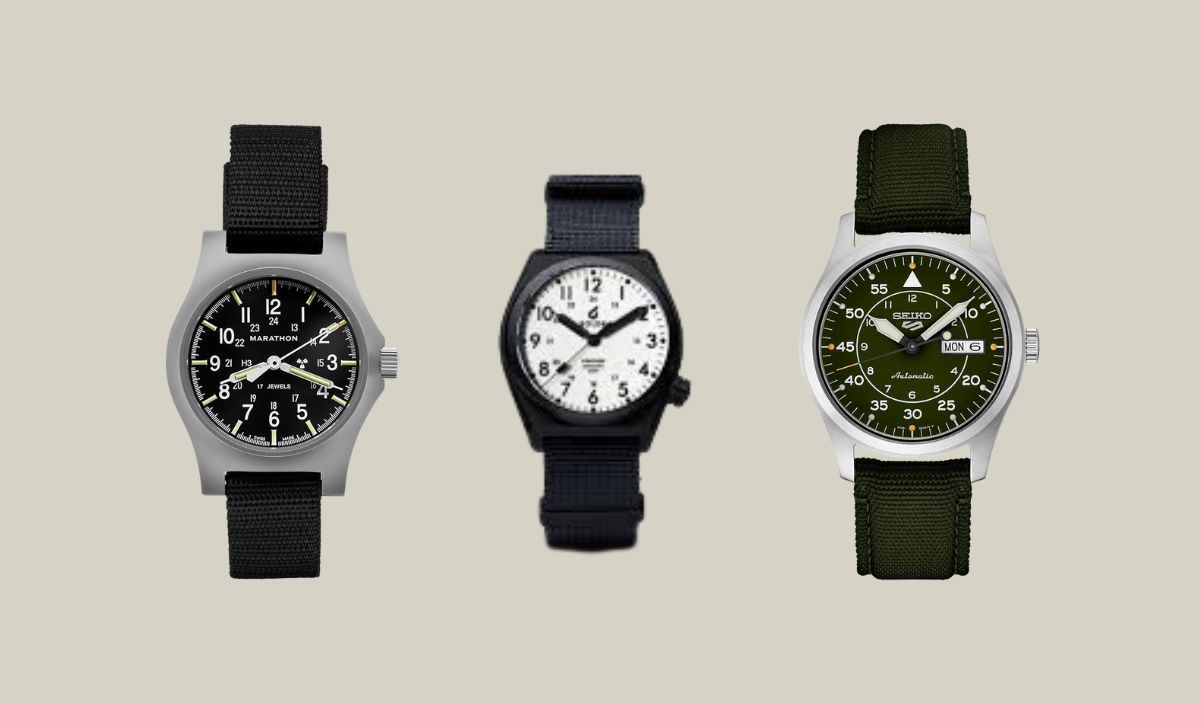
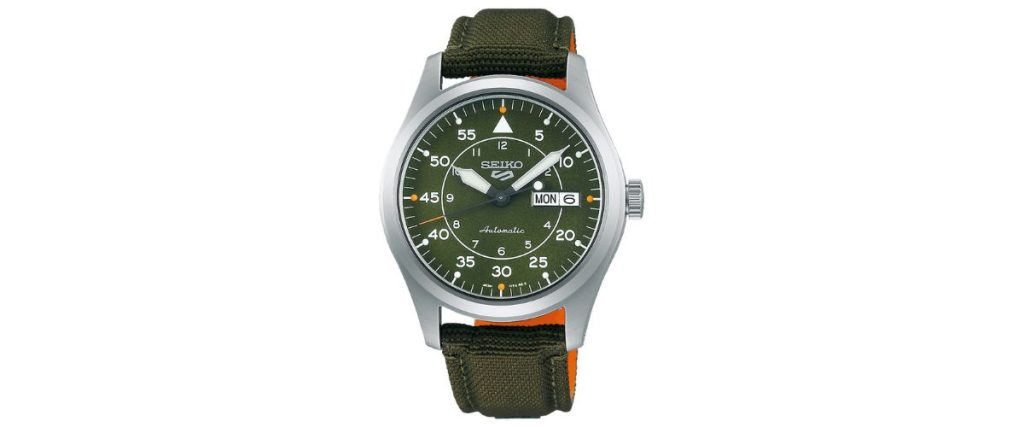
Seiko 5 Sports Field Sports Style SRPH29

Seiko 5 Sports Field Sports Style SRPH29

The 5 Sports Field watch by Seiko is rugged, affordable and straightforward. Most Seiko watches offer these qualities, but those models within the brand’s 5 Sports watch collection recall design features from classics of the past.

You can expect all the bang-for-buck attributes that you normally would from any Seiko watch, but this time in a compact 39mm diameter for smaller wristed males, complete with the archetypal field watch aesthetic.

This SRPH29 reference features a khaki green dial, an inner 12-hour track, and luminous-coated double-digit minutes around the outer scale. I particularly like the subtle shots of orange at the cardinal points around the minute track, and at the tip of the central seconds hand.

They marry nicely with the inner lining of one of Seiko’s military-like nylon straps. If you were worried that Seiko was leaving its roots behind by focusing on higher-priced models as of late, then don’t be.

There are still plenty of sub-$500 models like this one that promise surprising value for money, and with the variation you need to kit your watch collection out with different colours, case sizes and strap materials to boot.

Seiko even equips this watch with a see-through caseback so that you get to enjoy the workhorse Calibre 4R36 as it performs.

Marathon General Purpose Mechanical

Marathon General Purpose Mechanical

Field watches have always been associated with compact case proportions, making them appealing for those with less endowed wrists. The Marathon General Purpose Mechanical watch is an excellent example of such, taking up residence on the wrist with a discreet and unimposing 34mm diameter.

Even so, it compromises on nothing in terms of quality and performance. This is a superb choice for a mechanical under the $500 bracket, and a rare find. Its design is purpose-built for any terrain with a spec list that you’d generally associate with a higher-priced bracket.

The key takeaway is that Marathon is the sole official supplier of watches to the US Armed Forces, fortifying its reputation in crafting some exceptionally well-built field watches for everyday use.

This model is crafted from high-impact composite fibreshell and houses a Seiko movement. You can’t go wrong.

BOLDR Venture Blue Moon

BOLDR Venture Blue Moon

Seriously, find me another automatic field watch with a full-lume dial like the BOLDR Venture Blue Moon. You simply won’t. This field watch for under $1000 looks like a standard white dial tool with contrasting black elements that enable you to read the face wherever you are.

But, BOLDR notches up the legibility factor with a dial that fully illuminates in the dark, plus this watch feels light on the wrist thanks to its 38mm titanium case.

Like some Seiko watches, the Venture Blue Moon features a crown positioned at 4 o’clock to avoid snagging on clothes and promises 200-meter water resistance too. Additional features include a set of custom-made black hands that stand out with conviction against the luminous blue dial at night, as well as a Japanese movement, a sapphire lens, and a black polyester strap.

Hamilton Khai Field 38

Hamilton Khai Field 38

Of course, Hamilton had to make it onto this list with its Khaki Field watch design – a mechanical field watch for under $1000. It’s a simplified three-hand display with an outer 12-hour dial and inner 24-hour scale that captures the essence of the trench watches of yesteryear and harkens back to the brand’s involvement in crafting and supplying watches to the United States Armed Forces during WWII.

I particularly love the use of beige lume in these designs. The material serves to capture the vintage radium lume that would have been used during the advent of the early field watch during WWI.

Hamilton kits the Khaki Field watch out with the H-50 Calibre, a no-date movement with an extended power reserve of 80 hours. The watch completes its look on a khaki textile strap and an elongated screw-down crown.

Newmark 52 Field

Newmark Watch Company is a British heritage brand that specialises in reimagined classics. The brand’s catalogue comprises vintage-inspired skin divers, distinctive field watches and classic chronographs – the Newmark 52 of which is a field watch.

It boasts a striking ivory dial that brings vintage nuances to the forefront. To look at the watch, the Newmark 52 doesn’t look like much. Yet the simplified dial with subtle splashes of blue from the heated blue hands brings field watch credentials to the forefront.

Both the case and dial of this sub-$1k field watch nod back to the military companions of the 1950s, while inside, a modern quartz movement keeps track of time accurately with every second.

Casio G-Shock

Casio G-Shock Watch

Casio G-Shocks have a strong but lightweight carbon core, making them useful for just about any situation you can think of, whether spending a day at the beach or wading through knee-high mud.

With next-level digital technology, this field watch offers Bluetooth connectivity housed in a lightweight module with solar-powered functionality. Surprisingly, despite its beefy, masculine aesthetics, this G-Shock is relatively slim, measuring a thickness of just 12.9mm.

Perhaps a G-Shock was not what you had in mind when you first considered a sub-$1000 watch, but when you weigh up its rugged, ultra-resistant, lightweight and legible design, paired with features like a GMT complication and alarm, it’s certainly a watch that extends far beyond the basic field watch functionality.

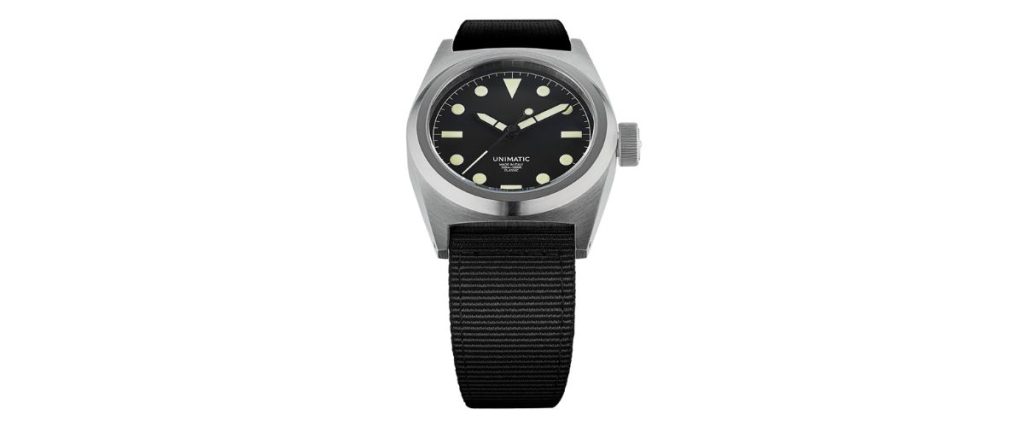
Unimatic Modello Due U2 Classic – UC2

Unimatic Modello Due U2 Classic – UC2

Unless you’ve been practising self-isolation since lockdown, you’ll have heard of the watch brand Unimatic. In fact, the company was founded in 2015, but the last few years have been the best for Unimatic.

It tends to take a stark, minimalist approach to creating tool watches, and evidence of that can certainly be seen in the design of the Unimatic Modello Due U2 Classic – UC2, which you can buy for well under the $1000 mark.

This is a made-in-Italy field watch, just like all Unimatic watches, and features pale green Super-LumiNova-coated indexes and hands against a rich black dial for complete contrast. 

This 38mm model features a beefy, easy-grip screw-down crown to help the case uphold its impressive 300M water resistance, while on the back of the case is an engraving of the ‘Rosa dei Venti’ logo that conceals the Seiko NH35A automatic movement, complete with a 41-hour power reserve.

Expedition Field Post Solar 36mm Recycled Fabric Strap Watch

You can’t beat the Timex Expedition Field Post Solar watch. It’s a win-win scenario, whatever way you look at it. It’s cheap, it ticks all the aesthetic boxes of a field watch, it’s powered by a solar quartz movement, measures a true-to-era size, and comes in this slick black-coated stainless steel case. \

To make the decision easier, this eco-friendly watch even comes on a recycled fabric strap in a dark sand colour, which sets off the beige faux-vintage lume on the hands and triangular hour pointers. For its price point, this has to be my favourite field watch on this list.

It has the 24-hour inner scale, 100 meters of water resistance and a screw-down crown and caseback. Plus, Timex’s track record in creating quality timepieces for very reasonable prices is second to none.

If you want the reassurance of a solid name, combined with a design that manifests all the quintessential features of a field watch, the Expedition Field Post Solar is a no-brainer.

Studio Underdog 02 Series Steffany Blue

Studio Underdog 02 Series Steffany Blue

Pink Lemonade and Steffany Blue. They sound like bizarre dial colours for a field watch, but field watches they certainly are.

These colours just work. The blue-green shade of the pastel dial in the Steffany Blue iteration is going to garner some attention, not just for its colour but for the pure fact that the 02 Series watch is such a playful twist on the classic field watch, yet it totally looks like a field watch.

If you’re undecided at this point, take a break and come back to this watch. I guarantee you’ll fall in love with it. It’s a spin on the Tiffany dial, surely? And Studio Underdog has daringly brought it to the field watch. This brand knows what it’s doing.

Let’s not forget it was elected by the British Ministry of Defence to make an accurate and reliable watch for the armed forces during WWII.

The 02 Series Steffany Blue is a sandwich dial with a base layer coated with custom-made Super-LumiNova, with a 1mm sapphire disc mounted to its surface. Interestingly, the hour markers, minute track, and brand name are all printed onto the surface of the sapphire disc.

When the two dials are affixed to one another, they create the impression of a much thicker, chunkier dial that can entrance with its sense of depth. These printed details appear to float atop the dial in the daylight, casting shadows onto the lower base.

Hands down, this is the most intriguing field watch of the lot. You get a tried and tested Sellita movement with this watch and a smooth black band made by The Strap Tailor.

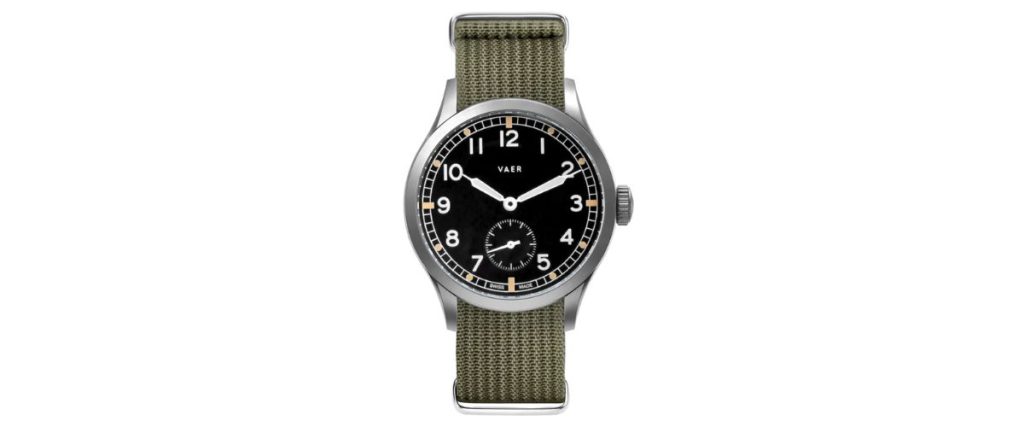
Vaer A5 Field Watch

Vaer A5 Field Watch

https://www.vaerwatches.com/products/a12-dirty-dozen-swiss-automatic-40mm

Inspired by the iconic Dirty Dozen watches of yesteryear, the Vaer A5 Field watch measures a sweet spot size of 40mm, making it a great choice for males with average-sized wrists.

As a respectful homage to the Swiss-made Dirty Dozen design, the microbrand equips the A5 Field Watch with Swiss-made components, accurately capturing the historically relevant design.

A threaded screw-down design ensures the case stays watertight and airtight, and as part of the brand’s “ocean to office” motto, two interchangeable straps are provided. These comprise a water-ready strap and a Horween leather strap option.

The cathedral hands on this dial give the Vaer A5 watch a Hamilton-type look, with the small seconds sub-dial serving a very practical purpose, donating more space to the two main timekeeping hands and achieving a simplified, minimalist display.

Dryden Heartlander Automatic 38mm

Dryden Heartlander Automatic 38mm

The Dryden Heartlander has a president bracelet. Enough said. This field watch demonstrates thoughtful attention, since the bracelet also features quick-release spring bars and a nice taper, allowing the watch to fit snug on the wrist. It has a somewhat refreshing versatility to its design.

Take, for example, the range of dials you can get in this series. From the “Traditional Field” watch style as seen here, to the “Classic Sport” style with the 3-6-9 markers, there is consistent attention to detail across all the models.

The Heartlander is powered by a Miyota movement, balancing performance with style perfectly. The addition of the President bracelet here spoils us. It’s a beautiful touch. The options are endless when it comes to experimenting with this watch.

You can even switch out the bracelet for a sportier NATO if you want to achieve a somewhat more military-esque look. Lastly, the injection of soft gold gilt hues is a delightful addition to this Heartlander watch.

They open up more options for coloured canvas strap configurations and ramp up the detailing across the black display. Dryden also equips the watch with an arrow-shaped hour hand, a sapphire crystal glass front, and 100M water resistance.

Conclusion

The thing that makes a field watch a field watch is its simplicity. Strip a watch back to basics, and you have a legible, easily readable dial, a no-nonsense case, and the ability to pair that watch with pretty much everything in your wardrobe.

Some brands specialising in the field watch have military roots like Longines, Hamilton, Omega, and Jaeger-LeCoultre. You’ll recognise some of the names in that list from the beloved Dirty Dozen watches, from which many modern-day field watches take inspiration.

But you seldom find field watches made by those brands for under $1k unless you shop on the pre-owned market. The good news is that many other brands produce affordable field watches today, whether they be microbrands or names synonymous with accessibility, like Timex.

And while the archetypal field watch is a black dial with white Arabic numerals and highly visible hands, housed in a compact sub-40mm case, there is no one definitive rule.

Today, field watches come in all sizes and dial colours, many of which buck the trend with unconventional case materials and straps. Hopefully, these options have given you some food for thought while planning your next purchase.

best dress watches under 1000

The term “dress watch” sounds very simple and self-explanatory, and because of this, it’s very rarely elaborated upon. Watch wearers, whether new to the game or experienced, are expected to know what one is and how to pick a good one without any real guidance.

Dress watch offerings across the watch market are vast, and there are no official standards to differentiate a decent one from a bad one. And there are so many opinions and schools of thought surrounding the topic of dress watches, too. It’s an absolute minefield.

Some believe a dress watch should be pure and simple, and that no formal outfit is complete without one. Others believe you shouldn’t wear one at all, since checking the time when attending a special occasion is considered rude and distasteful.

But in my opinion, watch-wearing traditions have evolved so much over the decades that in this day and age, anyone can and should be able to wear whatever makes them happy.

Of course, the Cartiers and the Pataks of the world are considered the cream of the crop when it comes to quality dress watches, but what of those in the low-to-mid-tier section? What about the dress watches priced under $1000?

While this guide will list some dress watches that you’ll have no doubt heard of, I’ll also be shining the spotlight on some lesser-known brands. The truth is, there are some micro brands out there producing dress watches and bringing stuff to the table that even hard hitters would struggle to compete with, so they deserve a mention on this list, too.

Of course, automatic watches within this price bracket give you more bang for your buck, but quartz-powered dress watches are also worth some consideration, so I’ve included both! 

So, without further ado, let’s get stuck into this list of top 10 dress watches under $1000. 

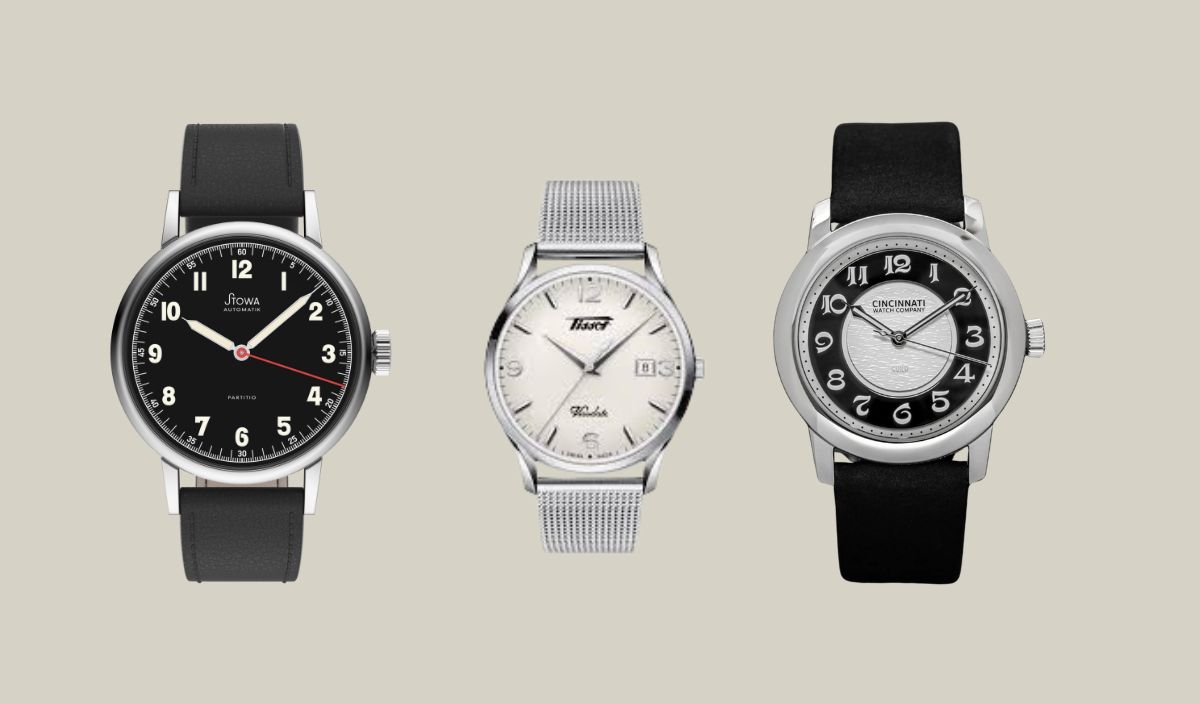
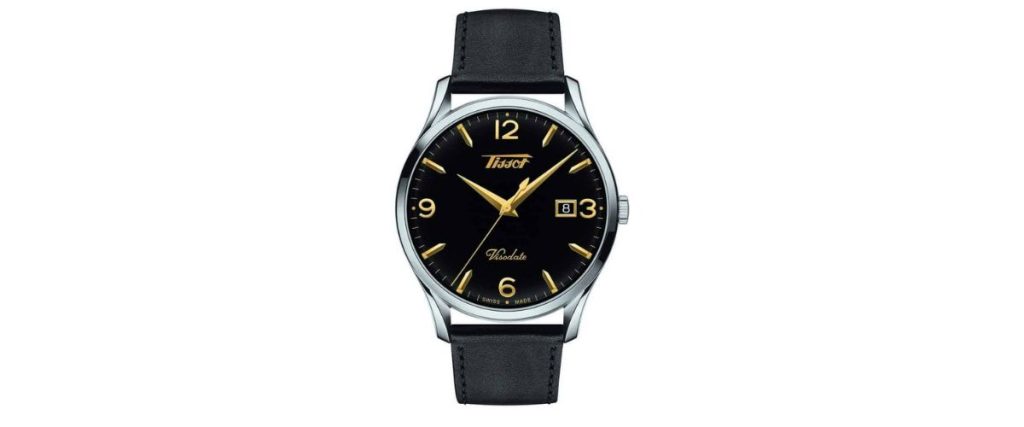
Tissot Visodate

Tissot Visodate

You only need to take a quick glance at the Tissot Visodate to realise that its design takes directional cues from a 1950s classic.

It has the curved dial and the domed sapphire glass that give a subtle vintage vibe, providing a scratch-resistant and anti-glare canopy over the dial, including its Day-Date complication at 3 o’clock.

And without being ostentatious, it exudes a distinct retro flavour that you can pretty much pair with any jeans and shirt combo. The Tissot Visodate is no longer available to purchase from the brand’s official website, but many Tissot stockists still have these models available to order.

Stowa Partitio Classic Black

Stowa Partitio Classic Black

If you quite like the look of Nomos watches but find them a little pricey, Stowa has a great alternative, named the Antea. Still, it’s slightly over budget, with a price tag of around $1,100, so, for something a little more affordable, take a look at this alternative dress watch from Stowa.

It’s called the Partitio, and comes in this “Classic Black” iteration, with legible Arabic numeral hour markers in a subtle cream colour, giving it a slightly vintage edge. The hands, too, have been treated with the same Super-LumiNova material, nodding to 1930s watch styles with their syringe profile.

For under $1000, this Stowa watch comes fitted with an automatic movement made in Switzerland. It also measures a nice and compact 37mm diameter, making it an ideal option for those wanting to avoid large-sized dress watches this summer. 

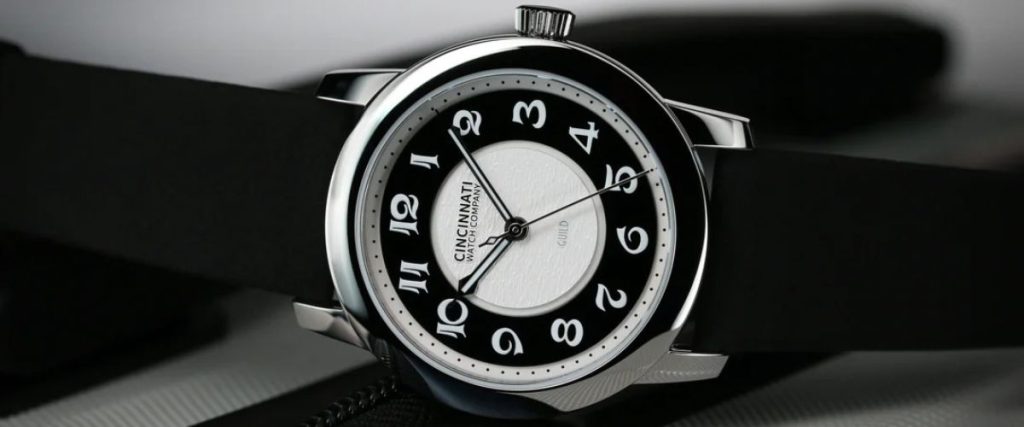
Cincinnati Guild Mechanical

Cincinnati Guild Mechanical

I’ve touched on Cincinnati Watch Company before. And if you haven’t yet heard of this brand, go check it out, because it’s an American brand making really nice watches for an affordable price.

What’s more, it’s not even trying to be anything other than itself. Its designs take inspiration from the golden era of mechanical watchmaking within this mid-western town in Southwest Ohio – an area that had a powerful voice in the industry during the 20th century.

After all, the town was once home to Gruen watch company, where Cincinnati Watch Company now resides.

The Guild Mechanical is an unusual-looking watch that will undoubtedly appeal to you if you have an eye for unorthodox designs. The 38mm steel watch features an inner white dial and a black hour ring, framed by a discreet minute track.

But here’s where the design gets even more interesting, because for under $1k, you’re not just getting any Swiss movement, you’re getting a Sellita Elabore movement that has been hand-assembled in-house at Cincinnati Watch Company. It’s a pretty interesting concept to add to any collection, especially one lacking a quirky dress watch. 

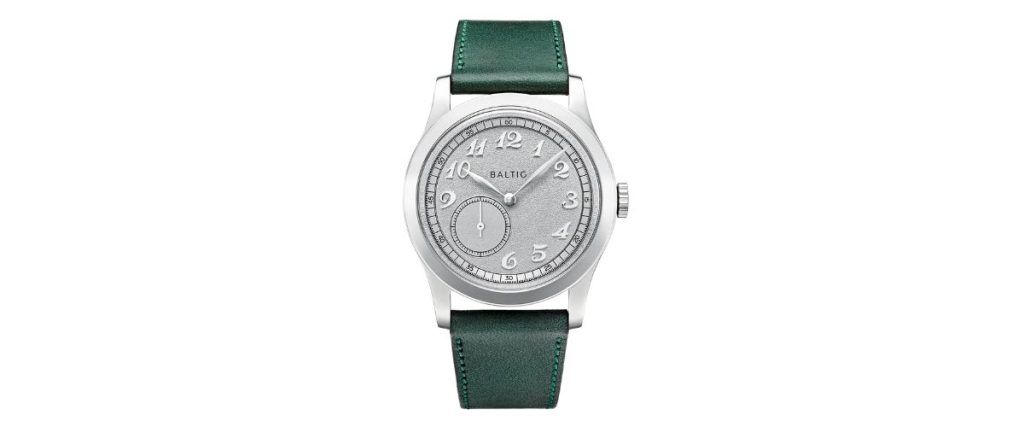
Baltic MR01

Baltic MR01

Baltic is an influential micro brand based in Paris. When I mentioned earlier that some micro brands are producing affordable dress watches with techniques and design elements that many larger brands wouldn’t even attempt, the MR01 by Baltic is what I’m talking about.

Firstly, the fact that this watch has been integrated with a micro rotor movement is pretty exceptional. It’s incredibly rare to see a watch with a micro rotor movement at this price point. It also has a nice compact case size that fits the current demand for smaller-sized watches.

As a vintage throwback to yesteryear watches, Baltic equips the MR01 (MR standing for micro rotor) with an acrylic glass. It’s not quite the same as having a sapphire glass front, but perhaps this is the only real compromise you make with this watch.

You could also argue that the beautifully textured dial is probably the most unusual in this entire dress watch guide.

The hour track, represented by silver-coloured Arabic numerals and the feuille-shaped hands, combines with a smooth off-centre small seconds sub-dial, creating something pretty phenomenal, especially when you admire it up close and under the light.

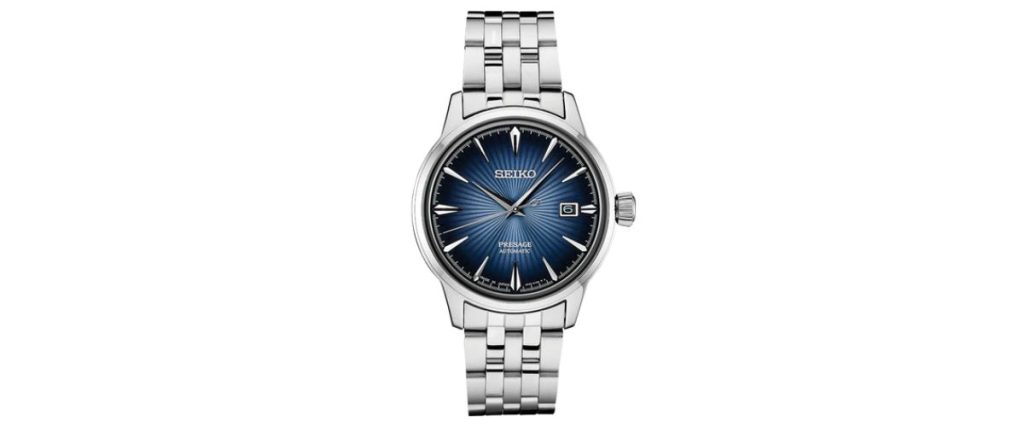
Seiko Presage Cocktail Time SRPB41

Seiko Presage Cocktail Time SRPB41

This is a no-brainer. Regardless of whether you’re a fan of the rugged dive tool, or you’re a sucker for the classic sports watch, everyone needs a dress watch like the Seiko Cocktail Time in their collection. There are plenty of designs to pick from in this collection, too.

Take, for example, the 77, the 43, and the SRPBs. They’re all top choices. Most of the designs within the collection are the 40mm models, though you can get a more manageable 38mm option should you have slender wrists that could do without the extra steel.

Their timeless dials work on a variety of wrists, while the case itself comprises the brand’s Hardlex Crystal, with case depths spanning just short of 12mm and a 50-meter water resistance that will serve you well should you get caught in the odd rainstorm.

The Seiko Pressge Cocktail Time SRPB41 is a fine example. Its deep blue dial, adorned in a shimmering pressed pattern, sits under a boxed crystal, with tapering hands driven by an in-house automatic movement capable of providing a 41-hour power reserve.

Seiko completes this classic-looking dress watch with a 5-link stainless steel bracelet that will easily elevate any casual wardrobe. Aesthetics aside, I love the concept behind this range.

Seiko launched the Cocktail Time series in 2010, taking inspiration from the work of mixologist Hisashi Kishi. Seiko’s use of colourful dials and in-house mechanical expertise makes the Cocktail Time one of the best value prospects in the realm of affordable dress watches today.

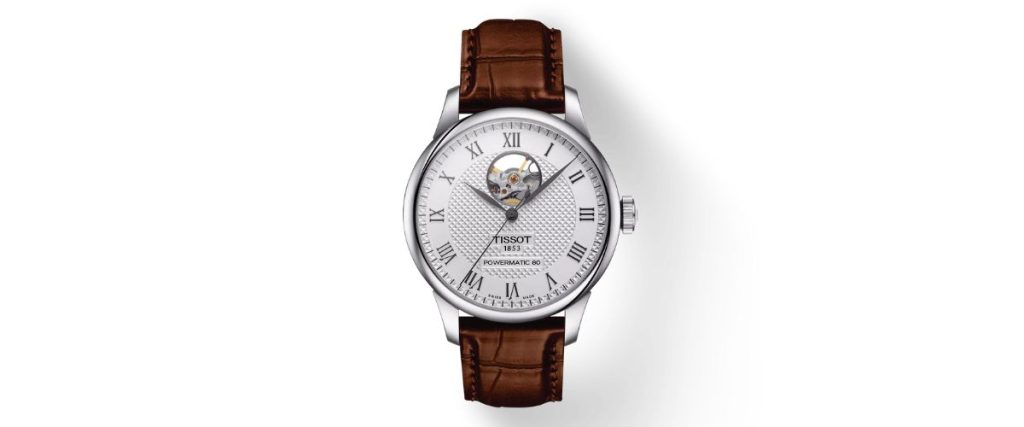
Tissot Le Locle

Tissot Le Locle

 Le Locle is Tissot’s home, and although the Seamaster and PRX models are probably the most talked about and popular of Tissot models, when it comes to dress watches, this collection, named after Tissot’s home city, is about as classic as they come.

The range offers some really neat designs, and despite their innate simplicity, added details like the patterned Guilloche centre and smooth outer hour ring create the look of a sector dial.

Also blazoned into the dial at 6 o’clock is the Powermatic 80 lettering, which relates to the power reserve of the Powermatic 80 movement sitting inside these steel cases.

Dress watches are the simplest-looking timepieces, but if you wanted something with an added layer of finesse and depth, you could consider the Le Locle Powermatic 80 Open Heart model. It features a cut-out section of the movement on the dial side, granting a unique glimpse into the engine as it performs.

This 40mm model features a Le Locle-adorned see-through caseback, exposing the movement further. The good news is that you can easily transform this dress watch’s look.

Swap the traditional brown-coloured leather strap with a different band using Tissot’s innovative interchangeable quick-release bracelet design, and enjoy smooth strap changes while you’re on the fly.

Junghans Max Bill Quarz

Junghans Max Bill Quarz

Sadly, you can’t get the Junghans Max Bill watch with an automatic movement for under $1k anymore, but the quartz version doesn’t exactly disappoint either. Its language of design is one that never seems to have any borders.

People, whether collectors or not, can appreciate its universal style. If you like the signature style of Junghans’ Bauhaus watches, you’ll love the quartz Max Bill. The dials adhere to minimalist design principles and play into the concept of 1930s-era watches.

Even after so many decades, Bauhaus-inspired watches still carry an enduring appeal. The typeface and Junghans’ use of space is nothing short of beautiful. As a lover of German watch design, this is what I’d personally be spending my money on if I were looking at dress watches within this price category.

This 38mm model relays the time functionally and practically with Arabic numeral hour markers and straight central hands, surrounded by a bezel-less case made from steel. Yes, this watch is powered by quartz, but looking at its dial, you’d never guess it was.

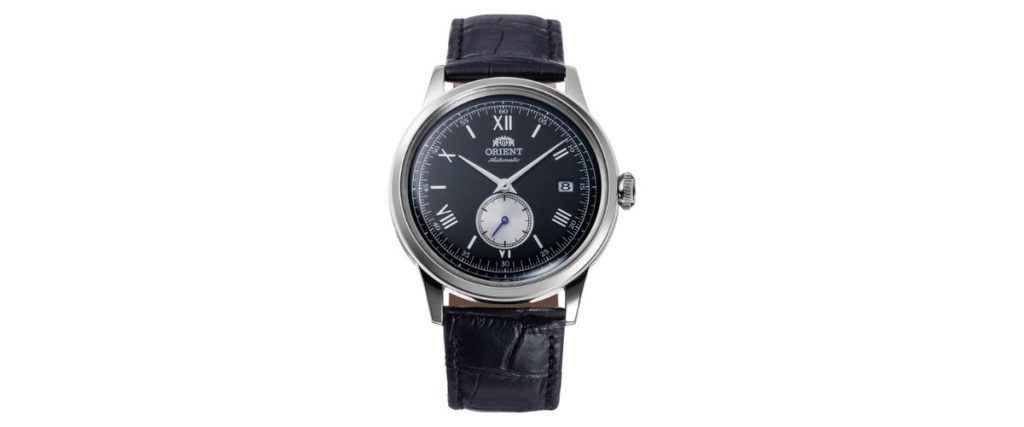
Orient Bambino 38mm Small Seconds

Orient Bambino 38mm Small Seconds

When the Orient Bambino came out with a small-second complication and 38mm size, it got heads turning. It took the classic Bambino three-hander and equipped it with the small seconds function at 6 o’clock, and it’s beautiful.

It has a lug-to-lug measurement of 44mm, making it a perfectly compact design for smaller wrists that won’t overhang or impose too much presence when paired with business attire or a suit.

This is just one of the dress watch options you can choose from within the Bambino family, which comes in different dial options, including a black iteration with a white small seconds dial, a white option with gold elements, and an ivory display for a more vintage edge.

Being a sub-40mm model, the Bambino Small Seconds wears so much better as a dress watch, and the dial opening definitely balances the proportions out on the wrist.

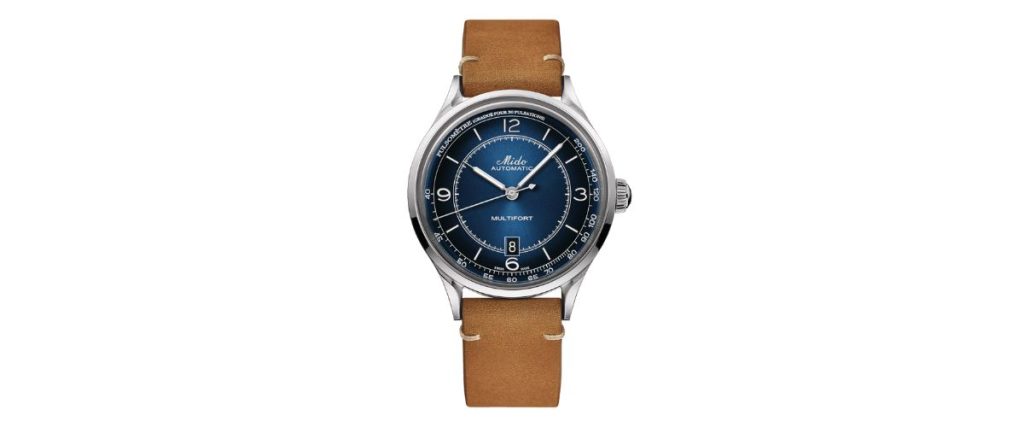
Mido Multifort Patrimony

Mido Multifort Patrimony

Mido has been around since 1919 and is associated with its automotive-inspired creations and, of course, the Multifort collection. While the Multifort is the brand’s sporty watch collection, some of the designs do sit on the edge of the dress watch genre.

In particular, we have designs like the Multifort Patrimony, which exudes a sensible, casual persona and a beautiful gradient dial, as seen in this striking deep blue variant, complete with a set of syringe hands. Personally, I find the timepieces from this collection more attractive than the Ocean Star.

They have a dial edge and a bezel thinness similar to a MeisterSinger (yes – looping back around to my love of German watches again!). Moreover, I picked out this design since,  as a dress watch under $1000, it certainly looks like it costs a lot more.

The attention to detail in the slimly carved Arabic numerals and the darkening edge around the blue dial make for a particularly intriguing design. The polished steel crown is engraved with the famous Mido name, while the light brown-toned strap is super classic and full of charm.

The sector dial enables the hour markers and the minutes to stand out with prominence in their own sections, and the contours of the polished lugs help to suck the dimensions of the 40mm case in, making it feel more compact overall.

The high-quality movement is also worth mentioning. With a power reserve of 80 hours (the Swatch Group’s Powermatic 80 movement), the Multifort Patrimony will keep an accurate time for several days if you want to alternate it with another watch. Plus, it features a Nivahron balance spring to regulate and control the oscillations of the balance wheel. 

The Hamilton Classic Intra-Matric Auto

The Hamilton Classic Intra-Matric Auto

Now, the Intra-Matric Champagne watch from Hamilton has been discontinued, but you can still pick it up from various Hamilton stockists from new, and for under a rack. Pre-owned, you will find it even cheaper.

This is another example of a dress watch with a thin bezel. This design element opens up a vast champagne dial, allowing the slim hour and minute hands and slim stick indexes to display the time in a simplified and pared-back format.

Without a doubt, the champagne dial is the star of the show, marrying perfectly with Hamilton’s choice of a dark brown calf leather strap, complete with a traditional steel pin buckle.

The watch has undeniable vintage flair, yet because of its relaxed and simplified dial layout, it will also work well with a contemporary suit. Hamilton experts give this watch a sapphire crystal glass front and 50 meters of water resistance. 

Wrapping Up

Whether it’s a reputable name like Tissot or Hamilton that you seek in a dress watch manufacturer, with a bit of history behind its design, or a kookie micro-brand with a bit of quirkiness, you can certainly pick up a beautiful dress watch for under $1000.

The models in this guide range from simple, minimalist three-handers to models combined with a complication or two. To anyone looking for their first dress watch, I always recommend they try on as many different sizes, case materials and designs as possible to get a feel for what looks and feels natural.

Above all, keep it classy and straightforward, and you can’t go wrong with any of these affordable dress watches.

To Top