News Archives - Page 9 of 45 - Exquisite Timepieces
iconHome Blog / News / Page 9

Category: News

how do automatic watches work

There was a time when automatic watches were a rare luxury, reserved for only the most prestigious of collectors.

The dawn of the modern age, however, found the emergence of automatic watches to be as popular as ever, and now, it seems like every highly-regarded brand includes automatic watches as their staple entries, as they are often featured as the poster child for the entire watch industry. 

Due to their complex nature, technology has done wonders for the manufacturing process, but automatic watches are still very much a luxury item, especially the ones that are equipped with many complications. 

But what makes them so unique, and how do they even work in the first place? Today, we will be diving deep to uncover precisely how intricate the design of these technical marvels truly is, as well as the primary differences and unique qualities automatic watches carry.

A Brief History

In the 1770s, with the designs of Swiss watchmaker Abraham-Louis Perrelet, the first mechanical device that could transfer energy created by the user’s body was developed. 

Perrelet created a clock that could hold power for eight days straight, and it wasn’t until the French inventor Hubert Sarton improved upon Perrelet’s designs that the idea of an automatic watch came to be. 

The biggest step in the automatic watch’s evolution came shortly after World War I when an English inventor named John Hartwood utilized the method to easily transform kinetic power into changing mechanisms when he started to produce watches in 1928. 

This gave the European public the chance to use watches capable of holding a 12-hour charge. Eventually, other manufacturers embraced Harwood’s designs and started an era of technological improvement. 

Rolex added their new system of weights that could capture more energy, Eterna Watch introduced ball bearings to the designs, and watchmakers were able to establish better control over internal components.
The structural integrity was valued above all else, and the shift in design caused watch companies to switch up their priorities.
What exactly is an automatic watch?

To put it simply, automatic watches don’t utilize batteries to run the mechanism. Instead, they are fueled solely by the wearer’s natural motions. That means whenever you move your hand, the watch gets wound—no manual winding or charging required. 
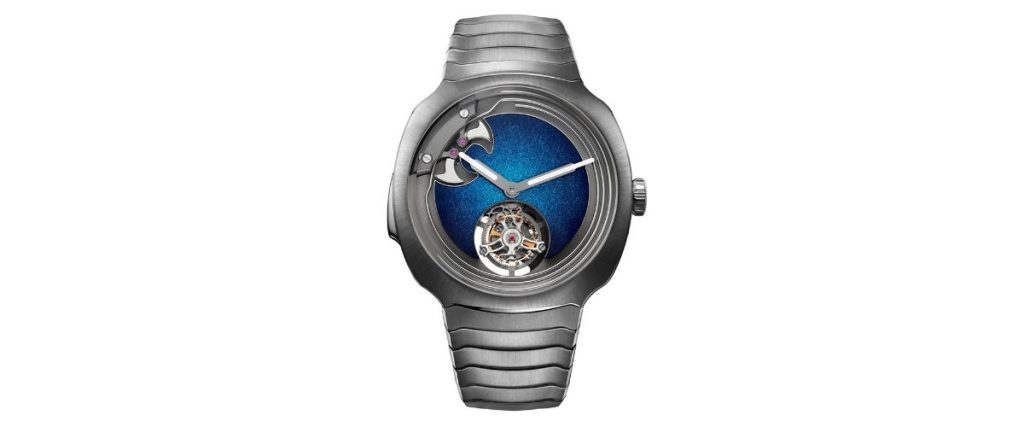
But if automatic watches don’t depend on anything other than the wearer’s movement, why is it that so many watches still come with manual winding options? It’s because, in order to get the most out of the watch’s maximum power reserve, automatic watches will occasionally need manual intervention. 

You see, while the automatic winding will do most of the heavy lifting, it still isn’t enough to fully wind it. The power reserve is the period that an automatic watch will run without any motion applied, meaning the more often you wear the watch, the longer it stays on.

But how do they work?

Think of your motions as an engine; if you aren’t wearing the watch, the freely spinning rotor does not move. Once you start moving your wrist, the rotor creates energy, and as the energy gradually makes its way around the device, it is accumulated into the mainspring, causing a chain reaction that is felt all over. 

The energy then moves down through multiple gears into the escapement, which measures it into equal parts.

These parts are necessary for the balance wheel to beat at an unchangeable rate, and with every beat of the balance wheel, the gear transfers the measured energy into equal parts of the watch hands, giving us our ticking and making everything run. If you think it sounds easy, then you could not be more wrong. 

The whole mechanism is composed of over one hundred miniature parts that all have to run in cohesion to keep everything working. That means that if one of these tiny parts slips up, the entire system malfunctions. 

That’s why these watches are viewed as technical masterpieces. The sophistication and complexity are off the charts and require an extreme level of skill to manufacture. Can you see now why they are valued so much more than standard quartz movements?

What are the best features of Automatic Watches?

Automatic watches boast their own unique traits that set them apart from the competition. For starters, most automatic watches feature an open caseback, allowing you to look at the gorgeous mechanism for yourself. 

Depending on your watch, it’s possible to see a half-circle-shaped spinning rotor, the balance wheel, the gears, and other components that make up the technical masterpiece.

Skeleton watches allow you a full view from both the front and back, and are even more of a gorgeous testament of what it takes to design something so complex.

Another visual bonus that automatic watches offer is a sweeping hand. Automatic watches take around 6-8 steps a second, giving an elegant sweeping motion of the second’s hand.

This is the result of a smoother and faster beat that is easy to differentiate from a traditionally battery-powered quartz piece. A sweeping second hand is usually the mark of a very high-luxury watch and gives the piece an extra sense of flair.

What are the cons of Automatic Watches?

The first downside to an automatic watch is its power reserve. The mainspring method that automatic watches utilize presents various physical limitations, such as the watch itself not being able to carry a consistent power reserve over a long period of time, in contrast to quartz, whose batteries last for years without any trouble. 

This means that if you want the watch to operate consistently, you have to wear it consistently. Another downside to automatic watches is the inconsistent accuracy.

To be more specific, the accuracy is unstable, meaning that automatic watches have the capability to lose seconds one day and gain them back the next, leaving you playing a guessing game as to which time is actually right. 

A typical caliber is accurate to +/- 20 seconds per day, while a quartz movement deviates +/- 15 seconds a month, reading much more accurately than an automatic.

Temperature fluctuations, magnetism, gravity, and friction levels all contribute to the inaccuracy of automatic watches, and unfortunately, this might be a deal breaker to some, but there is simply nothing to be done.

Tips to avoid damage

As with anything you pay for, the last thing you want is to see it damaged. Unlike manual watches, you can’t damage an automatic mainspring by twisting the crown too much.

There’s something called a “slipping spring” at the end of the mainspring that glides around the inside of the barrel after the watch is fully wound, shielding it from overuse. 

After all, even though automatic watches aren’t exactly known for their accuracy, the point is to spare the user from having the burden of winding them daily, and to display the flashy technique of technological brilliance that has come from a long history of tinkering and perfecting.

Conclusion

In my opinion, the good that comes from automatic watches far outweighs the bad. No watch is going to all of a sudden break down because you didn’t follow the exact instructions. All it takes is a little bit of care and a lot of love for your piece to run efficiently. 

For me, sporting one of the most advanced mechanical marvels on my wrist carries enough charm for automatic watches to be alluring, but you could be different. I hope, at least, you were able to better understand how automatic watches work and how they vary from differently-made pieces. 

Whether they fit your taste or not, it’s undeniable how talented watch makers have become, and when I look ahead to the next hundred years or so, it makes me wonder what kind of evolutions are waiting for the watch industry.

french watch brands

While you can find the heart of high-end horology beating away in Switzerland, cognoscenti know not to overlook the French. Watch insiders will probably be familiar with names like Breguet and Audemars Piguet, brands with French (or truly French-adjacent) origins. 

But for reasons that are clear, many luxury watch manufacturers connect themselves as closely as they can with the Swiss.

Today, I’d like to draw your attention to some undeniably French watch brands, illustrating how your search for luxury shouldn’t be confined to the land of clockmakers.

Let’s get started.

Yema

Yema

Founded by Henry Louis Belmont in Besançon, France, in 1948, Yema has a long tradition of making timepieces for adventurers. From the Superman to the Flygraf, from space to the North Pole, you’ll find Yema has staked its claim for French horology anywhere men dare to explore.

Once owned by Seiko and Beckensteiner, Yema has now returned to its roots under Montres Ambre de Morteau, making it solidly Gallic again.

Expect elegant design in field watches like the capable Flygraf, built on a titanium chassis that’s as light as it is comfortable.

Easily one of the most attractive field watches at any price, Yema’s Flygraf is a testament to value: exacting materials, meticulous precision, and experience everywhere danger is commonplace.

Similar aesthetic choices, and just as much attention to wearability, comfort, and refined taste, appear in the Granvelle CMM.20. Ultra-slim rotors and case design mean that the Granvelle disappears on your wrist, ready when you need it, but not forcing itself into your attention.

For discerning gentlemen looking for a watch that stands out while not being loud, a timepiece that says a lot with its silence, look no further than Yema.

Michel Herbelin

Michel Herbelin

At just 26, an independent-minded Michel Herbelin began crafting watches in Charquemont, a village located in the heart of the Jura Mountains in France.

Working out of his parents’ house, Herbelin’s vision – to restore French watchmaking’s pride of place – continues to drive the company and his two sons: Jean-Claude and Pierre-Michel.

What can you expect from Michel Herbelin?

Stunning precision, sophistication, and timeless elegance.

It’s refreshing to see high horology really embracing women’s designs. A quick glance at Herbelin’s collections reveals a deep catalogue of rectangular-faced Antares, each wearing an exquisitely crafted dial, and an impressive range of bracelets and straps for these models.

Gentlemen aren’t left out in the cold, either. The strikingly elegant Inspiration, especially with its deep blue dial and understated sword hands and hour markers, makes an indelible first impression.

And in a consumer culture obsessed with the popular, choosing the Inspiration is an inspired decision.

Baltic

A newcomer to the luxury scene in France, Etienne Malec’s Baltic Watches reflect his father’s deep-seated love of horology, and that passion is front and center in this watchmaker’s collections.

Rarely does one house produce so many eye-catching designs, and if you’re on the hunt for a lesser-known alternative to big names in the luxury industry, look no further.

From the ultra-legible, no-nonsense Hermetique Tourer, available in a wide range of dial colors and matching straps, to the refined HMS, to “classics” like the Aquacaphe, Baltic knows the look of luxury.

That’s not flash or bling; Baltic’s designs draw on a clear sense of purpose translated into action, and whether you need a timepiece for dress that can serve just as ably in causal roles, or demand a precision instrument for the field, there’s a watch that’s a reflection of your esprit among their offerings.

And to my eye, the subdued, textured dial of the Aquascaphe, paired with its minimalist aesthetic, makes this perhaps the diver’s watch to own. That’s saying a lot for a timepiece competing with the likes of the Submariner and Aqua Terra.

Lip

Lip

In 1867, Emmanuel Lipmann founded a small watchmaking workshop in Besançon, beginning a horological journey that continues today. One look at LIP’s catalogue reveals a situation similar to Baltic: there are so many spectacular timepieces that it’s hard to choose just one.

The Himalaya Calendrier Automatique is the kind of watch every gentleman craves: sophisticated, yes, but ready for action, too. The deep blue dial, simple hands, and red accents are less ornaments and more a testament to clever, legible design. 

This is a watch capable enough to trust with your life when summiting impossible peaks (it was – in 1950, Maurice Herzog and Louis Lachenal reached the summit of Annapurna wearing these timepieces). It’s also perfect for a sunset cocktail party with friends by the sea. 

For those who prefer pilot’s watches, the rugged Type 14 is nothing short of heart-stopping, and as with the Baltic Aquascaphe, that matte dial finish is marvelous.

Dressier occasions are met where they live by the Churchill and its many variations in dial, case, and strap. Among them, you’ll find the Churchill T18 (ref. 671000), offering the classic elegance and timeless value that the discerning demand.

Pequignet

Pequignet

Emile Pequignet founded this watch house in Morteau, France, in 1973. Since then, it’s been producing timepieces that rival anything you’ll find in Zurich for precision manufacture and sheer aesthetics.

My two favorites are easy choices for refined elegance: the Attitude Hallmark Viper’s Head (ref. 9060313PV) and the Royale Origine (ref. 9010437). 

The Attitude is something very hard to pull off: minimalist elegance that signals taste. There’s something about that opaline-white dial and subdued hands and markers that my eye can’t let go.

And from a drive down the Adriatic coast to a weekend in Malta, this watch somehow manages to look effortlessly elegant in anything short of a tuxedo.

By contrast, the Royal Origine’s intricate details, striking blue hands, and elegant case design is perfect for everything from business casual to the opera, and no one, no matter what they’re wearing or how deep their horological savvy, will fail to be impressed.

Serica

Serica was born from the creative minds of Jérôme Burgert and Gabriel Vachette in 2019. And while this watch brand has a very limited collection, what you’ll find is nothing short of stunning.

The 5303 Diving Chronometer is an effective counterpoint to the Rolex Submariner – by any metric, the bar against which all dive watches are measured. 

Rather than double down on the Submariner’s good looks, Serica took the 5303 in a different direction: a unique dial design that enhances legibility through simplicity. 

By moving the hour markers toward the center of the dial, the hour hand is brought into closer communion with the indicators, making instant readability a snap.

And the oversized crown, bruised case, and mesh bracelet mean that this watch looks just as sharp for work as it does for play – something quintessentially French.

Another Serica timepiece making waves in Gallic horology is the 6190, a field watch with military origins, it neither tries to hide nor can.

Simple legibility, uncluttered elegance of purpose married to design: that’s what Serica offers with the 6190, and from afternoons in vineyards to dinner on the Champs d’Elysees, this watch is for style-conscious but not trend-driven ladies and gentlemen with a cultivated sense of taste.

Conclusion

In horological circles, “luxury” and “Switzerland” are more or less synonyms, and that stands to reason. Swiss watchmaking stands out for its mechanical excellence, its rich history, and its brand recognition. 

Despite this, the style-forward French are repositioning themselves to recover Gallic horology’s well-respected roots, and companies like Serica, Pequignet, Baltic, and Yema are demonstrating that they have what it takes to compete in luxury watchmaking.

If you’re searching for a new timepiece, it’s worth travelling the path less taken and exploring what these watch houses have to offer.

new class of status watches

A watch is a tool. A watch is a mechanical wonder. A watch is a functional accessory, a piece of art, and everything in between. A luxury watch is what you make it.

And it is this balancing act – this traversing of currents that dictate the latest styles and the continual ebb and flow of trends – that make these instruments so desirable to us humans.

We are but mere crows in disguise beneath it all. We like to collect shiny things. Shiny things that tick. And each year, we enjoy an influx of new and exciting designs from world-leading brands.

Some are perfect as daily beaters, and others are pure “nailed it” designs worthy of peacocking as pure objects of envy.

But we’ve seen a considerable shift from bling watches to quiet luxury over the last couple of years. Gen-Z is seeking out something altogether modest and unassuming in grandeur. The new “stealth wealth” watch depicts an old money aesthetic. One where wealth is inherited rather than earned. 

Collectors are helping to put the value back into old-time classics – if not the real deal vintage collectibles, then at least in modern designs that echo the class and status of a traditional watch.

Thus, this year at Watches & Wonders, we saw a flux of elegant, classic designs dominating the exhibition cabinets.

If the idea of a stealth wealth watch appeals to you – something modestly understated that subtly communicates affluence and the type of refinement you’d see in the upper echelons of watch collecting – check out these top status watches I’ve rounded up in this guide. First, however, let’s take a quick look at the power of social media and how it influences watch trends.

Social Media and Watch Trends

Few factors are more important in marketing a watch than social media. Luxury and fashion are dictated to us by what we see, both in written content and with visuals via social feeds.

It’s the modern marketplace for luxury timepieces – a far cry from the traditional auction houses or brick-and-mortar dealerships, which would once have been our only through route to acquiring a rare and covetable timepiece.

Social media is slowly but surely strengthening and cementing the concept of watches being a physical embodiment of status, and over the years, it has done that in different ways.

We’ve jumped from Jay-Zs blinged-out Jacob & Co. Bugatti Tourbillon to Haily Bieber’s vintage Audemars Piguet cocktail watch in what feels like the blink of an eye.

Whether we like it or not, platforms like Instagram portray society’s elite or, more specifically, wealthy celebrities, selling a particular lifestyle through a brand name or a popular model, and we all lap it up like dogs.

The Best Watches That Define the Quiet Luxury Movement 2025

Interestingly, the drastic switch from unattainable diamond-festooned watches and integrated sports watches that fetch five-digit figures to designs that are actually doable and wearable means that we now have much more variety than ever before.

Even some Omegas and Rolexes are affordable if you know how and where to seek them out. For the first time ever, all these status watches tick the “stealth wealth” box and redefine luxury as we once knew it without being too ostentatious. And it’s refreshing.  

The Cartier Tank

The Cartier Tank

Let’s hit this guide off with a banger. The Cartier Tank is a thoroughbred classic. From its two parallel brancards to its elegant chemin de fer chapter ring, this military tank-inspired design re-wrote history when it emerged in 1917 with its bold rectangular profile, sword-shaped hands, and cabochon-adorned crown.

It’s crazy to think that this minimalist yet refined watch could stand the test of time despite the many avant-garde innovations that followed over the years.

But the Tank should be a staple to any style-oriented man’s wardrobe. It’s one of the few watches out there that can discreetly slip under the cuff of a shirt when you need it to, but at the same time, has this ability to stand out in a crowded room as a bold and solid design.

The range is undoubtedly vast. It offers plenty of refined models crafted from gold powered by mechanically driven engines. Likewise, there’s nothing wrong with the collection’s quartz-powered steel variations either.

All exude the stealth wealth factor, and with so many reasonably priced options to explore, the Cartier Tank is a kind of cheat code to achieve an affluent status within the watch-collecting society without robbing a bank.

The Nomos Lambda 39

The Nomos Lambda 39

Not all watch collectors desire the “Made in Switzerland” label, and many young enthusiasts are beginning to explore the benefits and joys of owning a non-Swiss watch.

Look at Nomos, for example. Take a look at the Nomos Lambda 39 and tell me it doesn’t epitomize quintessential German manufacture.

The dial arrangement of the Lambda 39 subtly encroaches on A Lange & Sohne territory, with its unique power reserve layout taking residence across the entire northern hemisphere of the dial.

Yet, simultaneously, the use of the heat-treated blue hands and the needle-fine slimness of the indexes and markings on the display retain the all-important Bauhaus-style fingerprint of authentic Nomos design.

The 18k rose gold case turbo boosts the watch to “fine dress watch” level, while the leather band will surely pair with any attire.

Thanks to twin mainspring barrels, the caliber DUW 1001 can offer a three-and-a-half-day power reserve, while features like the hand-engraved balance cock show off some exquisite examples of German craftsmanship.

Rolex Oyster Perpetual

Rolex Oyster Perpetual

Strip the timeless Oyster Perpetual from its date window, and you get a 36mm status watch that’s instantly identifiable but compact and understated at the same time.

This reference 126000 doesn’t cost an arm and a leg and still communicates those all-important hallmarks of Rolex craftsmanship: exceptional build quality, unmatched class, and a unique green dial color that Rolex specialists achieve via a 6-layer lacquer technique. The process is completed with a varnishing and polishing technique to accentuate its full brilliance.

The Oyster Perpetual is one of Rolex’s more affordable models, but it still features all the robustness and resistance you’d expect from any Rolex watch. A strong 904L stainless steel case leads to an expertly manufactured Oystersteel bracelet featuring a flat three-piece link design and a sturdy Oysterclasp.

This design serves as a powerful statement of the brand’s heritage and innovation. Still, because it doesn’t tend to garner the same level of respect as, say,  the Submariner or the Daytona, its status watch appeal may not be as apparent to every collector.

Even so, a Rolex watch of any kind is a wise investment, and models like the Oyster Perpetual are perfect for those who don’t necessarily want to follow the crowd.

The TAG Heuer Carrera

The TAG Heuer Carrera

Another example of a timepiece that proves a status watch doesn’t need to break the bank. The TAG Heuer Carrera is one of the most classic sports watches on the market, and anyone familiar with the brand will no doubt have heard of its name before.

The design of the Carrera is inspired by the Carrera Panamericana race in Mexico and connects the Swiss watchmaker to its deeply rooted heritage in motorsport.

Considering the trend for simple designs, even the modern three-handed Carrera takes a minimalist twist. Even so, it loses none of its classic charm and character.

TAG Heuer is a young person’s brand as much as anything else. Take a look at the latest Formula 1 Solargraphs, for example. These 2025 releases harken back to the original 1980s designs but inject a boldness and a vivid dose of color that look at home on youthful wrists.

The TAG Heuer Carrera, however, suits the old money wardrobe. Its slim bezel, combined with elegant dial detailing, makes for a compelling status watch that looks like it costs much more than its sub-$5k price tag.

Vacheron Constantin Patrimony Manual Winding 39

Vacheron Constantin Patrimony Manual Winding 39

People have been wearing Vacheron Constantin watches as status symbols for many years due to the brand’s exceptional craftsmanship and its reputation for producing elegant timepieces in limited production.

The brand also has a rich heritage as a fine watchmaker, being one of the three Holy Trinity brands and an innovator of the first perpetual calendar wristwatch in 1929.

Although more expensive than some of the other options on this list, Vacheron Constantin watches are a unique blend of horological innovation and artistry and are classic through and through.

The Patrimony watch collection is home to a vast array of dress watches, all of which impart that very special “stealth wealth” appeal.

Complications like the Moon Phase Retrograde watch display an exceptional level of work, with a poetical layout featuring a “pearl” minute track on an old silver-toned dial and a retrograde date hand encased within an 18k gold exterior.

However, for something simpler and more affordable, the two-handed Manual Winding models have to be the status watches of 2025. As seen in this example, experts have beautifully orchestrated the faceted rose gold hour markers to sit against a contrasting white gold case.

At the same time, the choice of a pistachio green alligator leather band perpetuates the brand’s ability to play about with unconventional color schemes.

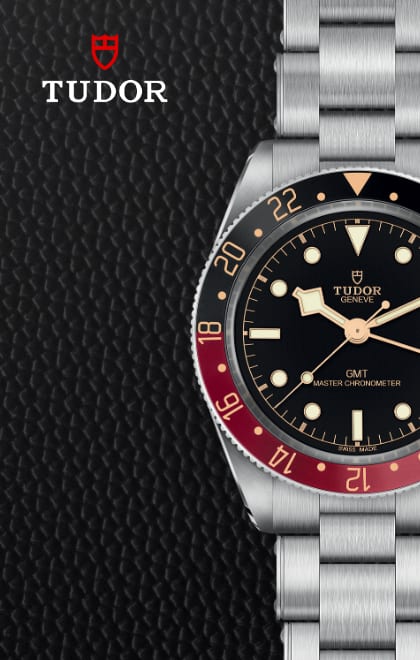
TUDOR Black Bay 54

TUDOR Black Bay 54

You don’t need a Rolex Sub on your wrist to be a man of good taste. You can do it with neo-vintage designs like the Black Bay.

If you didn’t know, TUDOR used to be dubbed the “poor man’s Rolex.” But over recent years, we’ve really seen the brand come into its own, especially with designs like the neo-vintage Black Bay. The collection is a relatively new one, not half as impressive as Rolex’s Submariner heritage, of course.

But dive watches will never go out of fashion. I’m sure their enduring, rugged elegance will still be enjoyed just as much in fifty years. And models like the Black Bay are a more affordable alternative.

The Back Bat 54 is the most true-to-form interpretation of the brand’s much older dive watch original (so there’s still some good history in this design), measuring a compact 37mm in case size.

Along with its classic proportions, the model boasts the technical prowess of an in-house movement and displays all the hallmarks of the ever-popular Black Bay series.

These features include the unidirectional rotating bezel, large luminous hour markers set upon a domed dial, and the iconic “Snowflake” hands that defined TUDOR’s post-1960s dive watch era.  

Patek Philippe In-Line Perpetual Calendar 5236P

Patek Philippe In-Line Perpetual Calendar 5236P

Patek Philippe’s Perpetual Calendar is no ordinary calendar watch. Back when the brand became one of the pioneers of this very special complication, Patek never rested on its laurels and was determined to make the feature more legible.

Remedying the difficult-to-read month, day, and date sub-scales, the brand invented the In-line Perpetual Calendar, which features a clean alignment of indicators for the day, date, month, and lunar cycles.

One of Patek’s very own independently crafted movements sits inside a platinum case, while the perfectly aligned moon phase complication adheres to the tasteful blue and silver color scheme on the dial.

Of course, Patek Philippe watches are far from cheap, but if money is no object, the Patrimony In-Line Perpetual Calendar will certainly exude the appeal of the status watch to boot.

IWC Schaffhausen Ingenieur Automatic 40

I may have left my favorite watch until last. The IWC Ingenieur Automatic 40 was released at the Watches & Wonders Palexpo back in April. And guess who joined its launch? No other than Jerry Bruckheimer, producer of the upcoming “F1” movie starring Brad Pitt. Shame he didn’t make an appearance, too, huh?

The new movie filmed live action from F1 weekends all over the world, including the British Grand Prix, with Lewis Hamilton joining the team as one of the movie’s co-producers. In the film, Pitt, who plays the character of Sonny Hayes, is seen wearing a prop watch that looks similar to the Ingenieur Automatic 40.

As the most anticipated release of the collection, it makes sense for this green Ingenieur watch to make it onto my list of best status watches for 2025. Its dial features the recognizable grid pattern and golden hands propelled by the brand’s Calibre 32111.

The Ingenieur has always garnered a cult-like following, Its characteristics are all faithful to the integrated steel sports watch, complete with a beautifully articulating H-Link bracelet, proven for comfort.

Since its inception in the 1950s, the Ingenieur has been slowly evolving as a robust sports watch and, fascinatingly, is just as relevant on the modern wrist today as it was back then.

Status Watches Don’t Have to Cost the Earth

The last few years have taught us that status watches don’t have to burn a hole in our wallets. They can be parred-back, understated, and resolutely simple, too. Quiet luxury seems the way to go, with brand after brand releasing classic takes on historically significant designs.

#Perhaps Cartier is a fitting example to use. The brand released the Tank Must in 1977 and reissued it in the Spring of 2022, where it was met with resounding success.

Collectors far and wide reveled in the resurgence of the Art Deco-inspired design, in the same way the emblematic Cartier Tank à Guichets made a comeback at the Geneva showcase this year with its unconventional jump hour.

Speaking of Jump Hour watches, take a look at the latest Bremont Terra Nova Jumping Hour watch in Bronze. Both designs appeal to an era of vintage romanticism, fusing functional style with historical importance very compellingly.

Collectors, young and experienced, are looking for old money-style status appeal in a watch today. And whether you look towards the higher echelons of watchmaking for such a design, or towards the affordable end of luxury timekeeping, if it looks the picture of refinement and exuberance, it will undoubtedly carry the essence of an all-important status watch.

BEST watches that made it to the BIG SCREEN

The 7 BEST watches that made it to the BIG SCREEN

William Boyd

July 22, 2025

As someone who’s into watching, following, and researching different kinds of watches, I often catch myself looking at people’s wrists as they walk by. Every now and then, I’m surprised in a good way by what I see. 

Over time, I even got my wife into watches, and now she’ll sometimes point out cool ones she spots too. When we’re watching movies or TV shows, it’s become a habit for us to point out any watches we notice. So, let’s go over a list of some of the ones we’ve seen on screen.

Breaking Bad – Walter White’s TAG Heuer Monaco Watch CAW2111.FC6183

Walter White’s TAG Heuer Monaco Watch CAW2111.FC6183


I remember the scene where Jesse Pinkman gives Walter White the watch, but I never really thought about what it could mean in the bigger picture of the story.

I’m not kidding—once I looked into it, I was shocked by how many articles, fan theories, and hidden meanings people have tied to that watch throughout the Breaking Bad series. 

It’s crazy how much this watch seems to matter—or not matter, depending on who you ask in the fan community. The watch itself is a TAG Heuer Monaco with a 39mm case.

That might sound small, but since it’s a square-shaped watch, it actually wears a bit larger. I’ve tried on a few Monaco models, including the newer titanium version, and they really are great-looking watches. 

It’s definitely a recognizable design, though I doubt anyone’s going to stop you and ask if you’re wearing the Breaking Bad watch.

The version from the show comes on a leather strap and runs on TAG’s Calibre 12 movement, which includes a chronograph, date, and time function. If you want to channel your inner Breaking Bad superfan, you can pick it up on the secondary market for around $4,000.

Mission Impossible – TAG Heuer Super Professional (Luther)

Mission Impossible – TAG Heuer Super Professional (Luther)

Still riding the TAG Heuer train, next up is the TAG Heuer Super Professional automatic dive watch. With an insane water resistance of 1000 meters, this thing could probably do its own stunts—just like Tom Cruise in Mission: Impossible. 

The 43mm case makes it super easy to read, even if you’re skydiving or jumping out of a moving car. Honestly, if I were being shot at, I’d want this big, tough watch to take the hit for me. The watch includes both time and date functions, and it comes on either a steel bracelet or a rubber strap.

 In Mission: Impossible, the tech genius Luther wears this exact model with a steel bracelet and a suit—pretty stylish move. Since this model dates back to the late ’80s to early 2000s, you can usually find it on the secondary market for about $1,000.

Men in Black – Hamilton Ventura

Men in Black – Hamilton Ventura

The famous line “I make this look good” was delivered by Will Smith in Men in Black, and in that movie, both he and Tommy Lee Jones wear the Hamilton Ventura. More specifically, it’s the Ventura XXL—though depending on who you ask, you might get a different opinion on the exact size.

The XXL model has a case size of 45.5mm, which is definitely on the larger side, but since it’s not a round watch, it wears a little differently and stands out in a unique way. I didn’t even know about this watch until I found out that Elvis Presley wore the original Ventura.

That connection gave the watch some serious popularity, and eventually, Hamilton even released an Elvis Presley Edition. Today, you can find newer versions of the Ventura on grey market sites for around $700. 

John Wick – Carl F. Bucherer Manero Autodate

John Wick – Carl F. Bucherer Manero Autodate

People have told me I look like John Wick—though I really hope they mean before he gets all beat up and looks like he just fought a hundred guys. But if you ever do find yourself in that kind of situation, take a note from John Wick and wear the Carl F. Bucherer Manero Autodate. 

This watch has a 38mm case and 30 meters of water resistance, so maybe try not to get too much blood on it. It’s a simple, clean design, but somehow still looks like it can handle a lot… or maybe it’s just that the person wearing it can. On the secondary market, you can usually find this model for around $2,000.

Sonic the Hedgehog – Hamilton Khaki Field

Sonic the Hedgehog – Hamilton Khaki Field

The Hamilton Khaki is already a well-known watch in the watch world. It comes with a 38mm case and 50 meters of water resistance. For those with bigger wrists, there’s also a 42mm version—which might actually be the one worn in the movie. 

This watch fits perfectly with an outdoorsy lifestyle, especially if you’re living—or in this case, working—in the woods. You can pick one up from Exquisite Timepieces for around $425.

Spiderman: No Way Home – Bremont Supermarine Chronograph

Picture: https://drive.google.com/file/d/1IHjcmW8qLuFCmiSpGltQYrp2N3WTKW_M/view?usp=sharing

At the end of pretty much every Marvel movie, there’s always that one extra scene that hints at or builds excitement for a future Marvel film. In this one, we get Tom Hardy as Eddie Brock, who seems to have ended up in a different universe, trying to figure out how this whole multiverse thing works. 

Hopefully, I explained that right—don’t come after me if I didn’t! Eddie Brock is seen wearing the Bremont Supermarine Chronograph, which has a 43mm case and 200 meters of water resistance.

Honestly, you’d probably want those kinds of specs if you had a symbiote hanging around with you. Right now, you can grab this watch at Exquisite Timepieces for $4,110.

Gossip Girl – Patek Philippe Aquanaut

Gossip Girl – Patek Philippe Aquanaut

There’s not much left to say about the Patek Aquanaut—it’s legendary. And let’s be honest, the chances of walking into a boutique and actually getting one are pretty much zero.

I didn’t exactly follow Gossip Girl closely, but I did catch a few episodes here and there while my wife was watching it for the third time. 

Let’s assume the model shown is the 5167, which has a 40mm case and features both time and date functions. It’s a clean, iconic piece. In the show, the character Dan gets the watch as a gift, but turns it down because it’s too expensive.

Personally, I’d never turn down a gift like that. In fact, I keep a running list of watches I’d love to receive—and while this one wasn’t originally on it, you can bet it is now. 

Conclusion

Over the past few years, watches seem to have blown up in popularity, kind of like Formula One has in the U.S. Being able to spot different watches feels like unlocking a new level of watch nerd status. Yes, that’s a real term… trust me. 

Next time you’re at the movies or watching Gossip Girl for the fourth time, try keeping an eye out for those hidden gems on people’s wrists. Although, now that I think about it, Gossip Girl might not be the best example—most of those characters are rich enough to be wearing actual gems on their wrists.

is citizen a good watch

Is Citizen a Good Watch Brand? (The Honest Truth)

William Boyd

July 22, 2025

There is no argument here. Swiss giants, namely those belonging to LVMH and Swatch Group, are selling the majority of the world’s best watches, and let’s not forget that Rolex is pulling its weight, too, accounting for 30% of the industry’s sales.

But the Swiss are not the only players in this horological game of craftsmanship, innovation, and storytelling.

Japanese brands like Seiko and Citizen are known for their technological advancements and, as well as nurturing a sizeable domestic market, contribute to the industry in a big way, though more for their mass-market designs that sit within the mid-price range.

For the most part, Citizen is the world’s largest watchmaker by volume. But that fact alone doesn’t necessarily help if you’re wondering whether its watches are any good.

In this article, we’ll aim to cover the question, “Are Citizen watches any good?” because what people really want to know is whether they’re worth buying and, if so, why they’re so underrated.

Perceptions of Budget Watch Brands

It’s only fair that Citizen gets the same level of coverage as we’d provide if we were covering a big brand like Rolex. What we really need to look at are all the factors that play a role in Citizen’s contribution to the world of watches.

We need to provide you with a comprehensive introduction to the brand, take a look at its history, and then delve into some of its innovations. But before we go any further, there’s one thing we need to touch on: the perception people have of budget watch brands.

I mentioned earlier that Citizen is an underrated watch brand for what it offers. Some of that will become clearer as you continue reading, but affordable watch brands are often viewed as disposable and not reputable enough.

But not everyone wants to spend a few thousand dollars on a new watch. In fact, a few hundred dollars can be an expensive investment for many of us. Not everyone is working on the same budget. Even so, a common misconception is that a budget brand must mean poor quality materials.

I’ve said this before, and I’ll say it again – budget watch brands are misunderstood. And one reason why Citizen may be overlooked is down to its mass production of affordable watches. Plus, Japanese origins generally carry the stigma of being cheaply made and of lesser quality.

If that was your understanding of Citizen watches before you began reading this article, you should prepare yourself to be pleasantly surprised.

I’m not going to overegg this watch brand, or big it up to a be something it isn’t. But if you get to the end of this guide without learning at least one or two things about this manufacturer, I’ll be dammed!

The Early Days 

Given Citizen’s avant-garde designs and some of its horological innovations, you could be forgiven for thinking this brand is younger than it actually is.

How about 1918 for its founding year? Surprised much? Indeed, the company evolved as a product of the Shokosha Watch Research Institute by Kamakechi Yamazaki. However, the actual Citizen name didn’t start to appear on watch dials for another five years.

No one really knows exactly how the brand acquired its name, but it’s thought that a close friend of Yamazaki – the mayor of Tokyo at the time – suggested the name since the ethos of the company was to make watches that were accessible to all “citizens” within Japan.

By partnering with a company called Schmid in 1930, Citizen could take full advantage of machining tools and its state-of-the-art factory, and by 1952 had released Japan’s first watch with calendar features.

The company grew and eventually began exporting watches outside of Japan, reaching a global audience and achieving a complete, fully automatic manufacturing process by 1970.

Citizen is a Pioneer in Dive Watches 

So, Seiko definitely produced Japan’s first fully-fledged dive watch; I’m not disputing that. That happened back in 1965.

But does the name Parawater ring a bell to you? The Parawater was actually Citizen’s innovation, and it was Japan’s first water-resistant watch, birthed six years before the Seiko Diver’s 150 (AKA the 62MAS)!

It’s worth mentioning here that by this point, Citizen had already developed its Parashock technology, which, in turn, led to the brand’s shock counteraction function, ensuring the hands of a watch remained in continual movement when exposed to impact.

To add weight to Citizen’s Parashock technology, a watch was dropped out of a helicopter at a height of 30 meters and was found to be in perfect working order when retrieved.

It may not seem like such a big deal now, but the Citizen Parawater was 50-meter water resistant – a true feat for its time. This water resistance was upheld via special O-ring gaskets that sealed all the integral parts of the case, including the case back, the joints, the crown, and the glass.

Like the brand’s Parashock technology, the Parawater was subjected to tests, too. It was used to help conduct tidal research and was launched into the ocean for an extended period of time. Some three years, in fact,  and was still found to be completely intact and operational at the end of the experiment.

The Parawater was the forerunner to the 1982 Promaster Marine. Citizen then released the 1300M Professional Diver’s watch, crafted from lightweight titanium in the same year, followed by the titanium-clad Aqualand in 1985 (the first quartz watch equipped with a depth gauge.

The model was superseded by the Fugu dive watch in 1989, which marked the birth of the Promaster series. It featured a chunky bezel with alternating smooth and serrated edges that resembled the pufferfish, hence its nickname.

Basically, my point is that Citizen was a valid contributor to the dive watch sector during the zeitgeist of the scuba diving and amateur diving era.

What About Citizen’s Materials? 

Many don’t realize that Citizen was the first brand to release a watch made from titanium – the X8 Chronometer – a short-lived electronic watch. Sadly, the development went under the radar.

Meanwhile, titanium was a material that was already emerging in the aerospace industry thanks to its incredibly strong and corrosion-resistant qualities. It was even used in Apollo Mission vehicles, transporting astronauts to the moon.

Years later, Citizen returned to this material, developing the 1982 Professional Diver watch, not to mention the Atessa collection – an all-titanium series of watches. Suffice to say, for a brand that focusses on affordable, mass-scale manufacture, Citizen has been no stranger to innovative materials.

By the year 2000, the brand was producing titanium watch cases with a Duractect finish – a serum that made the material even more scratch-resistant, not to mention five times harder than stainless steel. This technology now goes by the name of Super Titanium.

These are not the only advantages of Super Titanium, however. Due to its unique composition, it can allow for a range of different colored cases that standard titanium is not able to offer.

Citizens Eco-Drive Technology

Here, we reach one of Citizen’s most important milestones of all. Its Eco-Drive technology. It’s one of the most famous technical contributions to the watchmaking industry. The story began in 1976 when the brand launched the Quartz Crystron Solar Cell (not as appealing as the name “Eco Quartz,” right?).

Let’s set the scene. During the 1950s, electrically powered watches were emerging, using a quartz oscillating weight. They were followed by LED and LCD watches, which eventually led to the digital watch.

Japanese watchmakers like Seiko, Citizen, and Casio were key to driving the manufacturing costs of these watches down through mass production. Simultaneously, America was developing solar panels, but Japan was already one step ahead, producing solar-powered units for watches.

The Quartz Crystron Solar Cell that Citizen developed could utilize the energy from any light source, including a bedside lamp.

However, its battery didn’t last all that long, so Citizen followed this up with improved models that could last up to 8 days, followed by one released in 1995 that could last 6 months on a single charge.

The Eco-Drive arrived a year later with a design that could allow light to pass through a translucent dial where a solar cell lay underneath. Power would be sent from the solar cell to a lithium battery, eradicating the need for a battery replacement.

The technology was groundbreaking and has become a tentpole innovation around which Citizen has centered so many of its designs. Citizen reached new levels of precision following this milestone, namely with its radio-controlled timing technology and its GPS satellite Wave watches, which arrived in 2011.

However, in 2019, Citizen’s technology set new standards in accuracy with the brand’s release of the Calibre 0100, capable of maintaining a precision of +/- 1 second per year thanks to the use of an AT-cut-type crystal oscillator that vibrates at a frequency of 8.4 MHz. Suffice to say, this infinitely powered watch is hard to beat, and the fact that you can buy an Eco-Drive watch for around the $200 mark today suggests that Citizen’s precise tools are an incredible investment proposition if you’re looking for longevity in a watch.

Sadly, the solar-powered technology of an Eco-Drive watch is massively understood. It’s one of the reasons why Citizen is so underrated as a brand. People see the word “quartz” and scoff at it.

But let’s not forget that on paper, a quartz watch will outperform a mechanical watch on precision by a country mile. Quartz watches are just so incredibly accurate, and the same goes for the Eco-Drive watch.

There’s also the misconception that a solar-powered watch will stop working if caught under a rain cloud or if it happens to be a particularly cloudy day.

The reality is that people don’t understand enough about Citizen’s solar-powered technology. Most people aren’t even aware that modern Citizen watches from the Eco-Drive series have a power reserve of a year, some even boasting an absurd 7 years in total darkness!

Brand Growth 

Many perhaps don’t realize Citizen is a large parent company that bought Bulova in 2008. But that wasn’t where its relationship with the American brand first began.

In fact, it had been developing watch components for Bulova since the 1960s. Bulova is revered the world over for its technical innovations, but many of these breakthroughs are owed to the expertise and know-how of those at Citizen.

As the Japanese brand grew, so did its ambitions, and in 2012, it acquired La Joux-Perret, including its subsidiary, Arnold & Son. But that’s not where the story of Citizen’s growth ends.

In 2015, just six years after bringing La Joux-Perret under its wing, it began expanding its footprint in the Swiss watchmaking world by acquiring the Frederique Constant Group, comprising the likes of Alpina and Ateliers de Monaco.

Those well-versed in the Bulova brand will also be aware of the Accutron company, which became its own entity in 2020 before joining Citizen Watch Group. One pioneering development by Accutron was the electrostatic movement, which was only made possible by the help of Citizen’s experts.

As the years have passed, Citizen has continued to grow and now nurtures sponsorships with sporting events like the US Tennis Open. At the same time, its relationship with the cinematic world includes partnerships with Marvel, Star Wars, and Disney.

For a brand so closely associated with budget-friendly designs, Citizen has utilized its space on social media, effectively marketing itself to reach audiences engaged with the world of sport, TV, and technological innovation.

It’s not a luxury brand, don’t get me wrong, but its presence across the watch industry is certainly heard and seen.

Some of the Best Citizen Watches 

Perhaps to fully decide whether Citizen watches are for you, a peruse through some of the brand’s most impressive watch collections will help. Here’s a brief introduction to the brand’s core lines to save you some time.

The Citizen Promaster Range

The Promaster watch collection by Citizen is certainly a series primed for those who like adventure and exploration. Basically, it’s not just your everyday sports watch.

For example, the Perpetual Chrono watch within this range boosts performance more than a typical chronograph, with its radio-controlled atomic clock synchronization, along with a tachymeter bezel to track speed based on distance.

The Promaster Diver

Perfect for those seeking excitement under the waves or those who love the rugged elegance of the dive watch, the Promaster Diver collection is home to models that combine luminous details with Eco-Drive technology, not to mention a solid 200M water resistance.

H3: Citizen Tsuyosa

Love the integrated sports watch? You won’t be disappointed with the Tsuyosa. It’s often compared to the Tissot PRX as the more affordable option. You can enjoy the Tsuyosa in several bursts of color, including ice blue, bubble-gum pink, a rich sunny yellow color, and a deep burgundy.

This is one of the few Citizen watches you can enjoy in a more compact size, thanks to its 40mm diameter and slim lug design.

A Comparison: The Citizen Promaster vs the Seiko Prospex 

It’s one of the most common debates amongst collectors of budget sports watches – which brand is better – Seiko or Citizen? While the debate is bound to divide the crowds, we can at least add some weight to the topic by comparing one of Citizen’s most popular models with one of Seiko’s.

For example, let’s look at the Citizen Promaster and the Seiko Prospex. Both watches offer a similar style and price point, so it makes sense to put both contenders in the ring and see how they fair against one another.

Let’s start with the basics. Both of these watches appeal to dive watch collectors. Regardless of whether you actually intend to do any level of underwater exploration with one of these watches or whether you consider yourself a desk diver (no judgment here!), there are many ways you can adapt a dive watch to daily life.

They’re legible and durable and have a unidirectional rotating bezel. If for nothing else, you can always use this timing function when grilling your cheese on toast to perfection (yes, it is a science!). But let’s take the Seiko Prospex Turtle SRPE93 and the Citizen Promaster Diver ref BN0150-28E, for example.

Both have black dials with white luminous markers and hands, promise 200-meter water resistance, and are certified to ISO standards. Even better, both models are available in various dial colors (you name it, it’s probably been done).

They also feature mineral crystal fronts (not as great as sapphire, but still, they’re on par with one another). At the end of the day, both of these watches offer plenty of bang for your buck, with an unlimited range of straps to enjoy. 

Movement-wise, however, these respective watches go in their own direction. While one is a mechanical movement, the other is a solar-powered quartz, so although they are similarly designed sports watches, the Prospex has a rather vaunted history and is powered by an automatic engine.

In contrast, the Promaster features a less romantic movement but one that runs for up to six months and is perfect for the “set-it-and-forget-it” type. While the Seiko Prospex is primed for function and durability, the Citizen Promaster is a complete classic.

Really, choosing between the two depends on personal preference. There’s not much in it, especially if you value quality materials, legibility, and robustness in a watch. 

So, What’s the Verdict? Are Citizen Watches Any Good?

If you’ve skipped to the end of this article to get the low-down on whether Citizen watches are any good, then yes – in short – Citizen watches are good.

Especially if you’re drawn to technological innovation in a watch, and you like your timepieces to create interesting topics of conversation when chatting with other watch enthusiasts. Citizen watches, although not considered luxury items, certainly have a lot going for them. 

The majority of watches made by this Japanese brand will cost you no more than $300 on average, and you can’t exactly say they lack good, quality materials, either. Citizen developed a hardening technique to enhance its titanium cases, a material already well-utilized by many high-end brands today.

It can also lay claim to one of the watch world’s most innovative technological innovations – the Eco-Drive watch. The industry’s solution to environmentally friendly timekeeping eliminates the need to replace batteries.

As much as the mechanical watch will always garner the most respect amongst watch enthusiasts, Eco-Drive watches are full of technological wonder, and quite frankly, they blow the accuracy of a mechanical watch out of the water.

Of course, being a low to mid-tier watch brand, Citizen watches are not exemplary. In fact, only a handful of watch brands deserve that term.

But we’re looking at a quality-to-price ratio and some pretty neat designs, from classic dress watches to sporty chronographs and everything in between. In fact, I’ve very rarely heard anyone say a Citizen watch is not worth the money they’ve paid for it.

These timepieces are very reasonably priced, and anyone who disagrees with that may be unaware of the sheer choice on offer. The only slight criticism I can find is that people feel the brand lacks options for the smaller-sized wrist.

Those that measure around the 40mm mark come up big. Generally speaking, Citizen watches do measure big, and the brand’s sub-41mm category is very limited in variation.

Only time will tell if the brand expands its smaller-sized offerings for those with less-endowed wrists, and it will be interesting to see if it pays attention to recent trends leaning towards smaller-sized options.

Despite this sticking point, they’re a good B-tier watch brand if you’re shopping with champagne tastes on a lemonade budget. You won’t get the same ruggedness and timeless style of an Omega or Rolex, but for a sub-$1k brand, you can’t go wrong with a Citizen watch.  

To Top