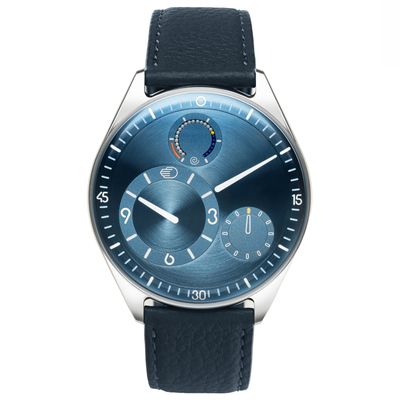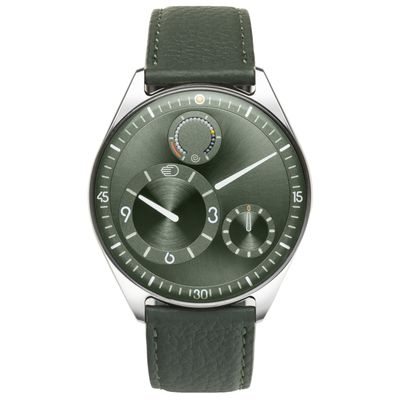



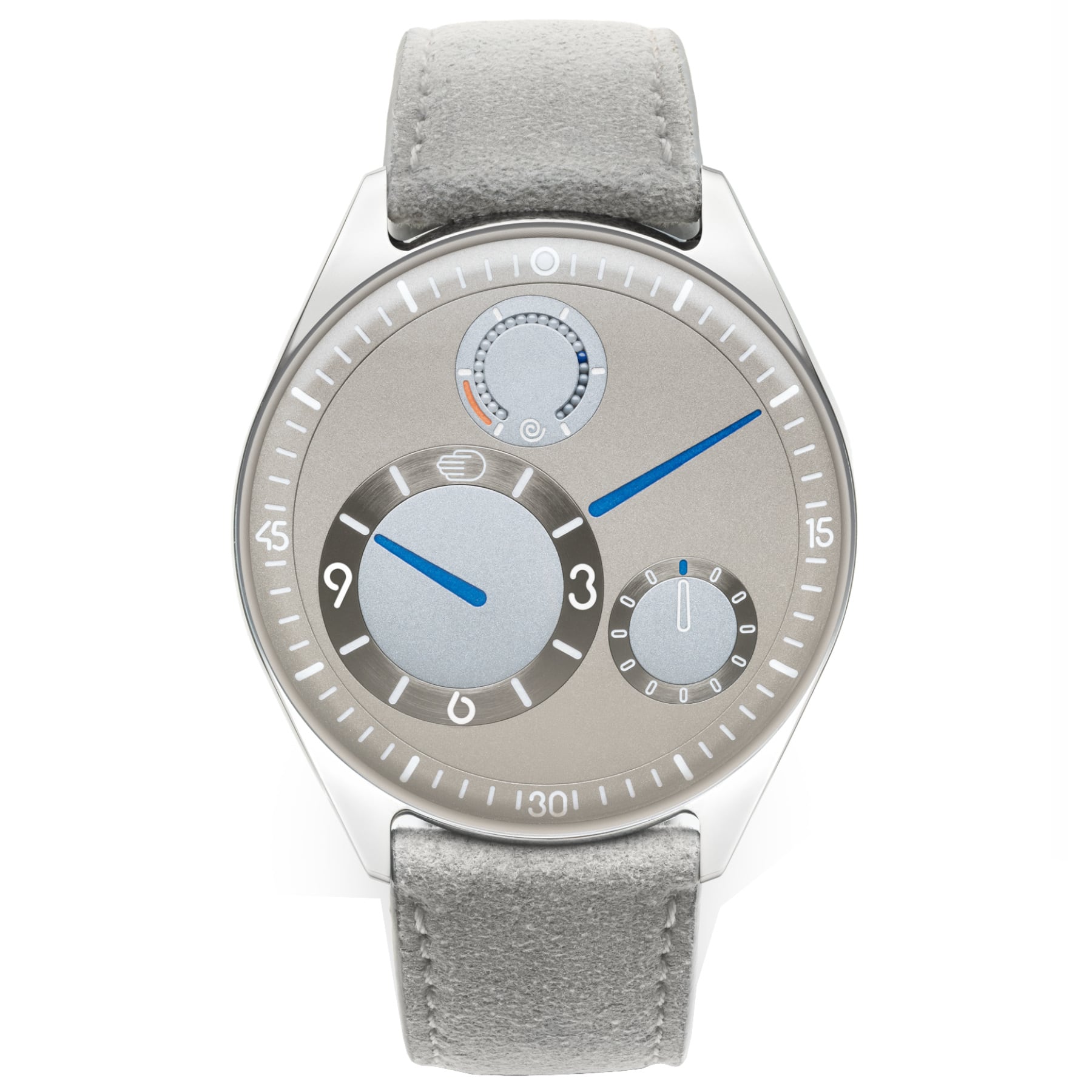
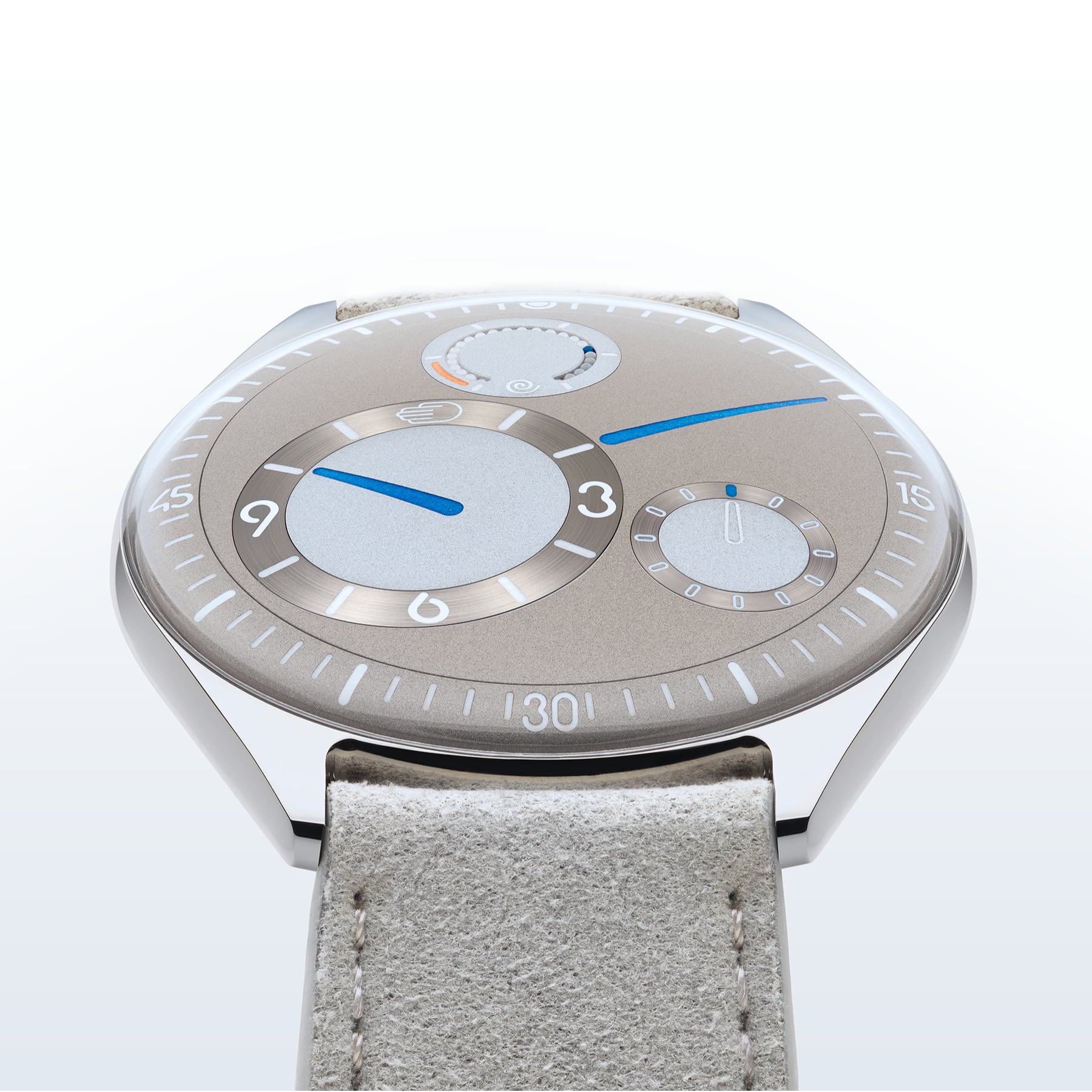
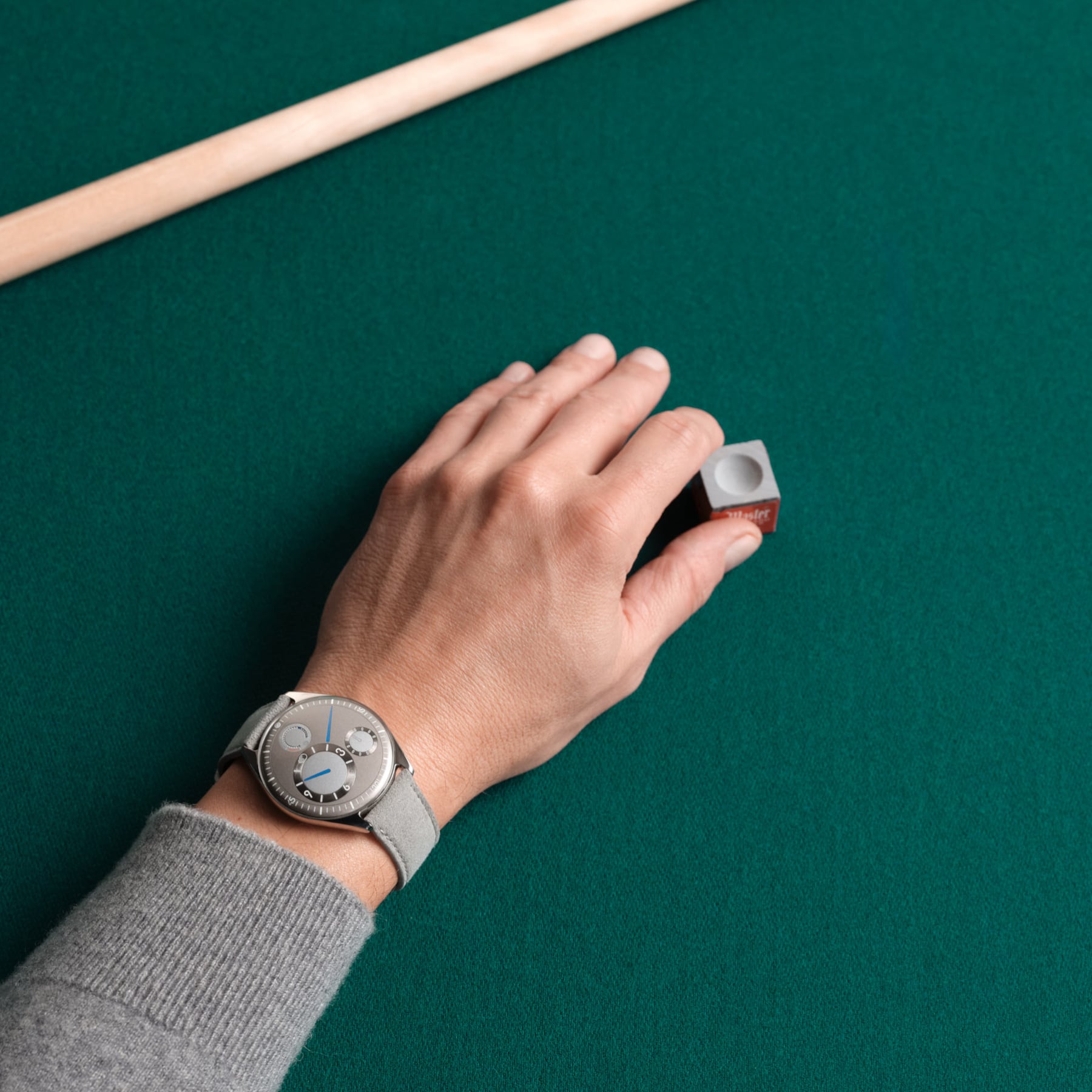
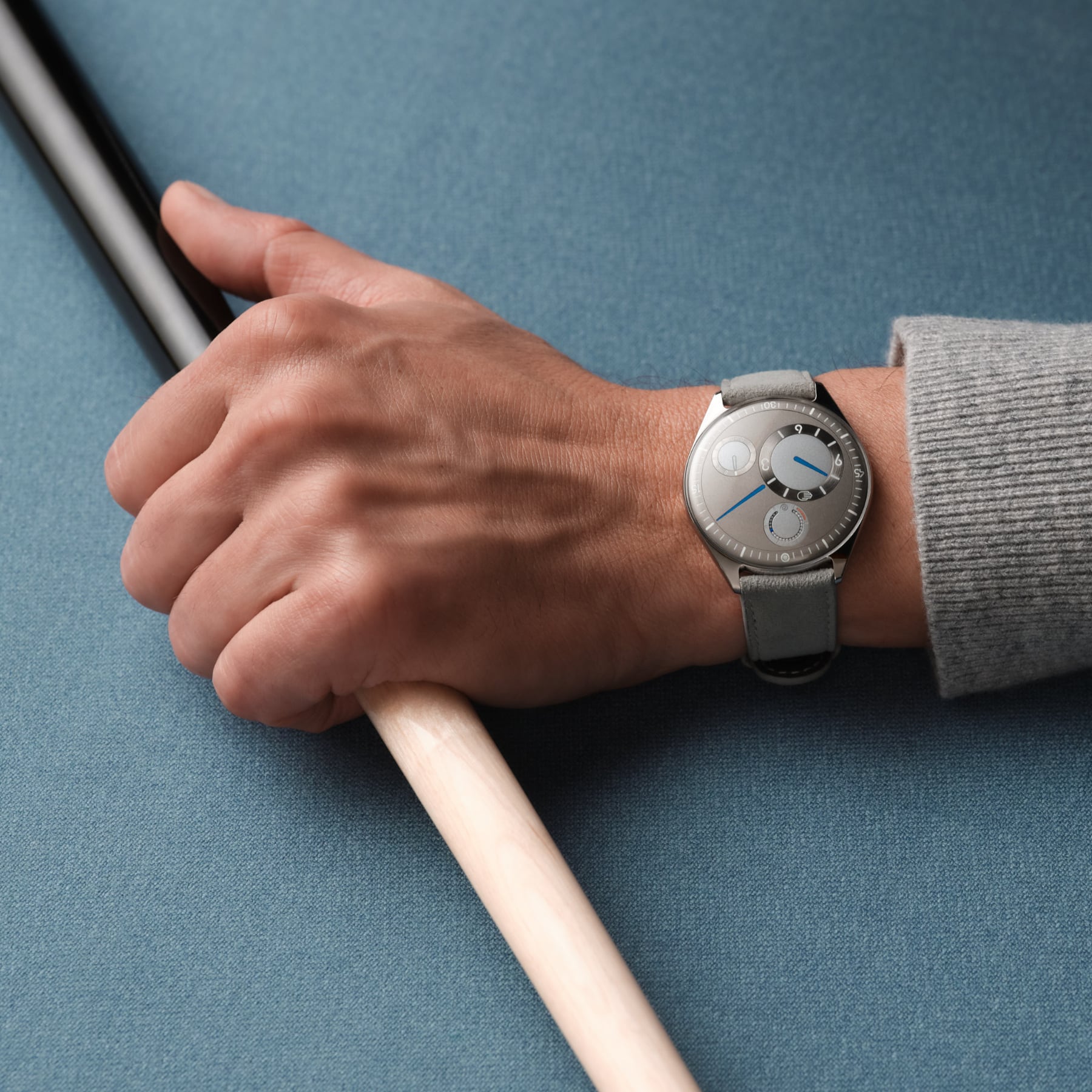
The new TYPE 11 is a contemporary watch - a considered, consolidated design that feels both familiar and unique, yet unmistakably Ressence.
At its core is a brand milestone: the Ressence Werk RW-01, the first movement designed and developed by Ressence. Configured specifically to power the ROCS - the patented Ressence Orbital Convex System - it creates a true integration between powerhouse and display. Its distinctive triangular architecture is defined by three circles — two barrels and a central reference balance wheel — echoing the motif of a Ressence dial.
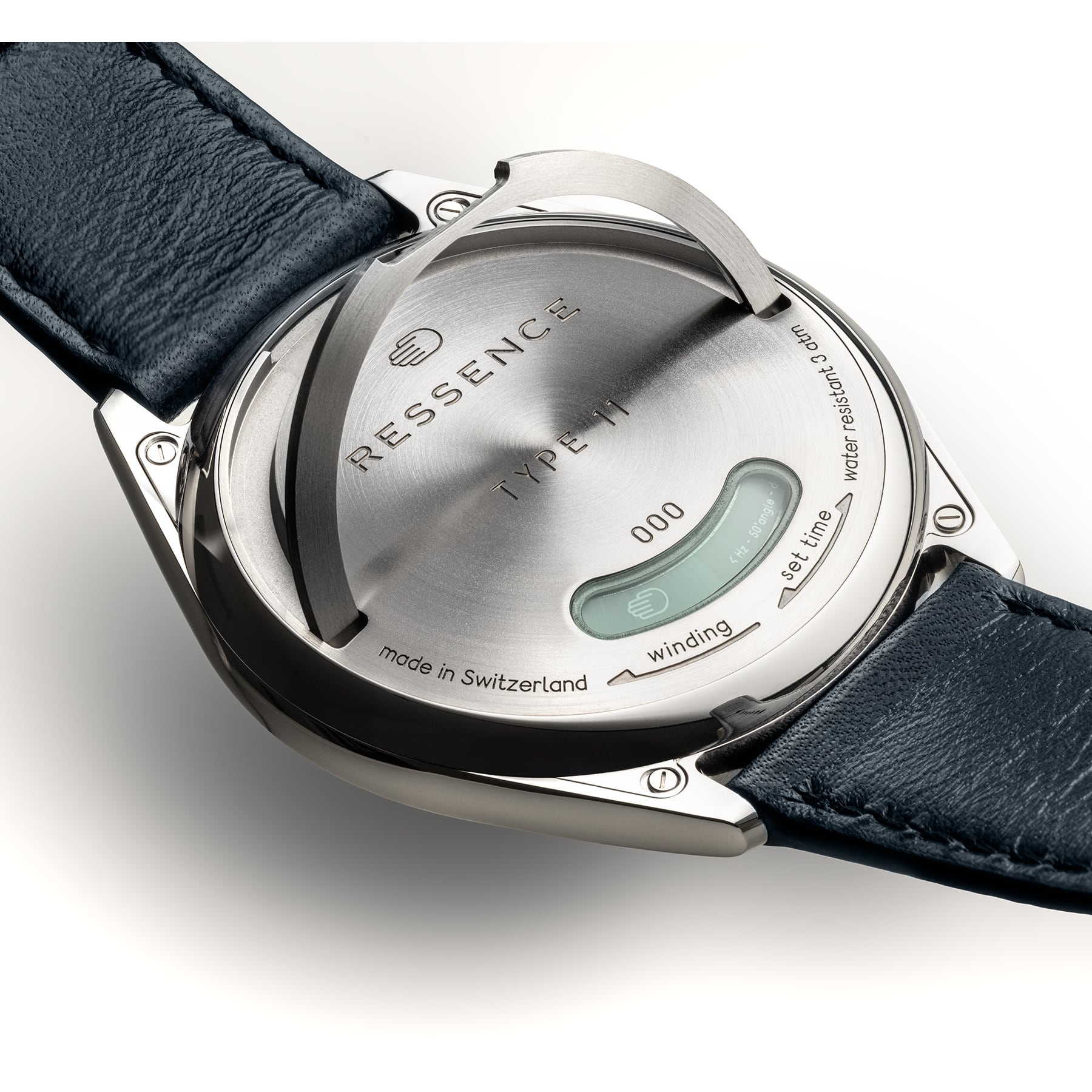
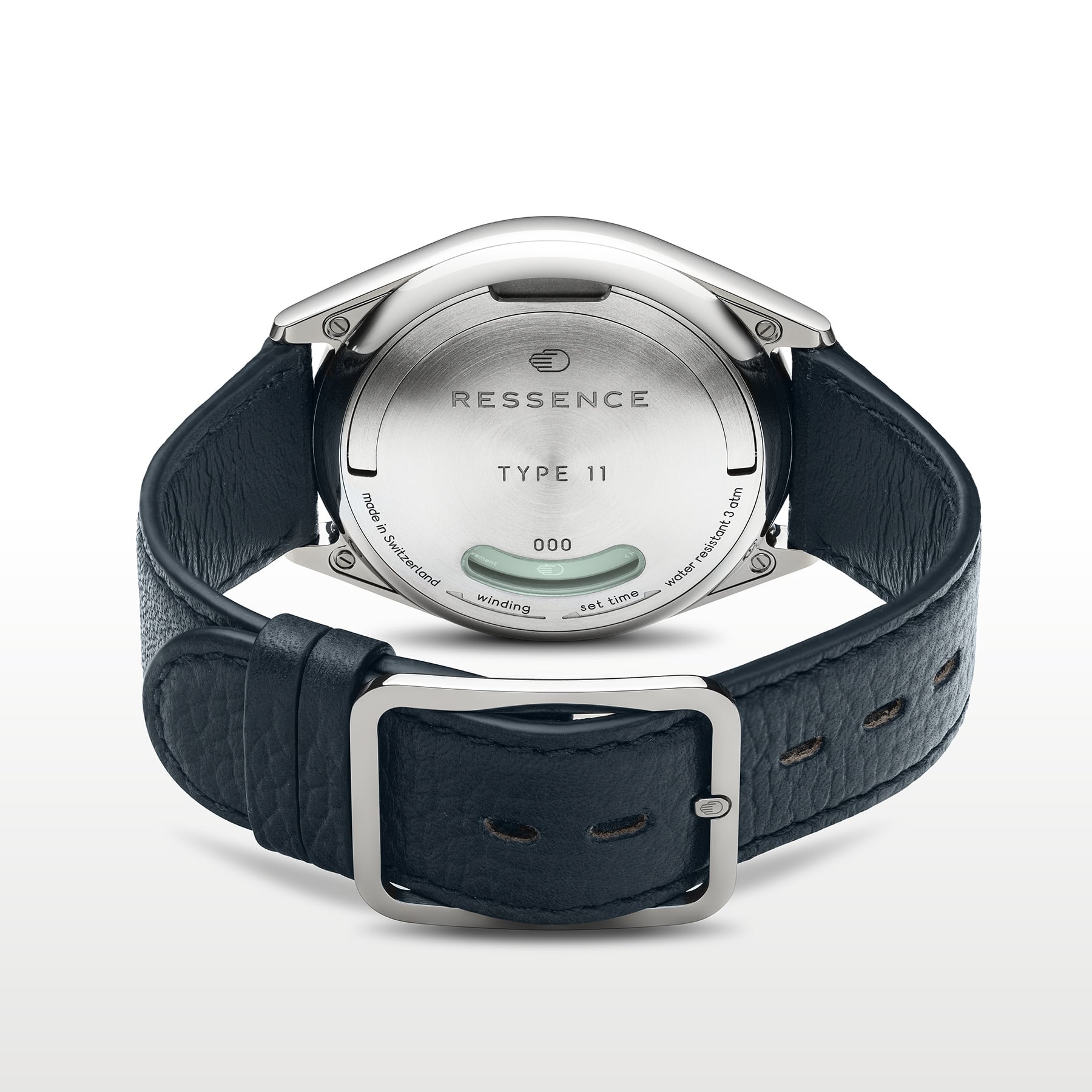
The TYPE 11 is Ressence's most complete watch. It features a patented power-reserve indication, a patented time display, a caseback window to observe the movement, a caseback lever for manual winding and time-setting, and 3 ATM water resistance.
“The TYPE 11 is our ‘Now’ watch, it has the codes of classic watchmaking but it is certainly not a watch of the past.” explains Benoît Mintiens, Ressence’s founder and creative leader. “It is contemporary but not futuristic. The TYPE 11 is a modern watch of the present, while offering the Ressence design ethos."
Unlike previous Ressence watches, the movement and the ROCS module are no longer separate. With a movement designed from the ground up with a Ressence system architecture in mind, the RW-01 and the ROCS are now a single, unified entity. The RW-01 eliminates the winding zone, allowing simplified and unrestricted manual winding via the caseback lever.
The TYPE 11’s Grade 5 titanium case features lugs and a round, pebble-shaped silhouette - classical proportions that give the watch a refined presence on the wrist. A domed sapphire crystal sits above the convex titanium dial, where Ressence’s signature ROCS rotating discs display hours, minutes, power reserve, and seconds without hands, crown or conventional indices.
The TYPE 11's 60-hour power reserve means the watch can span the weekend.
To keep track of power levels, Ressence developed a patented indication using ceramic micro-balls: a string of micro-balls in two contrasting tones that provide an intuitive visual gauge. As the movement winds, the lighter balls progressively emerge while the darker ones recede. When the watch is at rest and power depletes, the process reverses.