
ORIGIN STORY
The Cricket Nautical was the fruit of research conducted by 3 experts who pooled their knowledge and experience and, together with Manufacture Vulcain, developed the very first diver's watch that would not only feature a system for determining no-stop dive times built right into the dial, but also sound a real alarm to signal the diver “time to get back to the surface!” – in a sleek package water-resistant to a depth of 300 meters. The trio of passionate divers: Hannes Keller, a talented Swiss physicist/ mathematician, occasional pianist, and deep-sea diving pioneer; Max-Yves Brandily, explorer and filmmaker; and Arthur Droz, a national certified diving instructor and representative of the C.I.A.S (Centre d'Investigations et d'Activités Sous-Marines – Center for Underwater Investigations and Activities).
Here, Vulcain would like to pay tribute to Hannes Keller, who passed away last year, on 25 December 2022. On November 3, 1966, in Toulon, France, he reached the abyssal depth of almost 250 meters with a Cricket Nautical on his wrist. The record was witnessed and validated by none other than Jacques Cousteau, already a legend by then.
An aquatic cricket
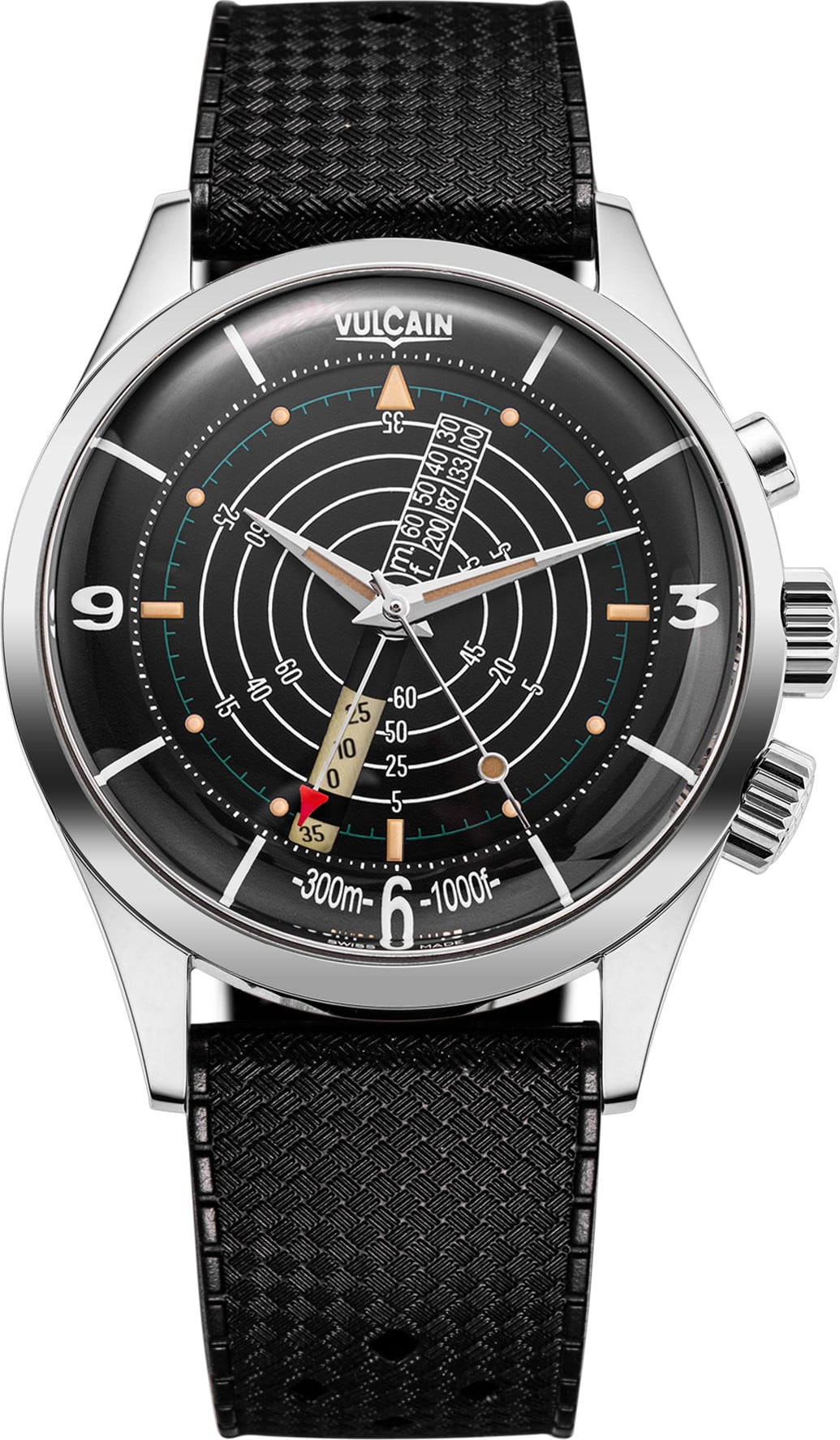
In 1961, Vulcain could boast of being the only watch Manufactures to offer a diver’s watch equipped with an aquatic alarm – in other words, an alarm that could also be heard underwater. Thanks to the ‘triple case back that acted as a resonance chamber, the Cricket Nautical reliably signaled when it was time to head back up. And it’s a performer on so many other levels, too. The purists among scuba diving enthusiasts, fans of mental arithmetic and no-stop tables, will be partial to its functional possibilities; lovers of vintage timepieces, on the other hand, will surely take to its particular aesthetic.
More than a diving watch, a diving instrument
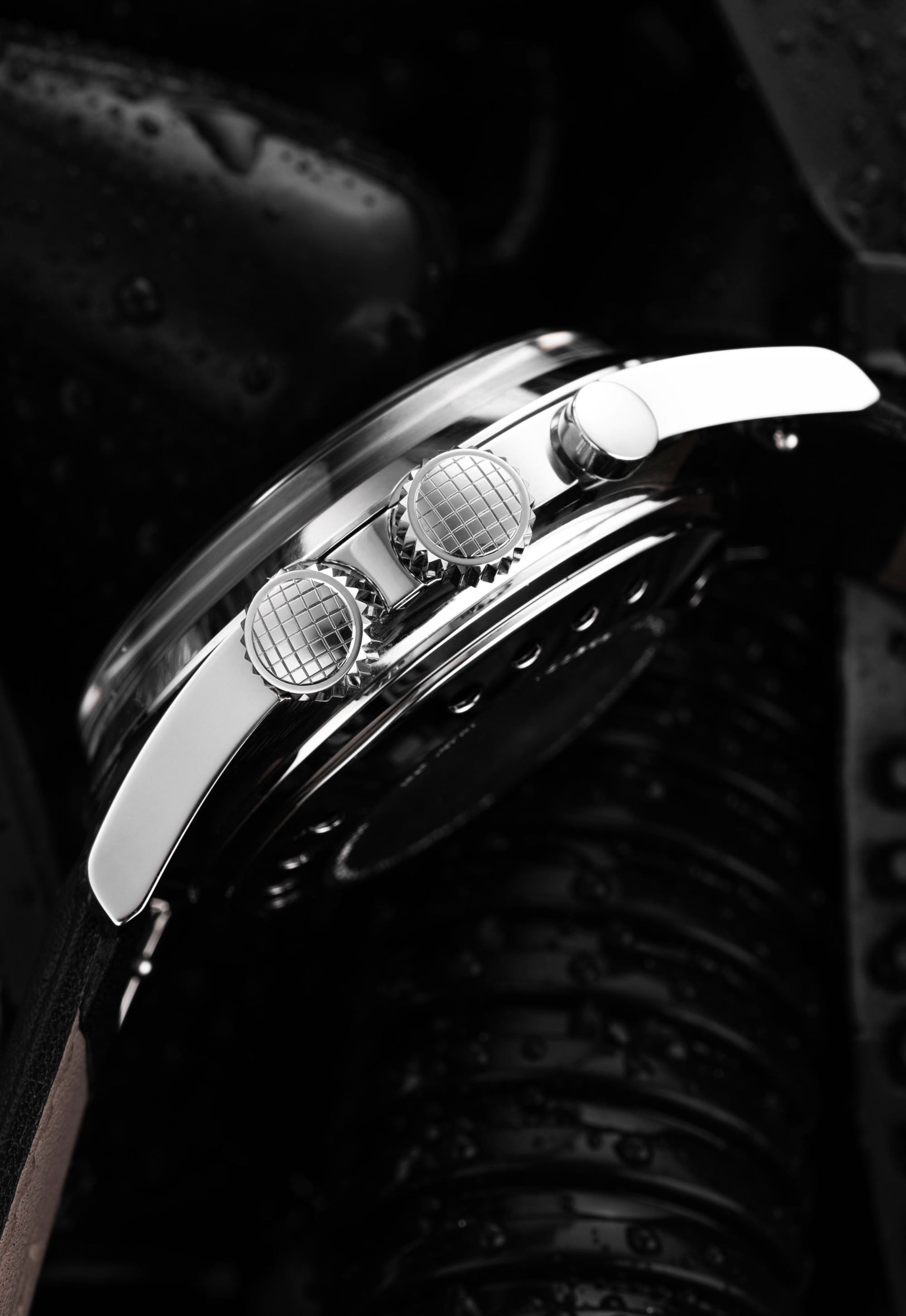
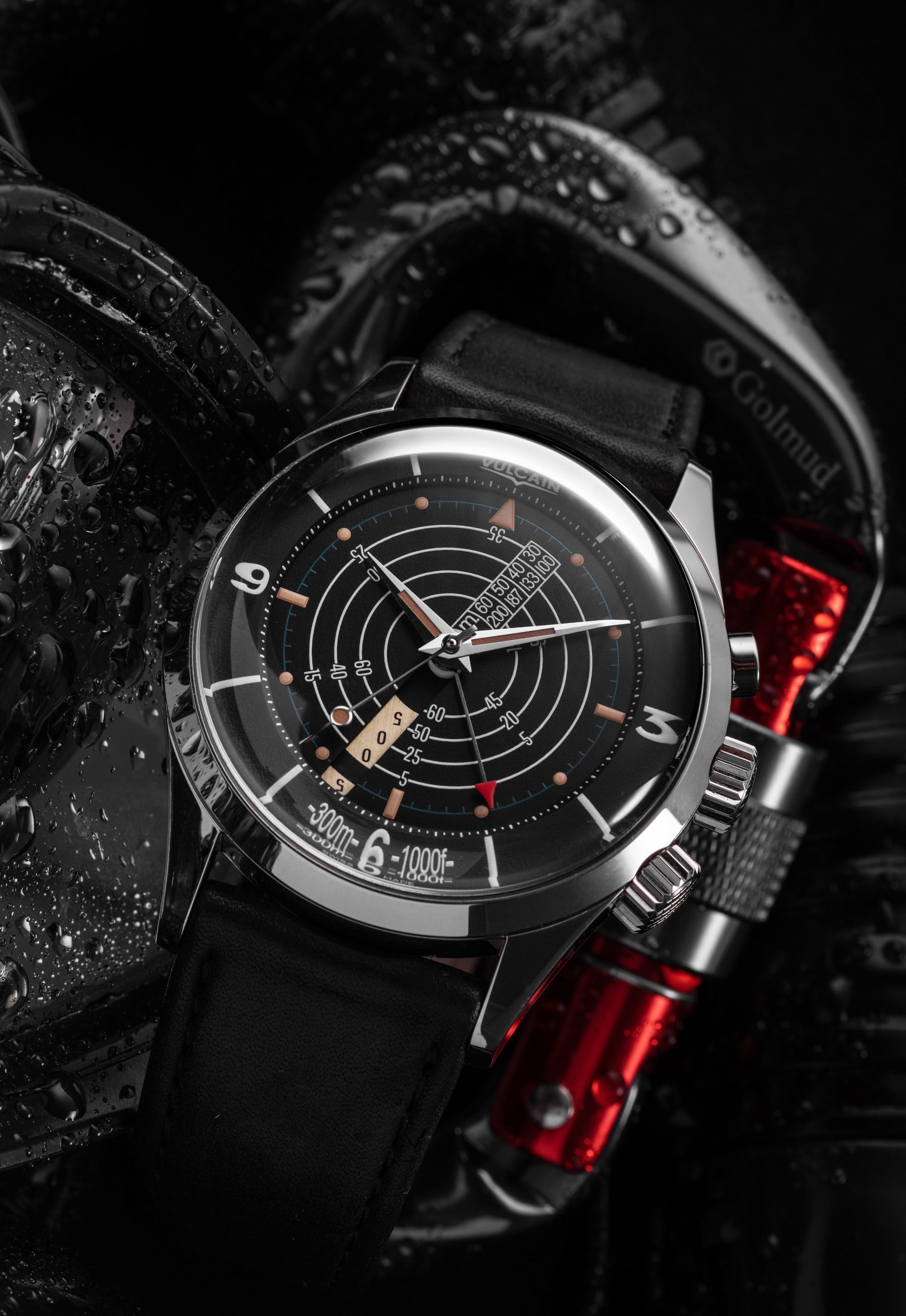
Like its forebear, the Cricket Nautical stands out with ample dimensions for its time, the diameter of 42mm making it easy to use the watch and read the dial indications underwater. Two superimposed dials – one fixed and the other rotating, adjustable with a dedicated crown at 4 o'clock – serve to determine decompression times. Depending on the dive duration and depth set on the dials, the rectangular aperture displays the stop times required at the typical depths of 9, 6 and 3 meters when ascending back to the surface after an extended underwater excursion.