Rolex is, incontestably, the most popular watch brand in the world, to the point where even talking about their popularity feels like a cliché. One million Rolexes are produced every year, and yet still most of their models have long waiting lists and are impossible to find unless you have a close connection with your local dealer.
When it comes to picking out a Rolex that speaks to you, it’s hard to go wrong: the Crown offers a very wide variety of rather customizable options, certainly, an advantage of such high production runs.
Perhaps as a consequence of this wide variety of customization options, however, you might find it difficult to choose between the many stellar picks out there. In particular, case size can be a big issue.
Most people have favorite colors or specific aesthetic draws when it comes to dials or bracelets, but what about case size when these other factors appear to stay the same?
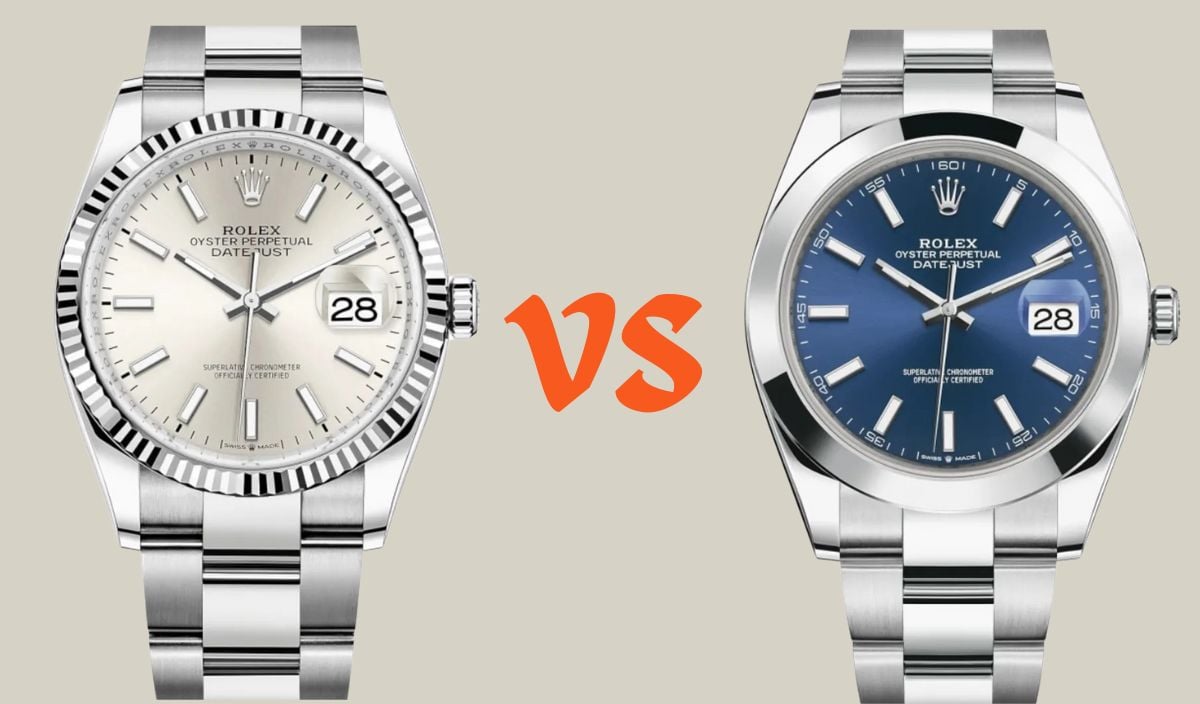
Whether you’re actively picking out your next Datejust or Oyster Perpetual, or just curious about which will prevail in a contest of close competitors, follow along here with my deep dive into the 36mm and 41mm Rolex sizings, and I’m sure you’ll walk away with some newfound insights into design, sizing a watch for your wrist, and the wonderful world of Rolex.
Rolex Datejust 36mm vs 41mm
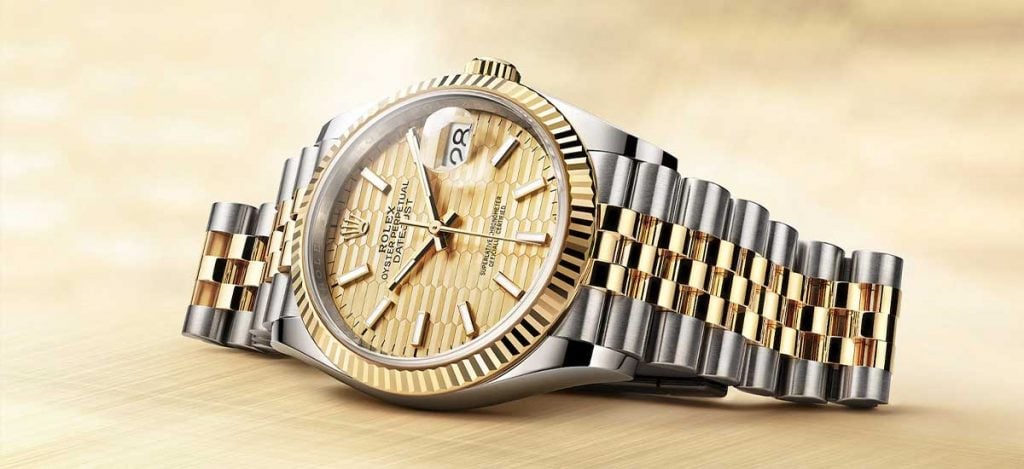
The Rolex Datejust collection has some serious historical backing. It was the first automatic watch with a date wheel, as before, this was usually represented with a pointer on a hand.
This made the dial more cluttered, and the clearest testament to the advantages of the date wheel is its near-ubiquitous presence in today’s sport watches and even dress watches. Many US presidents and key historical figures have worn the Datejust, such as Winston Churchill, and still more have worn its natural evolution, the Day-Date.
Thanks only in part to its extended heritage, the Datejust plays a major role in Rolex’s catalog today, with dozens of options spanning multiple case sizes, dial designs, and metal content. Among all these options, wearers are consistently faced with one key choice to make: should you opt for a 36mm or 41mm case size?
If only it was as clear-cut as a simple answer—but like everything else in the watch world, this decision comes with some significant nuance. In different situations, either option can be better, so I’m here to help guide you to the right one for your tastes.
The Datejust 36mm is the option, among the two, that greatly prioritizes the watch’s heritage. If you’re the type of person who’s fascinated by the “Moonwatch” history of the Omega Speedmaster, you should really consider going for the 36mm option as far as this Datejust battle goes.
It’s a historically accurate sizing, making it very much like the watch that Churchill and several presidents would have worn, without the quality worries that can come with a vintage watch.
In terms of its actual size, the 36mm is elegant and discreet. It slips under a cuff with ease, glinting quietly away as if confident in its own quality without needing to be shown off. Taking it around town on some errands?
It’s small enough that it won’t easily knock around on things, retaining that finished shine much more easily and sparing you a few of those wince-worthy moments when you hit your wrist on a doorknob and just know your crystal has acquired a new scratch.
On the other hand, the Datejust 41 has a much more modern style. 41mm is a very standard size for most modern watches, which will visually break some of those heritage ties and make it look fresher and newer.
Naturally, it has a larger wrist presence, which can make it a little flashier and a little harder to tuck away under a dress cuff if the need arises. Do note, however, that the Datejust 41 is actually closer to 39.5mm in diameter, and Rolex just rounded up the size to get a better model name. This means it’ll wear a little smaller than your traditional 41mm watch, making it a little more subdued.
Lastly, note that both watches feature the same caliber 3235, so the only difference between them is purely an aesthetic one. In either the 36 or the 41, you’ll be getting the same accuracy and power reserve, so there’s no mechanical advantage to either. You can rest assured knowing that no matter which option you decide on, you’ll have the same quality performance that mechanical Rolexes always provide.
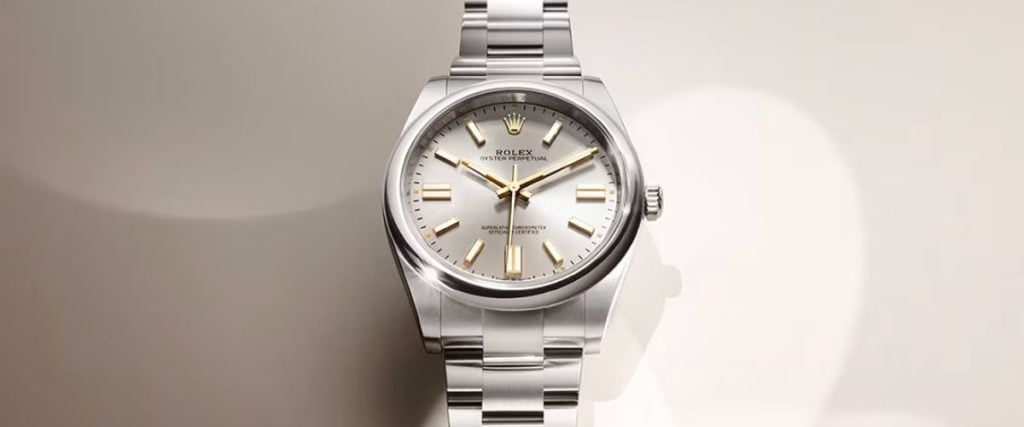
Rolex Oyster Perpetual 36mm vs 41mm
If you were staggered by the Datejust’s historical heritage, you’d better take a seat while we explore the Oyster Perpetual. This iconic collection began with the Oyster in 1926 (just long enough for the Cartier Santos-Dumont, the first men’s wristwatch, to have barely graduated college) and featured the eponymous Oyster case.
This was a patented Rolex invention and was the first waterproof watch ever made, thanks to its monobloc structure (i.e. machined out of one block of steel) and screw-down case back.
The Oyster then evolved into the Oyster Perpetual collection in 1931, with the invention of Rolex’s automatic winding system, which was one of the first to be introduced into wristwatches. At the time of writing this article, the Oyster will be 100 years old next year. That’s some serious heritage as far as a wristwatch collection goes.
Just like with the Datejust, the 36mm Oyster Perpetual is primarily a heritage-motivated pick, all else being equal. It’s just like some of the first Oyster Perpetuals, which the collecting community affectionately calls “bubblebacks” for their large casebacks accommodating the winding rotor.
Not much has changed in terms of the design or structure (except now it’s much thinner thanks to the reduced caseback size), so it’s easy to see this watch as a vintage-driven size that references the originals while also improving on them.
Also, just like the Datejust, the Oyster Perpetual 41 actually clocks in at 39.5mm, making it a little smaller and more wearable than you’d expect. The lug-to-lug is pretty extended as well, at 47.35mm versus the 44mm of the 36mm.
This is reflected in the way the watch spreads out over your wrist, taking up more space and calling more attention to itself. It’s a modern take on a vintage classic and one that executes well while creating a larger profile and contemporary look.
Note as well that, like the Datejusts, both sizes of Oyster Perpetual feature the Rolex caliber 3230, meaning that both will perform exactly the same, and neither will have any advantage over the other in terms of mechanics.
Rolex 36mm vs 41mm – How to Choose
Ultimately, the choice is a hard one, but it can be logically approached by looking at two different factors. The first of these is your wrist size. My colleague Charlotte goes into measuring and analyzing this in-depth in her article here, which you’ll definitely want to check out to help determine which size is better for you.
Let’s break down what size you might be looking at based on your measurement. At around 6”, a watch of around 36mm or 38mm are both good options, and anything below 6” also fits well with the 34mm-38mm range.
At the relatively average men’s sizes of 7-7.5”, look for the range of 39-42mm, or a 44mm for the higher end of this spectrum. Lastly, at 8” or larger, shoot for a large watch like a 44 or 46mm. Following this layout, then, if you’re going for a perfect fit above all, go for the 36mm option if your wrist is anywhere up to 6.5”, and go for the 41 if your wrist is anything above that.
Of course, wrist size isn’t the only factor that should motivate your watch purchase. As we discussed above, there are factors like whether you want something that appears more modern or vintage or more or less visible on your wrist.
Just because your measurement would indicate a “perfect size” doesn’t mean this is always the best option—notably, fashion-conscious actors have been pushing back against this trend, such as Timothée Chalamet wearing the tiny Cartier Tank Mini.
Another factor to note in the battle between these two sizings is the customizable options associated with each. While both sizes have a very wide range of offerings, Rolex does clearly treat the 36mm as a more feminine size, and has more dial options that would typically be considered feminine.
These include mother-of-pearl and pink colors, as well as several options studded with diamond indices. If you’re looking for a little extra bling or refined flair, the 36mm may be the way to go, thanks to its unique dial styles.
Conclusion
The decision between the Rolex 36mm and 41mm options may not be as contentious as the eternal questions of whether a hot dog is a sandwich or whether or not coffee tastes like dirt (don’t ask my opinion, you’ll probably be offended).
That said, it’s a decision that does take some thought, and I hope that you’re now equipped to make the right choice for your next Rolex or your next watch purchase, whatever it may be.
It’s no secret that the spectacular quality of a luxury watch almost never comes for cheap. But what about those watch fans who admire the refinement of watchmaking yet are unable to afford higher-end pieces? Never fear: microbrands provide the solution.
These small, generally affordable brands offer unique designs at accessible prices. Thanks to the many microbrands on the market, any watch enthusiast can easily find any style of watch. But amidst such a dizzying sea of offerings from all sorts of small brands, it can be challenging to find exceptional-quality offerings.
Thankfully, when you do, they astonish and amaze time and time again. There’s something for everyone, and all it takes is to find that special piece that would be a special addition to your collection or a faithful companion day in and day out.
History of Microbrand Watches
Small brands working steadily away at producing their own designs and quality pieces are as old as watchmaking itself. Often, these were individual watchmakers, producing pieces one by one.
Thanks to recent advancements in technology and global connectedness, watch designers are now able to get their parts produced by private-label companies, allowing individuals to realize complex case patterns and exquisite dial layouts.
The best microbrands are often the passion projects of watch aficionados, who are able to bring their expert collecting eye to bear on creating their own watches.
When you buy a quality microbrand watch, you’re tapping into a tremendous amount of attention, design, and energy, backed by the experience of people who have been immersed in the horological world for years.
Top 20 Best Microbrand Watches
There are a dizzying number of microbrand watches on the market right now, and it can be hard to pan through all these options to find the nuggets of gold. Look no further than this list, where I dive deep into 20 of the best watches out there on the market. I personally guarantee you’ll find at least one that speaks to you. Without further ado, let’s dive right in!
Christopher Ward The Twelve (Ti) Astral Blue
Since the 1970s, there have been very few new steel sports watch designs, while the originals—the Royal Oak, Nautilus, Ingénieur, and 222—continue to enjoy tremendous popularity. They’re iconic designs and were truly game-changing when they first came out. The Twelve is, without a doubt, a worthy successor to these spectacular watches, and it manages to reference the originals in a way that is both unique and refreshing.
The Twelve features a characteristic dodecahedronal bezel (try saying that ten times fast!). This bezel is absolutely stunning, with many facets and three different finishes to boot. These textures and angles pair perfectly with the sharp and elegant case.
The dial is absolutely fantastic and shows just as much attention to detail as the case, with a rich fumé (smoky) icy blue color over pyramidal engraved patterning. Toss in those sleek, modern hands, and you have a cutting-edge modern design.
At a clean, wearable 40mm in diameter, with a grade 2 titanium case and a slick tapered bracelet, and priced at just $1,895, this watch could easily be the Astral Blue star of any collection.
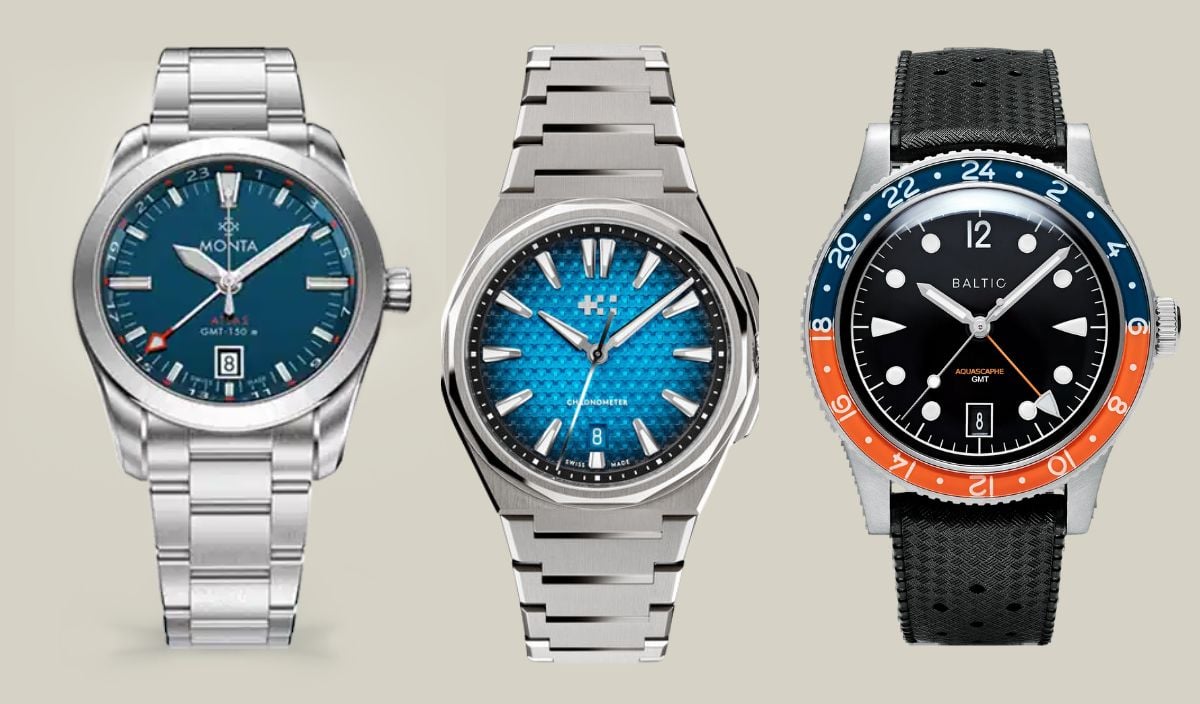
Monta Atlas GMT Opalin Silver Dial
GMT watches have the unique opportunity of coupling an extremely useful complication (the ability to track another timezone!) with a clean and elegant design, and the Monta Atlas is one of the very best in these regards.
With its refined silver dial touched with pops of light blue from the GMT hand and text, it transitions from the board room to a refined soirée with ease. Through the exhibition caseback, you can see the MONTA Caliber M-23 with a customized rotor.
At just $2,150, the Monta Atlas GMT Opalin Silver Dial easily meets all the criteria for a worthwhile pick and a beautiful everyday companion.
Lorier Neptune
Almost everyone knows the Rolex Submariner and the Omega Seamaster. They’re some of the most iconic watch designs ever created, full stop. So it took a particular amount of pluck for microbrand Lorier to step up and design the Neptune just as if it had been created in 1957, right alongside these greats. Thankfully, their bravado paid off.
The Neptune has a stunning gilt dial, with gold printing on black and lume that’s 3D printed on to make it extra thick and extra bright. The case is brushed and simple, flowing well into the bracelet. My favorite touch is the bezel, with its oh-so-simple vintage font that, in my eyes, is just right for a vintage-inspired watch like this one.
At 39mm, it’s a wearable companion that can follow you from scuba diving (with 200m of water resistance!) to the office. And at $499, it’s a very palatable choice for your wallet.
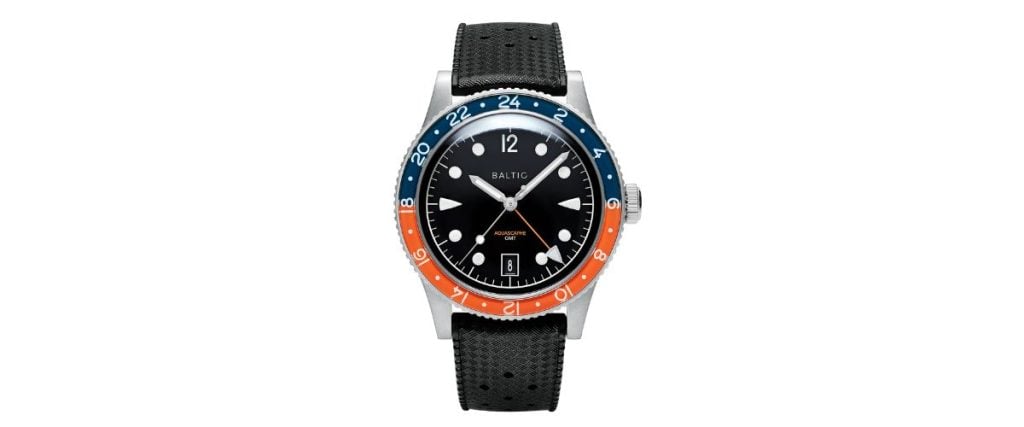
Baltic Aquascaphe GMT Orange
Baltic is a new French brand that has been making headlines lately—and with good reason. Their Aquascaphe GMT Orange works with colors in a way that’s incredibly eye-catching and harmonious.
The blue/orange bezel is bidirectional, allowing you to track not just two but three total time zones when you set it. The case has razor-sharp angles and a simplistic brushed surface, emphasizing its tool watch nature.
The dial, for its part, is a readable matte black touched by pops of orange from the GMT hand and dial text. The hands are faceted and polished, powered by the SOPROD C125 GMT, a Swiss automatic movement.
For $938.40, it’s even less expensive than many of its microbrand competitors, let alone some of the larger-brand GMTs. Personally, I recommend tacking on a beads-of-rice bracelet for an additional $97.58, which adds a chef’s kiss of vintage flair.
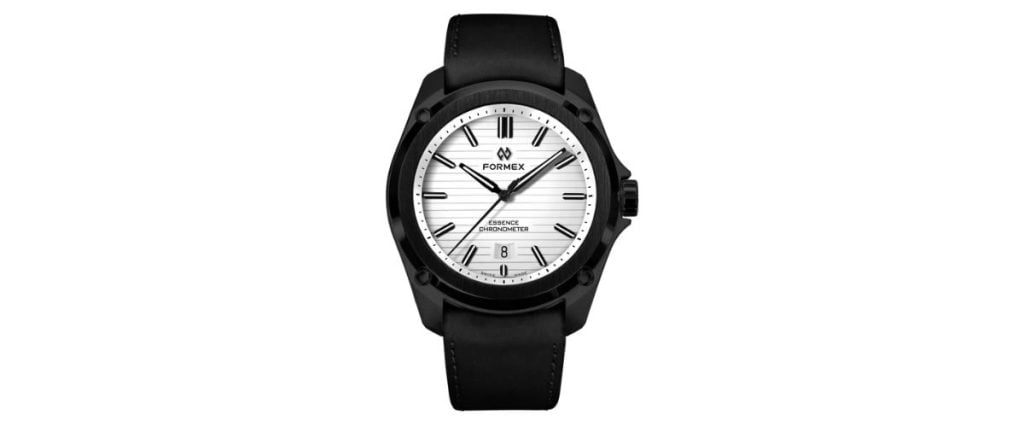
Formex Essence Leggera Forty One Arctic White
There are sports watches, and then there are sports watches. The Essence Leggera is firmly in the latter category. The case, for one, is made of carbon fiber composite, which makes it durable, gives it a silky feel, and provides a stealthy appearance. Contrast this with the polar white dial, which has engraved horizontal ribbing and bright blue lume on its mirror-polished hands and indices.
Beating at the heart of this wearable monster is the chronometer-grade Sellita SW-200-1, which has 41 hours of power reserve and is supported by the proprietary Formex case suspension system. This invention acts just like the suspension on a bike to protect the movement from hard knocks and quick motions.
All this extreme functionality and slick design come for just $1,640, including taxes and shipping.
Traska Commuter 38 Adriatic Blue
To pull off a simplistic watch design like this, you really have to nail every single detail. Astonishingly, that’s exactly what Traska has done here with their Commuter 38. It’s an understated everyday watch that can follow you anywhere faithfully. Its case finishing is elegant: brushed lugs and polished bevels emphasize the fluidity of its design and give it a lovely shine.
The bezel and the dial pair splendidly, as each is finished in a sunray pattern. The dial, of course, is rendered in the absolutely stunning blue-green shade that evokes the Adriatic Sea. Both the hands and the indices appear simple but, in reality, have a fascinating triple-faceted structure.
At an impeccable 38mm diameter and a price of just $650, allow me to finish with a brief warning: watch out so you don’t get just as lost in the rich blue-green of that dial as you would in the real Adriatic Sea.
Atelier Wen Millésime 2024 Mù Purple Dial
Full disclosure: this watch is one of my favorites. At once classical and modern, it builds on the integrated sports watches of the past in a stunning new way. Its case structure is stunning and fluid, creating a design that moves your eye around the watch thanks to its compounded curves.
The dial is a work of art. To describe that rich purple guilloché as simply “eye-catching” would be an injustice, but it really does seize your attention and draw your eye in.
Each dial is hand-crafted by China’s first and only master guillocheur, Cheng Yucai. Another elegant touch is the traditional Chinese pattern known as huí wén on the chapter ring, which is filled with Super-LumiNova.
This $3,588 beauty runs on a special ultra-thin movement made in China, the SL1588A, which was heavily customized for Atelier Wen to feature a strong 41-hour power reserve and some beautiful finishing.
Its custom purple rotor is visible in part through the caseback, which is engraved with the face of a stone lion whose mouth is transparent sapphire. It’s a watch that punches well above its price point and could easily compete with icons like the Royal Oak at over ten times its retail.
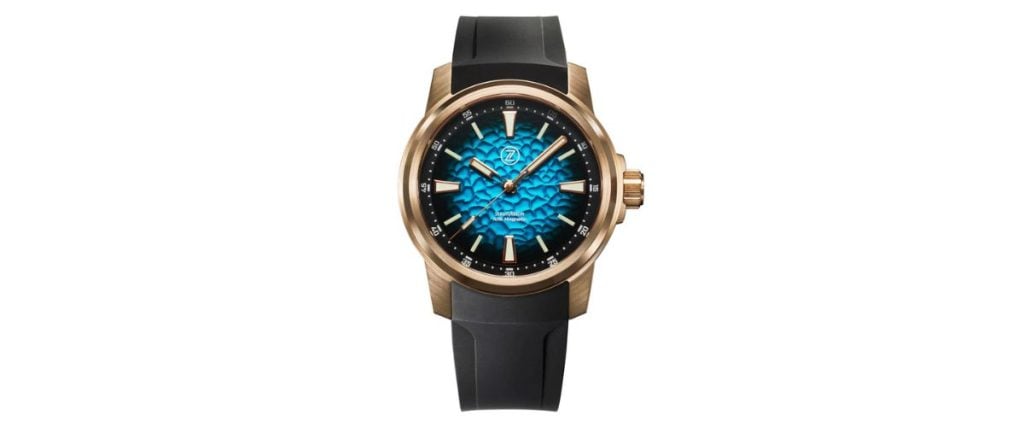
Zelos Aurora Field 38mm Bronze Hammered Blue
Many people are fascinated by the idea of a watch that ages with them, slowly accumulating scratches and scuffs from life’s great journey. A bronze watch can take this idea to the extreme. Over time, bronze slowly acquires a spectacular green patina—think of the Statue of Liberty in a unique and gradually changing pattern. If any of this sounds appealing to you, the Zelos Aurora Field is the perfect pick.
Even beyond its elegant brushed bronze case, the Aurora Field features a stunning hammered dial with a fumé blue gradient. Copious amounts of lume fill the sporty indices and hands, as well as the rehaut minutes scale. With its hammered texture and polished indices, it’s easy to imagine the Aurora Field as the product of a master metalworker’s workshop.
For just $399, this utterly unique everyday wear with 200m of water resistance could, and certainly should, be yours.
HALIOS Seaforth IV Pastel Blue
Looking for something playful and simple but a sturdy companion for wherever life takes you? Canada-based microbrand HALIOS’ Seaforth collection is the perfect answer. Available with or without a clean and nondescript dive bezel, this is a watch that can follow you from sea to land to sky with ease.
Its rich blue dial has an extremely creamy and smooth texture, and its prominent crown guards establish it as a durable tool watch. The extreme legibility of such a simple but refined dial set it firmly as one of the very best in this category. Frankly, it’s very difficult to find any fault with this watch—and the movement beating inside, a Sellita SW-200-1 is just as solid as the rest of it.
At $775 with the rotating bezel or $735 with a fixed one instead, the Seaforth IV Pastel Blue is a great value option for almost any budget.
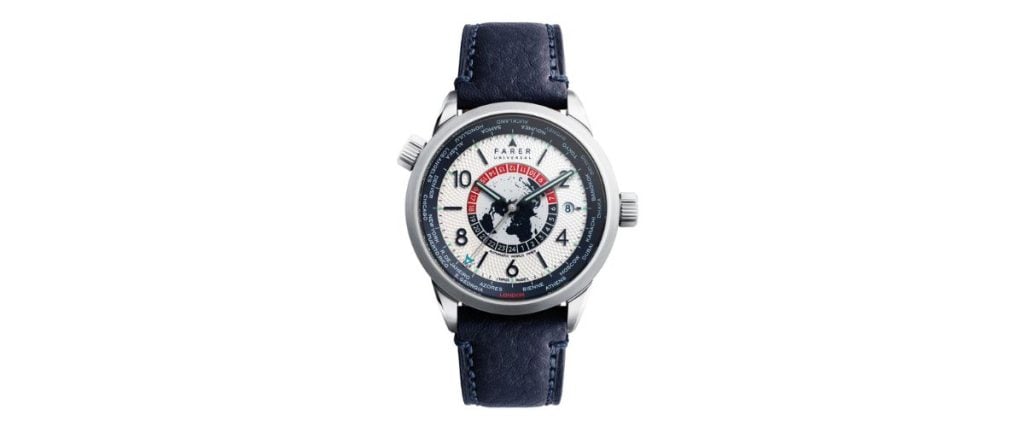
Farer Markham II World Timer
We’ve already featured several GMTs on this list, and while they’re exceptional watches, the Farer Markham II World Timer takes the level of travel functionality a whole step further by tracking not just one or two extra timezones but all of them simultaneously.
This is a complex design that’s hard to pull off simply or elegantly, but the incredibly cohesive design of the Markham II manages just that. The extra crown at 10:00 allows you to set the 24-hour rotating time zones bezel, aligning them each with the proper hour. The dial is, in my opinion, faultless, from the depth of the white guilloché base to the red and blue accent colors in various shades to the numerals and text shaped in a clean, modern font.
For $1,695, this quality, functionality, and attention to detail do come at a slightly elevated price, but it’s an investment that won’t stop paying dividends.
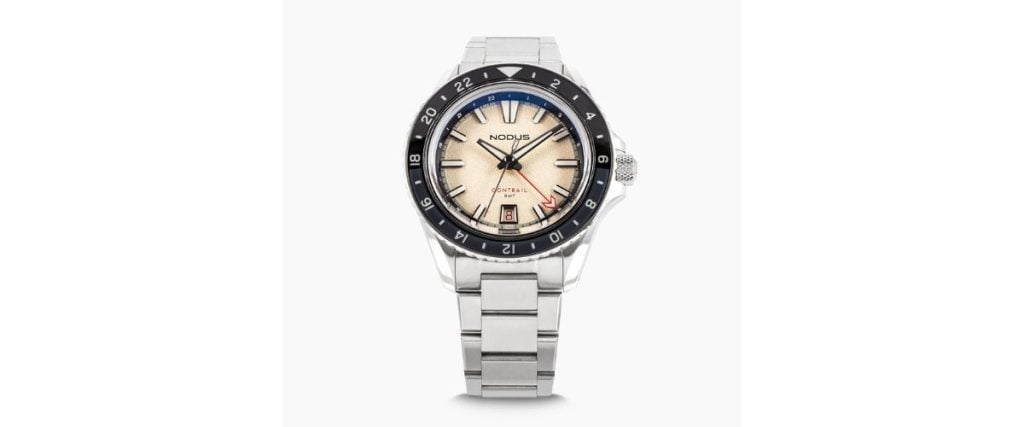
Nodus Contrail GMT Laguna
The Contrail GMT Laguna captures all of the Hollywood movie-star charm you would hope for from a Los Angeles-based brand like Nodus. I absolutely love the profile of this case and the way it lays on the wrist. I’m a sucker for twisted lugs, and the way Nodus has opted to mirror polish the outside of these lugs and brush the inside just provides some spectacular contrast, especially when seen in the context of that glossy sapphire GMT bezel.
The dial serves as the epicenter for all that charm, with its clean matte sandy finish that recalls hot California beaches in the summer, and the addition of a color-matched date window is a great touch.
For $825, it’s a solidly priced watch for a product that has clearly seen a significant amount of attention to detail in its design and development. It’s an elegant tool watch that doesn’t just do its job—it does it well.
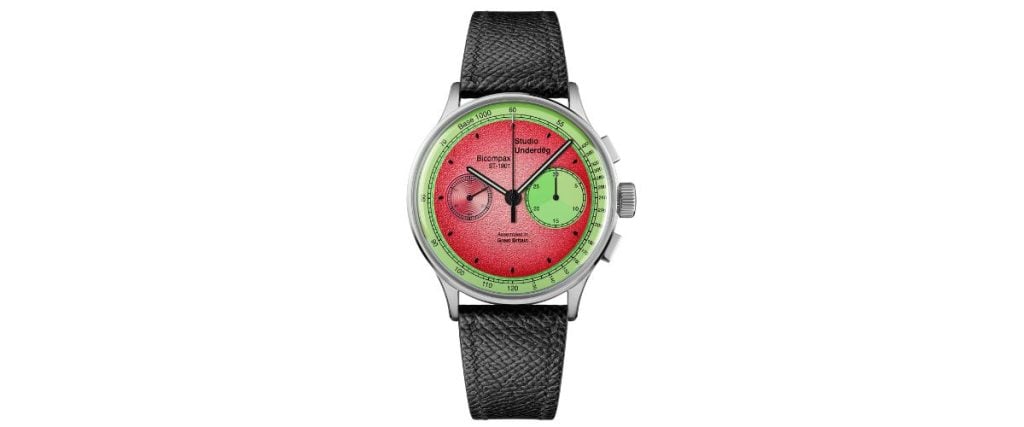
Studio Underd0g Watermel0n
This mouthwatering chronograph is, first and foremost, fun, to the point where I’m almost tempted to forget that it has some serious watchmaking chops behind it.
That spectacular dial has clearly seen a lot of development, from the carefully balanced layout of the text and the subdials to the fascinating matte finish of the center red section. Just looking at it brings back fond memories of summer picnics!
A small detail I’d like to mention here as representative of just how much attention has gone into this design: the 3:00 chronograph subdial is actually not just flat green but three separate shades, all faintly distinct, for each 10 minutes of the 30-minute counter. In this way, it ties together all of the separate shades of green used in the watch in an extremely cohesive manner.
For $675, you can get your hands on a serious piece of horological fun. Just don’t take a bite out of it…
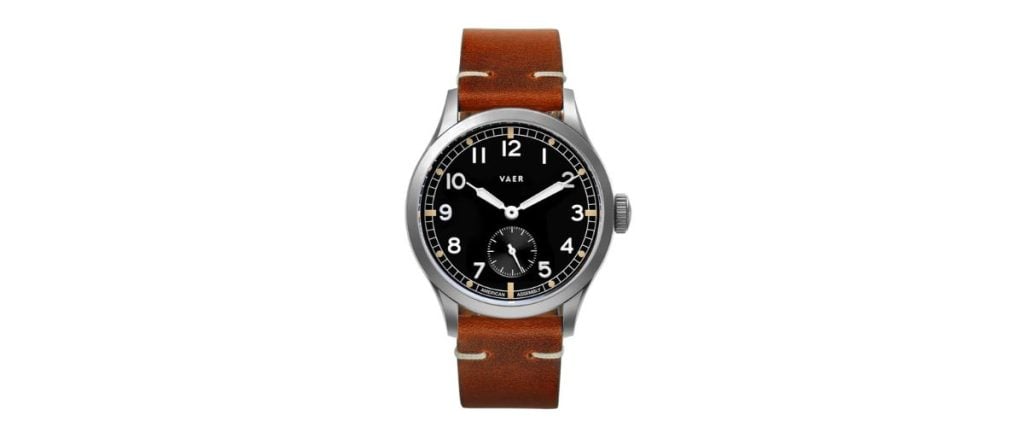
Vaer C5 Dirty Dozen – 40mm Ameriquartz
The Dirty Dozen were some of the most iconic watches ever made: a series of British field watches produced during WWII by 12 different Swiss manufacturers. They exude confidence and military charm—but purchasing one of these original antiques is both expensive and, for the most part, impractical. Enter Vaer, an American brand that has replicated this timeless design with a focus on USA craftsmanship.
Vaer’s design is motivated by practicality above all else, as evidenced by their “Ameriquartz” movement with 40 months of battery life. It’s a watch you can slip on and pair with any outfit, confident that it can easily resist the elements thanks to its 100m depth rating. The marriage of vintage design with modern practicality is nothing if not compelling.
For just $299, you get a watch that is at once infinitely cooler than the ubiquitous Apple Watch and much cheaper. Sounds to me like it has its competition beat!
Maen Manhattan 39 Ultra-Thin
At first glance, the Manhattan 39 instantly calls to mind horological masterpieces like the Royal Oak and the Gerald Charles Maestro. Yet upon closer examination, it proves itself completely distinct, a refreshingly new design that stands on the shoulders of giants but exudes a charm all its own.
The case flows organically, using contrasting polishing in several different areas to move the eye around the piece and provide incredible depth. The bracelet drops seamlessly from the lugs, with no juncture visible between the two. As for the dial, the traditional Côtes de Genève finish adds a healthy dose of classic style, which makes the avant-garde design of the case much more easily wearable.
For just $1,070, this ultra-thin watch is a worthy competitor of the icons it references, full of simplistic and elegant charm.
AnOrdain Model 1 Japanese Oxblood
AnOrdain is a brand that I’ve been checking out quite a bit lately, thanks to their gorgeous enamel dials and Scottish roots. I don’t think I’ve ever seen a color quite like this Japanese Oxblood dial, and for me, it inspires a nearly visceral reaction whenever I let my eyes linger on it.
Everything else on the dial is designed to complement that amazing enamel, and it does it perfectly, with thin markers and refined numerals inspired by Scottish cartography.
The case is a bit of a departure from what we’ve been seeing on the rest of this list since it’s mostly mirrored instead of brushed. The hands are a lovely heat-tempered straw color, which complements the dial splendidly as a bit of an accent color.
The opportunity to get your hands on a real in-house enamel dial for just $2,679 if you opt for a La Joux-Perret G101 or $2,284 for a Sellita SW210 is an option that really can’t be passed up. Pair that with the spectacular strap options that AnOrdain offers, with some seriously high-quality leather, and you have yourself a home run.
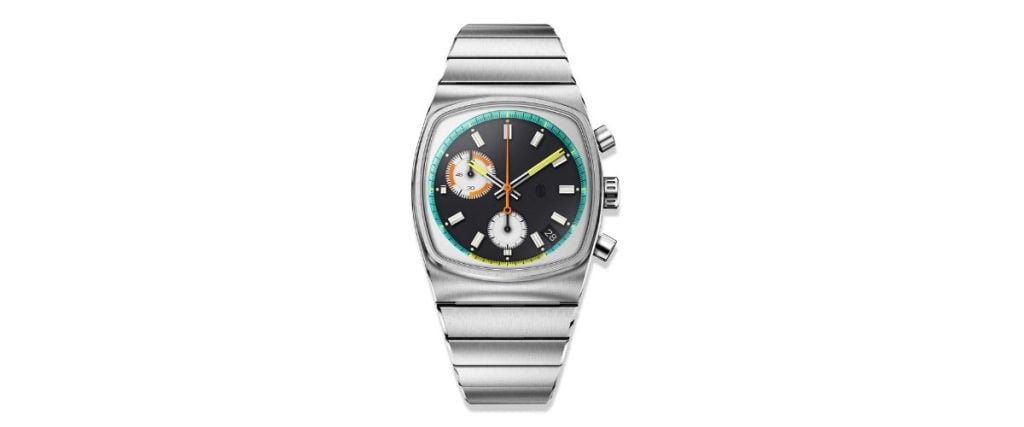
Brew Metric Retro Dial
What do coffee and incredible vintage watch design have in common? Go on, I’ll wait. Here’s the answer: the spectacular Brew Metric Retro Dial.
It’s an incredible vintage-inspired chronograph that uses bright vintage colors to stunning effect, with an overall color palette that pops strongly against its muted steel case and black dial. Plus, the chronograph function turns it into a perfect everyday wearer that can accompany you on any journey.
Where does the coffee come in I hear our dear caffeine-starved readers demanding. Never fear—the brand isn’t called Brew for nothing.
On this watch, the minutes track between 25-35 seconds is highlighted in yellow-green to signify the perfect time of extraction for an espresso shot. You could use your smartphone for this task… or time your fancy homemade espresso with an equally chic watch.
Its retail of $450 is an extremely reasonable price for a watch of this level of elegance and fun, whether you end up making espressos with it or not. Coffeemaker not included.
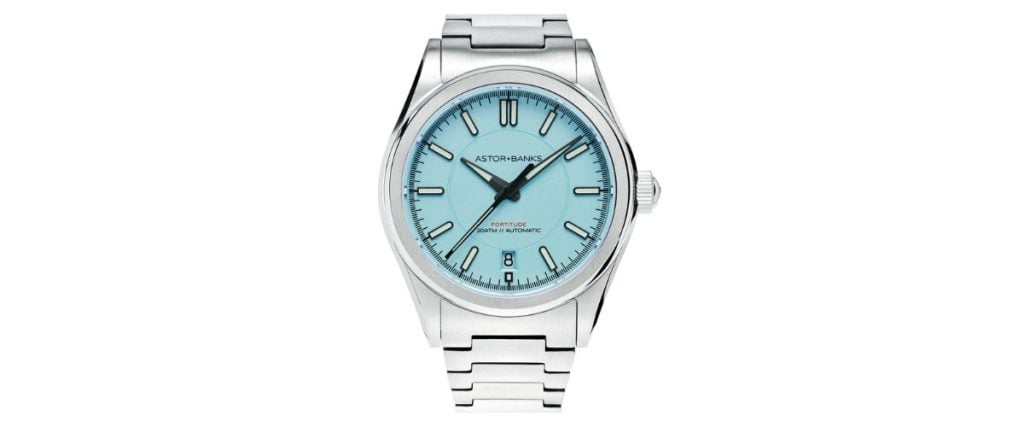
Astor + Banks Fortitude Pro Mint Green
I love mint—I always have and always will. So when I researched for this article and found out Astor + Banks had an edition of their Fortitude Pro with a rich mint green dial, it was immediately on my radar. I think it’s a truly fantastic watch.
That dial is refreshing just to look at, and its structure is so simple and clean that it would be challenging to find fault with it. The rest of the watch is exactly what a tool watch should be: drilled lugs for easy strap changes, a contrasting brushed and polished case, and a lovely brushed bracelet. The dial may be the star of the show, but the rest of it doesn’t disappoint.
At $675, you get a slick tool watch with a powerful automatic Miyota 9015 movement. Frankly, I’d buy it just for that mint dial—but the rest of it just so happens to be spectacular as well.
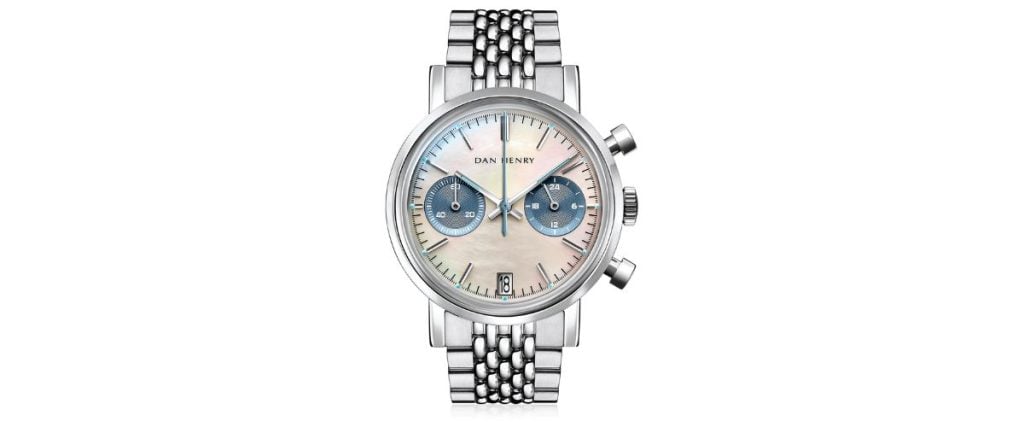
Dan Henry 1964 Gran Turismo Chronograph
The 1964 Gran Turismo is simple, elegant, vintage-inspired, and customizable. All four of these highly desirable characteristics together create something truly magical.
One of the biggest standout attractions of this watch is the wide variety of options you have in customizing your watch. Models are available in either 36mm or 38mm and in a wide variety of colorways. Plus, the 38mm includes a tachymeter, further building on the watch’s racing heritage evoked in the Gran Turismo name.
As a final touch, no matter which of the many sleek dial options you go with, consider adding a beads of rice bracelet for a boost of class and vintage flair. At $250 for the 36mm and $300 for the 38mm, you really can’t go wrong.
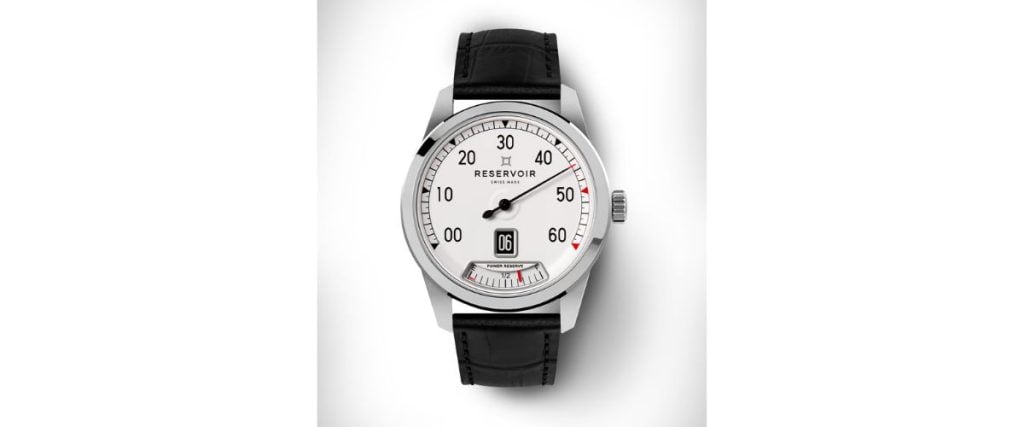
Reservoir Supercharged Classic
The luxury worlds of watches and automobiles often overlap, but rarely do they combine to form such a unique and fascinating product as the Reservoir Supercharged Classic. This watch is deeply inspired by vintage speedometers, and it accomplishes this look with a totally unique dial.
The minutes hand acts like the speedometer hand, gradually accelerating throughout your day before, at the top of the hour, it snaps back to 0 and begins again. The hour is unobtrusively present in a “digital” display and even the power reserve is presented just like a fuel tank, a useful and charming touch.
In case you’re wondering, all of this vintage driving charm is powered by a custom in-house module. For $4,400, it’s a little more expensive than the others on this list, but for that price you’re getting a specially developed module and a spectacular design. If you’re a car fan, don’t let this one pass you by.
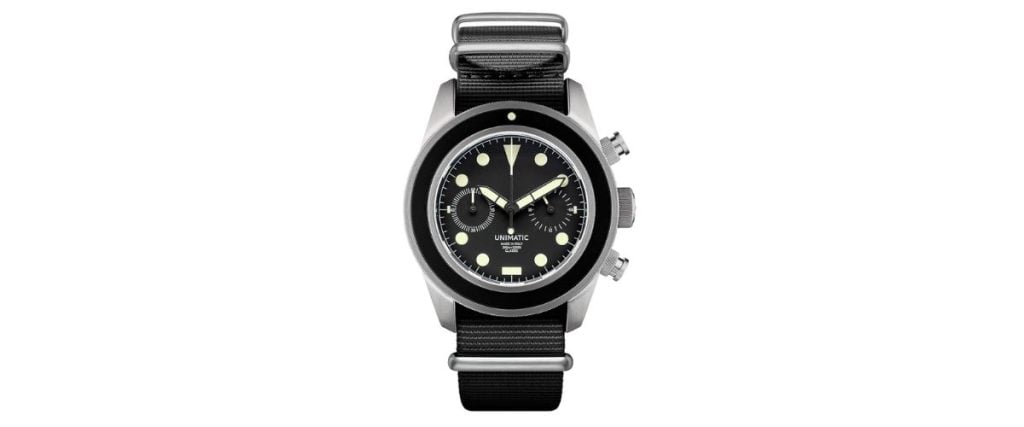
Unimatic U1 Classic
Unimatic is an Italian-based brand that is known first and foremost for their hardcore, tool-built designs. The U1 Classic continues that trend but with a healthy touch of refinement and class. It’s simple, minimalistic, and elegant, following timeless design codes with its matte black bezel and dial and pale green luminous markers.
A brushed case and crown guards cement this watch as a tool watch beauty whose 300m of water resistance means it would be only too happy to follow you on your latest diving expedition. Do note, however, that the single dot on the dive bezel does sacrifice practicality for design, as timing events will now be more difficult.
For $550, you’ll have a deep-diving watch that can follow you from the ocean to anywhere as soon as the water’s done streaming off of it. Or just take it for a few laps in the pool. Whatever floats your boat.
Conclusion
Microbrands are some of the brightest stars of the watchmaking community, producing watches that push the boundaries of both affordability and design. It can be hard to sift through the thousands of options out there, but this list is a fantastic starting point.
Whether you found a specific piece on here that called to you or simply a new brand to explore, I have no doubts that there is something for everyone who appreciates quality watchmaking and elegant design.
The Apple Watch is, without a doubt, the single most popular and recognizable watch in the world today. Its many models are present on wrists all around the world. As a category, they’re one of the best-selling products ever created. Their iconic rectangular shape can be spotted a mile away, adding style to powerful functionality.
Its near-ubiquity, however, does not detract from its simple attractiveness. For iPhone owners and even those without Apple products, the Apple Watch is a fantastic daily companion that can aid you with daily tasks, making life more streamlined and fun, just as the very best technology should.
Whether you’re a hardcore watch nerd wondering about the mysterious world of smartwatches, an Apple fanatic looking to upgrade to the latest watch model, or just a beginner looking for a good entry point into the confusing array of Apple Watch models, look no further than this guide. I guarantee you’ll find just the right watch for your style, interests, and budget here.
Iconic Development: The History of Apple Watches
Before we dive into the specific breakdown of the watches you might be interested in, let’s examine how this line has evolved and become the icon that it is today. Learning about where these watches have been and what they’re becoming helps any informed buyer determine what the best choice is for their budget and for the market as it currently stands, and even just a brief overview can make a big difference in helping you to make the right decision.
The more than 100 million Apple Watches sold to date span 15 generations since their introduction in April 2015. (I did the math—that’s over 11 million watches sold per year on average and close to 7 million per generation!) These dizzying numbers are a clear testament to the quality and appeal of the world’s most iconic watch.
The first Apple Watch may have been a little slow in processing speed, but it utterly redefined what a smartwatch could be. Step tracking, heart rate sensors, even Apple Pay—not even 10 years ago, many of the functions that we now take for granted in a smartwatch were absolutely groundbreaking, all thanks to the Apple Watch.
With later editions, the processing speed was greatly increased (almost doubled from the Series 0 to the Series 1!), and a bevy of new functions were introduced. GPS, waterproofing, mindfulness, independent cellular connection, Fall Detection, emergency sirens, and so much more all found their way into later editions of this smartwatch which is always at the very cutting edge of technology.
Throughout their history, Apple Watches have been pushing limits and driving the entire smartwatch market forward through their new advancements and technological features. The latest editions are a strong continuation of this trend, especially considering the powerful tech in the Ultra 2.
When considering purchasing a new Apple Watch, look for the technology it features and how it’s pushed the market forward, as well as for its price, which usually is remarkably low for the advancements the watch holds.
Top 5 Best Apple Watches
Without further ado, let’s get right into the breakdowns! Each watch fills its own particular niche in Apple’s portfolio of offerings, and there’s something for everyone, from avant-garde technological beasts to subdued affordable options. I guarantee you’ll easily find the right watch for your budget and interests on this list!
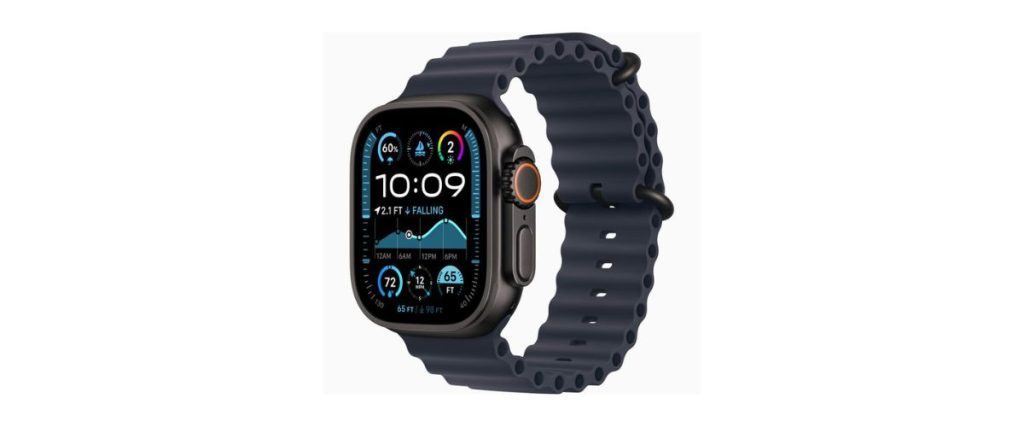
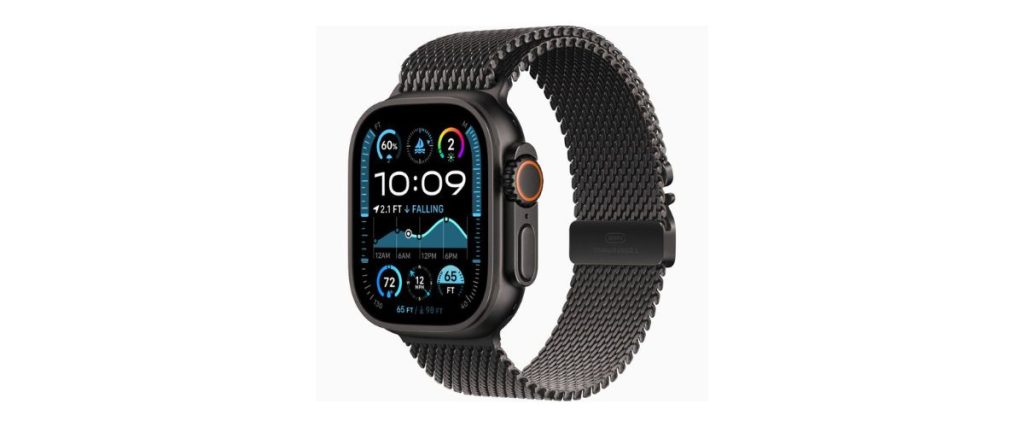
Apple Watch Ultra 2
Honestly, where else could we start except with this ultra-advanced stunner? (I make no apologies for my puns—watch out since there may be a few more ahead!) For $799, it won’t come cheap, but you’ll get every dollar of your money back in the form of a titanium-enshrouded, 49mm hulk.
The blazing fast S9 chip powers a dizzying array of functions: dual-band GPS, dual integrated speakers, emergency siren (audible up to 600 feet, two football fields away!), LTE cellular capability without even being connected to your phone, and a battery life that blows its competitors out of the water at up to 72 hours straight in Low Power Mode.
Sure, the price isn’t easy to swallow for most people looking to get into the market. While I can’t guarantee that your wallet will be happy with you, I can assure you that you’ll find many everyday moments becoming smoother.
You can quickly dash off text messages from your watch, your phone left behind; you can fire up that dual-band GPS and go for a run anywhere from the mountains to the streets of Barcelona; you can even pick out a particularly chic watch face from the store and stride calmly into a board room meeting or an important conference with your Swiss army knife of tech at your side. You couldn’t ask for anything more from a tool that’s not merely a watch—it’s a daily companion.
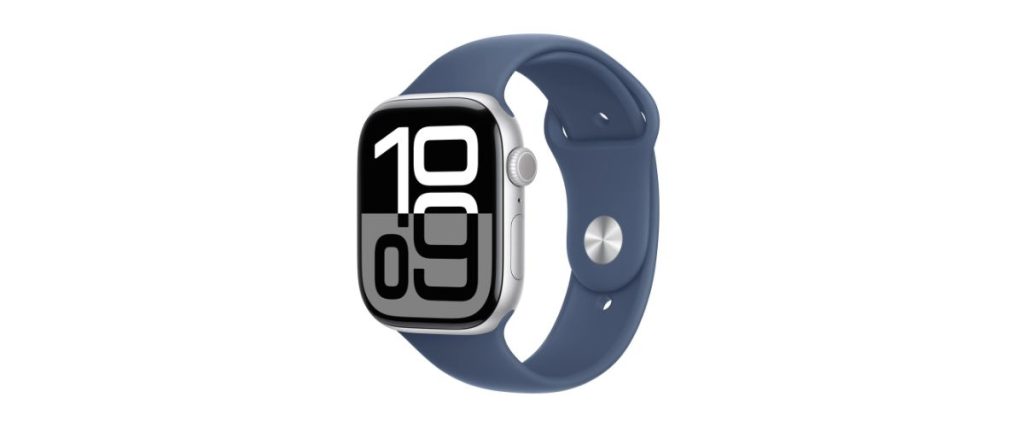
Apple Watch Series 10
At $399, the Series 10 is a much more palatable offering from Apple than the Ultra 2 which still manages to offer a wide variety of technological advancements. At either 42mm or 46mm, you can pick the size that best suits your wrist, knowing that regardless of which option you settle for, you’ll have a bright wide-angle OLED display to proudly show each of your Series 10’s functions.
It surpasses its predecessors in a few key notable ways, although, for the most part, it’s a very similar watch. It’s thinner, 10% lighter than the Series 9, and has fast charging—which usually takes just 20-30 minutes to get your watch charged the majority of the way.
For most, that means simply popping the watch onto the charger while you shower and slipping it on for the rest of the day! I find that these are things that seem like little details on paper (or on ETP’s exquisite blog, I suppose) but really improve the watch’s performance every single day throughout every function that you use.
Finally, the Series 10 offers the Breathing Disturbances function, which can detect sleep apnea. This is honestly a huge advancement in diagnosing and preventing this condition and is definitely worth checking out if you’re worried you may suffer from it.
One drawback to note, however, is the absence of any sort of blood oxygen sensing feature which could be used to measure your respiratory system and fitness performance. Previous Apple Watches have featured this powerful tool, but it unfortunately had to be removed due to a lawsuit filed against Apple over the blood oxygen function.
As such, this advancement has been removed in most new Series 9, 10, and Ultra 2 watches, leaving them at a slight disadvantage compared to other smartwatches on the market that still offer blood oxygen measurement. If you’re looking for any sort of respiratory system analysis, you can opt for an older Apple Watch made before the lawsuit.
An easy way to identify a watch that still has this function active is if it does not have the letters LW/A at the end of its part number. It’s an unfortunate loss but one that can be circumvented if the need arises.
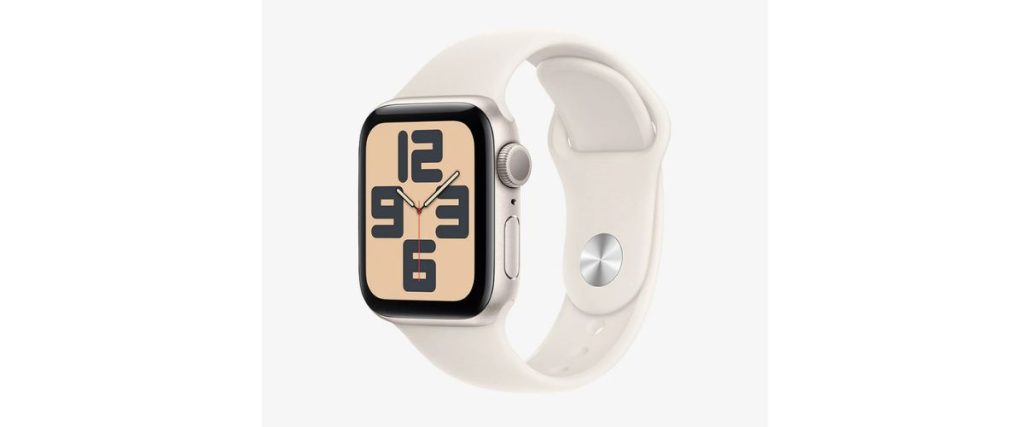
Apple Watch SE 2nd Generation
The original Apple Watch SE was, from the start, an exceptional budget-friendly option, and the 2nd Generation has only improved on the original while keeping a strong entry-level price. At $250, it’s much more affordable than even the Series 10, and still has quite the heavyweight lineup of features.
With an S8 chip, it’s not exactly as cutting-edge as the Ultra 2, but it sure does pack a punch (especially compared to some of those predecessors we were talking about in the History section!). The Vitals app is probably the biggest headline feature: at a quick glance, it shows heart rate, respiration, and other health-related features. Whether you’re working out or just going about your daily life, the Vitals app helps you stay on top of your well-being.
Another sweet budget-friendly option (which really just feels like dessert at this point—it’s almost impossible to resist!) is that independent cellular connectivity, which is a separate fee for each watch, is cheaper for the SE 2 than any other Apple Watch.
This makes the SE 2nd Generation a great pick for people who don’t actually have an Apple iPhone or who don’t want to be reliant on their phones. With cellular connectivity, the Apple Watch SE can do most of what an iPhone could, with a smaller, more unassuming presence on your wrist as opposed to the weight in your pocket.
Apple Watch Series 9
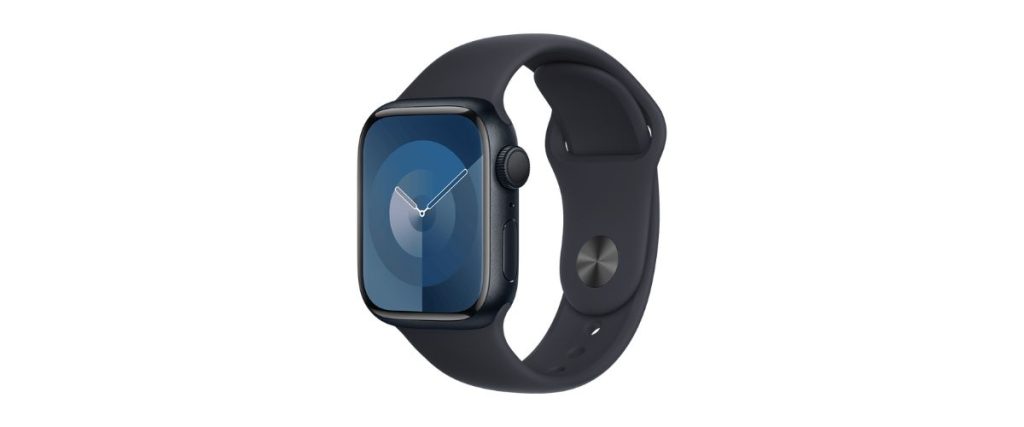
The Series 9 isn’t currently offered by Apple for retail sale, but it is still a strong option for anyone looking to get into the market of Apple Watches. With an S9 chip and Breathing Disturbances, it edges out the SE 2nd Gen in functionality while still remaining at a relatively affordable price of around $300. Thanks to the fast new S9 chip, it has quicker processing for intensive functions like Siri as well as better battery life.
What’s more, many Series 9 models still have a fantastic array of sensors: ECG, skin temperature (which can help you see if you could be getting sick), and some even feature that rare blood oxygen sensor (again, look for a part number without LW/A).
With 41mm and 45mm case options, you can get a size that fits perfectly with your wrist and lifestyle. Speaking of lifestyle, as if the Apple Watch couldn’t get any easier or more convenient, the Series 9 uses a newer function called Double Tap, which activates the primary button on your home screen (which can be whatever you map it to) by just tapping your index finger and thumb on your watch hand. As in, no need to even touch the screen.
The Series 9 is all about functionality, ease of access, and making your lifestyle easier, and it hits a home run in every possible way.
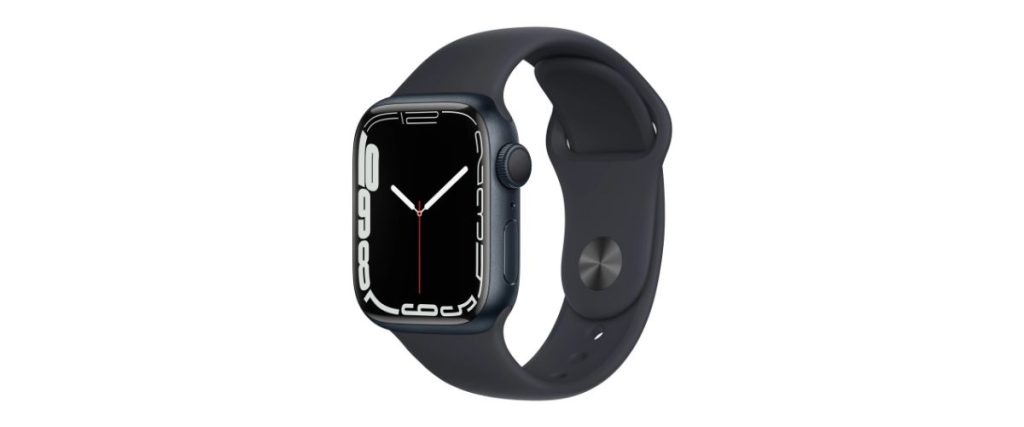
Apple Watch Series 7
The Series 7 may be an older model, but it sure has some kick left in it. You can find them for as low as $150 refurbished, which even surpasses the SE 2. Best of all, they still have that oh-so-precious blood oxygen sensor. No need to check part numbers in this case—every single Series 7 you can get your hands on will have it. For those who are in need of a good analysis of their respiratory activity, the Series 7 is a strongly compelling choice.
That said, one drawback of the Series 7 is that it usually goes for around the same price as a Series 8, both models being discontinued. For the most part, the Series 7 has one advantage beyond all others: its colors.
It comes in bright blue and green, colors that aren’t offered for any of the other models. If you’re looking for something a little more fun or fashionable than the austere titanium of an Ultra 2, the Series 7 might be exactly the watch you need.
Conclusion
Hundreds of millions of Apple Watches certainly haven’t been sold for nothing! As a collection, they span 15 generations of advancements that push the boundaries of what’s possible in smartwatches and wearable technology. They’re a true cultural icon in a way that few watches ever have been before, even surpassing the famous Swatches of the ’90s.
From the ultra-rugged Ultra 2 to the powerful but entry-level SE, there’s an option for everyone in Apple’s catalog. Whether you’re a hard-bitten mechanical watch collector or just someone looking to buy an everyday wrist companion, Apple has just the right watch for you.
Much in contrast to mechanical watches, which have remained the same in principle for centuries, smartwatches are evolving constantly. Brand-new cutting-edge sensors and programs are constantly being added to the latest models, and this has made today’s fitness watches extremely powerful tools for tracking your overall health and wellness.
Whether you’re a dedicated athlete or just focused on living a healthy lifestyle, any good fitness watch provides countless ways to stay on top of your game. From simple functions like heart rate tracking to advanced training programs offered by trained computer algorithms, the dozens of fitness watches on the market provide a wide variety of options for any budget and any goal.
Among all these options, however, it can seem overwhelming and nearly impossible to narrow your focus down to the very best one. As such, the experts at Exquisite Timepieces have put together a list of the 10 very best fitness watches that you can find, from budget-friendly to top-of-the-line.
History of Fitness Watches
Before we dive into the specific picks, I’d like to take a moment to break down the history of fitness watches and where their technology has come from. The past has shaped the future in ways that we can hardly begin to discern, and taking a moment to look at how this technology has grown allows for a better appreciation of the technology we have today and an understanding of how it will continue to develop.
As I discussed in my previous article on running watches, the first step tracker, or pedometer, was invented back in the 1700s, which is quite a formidable history for something that seems like such a recent invention!
However, pedometers never saw anywhere near the everyday usage of fitness watches today—they primarily served a military purpose in tracking the marching rates of companies of troops.
The invention of the first true fitness device as it exists today is usually cited as the Manpo-kei (10,000 Steps Meter), developed in Japan in 1965 to combat rising levels of obesity. It was a much more modernized pedometer that was worn around the waist.
As such, it was one of the very first accessible fitness devices, and I believe it was the beginning of a trend of wearable fitness technology that developed into the modern smartwatch.
Today, smartwatches have absolutely exploded in technological advancements, as if they’re trying to make up for their 200-ish years of relatively little progress from the first pedometer to the Manpo-kei.
Smartwatches can connect to your phone, come with built-in AI and voice assistants, can download applications, and even provide dedicated fitness training plans, much like a professional coach! As a genre, there’s truly nothing on the market quite like a smartwatch, and I’m certain anyone dedicated to their health would benefit highly from one.
Top 10 Watches for Fitness Enthusiasts
Without further ado, let’s dive into the 10 best fitness watches! Each watch is at a different price point and fills a different niche in the market, so I’m sure that anyone can find their perfect match on this list. From military-grade tactical watches to off-the-trail adventure pieces, you’ll find an option here.
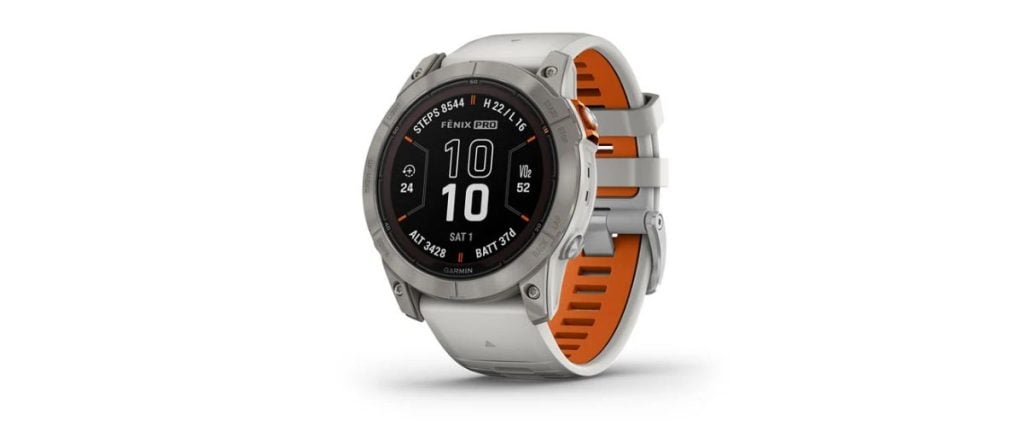
At a retail price of $1,000, this Garmin offering is a top-of-the-line fitness beast. Even setting aside the rest of its features, its battery life alone immediately sets it apart from the crowd: a whopping 37 days between charges, using its built-in solar charging. Coupled with a precision multi-band GPS and Satiq map technology, the Fenix 7X Pro is ready to go anywhere your fitness journey calls you.
Yet Garmin didn’t stop there. This watch comes with all the stunning features we’ve come to expect from Garmin, from customized Garmin Coach training programs to stats like Real-Time Stamina and Body Battery Energy Monitoring. It’s built for any sport at all, and even has Multisport Auto Transition for triathlon athletes who are quickly switching between different activities.
At three different case size options—42, 47, and 51mm—I find the Fenix 7X Pro Sapphire Solar to be a powerful option for anyone who’s seriously dedicated to staying on top of their health and challenging themselves.
Apple Watch Ultra 2
When the Apple Watch first took the world by storm in 2015, there was nothing like it. Apple has sought ever since to continue that trend and keep striving for watches that push the boundaries of what’s possible—in many cases blowing other brands’ offerings out of the water.
The Ultra 2 is a monster of health and fitness monitoring, with a dizzying array of sensors to track everything from depth underwater to height in the air. It sets itself apart with options for athletes that most other fitness watches don’t offer—most notably, divers, with 100m of water resistance and gauges to measure depth and water temperature.
The third-party app Oceanic+, supported by Apple, even turns your watch into a full dive computer! Other athletes aren’t left out at all, though—there’s built-in tracking for so many different sport and workout types that Apple could not list all of them on their website.
At a retail of $800 to $900, depending on the strap options you get for it, it’s not a watch for the faint of heart, but it will immensely reward those who are seeking a higher level of dedication to their sport.
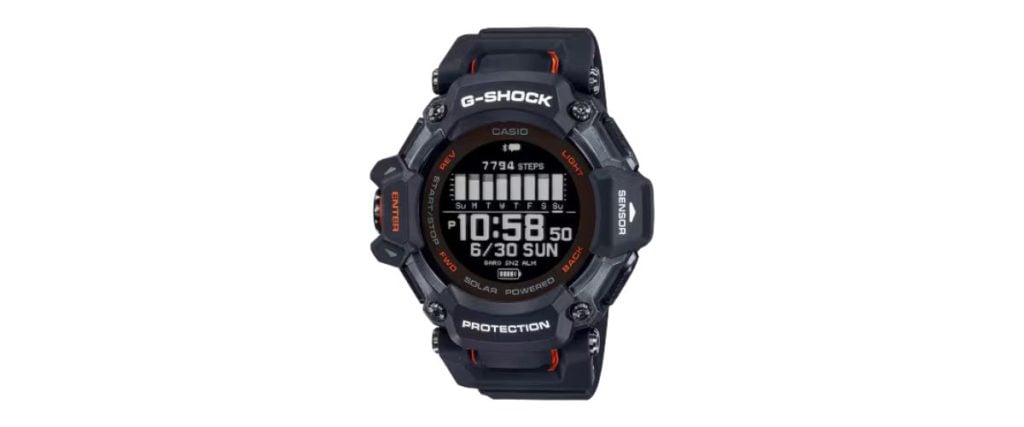
Casio G-Shock GBD-H2000-1A Move
For its price of around half the price of an Apple Watch—a retail of $400—the GBD-H200-1A Move is insanely advanced. It doesn’t have quite the same level of sensor-based functionality that some of its competitors do, but what it does supply is more than enough for almost all athletes: GPS, heart rate monitor, step and swimming stroke counters, and the opportunity to sync with Strava.
Like the Garmin 7X Pro, this watch also provides solar charging—but unlike the Garmin, it’s able to run almost exclusively off solar power, a stunning feat that very few other advanced smartwatches are able to pull off. Of course, if you’re continually running the GPS or other functions, you’ll run out eventually, but the opportunity to keep the battery continually topped off on solar power alone is easily the biggest advantage to this watch.
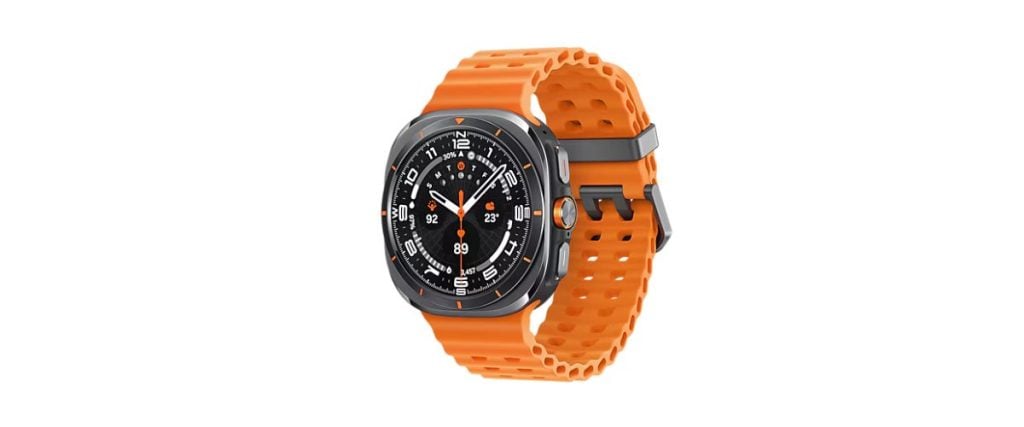
Samsung Galaxy Watch Ultra
Don’t worry, dear Android owners—we didn’t forget about you. The Galaxy Watch Ultra is a great alternative to the Apple Watch that even surpasses its competitor in many ways. The key highlight of this watch is the built-in Galaxy AI that provides insights into your stats and advanced personalized training programs that help you improve.
With the standard features you’d hope for from a fitness watch, like an advanced dual-band GPS and powerful BioActive sensor, the Galaxy Watch Ultra is a great pick even if you don’t opt for the AI advantages.
At $650, it beats out many of its top competitors in price while offering novel features that set it apart from the crowd. It’s easy to say that you could do much worse than a smartwatch like this one if you’re set on improving your health.
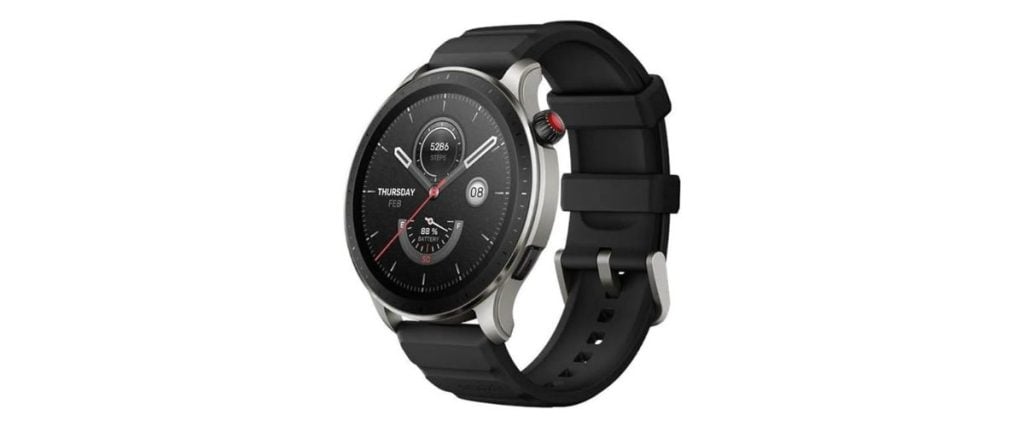
Amazfit GTR 4
Okay, I’ll be honest—this is easily one of my favorite picks on the list. At a stunningly low price of $200, you’d expect to have to make many concessions with this one in terms of its features. Ready for the breakdown? The GTR 4 comes built-in with over 150 different sport modes, a large brilliant AMOLED display, Amazon Alexa, a BioTracker 4.0 sensor, and a market-leading GPS that connects to 6 different satellite positioning systems.
And that’s just scratching the tip of the iceberg with this watch. The only faults that you could point out are a lack of third-party music app support—only local playback—and the operating system that powers it, which is a lesser-known Zepp OS and which almost certainly has not had quite the level of development that systems like the Polar algorithms that many other watches use enjoy.
Coros Vertix 2
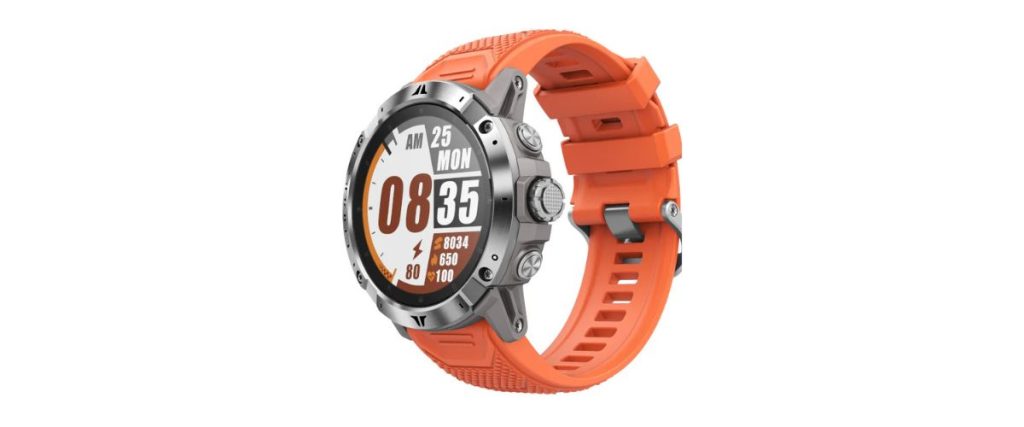
If your weekly fitness regimen is full of hikes in the mountains and if your bucket list is full of adventures to far-away, unmapped places, then the Coros Vertix 2 should be high on your list of much-needed accessories. It’s built to go where few other watches can, using features like its long battery life, durable reinforced bezel and screen, and offline features like maps and music storage.
Need to find your way through a winding mountain trail? No worries—the Vertix 2 comes with an altimeter and compass. Worried about that incoming storm? Use the built-in barometer to keep an eye on local weather no matter where you are.
At $600, it’s a middle-of-the-road price for a strong specialty pick that can accompany you anywhere.
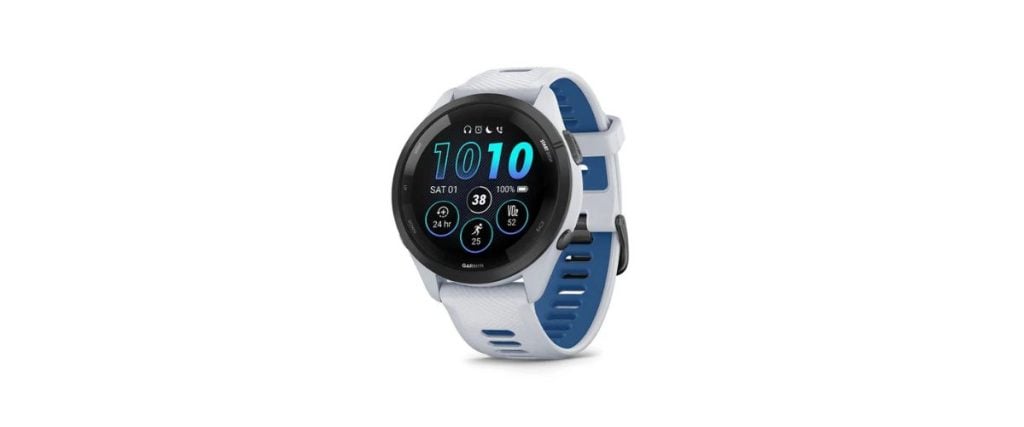
Look no further than the Forerunner 265 if you’re on the hunt for a lower-priced generalized option to support all sorts of fitness programs. At a retail of $450, it’s cheaper than others at its level of functionality, since it opens up almost the entire suite of advanced Garmin functions.
Like the Fenix 7X Pro, one of the major highlights is the Garmin Coach training plan, which is tailored just to you. It’s smaller than many of the massive adventurous watches out there, making it a much easier everyday wear that couples smartwatch functionalities with advanced insights into your exercise.
Sure, it may not be making any headlines with novel features—but it’s a wonderful everyday wear that provides more than enough athletic support for even dedicated athletes. I guarantee it’s a rock-solid pick that won’t disappoint.
Casio G-Shock GPRH1000-1 Rangeman
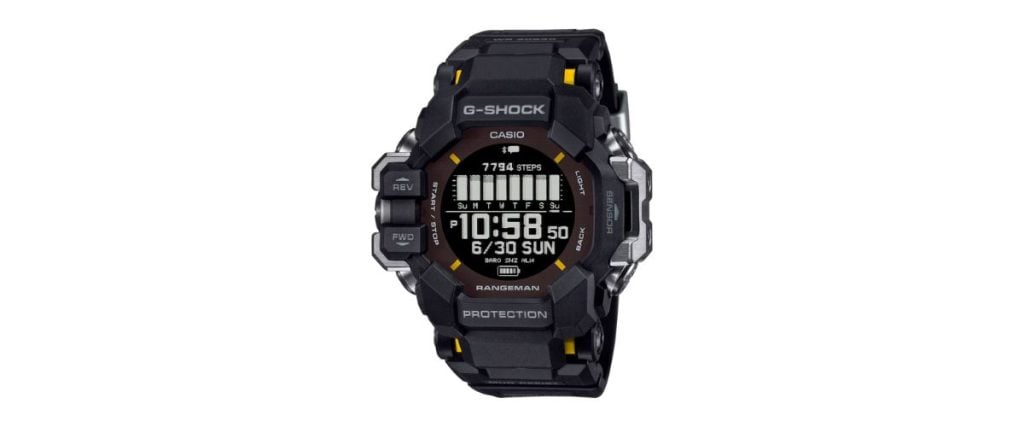
The GPRH1000-1 Rangeman has, well, a rather proficient range of versatility. Like the Vertix 2, it’s designed to go anywhere and do anything. A gigantic case, offered in either black or eye-catching yellow-orange, it’s built with extreme mud and dirt resistance thanks to the gaskets and steel casing around each button. Oh, and it also has 200m of water resistance. Fancy a dive?
With solar charging just like the GBD-H2000-1A Move, you’d be hard-pressed to wear this one down to an empty battery. An altimeter, thermometer, barometer, and compass accompany you on any adventure, as well as a GPS, heart rate measurement, multi-sport support, and many other advanced features.
Retailing for $500, this Rangeman is certainly not nearly as expensive as it could be, and I believe the price is more than reasonable for the advanced technology you get within. Personally, I recommend the yellow-orange option—with a watch that big, you’re hardly going to be trying to fly under the radar with the black version!
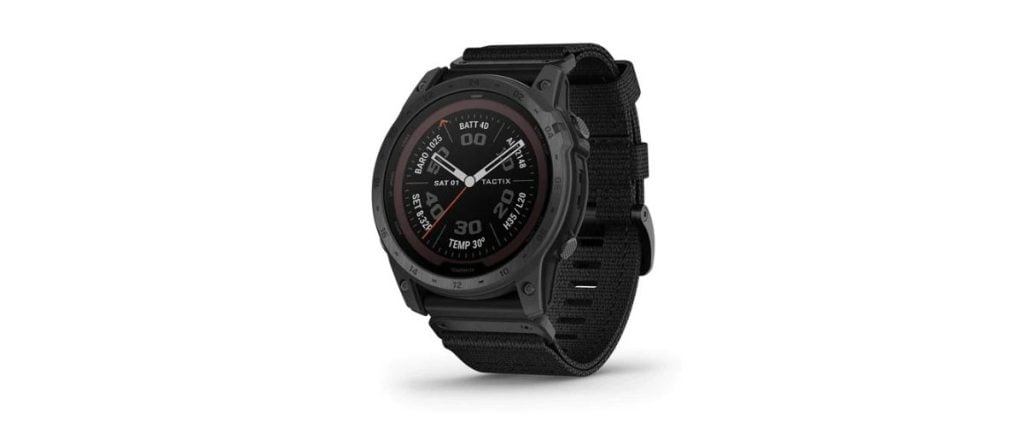
I’ve never seen anything quite like this watch, to be honest. It’s purpose-built as a tool watch for special forces, which means it comes with a host of features like a mode where the screen can be seen while wearing night vision goggles, a stealth mode that shuts off all GPS and internet connectivity, and even a kill switch that wipes the watch clear of all logged data.
While most of us won’t be tapping into those functions on a regular basis except as a neat party trick, the same level of design and technological development has gone into every other feature of the watch as well.
Solar charging, weather reports, a tracker for hunting, public land boundary maps, and so much more are what sets this watch far apart from the crowd. To be clear, the Tactix 7 Pro doesn’t skimp on any of the fitness features either: it has the same Garmin Coach suggestions, along with a powerful suite of sensors and training status indicators.
For $1,300, it’s not a cheap watch, but you get every bit what you pay for, and it’s a watch that will never disappoint!
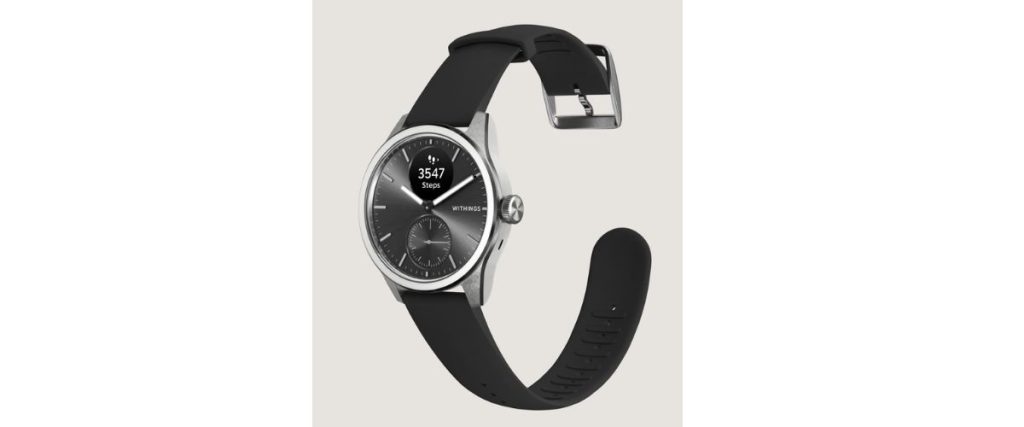
Withings ScanWatch 2
The ScanWatch 2 perfectly fills a very specific niche in the smartwatch market thanks to its significant variety of health features. At a retail of $350, it won’t break the bank, and who knows? It just might save your life! It features a medical-grade ECG to detect cardiac variations, along with body temperature tracking to indicate when an illness may be coming on.
Blood oxygen level tracking keeps an eye on your respiratory system as well. In terms of strictly fitness features, it’s a little limited except for a variety of different sport modes, so it’s mainly focused on overall wellness.
The major highlight of this watch for me is its elegant, under-the-radar presentation. It looks, for the most part, like a sleek time-only watch, with a more subdued screen. It provides information when you need it, and the rest of the time is a watch you won’t feel self-conscious about wearing to a fancy gala. What more could you ask for?
Conclusion
It’s truly staggering to me just how far fitness watches have come from the days when they were first getting started. From pedometers you couldn’t even wear on your wrist to now fitness watches that provide an overall picture of your health coupled with tactical features, solar charging, or AI, it’s truly unbelievable just how much technology you can wear on your wrist for a few hundred dollars.
Whether you’re looking for a holistic overview of your health, an advanced training program to become the very best athlete you can be, or a watch to accompany you from mountain heights to ocean lows, you’ll find your smartwatch soul mate here on this list.
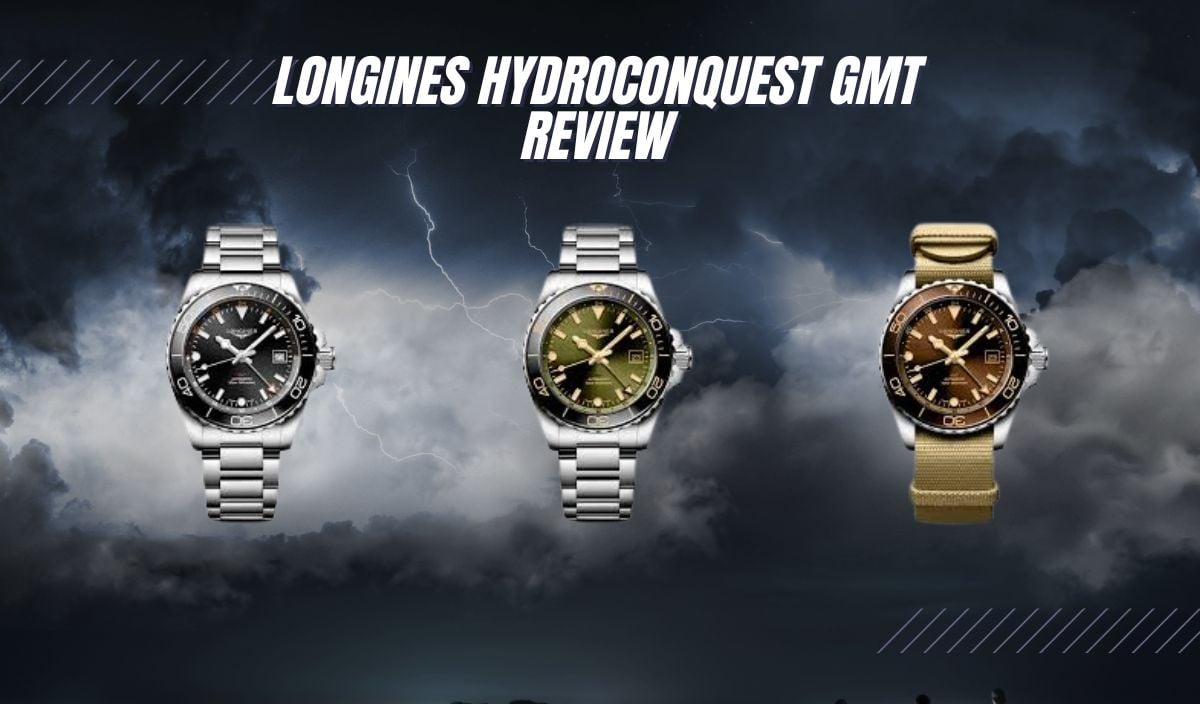
In the collecting world today, there’s an ocean of interest around dive watches of all shapes and forms, from the extremes of the Omega Ploprof to the more restrained iconic Rolex Submariner. In this tide of options and similarity, it’s nearly impossible for a newcomer to stand apart from the crowd—yet I’ve found that the Longines HydroConquest GMT does just that, in a subtle but endearing manner that sets it charmingly apart from both the flights of travel watches and waves of dive watches that surround it. Its tool-like but elegant nature makes it a great everyday wear, coupled with intense functionality.
History
As it turns out, Longines as a brand has perhaps the strongest link to GMT watches as a whole, which makes the HydroConquest GMT a particularly compelling piece thanks to the historical legacy that it plays a part in. The first watch ever to feature two time zones was a Longines pocket watch made in 1911, and they would continue this travel-focused trend with the first GMT wristwatches in 1925.
Longines today has continued their emphasis on GMT and travel watches with several different collections featuring this complication, including the Spirit Zulu Time GMT, the Master Collection GMT, and finally, the HydroConquest GMT.
Important to note as well is that the HydroConquest GMT is a modification of the original HydroConquest line, which is the standard Longines dive watch. Overall, I see it as an upgrade to go from the original dive watch functionality to maintaining all those aquatic features with the addition of the GMT function. As a whole, this is a spectacular watch on its own that also stands within a broad historical context of advanced development in GMT functions by Longines.
Case
The HydroConquest GMT is nothing if not a purpose-built tool, and its simple steel case reflects that in every way. One of the first design details to catch my eye upon first seeing it was the large sloping crown guards. Crown guards can easily stand out harshly against the rest of the design if they’re added as an afterthought to protect the vulnerable crown. In this case (pun intended), it’s clear that Longines very intentionally included them as a part of the design, as they flow very seamlessly into the case itself and clearly reference the shape of the lugs. They’re also quite restrained and don’t block the usage of the crown itself for winding.
As a whole, the case is uniformly brushed, a very muted effect that adds to the tool-like nature of the piece. This is set in contrast with the few places where a high polish has been applied—namely, the crown and the bezel.
While I’m always a sucker for a healthy dose of visual contrast in different polishing finishes, the choice to set the crown and bezel apart with high polishing does come with consequences. Both of these areas are the places you’ll touch most when interacting with the watch, and the high polish makes them quite a bit slipperier than if they were simply brushed. As such, it can at times be difficult to use these features. That said, the crown does have an extremely smooth winding action, so it won’t require much effort beyond keeping your fingers firmly on it as you wind.
The sapphire crystal is flat and rather simple, but it is also heavily tool-built and utilitarian thanks to the toughness provided by the sapphire. Furthermore, it is coated with several layers both outside and inside with anti-reflective coating, which provides for extreme legibility in almost any situation, even in direct sunlight.
The case itself comes in two sizes depending on the model—some models offer both, and others are available only in one of the two sizes. The options are 41mm and 43mm in diameter, neither one of which is overly large for a tool watch of this nature.
All options are 12.9mm thick—which frankly is not bad at all for a complicated watch such as this! Important to note as well is that the smaller models have a 21mm lug-to-lug measurement for adding replacement straps, while the larger ones are at 22mm. It will certainly be easier to find straps at the more even 22mm measurement, but those with smaller wrists may find the choice of a lesser diameter much more compelling.
The bezel closely matches the dial for each model and as such can be colored or monochromatic. It’s highly polished, which produces a lovely shine against the brushed finish on the case. As a dive bezel rather than a typical GMT bezel—this is, after all, the HydroConquest collection—it is equipped with a 60-minute scale where every five minutes is marked as well as the individual minutes up to 15.
The bezel is unidirectionally rotating to prevent it from accidentally skipping backwards. It’s a great touch that adds functionality whether you intend to use it for diving or just to time how long your casserole should be in the oven.
In all, it’s certainly not a case that is immediately striking as excessively beautiful or dazzling. It’s a tool, just like the rest of the watch, and from the toughness of the steel to the extra crown guards to the coated sapphire crystal, it does its job remarkably well—and even with a touch of elegance.
Dial
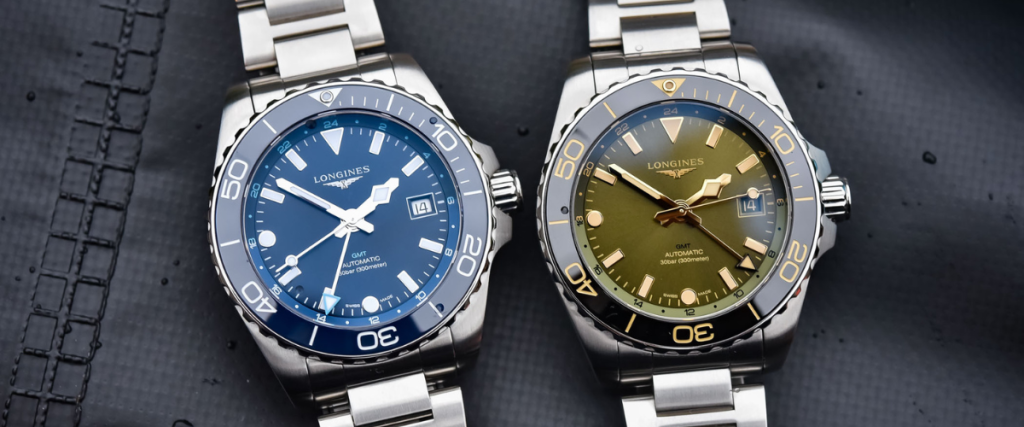
With the dial, we get into the real variation in the HydroConquest GMT family. Each dial features a variety of indices to help easily distinguish between the hours—a triangle at 12:00, circles at 6:00 and 9:00, and rectangular markers to fill in all the rest. Note that the 3:00 date window means that there is no marker at this position. The hands are a curious shape, and the hour hand has a certain diamond structure which fits well with the overall theme of shape indices. The GMT hand, likewise, is a simple and legible arrow.
The dial color matches with the bezel on any variant of the HydroConquest GMT, from the colored ones to those which are more plain. A gentle sunburst finish has been applied, allowing for better legibility in the way it captures light as well as another touch of elegance in elevating this watch above a fully utilitarian presentation. The minute track and date window are rendered in the same color as the lume on the indices and hands, which is present in copious amounts for extremely high legibility in low-light situations. In the green and brown dial models, this lume is in a rich cream color meant to evoke the patina of older tritium-lumed dive watches. All models glow a brilliant blue at night, which for me is evocative of the ocean depths as well as being an interesting choice considering that most lume options today are typically green.
The 24-hour GMT track is present only around the dial rehaut and does include a color differentiation between the 12-hour intervals of day and night. Naturally, this is meant to be paired with the GMT hand, which is so long it nearly touches the rehaut for maximum legibility. Unfortunately, the rehaut is rather slim, and I’ve found it can be quite difficult to reference in many situations. That said, I think that with enough use it will become intuitive for any user to determine the GMT hour even without a glance at the rehaut, since it is simply a 24-hour scale and as such there are two hour markings per hour on the dial. Even if this doesn’t become intuitive, it is still a simple matter to reference the rehaut—only it will take an extra moment of attention.
Ultimately, the HydroConquest GMT dial is a key element to tying the watch all together, presenting uniformity with the bezel and adding a delightful boost of charm and refinement to an otherwise utilitarian watch.
Movement
The HydroConquest GMT features the Caliber L884.5, a powerful and accurate GMT movement. What’s important to note, first of all, is that this movement is not in-house. It’s based on the ETA A31.411, and this version of it was not developed by Longines but by ETA. That said, it is exclusive for Longines’ use, so it is at least relatively special to Longines. It’s also clear that in this case the line between in-house and not in-house is rather blurred, as both Longines and ETA are part of the Swatch Group. It’s more like in-neighborhood if not in-house.
The L844.5 is identical to the caliber L844.4 GMT movement used in the Longines Spirit Zulu Time. However, the L844.4 is sent out by Longines to be certified by COSC for accuracy, which means that as these movements are identical, the L844.5 can also be regulated to COSC standards, despite not receiving an official certification. This means that collectors can get a watch with all the prestigious accuracy of a COSC-certified mechanical wonder with none of the price hike that often comes with sending movements out for this certification. I personally find that this is a more than satisfactory trade-off, as COSC certification is truly just a label meant to express the accuracy that wearers will be able to notice anyways.
The Caliber L844 is truly a spectacular movement. It has everything you could ask for from a hardcore traveler’s watch or an advanced dive watch: 300 meters of water resistance, 72 hours of power reserve, and hacking seconds for accurate time setting. It beats at the rather curious rate of 25,200 bph, which is 3.5 beats per second.
The final key detail to note is the L844 has a “true” or “traveler’s” GMT function. This means that the hour hand can be set independently of the others by pulling the crown out to one stop. This means that when traveling the GMT hand can be set to home time and the hour hand can easily be reset to whatever time zone you happen to be in, which allows for very easy and accessible use. Note however that since the one-stop position is taken by the independent hour hand, there is no way to independently change the date apart from rotating the hands. This isn’t a major issue, but it can get a little annoying if you find yourself having to make a big change. In that case, shame on you anyways for not wearing your lovely watch for so long!
Straps
Depending on the specific model you purchase, the HydroConquest GMT collection has a variety of options: rubber, NATO fabric, or a metal bracelet. Of these options, I find the bracelet the most attractive—it adds to the sporty look of the watch in a classy way that a different material can’t quite accomplish. However, it all really depends on what sort of look you’re searching for, and the NATO and rubber are also sporty options that are very versatile and can also add to the overall color palette of the watch, making it a little brighter and more showy.
The bracelet in particular is interesting and while it’s always nice to have an integrated bracelet with a sports watch, I find Longines’ bracelet not quite up to my tastes. It’s strictly utilitarian, just like the rest of the watch, and some will appreciate this visual continuity. To accomplish this utilitarian spirit, Longines finished the entire bracelet in a simple brushing, making it continuous with the case. In my eyes, this makes it a little visually uninteresting, as it’s entirely uniform and there’s no contrasting areas of polish. Again, it’s a choice focused on continuity and utilitarianism above all—people using this watch as it was designed will hardly be interested in having it extra polished when that could be so easily scratched!—and I respect the choice in this respect, even though I do find myself longing for just a touch more shine.
The bracelet, apart from its finishing, has a likewise simple construction. It features a push button clasp which cleanly and easily snaps and releases. Overall, as a tool, it leaves nothing to be desired.
On-Wrist Experience
The Longines HydroConquest GMT is a fantastic companion on any adventure, whether it’s to the office, the depths of the sea, or across the world. That strictly utilitarian nature that Longines strives so hard to push further absolutely shines in many circumstances, especially for those who find themselves living especially adventurous lifestyles.
As I mentioned before, I’m a big fan of the green and brown dial options. I find the colors involved just the right amount of subdued and the way the colors work with the cream lume is a positively delightful combo. I’m also particularly partial to the black dial with orange highlights in a way that I would never have expected as it’s such a monochromatic watch as a whole—yet those orange highlights provide just the right pop of color to make it playful in a simple but effortlessly cool manner.
Having multiple strap options for a watch like this is an absolute must. Each different strap provides a totally different look for the HydroConquest GMT in a way that any true fan of the watch would positively drool over. The bracelet is sporty but classy, while the NATO is inherently adventurous and the rubber takes the sportiness to another level. If you’re feeling adventurous, you could even try it on a leather strap for slightly dressier occasions. Just don’t try to take it to a black tie event!
Price & Availability
The HydroConquest GMT is not a limited edition, so it’ll remain available for a long time. It can be purchased via Longines’ website or in-store, or via Exquisite Timepieces.
Each watch is at a different price point depending on the strap it comes with. NATO strap options are the least expensive at $2,675, while rubber is a slight premium at $2,775 and bracelet at $2,975. Again, I believe the added price of the steel bracelet is a worthwhile price, but it’s also understandable if you prefer the look of the NATO or rubber, which both are a nice touch. For versatility, consider ordering a model on the bracelet and then adding another strap as an option to your purchase.
Conclusion
It’s clearly not for nothing that the HydroConquest GMT enjoys a serious following among dedicated collectors as well as among the general public. Its variety of color options coupled with extreme functionality and relatively affordable price are all wildly endearing characteristics, and any discerning collector would be remiss to pass this one up.






 Home
Home