Paul Rothbart, Author at Exquisite Timepieces - Page 2 of 4

Author: Paul Rothbart

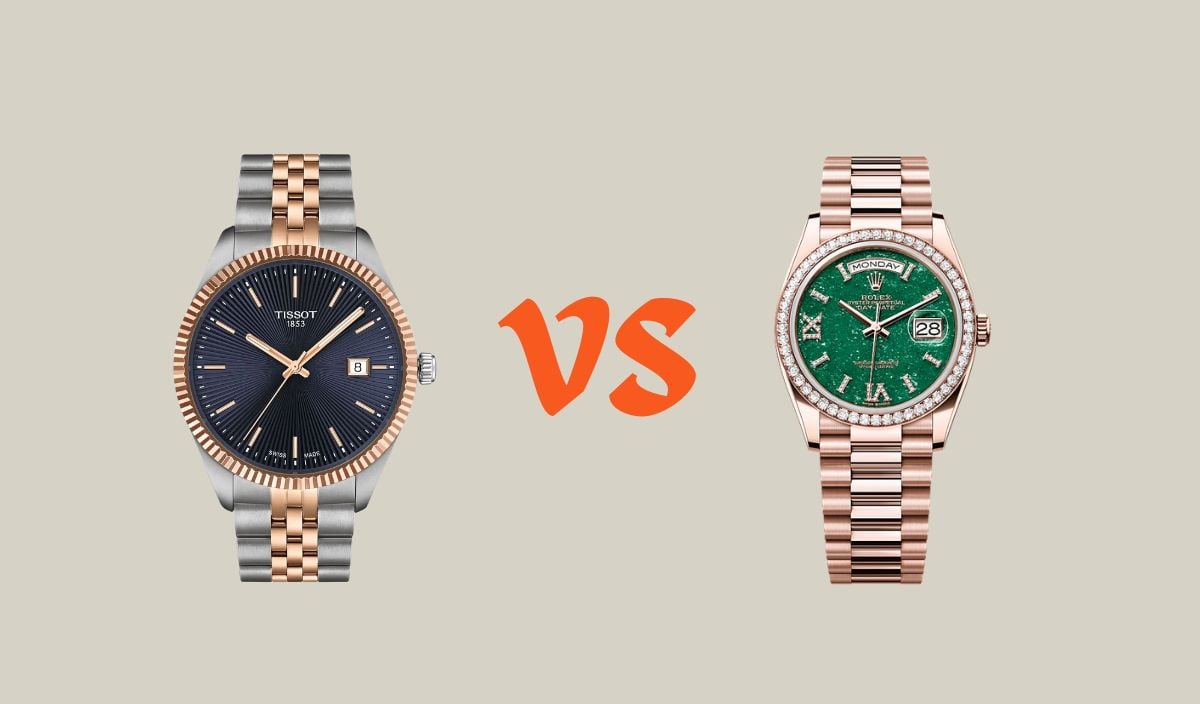
Upon reading the title of this article, many of you probably thought, “Tissot vs Rolex? That’s like a mediocre Division 3 college football team taking on the Philadelphia Eagles”. Yes, the two brands do inhabit different levels of the horological hierarchy.

Nevertheless, it’s a worthwhile comparison. If you are a newbie watch collector who dreams of a Rolex, you’re not there yet. For an entry-level timepiece, Tissot is a brand well worth considering. 

bot-only-imagebot-only-image

Both Tissot and Rolex are Swiss-made and have long and illustrious histories. Each has contributed to the art of watchmaking and, to this day, continues to craft stylish, accurate, and reliable watches. In fact, even after you get your first Rolex, you may well want a Tissot or two in your collection.

Brand Heritage

When it comes to heritage, both Tissot and Rolex are loaded with it. Both have more than a century of watchmaking behind them. Both are based in Switzerland, still considered the capital of the horological world. Although each targets different sectors of watch lovers out there, both have plenty to be proud of.

Tissot
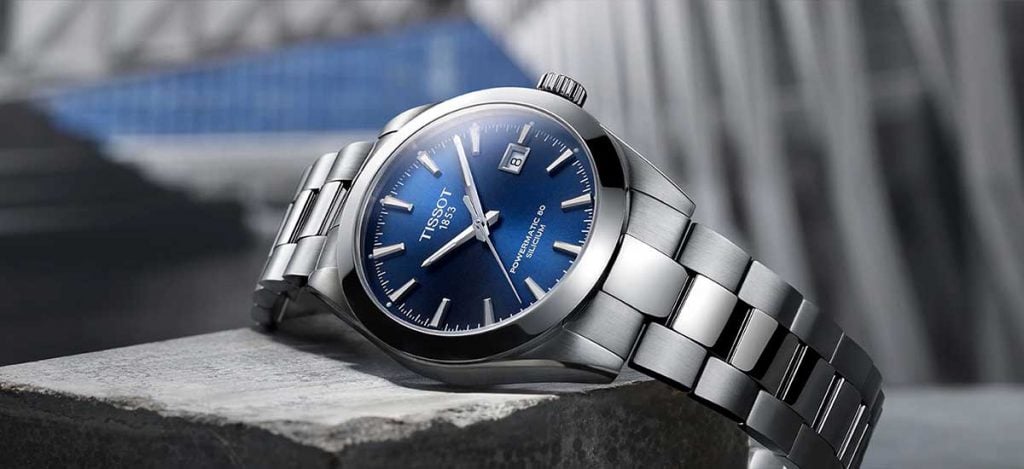
Tissot Gentleman

Tissot’s story begins in the mid 19th Century; 1853 to be exact. The father and son team of Charles-Felicien and Charles-Emile Tissot started crafting pocket watches in their home in Le Locle. Among their early successes was the first mass-produced pocket watch as well as the first that could track two time zones. 

The Tissots’ timepieces became popular throughout Europe and particularly in the Russian Empire, where nobles purchased many of the pocket watches. Such was the demand, that Charles-Emile moved to Moscow in 1885. In the post-World War I era, when men began wearing wristwatches, Tissot jumped in with both feet, crafting some reliable, accurate, and popular timepieces.

When the Great Depression began in 1929, it impacted industries worldwide, including watchmakers. Tissot was determined to stay in business and partnered with Omega.

The move proved to be a wise one and Tissot thrived, creating one of the first anti-magnetic watches in 1930. As the decade moved on, Tissot became the Official Timekeeper for Swiss ski races in 1938, its reputation growing.

When it came to using uncommon materials for watches, Tissot was near the front of the pack. In 1971, the brand made the first watch with a plastic case. It was innovative for the time and Tissot followed up in 1987 with the first mother-of-pearl dial.

A year later, Tissot created a watch that used wood, a material that is still fairly rare today. The brand now has a reputation as one of the best entry-level watches on the market. It sits under the umbrella of the Swatch Group along with Omega, Hamilton, Breguet, Longines, Blancpain, and several other quality brands.

Rolex
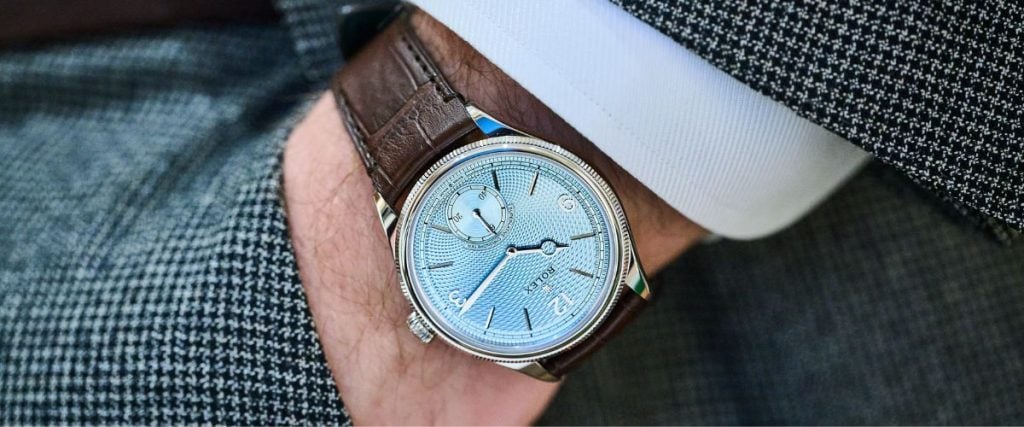
Rolex 1908 History

Perhaps more impactful than any innovation or watch model, is the reputation Rolex has created throughout the world. The company was founded in London in 1905 by Hans Wilsdorf, a fine watchmaker and a brilliant marketer. He registered the name “Rolex” in 1908, and following the First World War, moved his company to Switzerland where it thrives to this day as one of the nation’s greatest products.

In 1926, Wilsdorf demonstrated his marketing savvy when he purchased the patent for a water-resistant and dust-resistant case. Rolex developed it into its Oyster case.

Wilsdorf greatly boosted the brand’s reputation a year later, when a British nurse named Mercedes Glietze swam across the English Channel with an Oyster watch draped around her neck. The timepiece came out of the water functioning perfectly and Rolex got a huge amount of publicity.

In its early years, Rolex was an innovator, inventing the perpetual rotor in 1931. The metal semicircle attached to the back of the movement and rotated when the user moved their arms. This wound the mainspring and is the principle behind the automatic watch

As the years moved forward, Rolex developed a reputation for building quality, durable, and accurate tool watches. Divers, chronographs, and GMTs were offered alongside dress watches and Rolex became the “it” brand.

Today, Rolex has settled into its reputation. It is by far, the best known watch brand on the planet. Even those who don’t know a crown from a bezel know Rolex. So great is the demand for their watches, that Rolex cannot keep up, and obtaining one can involve a long wait and building a relationship with an AD, not to mention shelling out a lot of money. 

Model Variety

Although each brand sits on a different tier, both Tissot and Rolex have large catalogs filled with a variety of models of all the types of watches you would hope to find. 

Tissot

Tissot offers a wide variety of men’s and women’s watches in several case sizes. Cases and bracelets are available in stainless or gold-colored stainless, as well as two-tone. Genuine leather straps in multiple colors are other options that allow customers to choose their perfect timepiece.

Tissot has a nice selection of dial colors and textures. Standard hues such as white, black, and blue sit in the catalog along with bolder colors such as green, gold, and ivory. Sport watches and casual timepieces are offered along with classy dress watches with either automatic or quartz movement.

Some of the brand’s more popular sport watches are the Seastar divers, which have a water resistance of 300 meters, equal to dive watches available in much higher priced brands.

Fans of chronographs have some nice options in the Supersport Chrono series. The Gentlemen’s, PR100, and PRX models are classic dress watches and are some of Tissot’s best-selling timepieces.

The Le Locle collection features Tissot’s most expensive watches. While being priced below $2,000, these models are available with 18K gold or rose gold cases and bracelets. They add luxury to your wrist at entry-level prices. 

Rolex

Rolex also makes men’s and women’s watches and has many different models in its catalog. The classy, dressy Day-Date and Date Just watches are as reliable as they are elegant. Each features a date window at three o’clock magnified by Rolex’s Cyclops lens.

The Day-Date displays the day of the week at 12. These watches come in several precious metals as well as multiple case sizes and dial colors. 

One of many popular Rolex models is its first automatic water-resistant watch, the Oyster Perpetual. It’s available in many dial colors and textures and has a solid water resistance of 100 meters.

Rolex has several collections of dive watches with amazing levels of water resistance. The 300-meter Submariner is the base model and since its release in 1953, has maintained a position as one of the most popular dive watches with horology lovers. The classic design has changed little and the dials and bezels are available in numerous color combinations to suit a wide variety of tastes.

Rolex makes two dive models with astonishing levels of water resistance. The Sea-Dweller is water resistant to 1220 meters and the Deepsea is rated to a mind-blowing 3900 meters. Certainly, these are not practical levels of resistance, but they have come about because of the fierce competition between Rolex and Omega.

In 1935, Sir Malcolm Campbell, a British racing driver set a world land speed record while wearing a Rolex, establishing the brand’s longtime connection to motorsport. The record was set in Daytona, Florida, and inspired the name for Rolex’s Cosmograph Daytona Chronograph.

One of the most desired and difficult-to-obtain timepieces on the planet, the Daytona was legendary actor Paul Newman’s favorite watch. Available in numerous dial colors, and material options, it’s easy to see why people love it. 

Yet another category in which Rolex excels is GMT watches. The GMT-Master was released in 1954 and is extremely popular throughout the world of watch collecting. These models are available in many dial colors with bidirectional rotating bezels that have two colors that nicely coordinate the dial. This has earned them nicknames such as “Batman”, “Root Beer”, “Coke”, and “Pepsi”. 

Design

Tissot and Rolex both tend to embrace classic watch design. Rolex likes to stay with established favorites with proven sales records while Tissot is a bit more adventurous.

Tissot

Tissot’s partnership with Omega has influenced its design philosophy. The brand sticks with classic features such as dot and baton indices, Roman numerals, and sword hands. Straps are stitched leather and bracelets three and five link. T

he Powermatic series offers a check texture to the dial, and there are subtle and bold colors available on the brand’s dials. Most models are conservative in design but Tissot does offer some skeleton dials and square cases for watch lovers with more free-spirited tastes. 

Rolex

Since its beginning, Rolex has carefully crafted its reputation as the most desired watch on the market. It has been the classic retirement, special achievement, and graduation gift for decades.

For many, it’s the grail of grails. As such, the brand does not mess with success and maintains the same design philosophy that launched it to such lofty heights.

Back in earlier days, Rolex was an innovator in the development of automatic movements and water-resistant timepieces. These days, the brand tends to rest on its laurels but still employs expert watchmakers who craft stunning timepieces of the best materials. These watches are reliable, durable, and among the most accurate in the world. 

Rolex does still come out with some boldly-designed watches such as the Daytona Eye of the Tiger. The Oyster Perpetual Gumball is another wild dial that has sold very well. For the most part, though, Rolex stays with the classic designs that have carried to the top. A Submariner from the 1950s or ’60s looks very much like that model does today. 

Quartz Rolexes are very rare and the brand has largely stayed with its high-quality automatic movements. The brand also tends to eschew exhibition and elaborately engraved case backs. Doing what you do best when you have a large and enthusiastic fan base is good business sense.

One area where Rolex has had to make some design changes is in making it easier to tell a real Rolex from a fake. No other watch brand is counterfeited nearly as much. Rolex has addressed this by adding features such as a laser-engraved crown logo on the crystal. 

Build Quality & Materials

Tissot

Although not a luxury brand, Tissot does use quality materials in their timepiece. Cases, hands, indices, and bracelets are made with industry-standard 316L stainless steel. The surfaces are alternately brushed and polished for a look that pops. 

Crystals and exhibition case backs are made from scratch-resistant sapphire coated with an anti-reflective material. This is a nice touch for watches at this price point. The Le Locle collection features some models that have 18K yellow or rose gold cases and bracelets. The popular Gentlemen collection offers titanium cases and bracelets. 

Straps are made from genuine leather. Although not top-of-the-line, the straps look great and hold up well to daily wear. Super-Luminova is used on the hands and indices of numerous models. This ensures you can easily read the dial in low-light conditions.

Tissot watches are well-built by qualified watchmakers. Hold one next to a Rolex and the difference is clear, yet a Tissot is still a quality timepiece, especially given the much lower cost.

Rolex

Rolex uses the highest-quality materials in all of its watches. The brand uses its own unique blend of 904L stainless steel, called “Oystersteel”, in cases, bracelets, indices, and hands. It’s durable and looks incredible when brushed and polished.

Precious metal models are made with 18K yellow gold and everose gold. These metals are stunning to look at and are among the most prestigious timepieces in the Rolex catalog.

Rolex covers its dials in top-quality scratch-resistant sapphire crystals, which are anti-reflective coated. This same material is used in the Cyclops lenses that sit over date complications. Divers and GMTs have ceramic bezels that shine and resist scratches. 

Straps are made from the highest quality leather, including crocodile. They’re comfortable, durable, and stylish. Rolex continues to live up to its reputation as a crafter of tough tool watches and classy dress watches. Their standards are high and you can be sure that every watch that leaves the factory lives up to them. 

Movements

The movement is the heart of a watch and if it doesn’t function well, the looks don’t matter. Rolex is renowned for its movements and Tissot’s watch works are accurate and well-crafted.

Tissot

Tissot does make in-house movements, the best of which is its 11 ½” automatic. These have a useful 38-hour power reserve and are COSC-certified. The brand also has in-house movements that are accurate but not to COSC standards and have 30-hour power reserves. Naturally, these cost less.

Tissot uses generic ETA quartz and automatic movements in its lower-priced timepieces. They are Swiss-made and solidly built with a good degree of accuracy. Tissot’s movements are designed to be admired and with the exhibition case back models, you can do just that.

Rolex

Rolex was an innovator in developing automatic movements during its infancy. They excelled at modifying new advancements from other brands to create their own movements. A great example of this is the modified Zenith movement that Rolex used in the first Daytona models. 

Currently, Rolex tends to stick with what works and their watches are powered by movements that are COSC-certified, reliable, durable, and some of the most accurate in the world of horology.

The power reserves are generous and the materials and craftsmanship are second to none. Rolex has rarely made quartz movements and doesn’t make exhibition case backs. Although you can’t see the movements, they are works of art.

Price Point

In the category of price point, there is a huge gap between these two brands. This is to be expected, as Tissot is an entry-level brand and Rolex occupies the luxury level. 

Tissot

If you are just getting into watches, Tissot is one of the first brands you should look at. They offer many models that sell for less than $500.

Their in-house automatics can be had for $500-$1,000. At the top of the catalog are the Le Locle models, with the highest price settling in at $1,800. Quite a bargain for a precious metal timepiece.

Tissot gives you a ton of value for what you pay. High-quality, in-house COSC-certified movements, 18K gold, and all models prices below $2,000.

Rolex

Ah, Rolex. If you want one, you are going to pay. The brand takes advantage of its lofty status and even the lowest-priced models are close to the $10,000 mark. Once you start getting into the more desirable Rolexes, you’re talking north of $10,000 and even $20,000. 

It is also difficult to obtain a Rolex. The brand simply cannot keep up with the incredible demand and Rolex ADs often will not have the model you are looking for.

You have to put your name on a list of interest and compete with regular customers who will take priority. Waits for Submariners, Daytonas, and GMT-Masters are usually measured in years.

An alternate way to go is to buy one on the grey market. However, you will likely have to pay much higher than retail.

Although Rolex makes extremely high-quality and beautiful watches, I have to score them low on value for the money. You are paying a premium for reputation and prestige. Is it worth it? I say no, but that’s for you to decide.

Conclusion

Comparing Tissot and Rolex is a stretch considering the difference in their status in the horological world. Despite this, both are excellent brands. If you are just starting your watch collection, I urge you to check out Tissot. You can easily find them.

Most major department stores carry Tissot and you can try a bunch on and for a reasonable price, walk out with the one you love that day. Going through the hassle and expense of getting a Rolex doesn’t make sense for beginners. Your tastes will change so why spend that much at the start?

Rolex has the rep and the street cred. If it’s your grail, then go for it. Just be warned, you will be shelling out a lot of money and going through loopholes. If you are a more experienced collector and have the money and patience, by all means, grab yourself a Rolex.
Seiko vs Rolex

Grand Seiko vs Rolex: Battle Between Two Luxury Watch Giants

Paul Rothbart

February 23, 2025

Comparisons are inevitable, especially when it comes to consumer goods. Ford vs. Chevy, Coke vs. Pepsi, Android vs. iPhone. These comparisons are often polarizing, with fanboys and fangirls landing solidly on one side or the other. The world of horology is no different.

Two of the finest watchmakers on the planet are Rolex, the world’s most famous brand, and Grand Seiko, Japan’s luxury brand. Each has a long history, and you can’t go wrong with either if you are seeking a high-quality, reliable, and aesthetically pleasing timepiece. 

bot-only-imagebot-only-image

Rolex and Grand Seiko can both fit the bill quite nicely. However, there are significant differences between the two brands in design philosophy, technical innovations, and other aspects of watchmaking. Let’s explore them.

Brand Heritage

Rolex

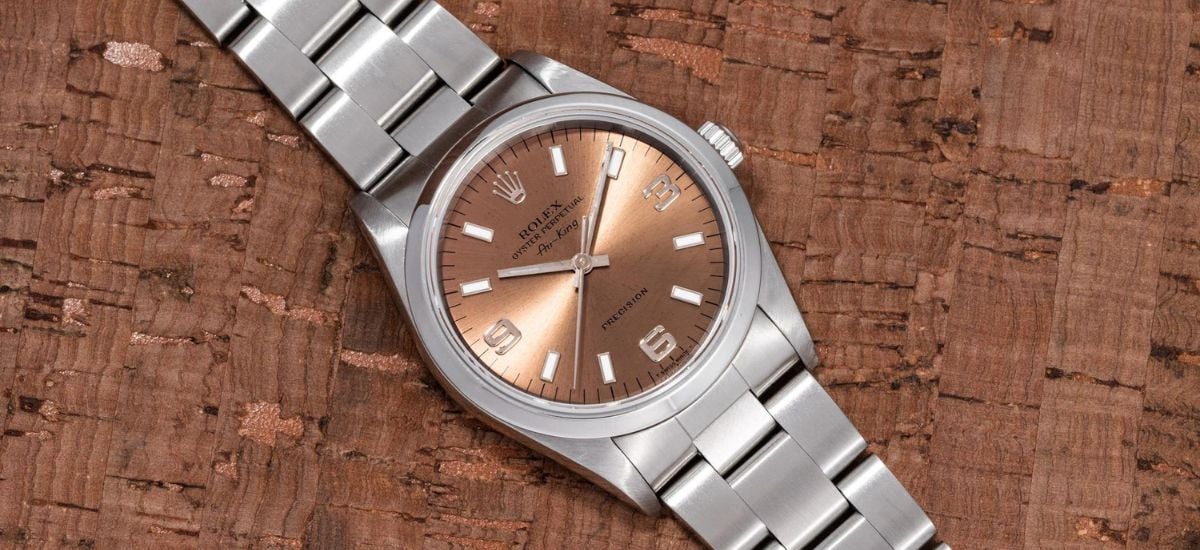
Rolex Air King Salmon Dial

Rolex has a distinguished history that dates back to 1905 when Hans Wilsdorf started the company in London. Later, Wilsdorf moved his company to Switzerland and quickly established Rolex as one of the best watches, Swiss or otherwise, on the market. 

Wilsdorf’s true genius came in marketing. In 1926, Rolex purchased the patent for a water and dust-resistant case that it called the Oyster. The following year, Mercedes Gleitze swam across the English Channel with a Rolex Oyster hung around her neck. The publicity boosted the popularity of the brand and the model to great heights.

In 1931, Rolex developed an automatic movement when it invented the perpetual rotor, which wound the watch as the wearer moved their arms. This is the same basic mechanism used today by all automatic watches.

Over the years, the brand created tool watches such as divers, chronographs, and GMTs. Long before it became a symbol of luxury and status, Rolex was known for quality timepieces that performed useful tasks. 

Today, Rolex has firmly cemented its place as the best-known watch brand worldwide. It is known even by the horologically ignorant.

Their reputation is so strong that despite making a million watches a year, Rolex cannot meet the demand. This leads to long wait times on lists of interest and the necessity of developing lasting relationships with Rolex ADs. 

Counterfeiting and flipping are two phenomena that Rolex has had to take steps to guard against, and each has influenced its design and marketing strategies.

Grand Seiko

Grand Seiko also has a long history that has humble beginnings. In 1881, Kintaro Hattori founded a company that initially bore his name. Hattori was a staunch admirer of Swiss watchmakers and strove to match the level of craftsmanship and quality in watches of his own making. 

In 1892, Hattori renamed his company Seikosha and, in 1913, produced the Laurel, the first Japanese wristwatch. In 1924, the brand’s name was changed to Seiko, and the first Seiko watches hit the market.

During the Second World War, Seiko supplied watches to the Japanese military. The post-war period saw advancements such as the 1956 launch of Japan’s first automatic watch. In 1959, Seiko patented the Magic Lever, a self-winding mechanism that was simple and reliable and it helped popularize automatic watches.

In 1960, Seiko created the first Grand Seiko watch, designed to be the most accurate wristwatch in the world and place the company on par with the Swiss luxury brands.

By 1963, Seiko was developing the first quartz timepieces to be used at the 1964 Tokyo Olympics. This technology had a tremendous impact on the world of horology and eventually created the Quartz Crisis, which changed the industry dramatically.

The 60s were a decade of great progress for Seiko and saw the release of Japan’s first chronograph and dive watch. In 1967, the final year of the Neuchatel Observatory competition. Seiko took second and third place to make a huge statement to the watchmaking industry.

In 2017, Grand Seiko became its own brand, separate from Seiko, and began selling watches in the U.S. and throughout the world. Since then, with continued innovation and stunning designs, the brand has rapidly climbed the ladder as one of the most popular watches amongst horology connoisseurs. 

Model Variety

Both Rolex and Grand Seiko offer a number of models covering the main categories of watches: dress, diver, chronograph, and GMT. Within each category, both brands have a variety of selections in terms of materials, case sizes, strap options, dial color and texture, and complications. Ladies’ and men’s models are also offered by each. Let’s take a closer look.

Rolex

At the top of the Rolex catalog are its two elegant and popular dress watches, the datejust and the day-date. Both models feature a date complication at three o’clock under Rolex’s Cyclops magnifying lens. 

The day-date has the day of the week spelled out above the logo at 12 o’clock. It acquired the classy nickname “The President” in the 1960s when it was Lyndon Johnson’s timepiece of choice. With a variety of dial colors, case sizes, and both men’s and women’s models, these watches are a staple of the Rolex brand.

There is also the legendary Oyster Perpetual, Rolex’s first automatic water-resistant watch. With 100 meters of water resistance and a wide variety of dial colors and patterns, it is as popular today as ever.

With its early development of a water-resistant case, it should be no surprise that Rolex offers one of the industry’s best dive watches, the Submariner. First released in 1953, the Submariner has maintained its classic design and is available in a variety of dial colors with complementary or contrasting bezels. 

The basic Submariner has a water resistance of 300 meters. Other dive watches include the Sea-Dweller, with a 1220-meter water resistance, and the Deepsea, which is water resistant to an incredible 3900 meters. Divers today use dive computers, and no human could survive at these depths. Rolex’s ultra-dive watches were developed as a result of its competition with Omega.

Rolex has a historical connection to auto racing, and British driver Sir Malcolm Campbell had one on his wrist in 1935 when he set a world land speed record in Daytona, Florida. Naturally, the brand offers the Cosmograph Daytona, one of the most sought-after chronographs on the market. Current models come in a variety of dial colors, case materials, and other options.

For a frequent traveler, a GMT watch is desirable, and Rolex has some great ones. Released in 1954, the GMT-Master remains perhaps the most popular watch of its kind. These timepieces feature an extra GMT hour hand and a bidirectional rotating bezel. The dials come in a variety of colors coordinated with two-color bezels that led to nicknames such as “Pepsi”, “Coke”, “Root Beer”, and “Batman”. 

Rolex’s models have changed very little in design over the years. This makes sense when you consider its impressive sales record. Why mess with a winning formula?

Grand Seiko

Grand Seiko offers outstanding watches in all of these categories as well. A gorgeous variety of dial colors and textures, as well as case materials and straps make the Grand Seiko catalog a playground for watch lovers.

When it comes to dress watches, it’s hard to top Grand Seiko’s Heritage and Elegance collections. With a variety of case sizes, men’s and ladies’ models, case materials, and incredible dial colors and textures, a true watch aficionado has a huge variety of options. 

Originally dedicated to mostly elegant dress watches, when Grand Seiko became a separate brand in 2017, it began offering tool watches, including some impressive divers. The Sport and Evolution 9 collections include dive watches with water resistance of 200 and 600 meters.

Titanium cases and dial options in blue with textures that evoke the feel of the waves of the sea make Grand Seiko an excellent choice for dive watch fans. They rank among my favorites in the dive category, which is my preferred type.

Looking for a chronograph? Grand Seiko has you covered. The Tentagraph, so named because of its 10 beats per second Caliber 9R96 Spring Drive movement, is among the most accurate chronographs out there. With a variety of dial colors, textures, and subdial alignments, Grand Seiko can please a wide variety of chronograph fans. 

When it comes to GMTs, Grand Seiko takes a backseat to no one. The Sport Collection has models with beautifully coordinated bezel and dial colors, and textures with the same Grand Seiko high quality, accuracy, and reliability. 

Design

In regards to design ingenuity and philosophy, the two brands differ, yet each is dedicated to quality, consistency, and pleasing aesthetics. 

Rolex

Rolex has built a reputation as THE watch to own. It’s the grail wrist candy for millions, the watch for a graduation or retirement gift, or to commemorate a special achievement. As such, the need for innovation and ingenuity is not that great.

Early on in its history, Rolex was involved in the development of water-resistant cases and automatic movements. It remains dedicated to timepieces that are accurate to COSC standards, made of the highest quality materials, and beautifully fit and finished.

In terms of design, Rolex watches have not changed much over the decades. For example, a modern Submariner shows very little difference to one from the 50s or 60s. Rolex does come out with new bezel and dial color combinations and even a few gaudy dials, such as the Oyster Perpetual Gumball or the Daytona Eye of the Tiger, but for the most part, the basic case, hands, and bracelets remain the same.

The huge amount of counterfeits out there has caused Rolex to add features such as the crown logo engraved on the crystal to help authenticate the real deal. 

Rolex generally sticks to automatics and solid, unengraved casebacks. These are standard features that many watch collectors desire. Rolex markets heavily to watch snobs. This is not a criticism. It’s a smart marketing strategy. These are the people who absolutely love the brand, and their loyalty keeps Rolex near the top of the heap.

Grand Seiko

When it comes to innovations in technical and design aspects of watchmaking, Grand Seiko is not one to rest on its laurels. The brand follows its founder’s desire to compete with and surpass the best Swiss brands. Japanese manufacturers, in general, follow a “there’s always room for improvement” philosophy, and Grand Seiko is no exception.

In terms of design, Grand Seiko continually uses new materials and adds new dial colors and textures. Innovative technology combined with aesthetic beauty keeps the brand moving forward.

Build Quality & Materials

Both Rolex and Grand Seiko feature high levels of build quality and the best materials. Fit and finish are paramount to both brands.

Rolex

Rolex uses its own blend of 904L stainless steel, crafted at its own factory. Named “Oystersteel”, it’s robust and aesthetically pleasing. As with other luxury brands, Rolex also uses 18K yellow, gold, and everose gold in its precious metal models. 

Sapphire crystals and ceramic bezels are other Rolex hallmarks, as are high-quality leather straps and metal bracelets. The brand also uses a combination of brushed and polished surfaces to make cases, indices, and hands pop.

Rolex dials are designed to be easy to read and to add color and contrast to the bezels. They are beautiful without being particularly spectacular.

For decades, Rolex watches have had a well-earned reputation as hardy tool watches. That aspect is still there but elevated to a higher level of luxury. No watch leaves the Rolex factory with even the slightest of flaws. 

Grand Seiko

Grand Seiko uses 316L stainless steel, an industry-standard in its watches, as well as lightweight, durable titanium. Precious metal watches are made with 18K yellow, white, and rose gold in the cases, bezels, and bracelets.

Grand Seiko’s straps are high-quality leather and crocodile. Sapphire crystals sit above the dial and exhibition casebacks.

As for the finish, Grand Seiko also uses brushed and polished surfaces but takes it to another level with their own Zaratsu polishing. This method gives cases, bracelets, bezels, indices, and hands a gorgeous mirror finish, unlike anything you will see on a competing brand. Every part is precision cut by experts in their field, and the fit is flawless.

Grand Seiko does everything well, but when it comes to dials, their craftsmanship and designs are out of this world. The Japanese revere nature, and this is reflected in the brand’s dials. 

Whereas Rolex would give you an on-the-nose design with a green dial, perhaps with an image of a tree to simulate nature, Grand Seiko does it in an abstract fashion that will affect you in a visceral way.

The dial would be an evergreen color with a texture that matched the actual needles. You can almost smell the pine looking at a dial like this. There are dials that evoke lakes at different times of day, snow, ice, and sakura leaves in various seasons. 

Nobody does dials like Grand Seiko, and this alone establishes the brand as one of the best in the watchmaking world.

Movements

As nice as a watch may look, it’s useless without a quality movement. Both brands create their movements in-house and are known for quality and accuracy.

Rolex

In their early days, Rolex was an innovator, with their perpetual models that advanced automatic movements. The first Daytonas used modified Zenith chronograph movements that were advanced for their time. 

These days, Rolex is not so innovative, but their movements are among the most accurate in the business, COSC certified, reliable, and durable, and with generous power reserves. The movements are made with top-quality materials and finished beautifully. Unfortunately, only your local watchmaker gets to see the movement, as Rolex doesn’t do exhibition casebacks.

Grand Seiko

Grand Seiko has continually been an innovator with regard to movements, utilizing the Japanese passion for technology. The brand offers several types of movements, including the Hi Beat which  operates at 36000 bph, yet still has an impressive power reserve of 70 hours.

The patented Spring Drive movement is an amazing innovation that combines the prestige of an automatic movement with the accuracy of quartz. In addition to ratings higher than that of COSC, these watches have the smooth second hand sweep of an automatic.

Grand Seiko uses the best quality materials in their movements and finishes them beautifully. Stripe patterns made from polished and brushed surfaces, logo and movement specs inlaid in gold make the movements works of art in their own right. Thanks to the proliferation of exhibition case backs, you can enjoy the look of the movement and share it with your watch-loving friends anytime you like. 

Price Point

Whether any watch is considered expensive is relative to a buyer’s income and budget. That said, both Rolex and Grand Seiko are expensive watches. Given their high quality, that should be expected. Both brands have models that have a very hefty price tag, but in general, Rolexes cost significantly more.

Rolex

With its incredible reputation and general public perception of being THE watch to own, Rolex’s price points are high. Brand new, the lowest priced models go for $9200, and the prices go way beyond $10,000 and even $20,000. That’s if you can get one.

Rolex is unable to meet the yearly demand for its timepieces, and getting one from an AD can involve a song and a dance you may not be willing to go through, especially if you have never purchased one from the store in question.

You could go the grey market route, but prices will be higher, often significantly so. As for value for the money, sure some Rolexes appreciate, but watches, in general, are not considered good bets for investment, and the market is currently in a down cycle.

Rolex is a high-quality brand that will last long enough to pass down to your grandchildren, and they certainly carry a ton of prestige but the prestige is what you are paying for.

Other brands, such as Grand Seiko, offer watches that are every bit as good and sometimes better for a much lower price. Many people also find them much more aesthetically pleasing. 

Grand Seiko

Although Grand Seiko does have its share of super high-priced watches, many of their finest models sell for less than $10,000 and some for less than $8,000.

These timepieces are beautifully designed and finished horological masterpieces. They will last, keep incredibly accurate time, and look great on your wrist. 

Conclusion

Rolex occupies a lofty position in the world of horology. Grand Seiko is rapidly climbing the ladder, and most watch lovers recognize it as one of the best. Which is better? That largely comes down to personal preference. 

For me, there’s no contest. Value for the money, design philosophy, and those incredible dials put me solidly on Team Grand Seiko. Not that Rolexes aren’t outstanding watches. But I feel that the difficulty of obtaining one and the much higher cost aren’t worth the perceived prestige. 

Your choice depends upon your preferences and whichever way you go, you’re going to get one hell of a timepiece.

Fake Rolex vs Real – How to Tell Them Apart

Paul Rothbart

December 27, 2024

It is impossible to state definitively what the best watch brand is. As with most other things, you can come up with a group of worthy candidates, but it’s all subjective, and everyone has their own valid opinions. However, I think we would all agree that there is one brand that is more well-known than any other. That would be Rolex.

Ask 10 random people on the street to name a luxury watch brand, and it is highly likely that all of them will say Rolex. Hans Wilsdorf was a brilliant marketer and to this day, the brand has nearly 100% recognition.

bot-only-imagebot-only-image

A gold Rolex is the classic retirement gift, graduation present, or trophy for a life 

accomplishment. For millions of people, a Rolex is their grail watch. There is, however, a downside to being this well-known. 

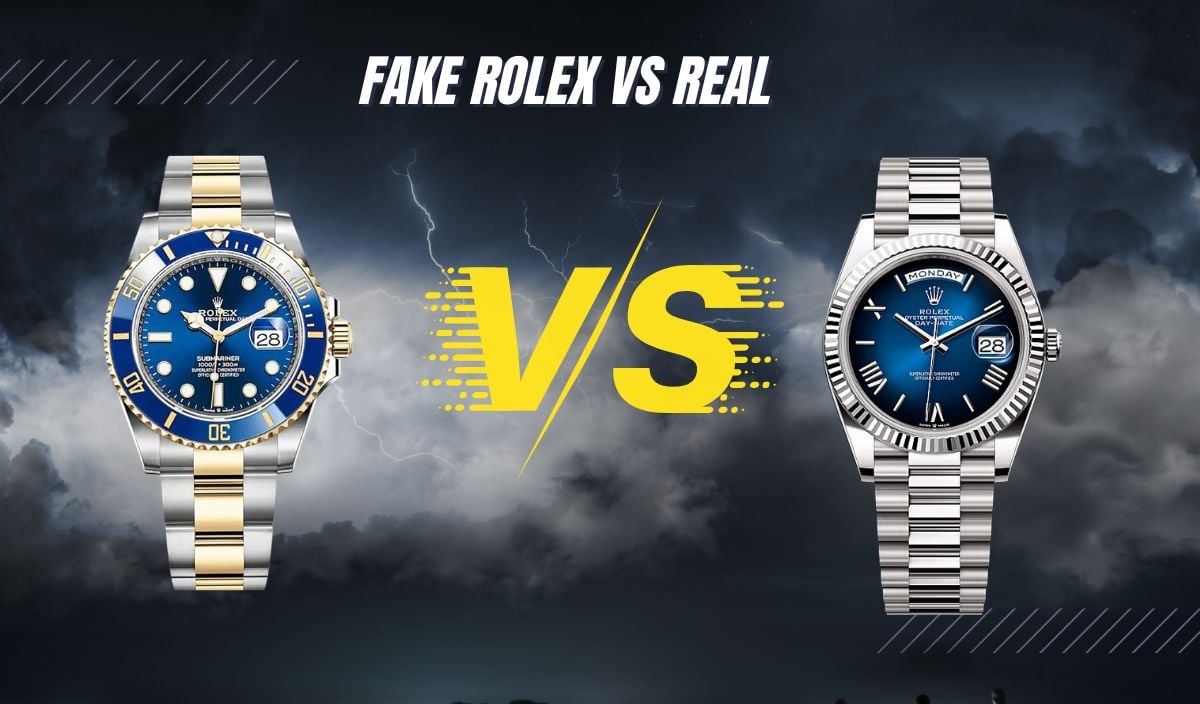
The world is full of nefarious types who counterfeit everything from artwork to musical instruments and even money. Fake timepieces abound and Rolex is counterfeited more than any other brand. Take a walk down Canal Street in Lower Manhattan, and you will see dozens of fake Rolexes for sale.

If you dream of landing one of these prestigious timepieces on your wrist, especially if the price tag is a bit out of your range, you may be tempted to search for bargains. It is all too easy to be tricked, as counterfeiters have become very sophisticated and made some watches look very close to the real thing. Here’s what you need to know before delving into the marketplace.

The Telltale Signs of a Fake Rolex

Before we begin, you should be warned about buying online. Unless the company is a reputable watch shop, be wary of buying a Rolex. Determining whether a watch is real or fake from pictures on a website is nearly impossible unless you are an expert. Always look at any Rolex you are considering buying in person.

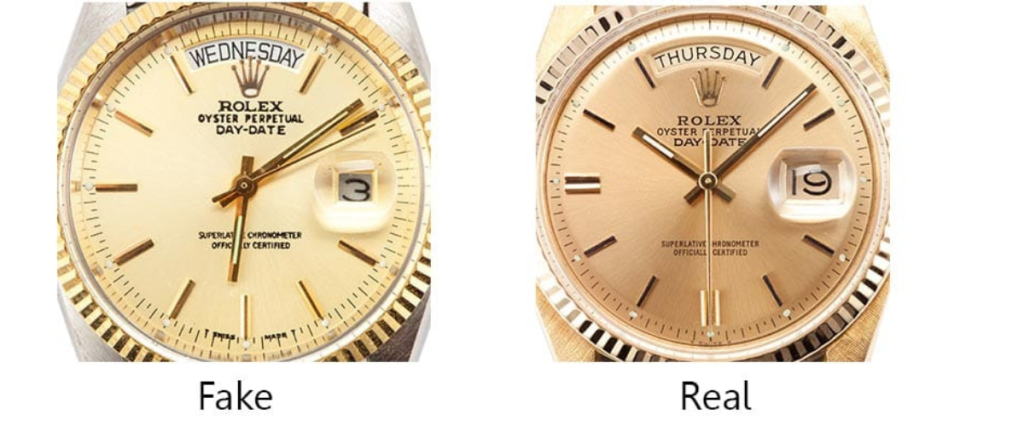
The first thing to do is to heft the watch. Rolex uses high-quality 904L stainless steel, 18K gold, and other precious metals in their timepieces. Counterfeits use cheaper materials that weigh less. The watch should feel solid. If it feels light and cheap, do not buy it.

Next, look at the fit and finish. Examine every component, dial, hands, indices, bezel, and bracelet. If parts look poorly cut or polished or pieces don’t fit nicely together, it’s a fake. Rolex takes great pride in its timepieces, and it does not let poorly made watches leave the factory. 

Another thing to note is that if you are looking at a Rolex that has both day and date complications, it should be made of gold or platinum. Rolex does not make day-dates in stainless steel. That is a sure sign of a fake.

Check the case back. Rolex does have a few models with exhibition case-backs, but they are rare. If the back of the case is not solid, pass on the watch. In their quest for elegance, most Rolex case-backs are plain. There are a few that are engraved, but be suspicious if the watch you are looking at does not have a plain case-back.

The magnifier that sits above the date complication on the Submariner and other models is called a cyclops. Rolex invented it, and it magnifies the numeral exactly 2.5 times. It is coated on the inside with a clear anti-reflective substance. 

If you see a tint of color in the cyclops or the date is hard to read and reflects glare, the watch is a fake. The date numeral should also be in an easy-to-read font and be perfectly centered in the window.

Now, we are going to check the rehaut. This is the ring around the inner surface that connects the dial to the bezel. It should have the name “Rolex” engraved several times around the circumference. Further, on the side from 12 o’clock to six, the “X” should line up with the hour markers. On the six to 12 side, the “R” will line up with the hour markers.

The engraving should be easy to read and have a high-quality look to it. At the six o’clock side of the rehaut, the serial number should be engraved and easy to read. If a serial number is present, you can look it up online to get more information about the watch. On the outside of the case between the lugs above 12 o’clock, the model number should be engraved. To see it, you will have to remove the bracelet or strap.

Rolex has become very clever in adding features to indicate that a watch is genuine. In 2002, they began engraving a small crown logo on the crystal at six o’clock. It’s hard to see with the naked eye unless the lighting and angle are perfect. Using a loupe or magnifying glass is the best way to check.

If the crown is not there, the watch is a fake. Also, the crown will be made up of a series of laser-engraved dots of varying depth. This is extremely difficult for a counterfeiter to get right and is one of the best ways to verify whether a Rolex is real or not. 

Remove the case back and look at the movement. On a genuine Rolex, the parts will be perfectly machined and finished and fit together with no gaps. Fakes don’t have the quality machining or polished finish of the real thing. Check the movement by winding the watch. On a real Rolex, it will feel smooth and be easy to turn the crown. If the movement feels gritty and doesn’t wind with ease, it’s a fake. 

Note that although Rolex has made models with quartz movements, they are rare. The vast majority of Rolexes have automatic movements, so if it’s a quartz, that should raise red flags.

Speaking of the crown, the Rolex logo, which is a crown, should be perfectly embossed on the crown. On recent models, there will be two or three dots or bars beneath the logo. Counterfeiters consistently miss this detail. The grooves on the sides of the crown should be perfectly cut and uniform in size and depth.

In addition to the quality of the bracelet or strap, find out which Rolex pairs with the model you are looking at. If the strap or bracelet is wrong, the watch could be fake. It might also be real but placed on a fake bracelet. The wrong combo should make you question the authenticity.

Finally, the Rolex logo on the bracelet clasp should be crisp, clear, and perfectly embossed. Fakes usually get this wrong and often it’s a poorly cut logo soldered on.

Are Fake Rolex Watches Worth It?

Now that you know how to spot a fake Rolex, you might be tempted to buy one anyway because they are priced so much lower than the real thing. There are many companies that make what they call., “Super Clones”. Own an exact copy of a Submariner for $1,500. 

Don’t fall for this. First, these watches are made from inferior materials and use generic movements that are nowhere near as accurate, precise, or durable as a real Rolex. That’s why they’re so cheap.

The biggest problem with buying a fake Rolex is that counterfeiting is illegal in most jurisdictions. Watchmakers can copy an unpatented Rolex design as long as they put their own name and logo on it.

Using the Rolex name and logo is trademark infringement. These companies can be prosecuted for fraud and false advertising. In many places, it is illegal to own a counterfeit product. If you knowingly buy a fake, you could find yourself in legal trouble. Also, if you buy one, you are stuck with it. It is against the law in most countries to sell a counterfeit item even if you inform the potential buyer that it is a fake. 

I would thus advise you against buying a fake Rolex. The possible exposure to legal trouble, coupled with the fact that you are hurting the brand, no matter how wealthy it is, make it a really bad idea. Think about it. If it’s not real, you will always be aware of it and never have the satisfaction that real Rolex owners enjoy. As for prestige, the average person will rarely notice that you are even wearing a watch and a horology connoisseur will likely spot it as a fake. 

How to Avoid Getting a Fake Rolex

If you are in the market for a Rolex, you want to avoid getting stuck with a fake. The most important thing to do is to carefully vet any seller. Stick with a Rolex authorized dealer or a grey market shop with a sterling reputation. Avoid eBay and Craig’s list. They are loaded with shady types and you don’t know who you are dealing with. 

Don’t buy online unless the dealer has a great reputation. Check out the watch you are considering in person. Examine it thoroughly and look for all of the issues we discussed. Don’t be afraid to ask lots of questions. You are taking a big risk and are entitled to all information about the watch. If the seller is not forthcoming in answering your questions, get out of there.

If you have a friend who is very knowledgeable about watches, take them with you. By all means, do not even consider any “Rolex” that is being offered at a ridiculously low price. Even Rolex’s lowest-priced brand-new models are going to run north of $10,000. 

Conclusion

Rolex is easily the most well-known watch brand on the planet and it has an enormous number of fans. As such, it is the most counterfeited. If you dream of owning a Rolex, keep in mind that there are probably as many fakes out there as real ones.

Purchasing a fake Rolex or super clone is not worth it. Go with an AD or seller with an impeccable reputation and save your money to buy a genuine Rolex. You will be much happier. One more tip. If the name on the dial is spelled, “Rolecks”, it’s probably a fake. 

Grand Seiko SBGW301 Review: One for the Special Occasions

Paul Rothbart

December 17, 2024

Over time, the way people dress has gotten more casual. You don’t see men wearing suits every day or even to most jobs. With casual clothes come casual watches. Tool watches such as divers and chronographs fill the collections of many watch lovers.

However, you may need to dress it up every once in a while. You could be invited to a wedding, a job interview, or another event where you need more formal attire. In these situations, you’ll need a watch to match the level of formality. Not that you can’t wear a diver with a suit, but a dress watch will elevate your appearance.

bot-only-imagebot-only-image

If, like most guys, you have one suit, you should have one dress watch to go with it. You want it to be elegant, accurate, and reliable, and a brand that checks all those boxes is Grand Seiko.

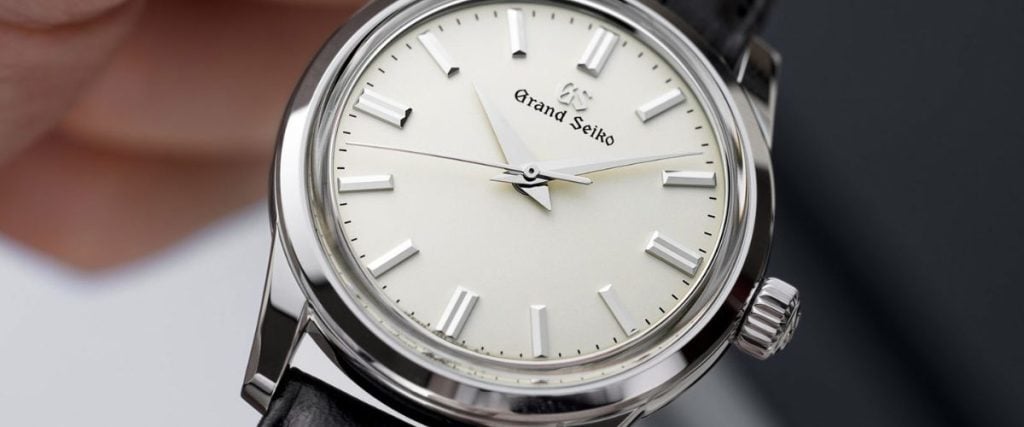
For more than 140 years, the prestigious Japanese watchmaker has been creating timepieces that rival anything coming out of Switzerland. If you are looking for a classic dress watch to complete your best outfits, look no further than the Grand Seiko SBGW301 Elegance Manual. Let’s take a good look at this stunning timepiece.

History

Grand Seiko has produced many mechanical dress watches over the years and continues to update them. The models in the Elegance Collection are among the finest. 

In 2017, the brand released the stunning hand-wound SBGW231, which was a hit with many watch lovers. The simple three-hand, cream-colored dial was appreciated for its simplicity and beauty. It was essentially a newer version of 2001’s SBGW001, which was, in turn, inspired by the original Grand Seiko released in 1960.

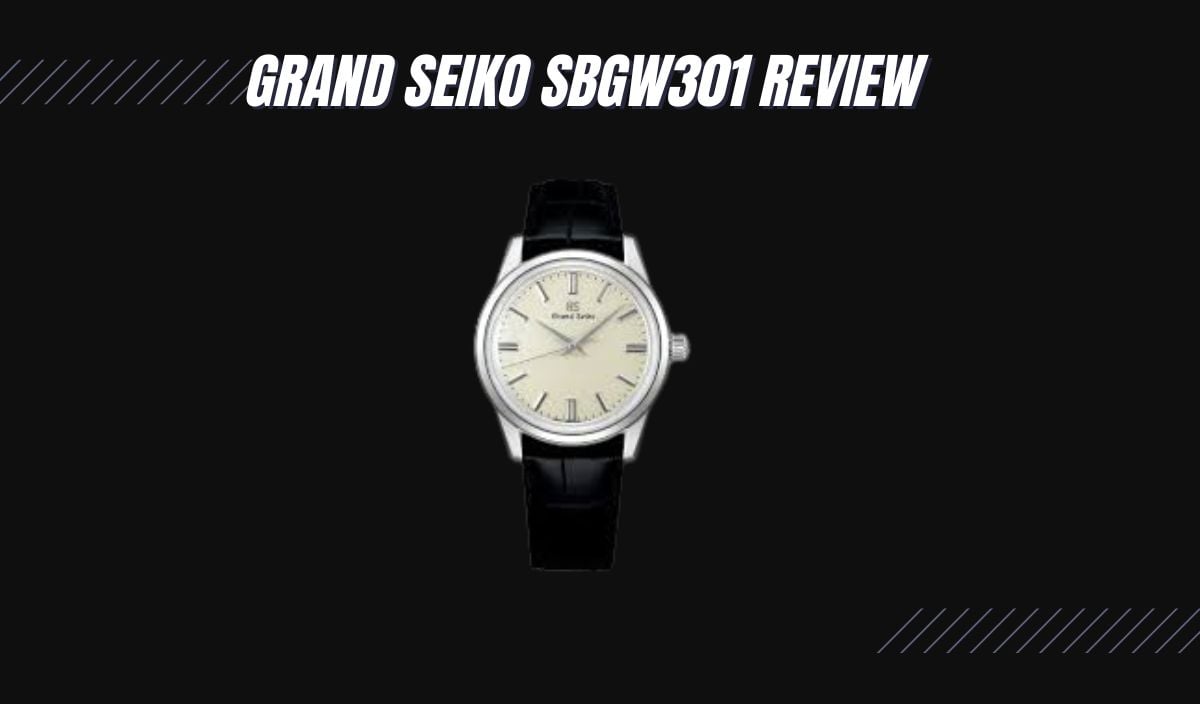
More recently, Grand Seiko created an updated version of the 231, the SBGW301. Released in January of 2024, the 301 also has a manual mechanical movement free from complications. With a few slight changes, the newer model is proving to be every bit the classic its older sibling is. 

Case

The 316L stainless steel case is 37.3 mm in diameter, a perfect size for a dress watch. Small enough to be elegant but big enough to suit small to average-size wrists. With a 43.3 mm lug-to-lug and a thickness of 11.7 mm, it will easily slide under a shirt cuff and maintain a low profile, as any good dress watch should. 

The surfaces of the case are brushed and polished using Grand Seiko’s trademark Zaratsu process. This gives it depth, and its sleek lines combined with the gentle curves of the lugs make for a truly beautiful case.

The scratch-resistant sapphire crystal is double-dome, which makes up a significant part of the watch’s thickness. A sapphire is also used for the exhibition case back. It’s nice for fans of fine horology to be able to take a peek at the movement, especially with a brand that puts this much into the design. 

As you would expect, the crown is a simple push-pull and is only needed for winding and setting the time. The water resistance is only 30 m, which is perfectly acceptable for a dress watch. The crown is large, which makes the case seem a bit bulky. But that does make it easy to grip when winding.

Dial

When it comes to watch style, it’s all about the dial. It’s where you look to see the time and draws more attention than any other part of a watch. Grand Seiko excels at pretty much every aspect of watchmaking but it’s their dials that really steal the show.

The dial on the SBGW301 doesn’t have a texture like so many Grand Seiko models. But the smooth finish fits perfectly with its dress watch elegance. The color is a beautiful ivory. White is a suitable color for a dress watch, but it can seem stark and antiseptic. The dial of the 301 is subtle but carries just enough color to give it added interest.

The indices are precision-cut, brushed, and polished stainless batons with double batons at three, six, nine, and 12 o’clock. The hands are also stainless with brushed and polished surfaces. The minute and hour hands taper, and the second hand is a needle. They stand out nicely against the dial, making the watch easy to read but not flashy.

Simple black ticks around the outer edge of the dial form the minute track. Applied at 12 o’clock in stainless steel is the Grand Seiko logo with the name in black underneath. There is no other text on the dial, maintaining the minimalist look. It’s classic Grand Seiko, and the lack of a date complication only adds to the dressy elegance of the dial and the entire watch. 

Movement

The watch is powered by Grand Seiko’s in-house Caliber 9S64 mechanical manual movement. With 24 jewels, it operates at 4Hz and with adjustments at six different points, has an accuracy of -3 to +5 seconds per day. Better than COSC so you won’t have to reset it too often. Although not an automatic movement, the 72-hour power reserve means you won’t have to wind it every day. With a timepiece this nice, you will likely enjoy the winding experience. If you wear it to work, you can put it down over the weekend and it will still be ticking Monday morning. 

It’s an attractive design too. Thanks to the exhibition case back, you can view the brushed and polished stripe pattern and the engraved Grand Seiko logo and name in black. The movement specs are engraved in shiny gold and you can watch the balance wheel do its work.

Straps

The strap of a watch should do more than just hold it on your wrist. Ideally, it complements and enhances the style and character of the timepiece it’s attached to. The SBGW301 has a strap that pairs perfectly with the case.

A deep black crocodile leather strap contrasts the stainless case and also looks great with the ivory dial. The leather is soft, flexible, and very comfortable. It is attached with a pin buckle adorned with a vintage Grand Seiko logo, a tribute to the brand’s heritage that adds to the style of the watch.

The lugs are drilled, making switching out the strap easy. The lug width is on the small side at 19 mm, and it may be tough to find straps in that size. Honestly, you can’t top what Grand Seiko did here and probably won’t want to change the strap anyway.

On-Wrist Experience

Let’s talk about how the SBGW301 looks and feels. My frame of reference is my average-sized 7.25-inch wrist. I prefer watches in the 40-42 mm range. As a high-end dress watch, the small case of the 301 looks good on my wrist. Given that I would only wear it when dressed up, I think I like the smaller case better than my typical size watch. 

If your wrist is small to average size, you are not likely to have a problem with the 301. People with bigger wrists approaching eight inches will probably find it too small, dress watch status notwithstanding.

As for comfort, it feels very nice. It’s not a heavy watch at all and the crocodile strap is soft and supple. If you have it adjusted properly, you may not even be aware that the watch is held on with a strap. It will easily slide under a shirt cuff, tucked away neatly until you need it.

The color scheme is perfectly neutral. I like it better than plain white. Ivory adds interest, but will go with another color you may wish to wear. Hot, warm, cool, earth tones, you name it, you can wear it with the SBGW301.

You don’t have to be in a tux but you will want to be dressed fairly well when you wear it. It will work with a suit, blazer, or sport jacket, with or without a tie. I wouldn’t wear it with something as casual as a polo shirt though. A nice long-sleeve button-up is the way to go.

Price & Availability

The price may surprise you. The SBGW301 retails for $4,900. This is quite a bargain, considering it is just as nice, reliable, and accurate as many watches that cost two, three, or four times as much. You get a lot for your money from Grand Seiko.

You can pick up a brand-new model from a Grand Seiko boutique or their website. These beauties are also available from a Grand Seiko authorized dealer, such as Exquisite Timepieces. If you’re in the neighborhood, stop by our Naples, FL, boutique to try one on.

You can also order one from our website. We offer free domestic shipping, and as an AD, you will receive Grand Seiko’s five-year warranty. Whether you visit in person or online, our knowledgeable and friendly sales staff will be happy to assist you.

Should you decide to take a look at the preowned market, you won’t have any trouble finding a 301 for between $3,500 and $4,500.

Conclusion

Casual is nice. Casual is comfortable. But sometimes, ya gotta dress up a bit. Having the right watch is the finishing touch to a stylish and elegant outfit. Grand Seiko does dress watches well, and with its neutral colorway, small case, elegant, vintage lines, accuracy, and Grand Seiko reliability, you owe it to yourself to take a look at the SBGW301.

Watch Crown Functions and Types

Paul Rothbart

November 22, 2024

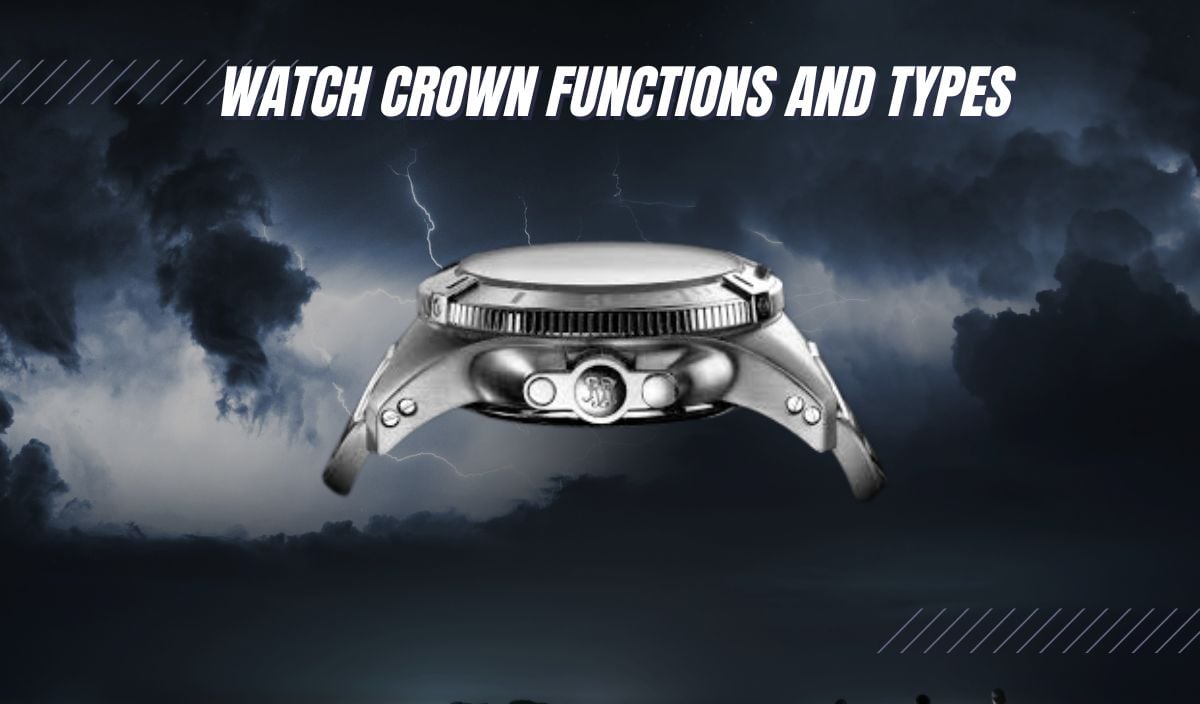
Okay, listen up, people. Today, we are going to learn about a small, sometimes overlooked, but extremely important part of a mechanical watch. Some of the less horologically educated among you may call it a “winder” or “that twisty thing on the side”. Like every other part of a watch, it has a proper name. It is called the crown, and, as you will see, that’s a fitting name. 

The crown is easy to spot on a watch. It’s usually a round knob and generally found at the 3 o’clock position. This makes it easy to wind for a right-handed person because they can hold the case in their left hand and wind with the right. 

bot-only-imagebot-only-image

By the way, never wind or set your watch while it’s on your wrist. You could easily bend the stem of the crown and cause damage that can be pretty expensive to have fixed.

There are watches with the crown at 9 o’clock. These are left-handed watches for obvious reasons. Some right-handed people like them, too, because they don’t have to deal with the crown digging into the back of their left hand while bending it. Lefties are not common, but they are out there.

Watches with crowns at 4 o’clock also exist. In fact, there are even two and three-crown timepieces. You won’t have any trouble identifying the crown. Let’s take a look at how they function.

How Watch Crowns Work

The crown is technically part of the movement and the only part of it that you can touch. Its main function is to wind the mainspring, which is what powers a mechanical watch. You turn the crown clockwise until you feel resistance. On most watches, this is about 30-40 turns, which means the mainspring is fully wound.

The crown is attached to a stem that runs through the case into the movement. A system of gears engage when the crown is turned and wind the spring. The crown performs other functions as well.

Displaying the correct time is essential to a watch. The crown will have a position that allows you to turn the crown to move the hands forward or back to set the time. On a basic three-hand watch with no complications, there will only be one position. 

Pull out to set the time, push back when you’re done. Many watches have a hacking function that stops the second hand when the crown is pulled out. This allows you to synchronize your watch to the exact time. I like to set mine using my cell phone.

Watches with complications such as date, day of the week, GMT, or moonphase have added positions to allow you to set them with the crown. 

For example, you pull out to the first position to set the date. Some watches change the date when you turn in one direction and a different complication, such as the GMT hand or the day of the week when you turn in the other. 

A handy feature some watches have is a position that just moves the hour hand. I have this on my Omega Seamaster, and it’s great when you travel to a different timezone or have to adjust to semi-annual time changes. 

Watches that have more than one crown assign a different function to each crown rather than having multiple positions. 

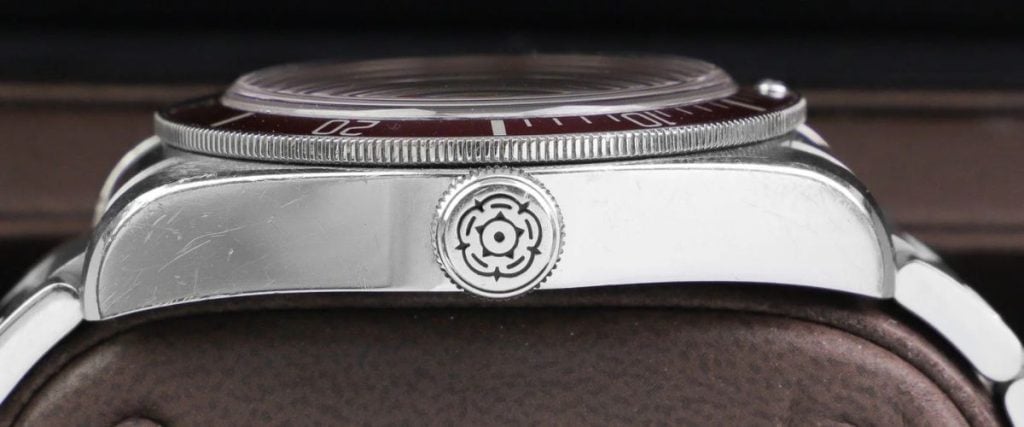
The crown of a watch also adds to its aesthetics. It will be designed to match the case, style, and type of watch. There are usually grooves to make it easy to grip. Some crowns have a precious stone on them to bling the timepiece up a bit. Now that we know about the many functions of a crown let’s see how they evolved. It didn’t happen overnight. 

History of Watch Crowns

There was a time before crowns existed. Pocket watches were wound with a key that was inserted into the dial or case. If you’ve ever seen an antique clock, you know what that looks like. This was inconvenient for a watch because if you left the key at home or lost it, you could not wind or reset your watch.

A watchmaker in England, John Arnold, is credited as the first to find a solution to this problem. He placed a knob on a pocket watch that could wind the mainspring. Later, in 1830, the legendary Antoine-Louis Breguet refined Arnold’s mechanism, which allowed it to be used on smaller watches, such as those worn on the wrist.

A decade or so later, in France, Jean Adrien Phillipe, co-founder of Patek Philippe, developed a sliding pinion that brought the crown closer to the modern one we know today. It allowed for different positions and multiple functions. 

We should note that the crown didn’t always have such a regal name. It was originally called a knob. Not so elegant but over time, watchmakers noted that the shape resembles the headwear of royalty. That coupled with the fact that on pocket watches, the crown sat at 12 o’clock or on the “head” of the case, and the familiar moniker of crown was applied and stuck for good. 

As newer complications were developed and added to watches, the crown was further developed to allow the wearer to set these features. Several different types of crowns were also invented. 

Types of Watch Crowns

There is more than one type of watch crown, and if you have even a small collection, you probably own watches with more than one type. These types were created to serve different purposes in various watch types.

Screw-Down Crowns

My favorite type of crown is the screw-down. As the name implies, the base of the crown is threaded, and it screws down into the case. This creates a seal that is essential to high-water resistance timepieces such as divers. If the crown doesn’t screw down, it’s not a dive watch. A screw-down crown is a highly desirable feature, even if you don’t plan to wear your watch in water. 

The screw-down also keeps dust and other debris from getting into your movement and damaging it. Screw-down crowns have multiple positions on watches with complications, and you must unscrew them to pull the crown out before winding or setting.

Push-Pull Crowns

The most basic type of crown is the push-pull. It simply pulls out and pushes back in with no unscrewing necessary. These are typically found on dress watches because of their simple and elegant design. They will have multiple positions if necessary and are easy to use.

Recessed Crowns

Recessed crowns sit down partly in the case. This gives the watch clean lines and a pretty aesthetic. You also don’t have to worry about the crown digging into the back of your wrist. The downside is that they can be tricky to turn, and that may get a little annoying.

Multiple Crowns

As mentioned earlier, there are watches with more than one crown. Two-crown watches generally have them located at 2 and 4 o’clock, while three-crowns have them at two, three, and four. The extra crowns perform the function of adjusting other complications making fewer crown positions necessary. 

There are other knobs or buttons you may see protruding from a watch case that are not actually crowns. As I look down at my wrist, I see one now. The infamous helium escape valve on the Omega Seamaster. 

Its purpose is to let helium escape from the case on extended saturation dives, which makes it not at all necessary for the vast majority of watch lovers. Many people hate it, but I think it adds to the cool factor.

Chronographs usually have buttons at 2 and 4 o’clock that start and stop the stopwatch and reset it, respectively. I have a multi-function watch with this same setup. It’s a quartz movement, so it needs no winding. The crown sets the time, and the two buttons advance dials display the day and date. 

How Important is a Watch Crown?

The importance of a watch crown cannot be overstated. If you can’t wind the mainspring on a mechanical watch, when it stops, it’s useless. Even an automatic needs to be wound from time to time.

Setting the time is always a necessity. Even the most accurate mechanical timepieces gain or lose a bit of time each day. Eventually, that means a reset, and switching to and from Daylight Savings Time means adjusting your watch with the crown. Unless you have a GMT, you need to adjust your watch when traveling to different time zones. 

A date complication needs to be adjusted at the end of every month with less than 30 days. The functions of this tiny part of a watch are essential to its usefulness. Sure, you could avoid all this with a smartwatch, but where’s the fun in that?

Conclusion

A watch is a complex piece of mechanical engineering with many moving parts. Some you can’t see, and some you can. Most will only ever be touched or repaired by your friendly neighborhood watchmaker. 

The crown, small though it is, is your opportunity to adjust, power, and interact with your precious wrist babies. The next time you wind your watch, take a moment to appreciate all that your crown does for you.

To Top