Charlotte H, Author at Exquisite Timepieces - Page 12 of 18

Author: Charlotte H

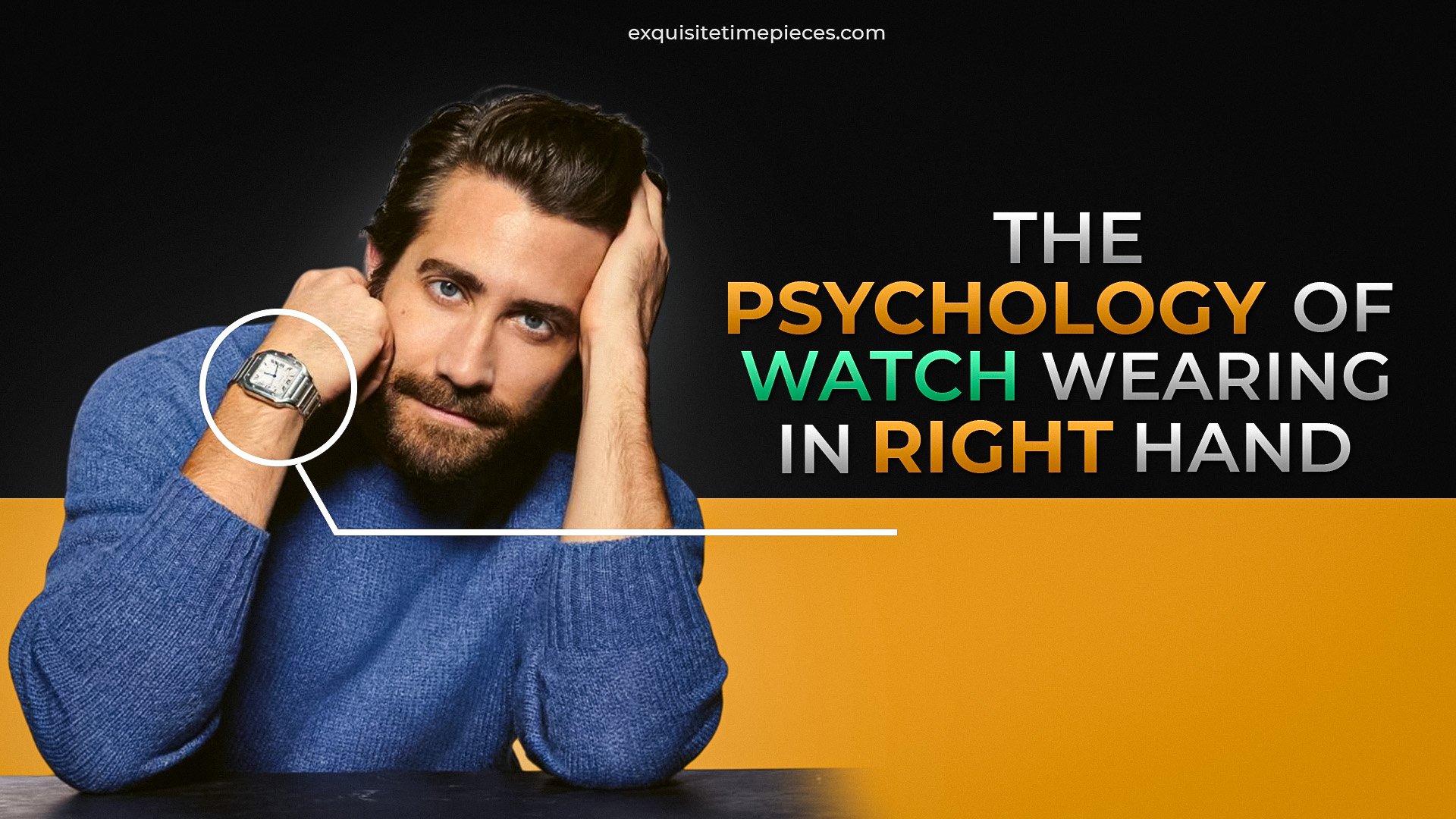
The Psychology of Watch Wearing on the Right Hand

Charlotte H

November 22, 2024

Watches say a lot about us. They speak to our sense of style, our punctuality (or attempts at it), and even our personality quirks. Even the smallest parts of our watches can reveal things about us, whether it’s the color of the dial or even the size of the case. Similarly, did you know that even the wrist you choose to wear your watch can reveal something about you?

Most people automatically go for the left wrist, following a decades-old tradition. But many people are choosing to break from the mold, donning their watches on the right wrist instead. 

bot-only-imagebot-only-image

For some, it’s a matter of comfort or just about practicality. For others, it’s a matter of habit or style. But without us realizing it, there can be some subconscious psychological reasons why we wear our watches on the right hand.

Reasons for Wearing a Watch on the Right Hand 

Wearing a watch on the right hand may not be as common, but it’s certainly not unusual. People have all kinds of reasons for making this choice; some practical, some personal, and some just based on habit. Here are some of just a few reasons you might choose to wear a watch on your right wrist:

Tradition

Tradition often plays a big role in why people wear a watch on a particular wrist. Historically, wristwatches were designed with a specific function in mind: to be easily operated without needing to remove them. Most people are right-handed, so the majority of watches are crafted with a small knob on the right side of the watch face called the crown. 

This crown allows you to wind the watch and adjust the time, so placing it on the left wrist means you can wind and adjust it using your dominant right hand. Wearing your watch on the left also helps protect the watch from damage since the less dominant hand (the left, for most) is generally less active and thus less likely to bump or scratch the watch.

This left-wrist tradition quickly became the standard in Western culture, with the design of wristwatches reflecting it to this day. However, in some cultures, wearing a watch on the right wrist is more common and even carries its own significance. 

In parts of Eastern Europe, South Asia, and the Middle East, for instance, wearing a watch on the right wrist may be linked to cultural norms and values or even religious beliefs. In these regions, people may feel that wearing a watch on the right wrist aligns with certain customs or is seen as a more dignified or respectful choice.

Left-Handed

Being left-handed is one of the most common practical reasons people wear a watch on their right wrist. Since lefties use their left hand for most daily tasks, putting a watch on the right wrist frees up their dominant hand for writing, eating, or using tools. 

This means the watch doesn’t interfere with the activities they perform most frequently, where wrist movement and flexibility are essential. Having the watch on their non-dominant wrist also reduces the chance of accidental damage from tasks that involve fine motor skills or pressure, like chopping, writing, or even playing sports.

Wearing the watch on the right wrist also allows left-handed people to adjust or wind the watch more comfortably with their dominant hand. 

Many traditional watches are designed with the crown (the knob used to set the time) on the right side, which is ideal for right-handers wearing a watch on their left wrist. When left-handed people wear a right-sided crown watch on their right wrist, they can easily access and operate it with their left hand, which might be much trickier if they wore the watch on the left.

Personal Style

Sometimes, wearing a watch on the right wrist is simply a matter of personal style. Watches are often worn as part of an outfit as a fashion accessory, and rightly so. These timekeeping marvels are made to look good, after all. 

So, some people choose to wear their watch on a particular wrist simply because they like how it looks. For some people, a watch on the right wrist feels a bit more unconventional and can help them stand out from the crowd. 

It’s like a subtle statement to show they like to be different. Others might choose the right wrist because it fits better with other accessories. For example, they might wear other pieces of jewelry on the left wrist, like bracelets or bangles.

Physiological Issues

Comfort and health considerations play a significant role in how people choose which wrist to wear a watch on, especially for those managing certain physiological conditions or temporary injuries. 

For example, for people with carpal tunnel syndrome or tendonitis, the choice of wrist can greatly impact comfort. Carpal tunnel syndrome occurs when the median nerve is compressed as it travels through the wrist, often causing tingling, pain, or numbness. 

Wearing a watch on an affected wrist may worsen these symptoms by adding extra pressure to an already sensitive area.

In addition to chronic conditions, injuries like sprains, fractures, or even just soreness from repetitive strain can influence the choice of wrist. For instance, someone with a cast or a bandage on one wrist may naturally shift their watch to the other side. 

Some people may also experience swelling due to circulation issues or arthritis, which can cause fluctuations in wrist size and sensitivity. For these individuals, wearing a watch loosely on the less sensitive wrist or switching wrists based on daily comfort can prevent additional pain and allow them to keep wearing their timepieces.

Which Hand Should a Man Wear a Watch on? 

Traditionally, men are most commonly seen wearing their watch on the left hand. This trend dates back to the early days of wristwatches when pocket watches were converted into wristwatches and worn on the left hand, making it easier for right-handed men to wind them with their dominant hand. Over time, this became a social norm, and it’s still the standard for many men today. 

However, there’s no hard and fast rule that says men must wear their watch on the left wrist. If wearing it on the right hand feels more natural, looks better with other accessories, or simply suits your style, there’s no reason you can’t switch it up. In the end, the wrist you choose says a lot about your personality and your willingness to follow or break tradition.

Which Hand Should a Woman Wear a Watch on? 

Interestingly, the social expectations for women’s watch-wearing have been different from those for men. Traditionally, women were more likely to wear their watch on their right hand, though there isn’t a clear reason why this trend emerged. Some say it’s to differentiate from men’s style, while others suggest it simply became a custom over time. 

Just like with men, though, this tradition is far from a rule. Women today should choose whichever wrist feels right for them. Some women might stick with the right wrist out of habit or preference, while others may find the left hand more comfortable or practical. 

As a female myself, I’m happy to admit my right wrist has always felt the most comfortable for my watches. It was a subconscious decision I made early on, and now I only ever put them on this wrist out of habit. But who knows, maybe I’ll mix it up more often. Ultimately, there’s no right or wrong wrist for a woman to wear her watch on; it should all be personal style and comfort.

Are There Psychological Reasons for Wearing a Watch on the Right or Left Hand?

This is where things get a little interesting and fun. Could the wrist you wear your watch on actually reveal clues about your personality, habits, and even your psychological makeup? Maybe… Psychology often weaves its way into the subtle choices we make, whether it’s our fashion sense or our favorite accessories. 

And yes, some people believe that the wrist you choose for your watch, left or right, could hint at certain personality traits or even offer insight into how you navigate life.

For example, since the majority of people (aka right-handers) tend to make the left wrist their default choice, these people are often associated with a sense of tradition and practicality. It’s a convenient choice, as we’ve already explained, since the left hand is less dominant, so the watch is less likely to get in the way of daily tasks. 

For that reason, those who stick with this classic placement might be seen as organized and maybe even planners at heart, often valuing order and routine.

You could also argue left wrist watch-wearers are less risk averse, choosing the “typical” wrist because they know it’s tried-and-true and keeps their watch more protected. Alternatively, it may just mean they are detail-oriented, as the traditional placement suggests they value efficiency and don’t feel the need to complicate things, especially when it comes to practical manners.

Wearing a watch on the right wrist, while less common, is still an option for many and can equally suggest a few things about that person. It could be that the person is simply left-handed, and wearing their timepiece on the right wrist just makes sense. Or it could be that they want to defy the norm and embrace a choice that’s different and unexpected. 

This alone reflects their confident personality and proves they value self-expression. It also hints at a bravery to go against the grain. Similarly, those who wear their watch on the right wrist might enjoy approaching things from new angles, bringing a fresh, unconventional mindset to everyday choices.

Interestingly, if you’re right-handed but choose to wear your watch on your right wrist, this could hint at an intentional embrace of self-expression. Maybe it’s a sign that you like to make even small choices of your own. 

Similarly, a left-handed person who wears their watch on the left might value comfort but isn’t afraid to endure a bit of awkwardness for the sake of blending in or sticking to what feels “right.”

In the end, whether these assumptions hold true depends entirely on the individual. But there’s something fun about the idea that even a small, everyday choice like which wrist to wear a watch on might reveal a glimpse into someone’s inner workings. 

So, if you’re rocking your watch on the “unexpected” wrist, maybe you’re subtly showing the world you’re not one to follow the crowd—or maybe you’re just all about making things work for you in your own way!

Conclusion 

At the end of the day, it really doesn’t matter which wrist you choose to wear your watch on. You should decide based on your own wants and needs. If you like to be influenced by tradition or you enjoy the practicality and comfort of wearing it on your left wrist, then do just that. Or, if you see yourself as more of a fashion-forward thinker who wants to stand out, choose your right. 

The beauty of watches is that it’s all about you and your personal style. They’re designed to be a reflection of our habits, preferences, and personalities, so wear your watch on the wrist that feels right for you. There are no rules when it comes to watchmaking, let alone watch-wearing, so enjoy the freedom of it and wear your timepiece without any rules.

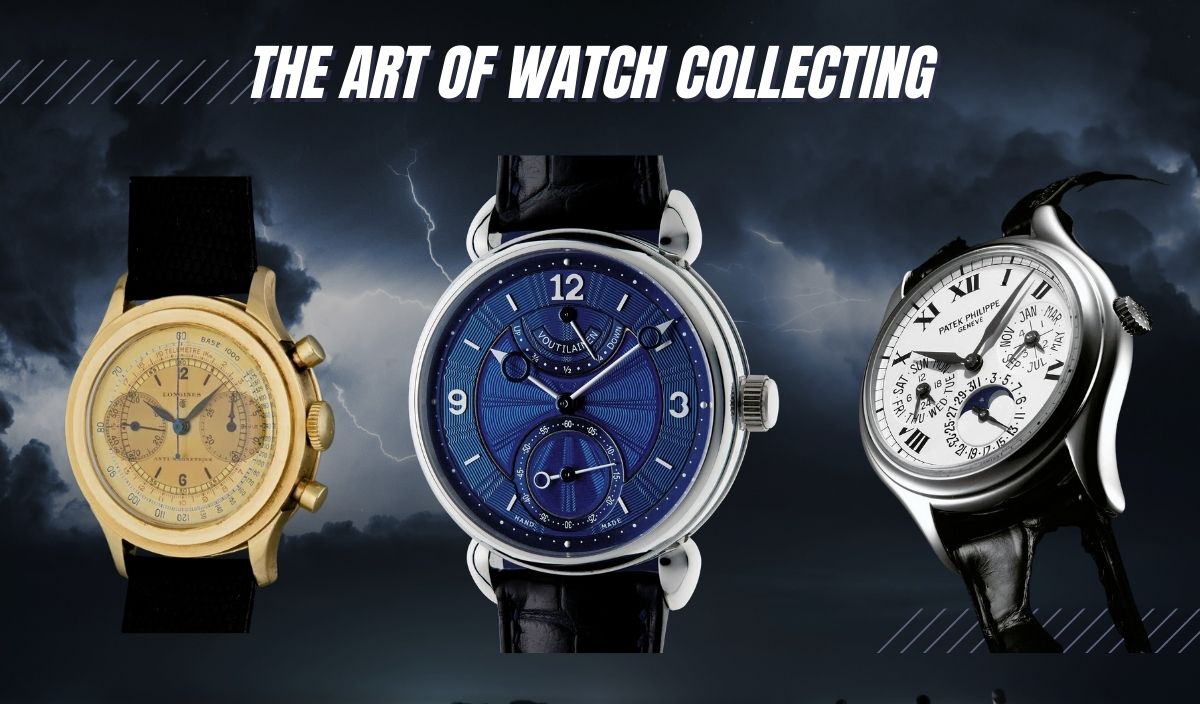
Watches are beautiful little things, and we often collect them for a particular reason. Sometimes, we’re fascinated by the design, whether it be an intricately decorated dial or a unique case shape. Other times, it’s the technology inside that fascinates us, like a particular high-end complication or, in some cases, the precision of the movement. 

Watch accuracy can be a long, sometimes complex topic to discuss, as so much is involved in determining its precision. Any watch wearer will know that even the most expensive and beautiful watches aren’t always perfectly on time. 

bot-only-imagebot-only-image

Sure, some are close enough, so close in fact that you’ll rarely notice any deviation. But there will always be a few seconds, or even a few minutes lost, depending on the watch in question – and most importantly – the environments it has been exposed to. 

It’s why something every watch enthusiast should learn early on is why watches lose time and how some lose time faster than others. In this blog, we’ll be exploring all the different factors that impact a watch’s accuracy, from movement type to the conditions it faces daily.

Do All Watches Lose Time?

Alright, so it’s time for a little bit of myth-busting. No matter what anyone tells you, all watches lose time. It doesn’t matter whether you’re wearing the world’s most expensive Swiss masterpiece or a basic quartz watch from your childhood; they will all drift from the exact time – just in different ways and amounts. 

Quartz watches are typically some of the most accurate of the bunch. These are timepieces that are powered by batteries, and on average, they lose only about 15 to 30 seconds a month. 

Thanks to their quartz crystal oscillator, they’re highly resistant to many external factors, so they’re often a popular choice among watch folk who want something reliable and easy to maintain.

Then you have mechanical watches, those incredible high-spec watches with movements made up of lots of tiny gears, springs, and wheels. These components all work together in harmony to keep time. 

However, sadly, despite being more technically marvelous than quartz watches, mechanical timepieces tend to lose time more easily due to their complexity. It’s common for a mechanical watch to lose or gain about 5 to 10 seconds a day, though high-end, well-maintained ones might only lose a few seconds. 

Those that enjoy the complexity of mechanical watches but still want the best of the best when it comes to precision, there’s a small genre of mechanical watches that are COSC-certified. 

COSC-certified watches are tested for accuracy under specific conditions, and only those that meet stringent standards get the certification. A COSC-certified or chronometer mechanical watch is usually accurate within -4 to +6 seconds per day. It’s as close as you’ll get to perfection in the world of mechanical timekeeping. 

Finally, we’ll briefly discuss smartwatches. Like quartz watches, these timepieces are powered by a battery, so they are among some of the most accurate wearables. They often also sync with time servers over Wi-Fi or cellular networks, adjusting automatically to maintain accuracy. In other words, a smartwatch won’t lose time unless it’s disconnected for extended periods. 

So, while all watches lose time, how much they lose largely depends on the type of watch and its movement. But of course, there are other factors as to why your watch will lose time, too. 

Here are some of the main reasons even the world’s most accurate timepiece may begin to lose or gain more time than it promised…

Reasons Why Watches Lose Time

No matter the type of watch, several environmental factors can cause even the best timepiece to stray from perfect accuracy. And while we may not think about these factors every day, they’re constantly at play. The good news? By knowing the most common culprits, you can take simple steps to avoid them, helping your watch stay as precise as possible.

Magnetism

It’s surprising how much magnetic fields can interfere with your watch’s accuracy. We’re always surrounded by magnetic fields without us realizing it. Devices like phones, computers, speakers, and even fridge magnets all have a magnetic charge. 

When a mechanical watch encounters a magnetic field, it can cause parts like the balance spring to stick together, which messes up the oscillation and makes the watch run faster or slower. 

Most modern watches come with some degree of magnetic resistance, but even so, it’s a good idea to keep them away from strong magnetic fields such as industrial magnets. And if your watch does end up magnetized, don’t worry; a professional watchmaker can usually demagnetize it without much hassle.

Water Damage 

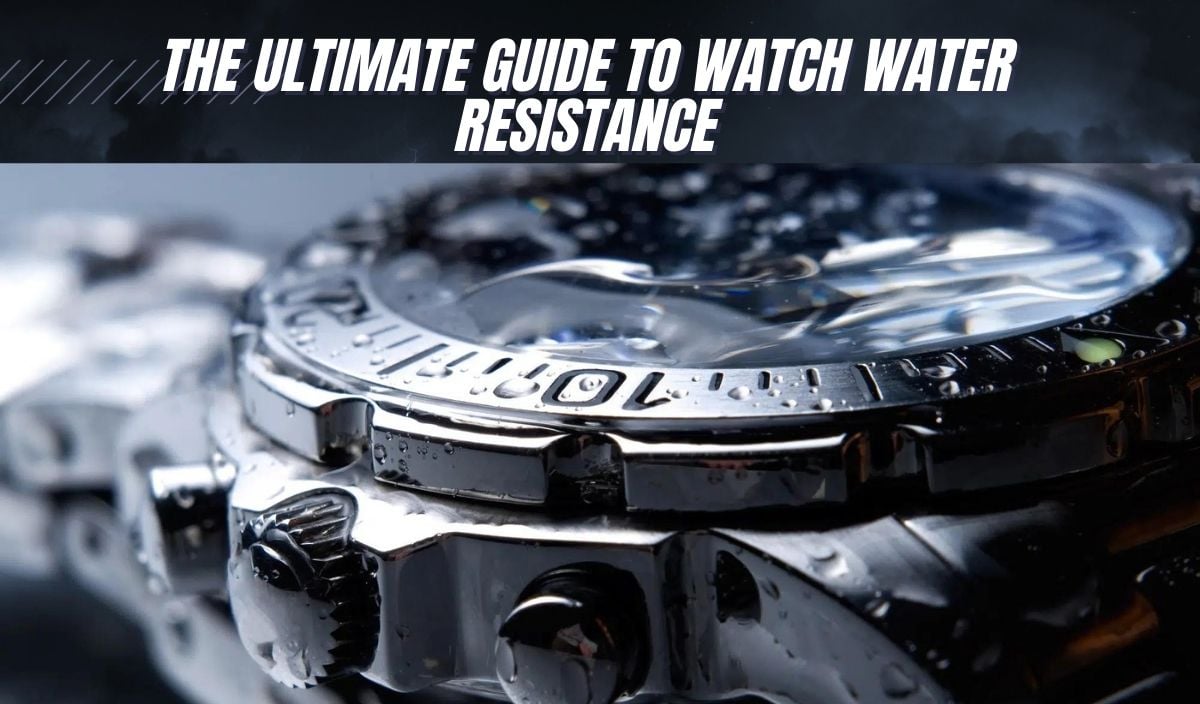
Water damage might just be the most common enemy of watch accuracy, even for so-called “water-resistant” watches. If moisture sneaks into a watch, it can corrode the delicate metal parts inside, which may throw off the timekeeping. Not all water-resistant watches are created equal; some can handle a splash, while others can go diving deep under the sea.

Always check your watch’s specific water resistance rating and learn exactly what that means. Just because your watch states “100 meters water resistant” on the dial doesn’t mean it can survive 100 meters of depth. This rating relates to pressure rather than distance. 

So, it’s good to learn exactly what your watch can withstand in regard to water before jumping headfirst into a pool. If you do suspect water damage, it’s best to take it in for a check-up to prevent any long-term harm.

Shocks

Accidental bumps, drops, or any kind of physical jolt can disrupt your watch’s timekeeping. Quartz watches generally handle shocks better, as they have fewer moving parts, but mechanical watches have intricate and sensitive mechanisms, so they are more vulnerable. 

Sometimes, even the smallest bump on the edge of a door or a fall to the floor can affect your watch’s accuracy. Thankfully, a lot of high-end brands build shock-resistant features into their watches to help with this, but even so, avoiding any hard knocks is the safest approach.

Watch Position

Even the most seasoned watch collectors don’t realize that the position your watch is placed can sometimes affect accuracy. Gravity can affect the movement, especially if a watch sits in one position for long periods. The force of gravity can cause some of the smaller components of the movement to lean and bend just ever so slightly, which in turn can disrupt the movement and cause problems related to precision. 

It’s why we encourage so many of our customers to purchase proper watch storage for their timepieces or even use watch winders to keep their timepieces constantly moving. Simple acts like this can help maintain accuracy and keep watches running at near-perfect times. 

Temperature 

Finally, there is temperature. The temperature to which your watch is exposed can seriously impact its accuracy. It’s one of those silent influencers that we don’t see, but it’s constantly at work. It’s an external factor we want to look at in a little more detail since it can be such a killer in the accuracy department.

How Temperature Affects Your Watch’s Accuracy

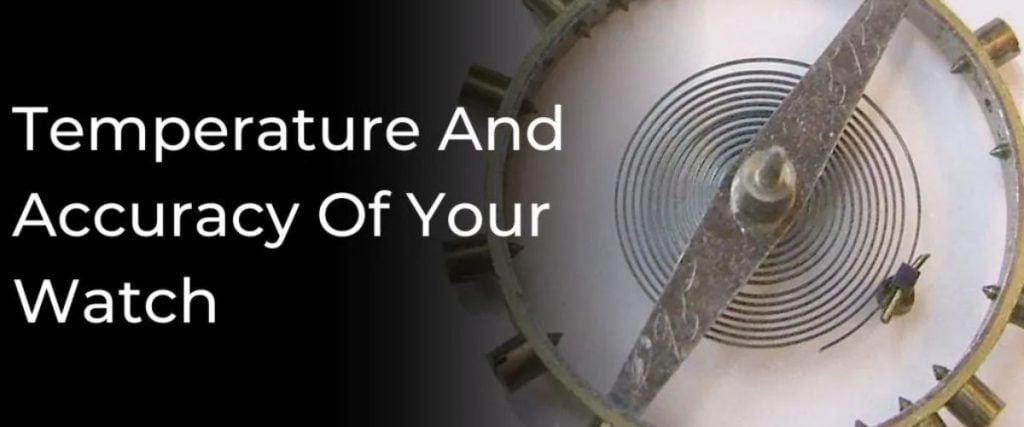
Temperature plays a big role in the precision of timekeeping, especially for mechanical watches. For example, heat can make those tiny metal components inside the movement expand, and even the tiniest expansion in the balance spring or gear can throw off the timekeeping mechanism. 

Take the balance spring, for example; should this expand, it can slow down the oscillation, which will make the watch lose time. For this reason, if you’re heading to the beach or a warm climate, be aware that your watch might lose a few seconds if exposed to high temperatures for an extended period of time. 

Similarly, cold weather can have the opposite effect. Metal contracts in low temperatures, and this can cause certain components to tighten or even shrink slightly, potentially making the watch run faster. 

Some high-end watches are specifically designed to handle extreme temperatures and can operate within a particular range, but most everyday watches will show slight fluctuations in very cold weather. 

As you’ve probably realized, quartz watches are generally more resistant to everyday influences, which also goes with temperature. But they’re not immune. In high temperatures, the quartz crystal can oscillate slightly slower, affecting accuracy. 

Similarly, at low temperatures, the crystal might oscillate faster. While this effect is small, quartz watches may still lose or gain a few seconds per month in extreme temperatures. However, some quartz watches have thermocompensation, which adjusts for temperature variations and ensures a more consistent timekeeping experience. 

Some watchmakers have also tried to tackle temperature issues related to mechanical watches by using different materials or specialized mechanisms. 

For example, some luxury watch manufacturers like Omega use bimetallic balance wheels, which are designed to counteract temperature-induced expansion or contraction. These watches are more likely to maintain accuracy even in fluctuating temperatures, but they’re rare and typically come with a higher price tag. 

So yes, temperature does impact a watch’s performance, but the extent varies greatly depending on the type of watch and how it’s built. While modern watches are more resistant to temperature changes than ever before, they’re not immune. 

If you’re planning to wear a watch in extreme conditions, it’s worth choosing one specifically designed for such situations or at least knowing what to expect.

Conclusion

In the end, no watch keeps perfect time forever. Whether it’s a mechanical marvel or a trusty quartz watch, timepieces are bound to lose or gain a little time over the years. Everything from magnetism and shocks to temperature can play a role in a watch’s accuracy, sometimes in ways we barely notice.

But understanding why watches lose time can give you a greater appreciation for the craft and complexity of watchmaking. And if precision is what you’re after, consider looking for COSC-certified or temperature-compensated watches. These innovative designs are as close to perfect as you can get in the world of timekeeping. 

But honestly, nothing is perfect, and that’s part of what makes watch collecting fun. I always say you deserve to embrace the quirks of your watch since it’s part of what makes each one unique.

And don’t forget, if you’re truly concerned about the accuracy of your timepiece and notice it’s losing or gaining more time than usual, pop into your local jeweler. They can check for any underlying issues, like magnetization, wear in the movement, or water damage, and make adjustments to bring your watch back to peak performance. Regular check-ups are so important, as they’ll keep your watch running smoothly and accurately for years to come.

5 Most Expensive Watches Ever Sold at Auction

Charlotte H

November 15, 2024

Most of us have owned a watch or two in our lives, but usually, it’s something we grab for its stylish look or just to make sure we’re not late for work. Maybe it’s a trusty Seiko or a handsome Omega. But there’s a whole other world of watches out there, ones that don’t just keep time but also rake in millions of dollars at auction. 

If you’ve ever wondered what makes a tiny, ticking piece of machinery worth millions, then you’ve come to the right place. While most of us can’t imagine forking the cost of a mansion for something that fits our wrists, there are plenty of collectors and connoisseurs out there who are more than happy to drop millions at the drop of a gavel. 

bot-only-imagebot-only-image

These watches aren’t just about telling the time anymore; they’re about owning a piece of history, art, and, in some cases – or maybe even every case – status. 

But as you’d expect, the world’s most expensive watches ever sold at auction aren’t your run-of-the-mill wrist candy. These aren’t the kind of watches you’ll find in the window of any regular jewelers. 

These are watches that combine rarity, craftsmanship, and a touch of fame to create something almost completely one-of-a-kind. So, what exactly makes a watch rake in the big bucks? Is it all about diamonds and gold, or is there more to the story?

What Makes a Watch Fetch a High Auction Price?

So, what exactly makes a watch go from a cool, high-performing accessory to something worth more than an actual house? Well, to be honest, there’s no one-size-fits-all answer, and as you’ll soon find out, every watch has its own unique story and set of reasons for being valued so highly. But there are also a few key ingredients that can send a watch’s price tag souring. 

For starters, the rarity of a watch makes a big difference to its value. The fewer pieces made, the higher the price will likely be. Some watches are limited editions while others are one-of-a-kind, and buzzwords like this can get collectors salivating. 

To add to this, when a watch is made by some of the most prestigious watchmakers in the world, such as Patek Philippe, Rolex, and Audemars Piguet, you’re also more likely going to hold sway in the auction world. These brands have been around for decades, even centuries, and have built a reputation for producing exceptional timepieces.

Complications are another thing to consider. In the watch world, complications refer to features beyond just telling time. These could be anything from a perpetual calendar to a moon phase indicator or even a split-second chronograph. The more complicated, the better. And the more people are willing to shell out. 

Similarly, materials help. Sure, gold and diamonds come to mind, but it’s also more about the craftsmanship and uniqueness of these materials that really add value. Some watches are made with super rare materials or are meticulously hand-crafted down to the smallest detail. When you’re dealing with that level of precision, you’re not just buying a watch but a work of art.

Finally, we need to talk about provenance. This is a fancy word for “who owned this thing before?” For example, a watch that once belonged to a celebrity or a historical figure is much more likely to sell for the same design that’s been sitting in a shop window for several years.  

Take the Omega Speedmaster, which belonged to astronaut Dave Scott, as an example. This was one he wore during the Apollo 15 mission, and it made history as the first privately owned timepiece to go to the moon. When it hit the auction block, it sold for a whopping $1.6 million. Personal connections and backstories are a game changer. 

Top 5 Watches Sold at Auction 

Now that we know what makes a watch sell for insane prices let’s dive into the watches that have broken all the records. Some of these have stories attached that are just as cool as the watches themselves. So, without further ado, let’s take a look at the top 5 most expensive watches ever sold at auction…

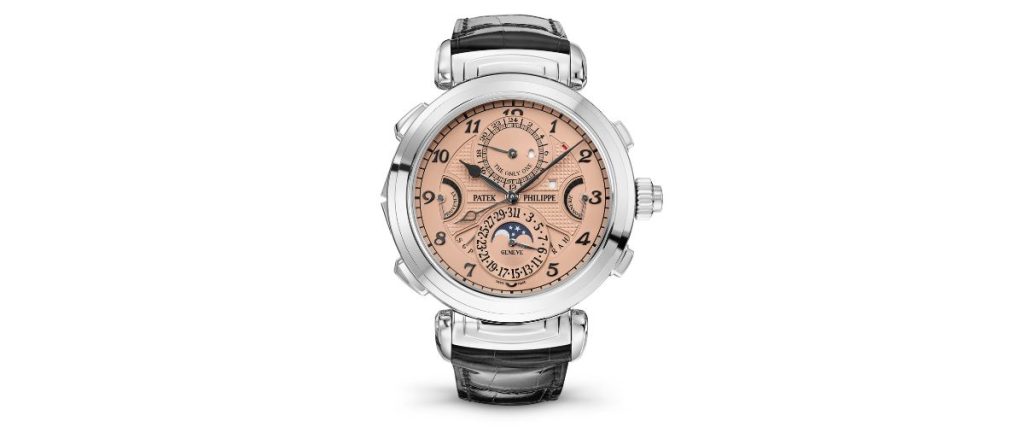
#1 Patek Philippe Grandmaster Chime (ref. 6300A-010)

The Patek Philippe Grandmaster Chime (ref. 6300A-010) is a true masterpiece, breaking records when it sold for a staggering $31.19 million at the Only Watch Charity Auction in Geneva in 2019. What makes this watch so special? First, it’s the only Grandmaster Chime ever made in stainless steel—a material rarely used by Patek Philippe for its grand complications. 

It’s also a watch that features 20 complications – yes, that’s a lot. This includes an alarm that chimes the pre-set time and a date repeater that sounds the date on demand. It’s also equipped with two dials housed in a reversible case, allowing the wearer to display either dial. 

With “The Only One” engraved on the case, it’s also a timepiece that oozes exclusivity and prestige. Combining its rarity, complexity, and the charitable cause behind its creation, the Grandmaster Chime stands as one of the most valuable watches ever sold.

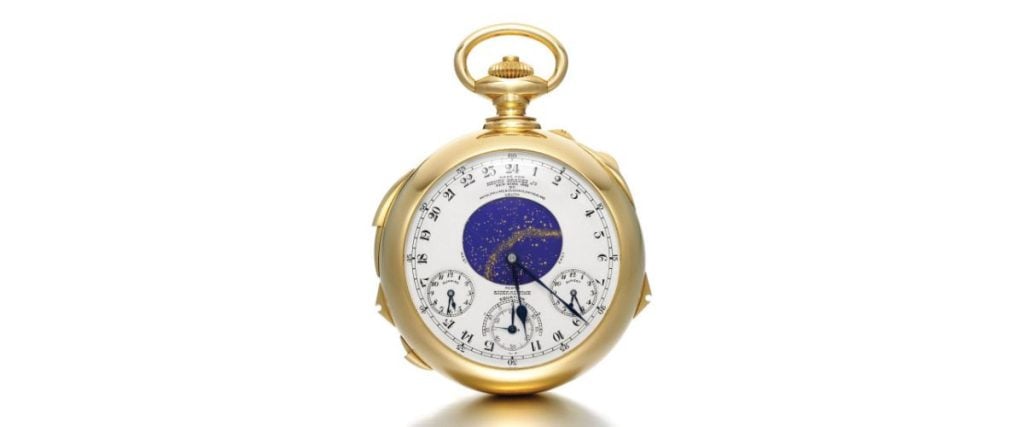
#2 Patek Philippe Henry Graves Supercomplication (ref. 198.385) 

Another model from Patek Philippe is the Henry Graves Supercomplication (ref. 198.385). Created in 1933 for American banker Henry Graves Jr., this stunning timepiece features 24 complications, making it one of the most complex mechanical watches ever made. 

The watch took nearly five years to craft and remains a testament to Patek Philippe’s exceptional artistry and technical expertise. Its most notable features include a perpetual calendar, sunrise and sunset times, a moon phase indicator, and a minute repeater

The intricacy of its design is matched only by its beauty, with an elegant gold case adorned with exquisite engravings. In 2014, the Henry Graves Supercomplication was sold at auction for a jaw-dropping $24 million, making it the most expensive watch ever sold at the time.

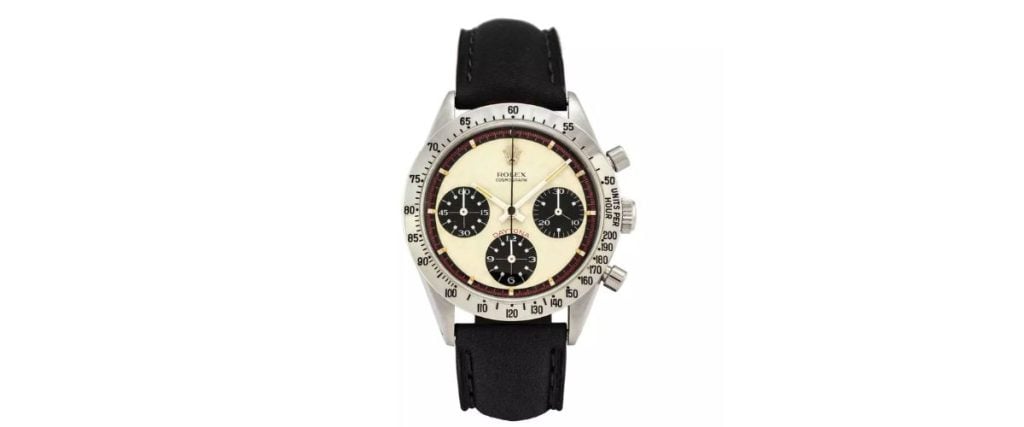
#3 Rolex Daytona “Paul Newman” (ref. 6239)

The Rolex Daytona “Paul Newman” (ref. 6239) is arguably one of the most famous designs from the Swiss watch giant, and for good reason. Originally introduced in the 1960s, this watch gained its nickname thanks to the legendary actor and race car driver Paul Newman, who was often seen wearing it. The design featured an Art Deco-like dial with a cream backdrop and striking black sub-dials – a combination of details that remains a huge draw for collectors today. 

In addition to having a celebrity connection, the Rolex Daytona “Paul Newman” was a rare timepiece, with only a limited number of people dressed in these specific aesthetic details. In 2017, a “Paul Newman” Daytona sold for an astounding $17 million at auction, making it one of the most expensive wristwatches ever sold. 

Today, many models have emerged that resemble the original Daytona, but none carry the same cachet. Even though these newer versions don’t fetch millions, they are still some of Rolex’s most coveted designs.

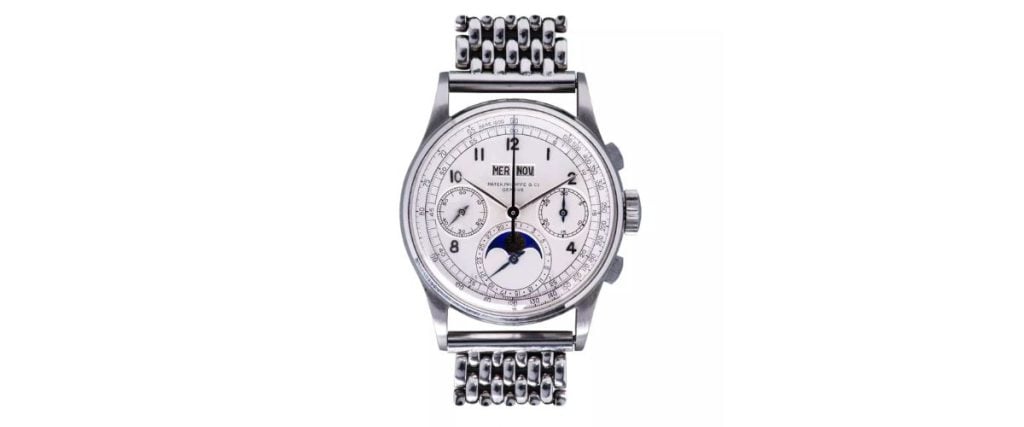
#4 Patek Philippe Perpetual Calendar Chronograph (ref. 1518)

Our next legendary timepiece is the Patek Philippe Perpetual Calendar Chronograph (ref. 1518. Launched in 1941, this model was the world’s first perpetual calendar chronograph wristwatch ever to be produced in a series by a manufacturer. 

Its innovative perpetual calendar complication accurately tracks the date and accounts for leap years. But what makes the reference 1518 exceptionally rare is the fact that only four examples were ever produced in stainless steel. 

This unique material, combined with the watch’s already limited production, has elevated its status among collectors. In 2016, one of these steel models sold at auction for an astonishing $11 million. Other models with differing case materials have also been up for auction since, and although none have quite beaten their predecessor, they rarely fail to hit six figures. 

#5 Patek Philippe “Prince Mohammed Tewlik A. Toussou” (ref. 1518 with French calendar)

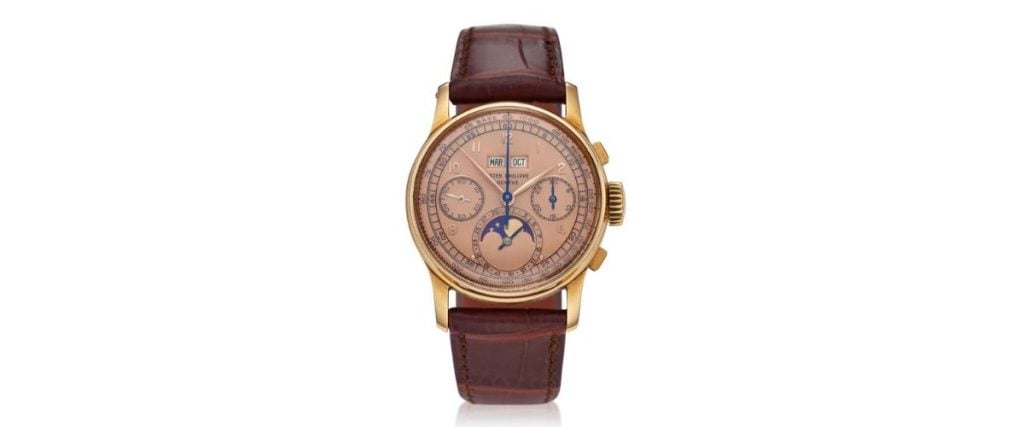
Yes, you read that right. Our final watch in today’s rundown is yet another Patek Philippe and another reference 1518. This release was also part of a limited production run, with only 14 known pink gold versions in existence. It’s also largely set apart by its unique French calendar, which adds a special charm to its already sophisticated design. 

In December 2021, the Patek Philippe “Prince Mohammed Tewlik A. Toussou” watch, named as such for the royal figure that owned it previously, made headlines when it sold for an impressive $9.57 million at a Sotheby’s auction in New York. Its combination of rich history, royal provenance, and the allure of its pink gold casing contributed to its elevated value.

Conclusion

So, there you have it, the five most expensive watches ever sold at auction. As we’ve hopefully demonstrated, these are watches that are famed for their high levels of craftsmanship, rarity, and history. 

From the unique Patek Philippe Grandmaster Chime to the iconic Paul Newman Daytona, each piece has captivated collectors for their stunning designs and intricate complications and their connections to famous figures and pivotal moments in time. 

They may not be watches we’ll ever own personally, but it’s certainly fun to hear about their stories and the extraordinary price tags they’ve reached!

Watch Crystal Types: Sapphire vs Mineral vs Acrylic

Charlotte H

November 15, 2024

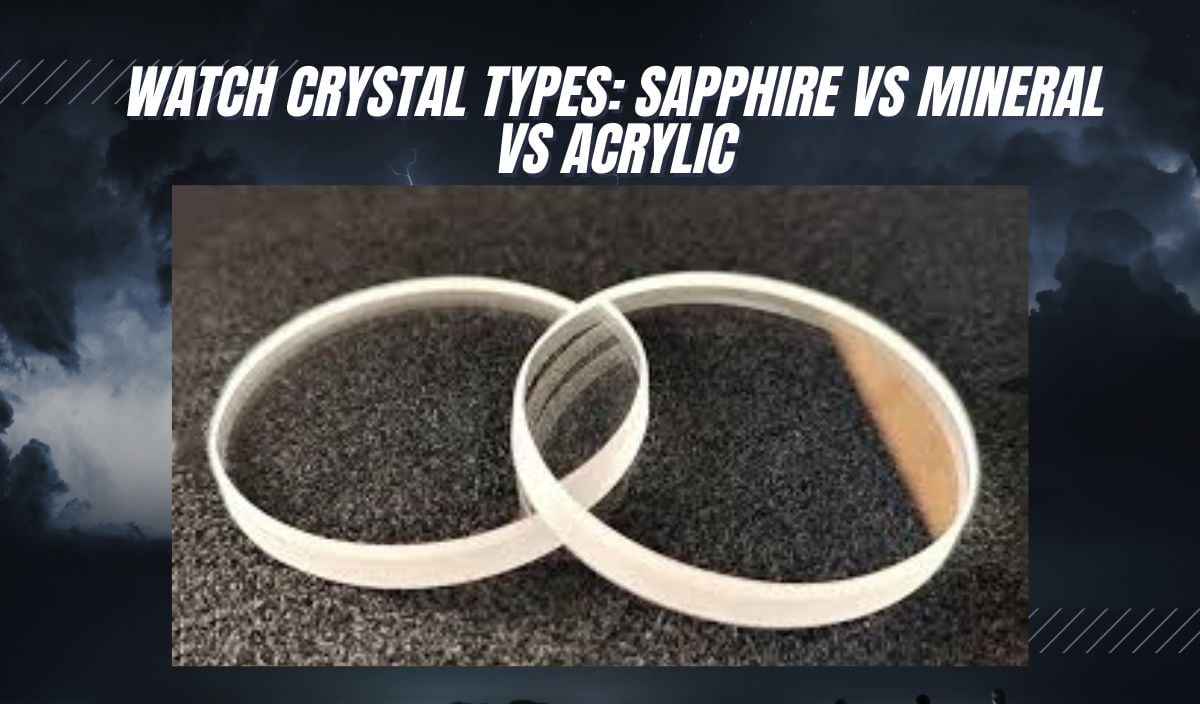
We’ll forgive you if you haven’t thought much about your watch’s crystal. At the end of the day, this thing is almost entirely transparent so it’s not going to be the first thing you notice. That clear thing covering the dial does a lot more than you might expect, however. But isn’t it just glass? Well, yes… and no. That “glass” is actually called watch crystal, and it does a lot more than just look pretty. 

It’s a little like your watch’s armor, and it greatly affects how tough your watch is, how clear the dial looks and importantly, how much you’ll be shelling out for the timepiece at checkout. If you’ve owned watches in the past, it’s likely you’ve noticed scratches popping up on some watch crystals more than others, or you’ve noticed some watch crystals looking perfectly clear while others can be a little cloudy. That’s because not all watch crystals are the same. 

bot-only-imagebot-only-image

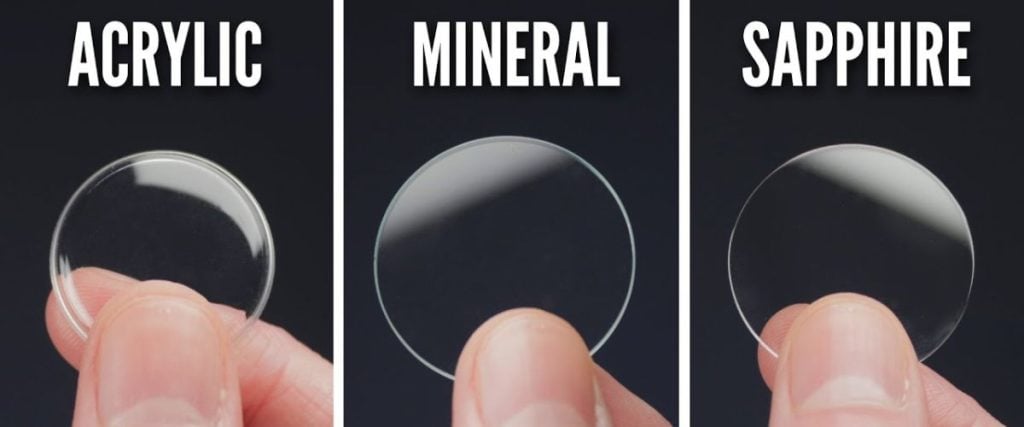
In fact, there are three types of main watch crystal types: sapphire crystal, mineral crystal and acrylic. Each has its own superpowers and its own weaknesses, so the type you choose can make a real difference in your watch’s durability and aesthetic. In this guide, we’ll be breaking down these three crystal types for you. We’ll walk you through the pros and cons of each, so you can make the right decision for you when it comes to choosing your next timepiece.

The Acrylic Crystal 

Alright, let’s get into the wonderful, occasionally scratchy world of acrylic glass! I like to think of acrylic glass as the humble, hardworking, and slightly underappreciated material that covers the face of many watches. While it might not be as flashy as sapphire or as refined as mineral glass, acrylic is a classic choice for a reason.

 What Exactly Is Acrylic Glass? 

First things first, despite being called “acrylic glass,” it’s not glass at all. Acrylic is actually a type of plastic, specifically polymethyl methacrylate (or PMMA if you’re feeling fancy). You might also hear it called Plexiglas or plexiglass. It’s lightweight, clear as can be, and is used for watch crystals because it shares some glass-like optical properties while being a lot easier on the wallet. It’s been a go-to material in watchmaking for decades and is especially common in vintage watches since it was used a lot more regularly during the 70’s and 80’s.  

 A Quick History of Acrylic in Watchmaking 

Acrylic glass, or PMMA, was first developed in the 1920s by British chemists Rowland Hill and John Crawford, who were working with the company Imperial Chemical Industries. It was later introduced commercially in 1933 by the German company Röhm and Haas under the trade name Plexiglas. This material became especially popular due to its unique combination of transparency, durability, and lightweight properties, mimicking the appearance of glass but with greater resistance to impact and lower cost. 

Its early uses were mainly industrial and military. For example, during World War II, acrylic glass was widely used in aircraft canopies, submarine periscopes, and even gun turrets, valued for its impact resistance and transparency. After the war, acrylic became more accessible and was adapted for consumer products, including watch crystals. It first appeared on watches around the 1950s, and quickly became a standard material, especially throughout the 1970s and 1980s. 

Pros of Acrylic Glass 

·       Impact Resistance – One of the top reasons acrylic has stuck around for so long is its durability. Unlike glass, which can crack or shatter, acrylic is more flexible and can absorb a hit without falling to pieces. This makes it ideal for sports or outdoor watches and any watch likely to see some rough handling. It’s why a lot of smartwatch brands tend to use acrylic glass on their designs, because it’s best for those that like to go hiking or jump out of planes. It can take a beating without flinching.

·       Light as a Feather – Acrylic glass is noticeably lighter than other crystal materials like mineral glass or sapphire, making it super comfortable to wear. If you’re after an everyday watch that doesn’t feel like a weight on your wrist, acrylic is a solid choice. Less weight on your wrist means it’s most likely going to be more comfortable.

·       Cost-Effective Choice – Acrylic glass is cheaper to produce than other crystal types, so it’s often found in more affordable watches. This means you can get a stylish, functional watch without spending a fortune, which is great news for newcomers to the watch world or anyone looking to expand their collection on a budget.

·       Easy to Polish – While acrylic might scratch more easily than other materials (we’ll get to that in a minute), it has a secret weapon: you can polish those scratches away! With a little bit of polishing, acrylic crystals can be buffed back to clear, like-new condition. No need for costly replacements or worrying about every little nick or scuff—just polish, and it’s like they were never there. 

Cons of Acrylic Glass

·       Scratch-Prone – Despite acrylic happily taking a strong hit without cracking, it can be pretty easy to scratch. Toss it in your pocket with your keys, or brush it up against a rough surface, and it’s likely to come away with a few marks. But as we mentioned earlier, scratches on acrylic are generally fixable with a quick polish. However, if you’re someone who wants a completely scratch-free watch face all the time, acrylic might drive you a little nuts.

·       Looks a Bit “Cheap” – At the end of the day, acrylic is plastic, and it sometimes lacks the high-end look that mineral or sapphire crystal can give a watch. Especially when you hold it up next to sapphire, it can seem a little less sophisticated or luxe. That said, plenty of watch lovers appreciate the retro, warm look that acrylic gives, so this really comes down to personal taste.

The Mineral Crystal

Now, let’s talk about mineral glass, the reliable middle ground of watch crystals. Mineral glass is probably the most common glass you’ll find on mid-range watches, giving you a solid blend of durability, affordability, and clarity.

What Exactly is Mineral Glass?

This time mineral glass is, as its name suggests, a type of glass. But it’s not just any old glass like what our drinking glasses are made of. It’s toughened up with a process called tempering (or hardening) where the glass is heated to high temperatures and then cooled rapidly. This treatment strengthens the glass, making it harder and more resistant to scratches and impacts than regular glass. It won’t take on sapphire crystal in terms of hardness, but it’s got way more scratch resistance than acrylic.

A Quick History of Mineral Glass

Mineral glass began making its way into watches during the mid-20th century, as watchmakers were looking for a stronger alternative to acrylic that was still cost-effective. By the 1970s and 1980s, mineral glass was all over the place in the watch world, quickly becoming the industry standard for most mid-range models. Its clarity, scratch resistance, and lower price point helped mineral glass become a favorite among both brands and buyers alike. Interestingly, there is no inventor credited to the creation of mineral glass but many accessible watch brands, like Seiko and Citizen, are known for playing a significant role in popularizing the material.

Pros of Mineral Glass

·       Scratch Resistance – One of mineral glass’s big selling points is its scratch resistance. While not as tough as sapphire, mineral glass is sturdy enough to handle everyday knocks and scrapes without showing too much wear. If you’re careful with your watch but still want something resilient enough for regular use, mineral glass strikes a good balance. It’s definitely more scratch-resistant than acrylic, so it doesn’t need constant touch-ups to stay looking nice and clear.

·       Cost-Effective – Mineral glass is affordable to produce, which keeps prices down on watches that use it. This makes it a popular choice for budget-conscious watch collectors who want durability without breaking the bank. You get a quality crystal that offers some resistance to scratching and impact, all while keeping your wallet happy.

·       Clear as Day – Mineral glass is known for its optical clarity, allowing you to see your watch’s dial and hands clearly. In some cases, it’s even coated with an anti-reflective (AR) layer, so you get an extra-clear view without those annoying reflections. This is especially nice if you’re outdoors a lot or tend to check the time in bright settings, as it keeps the dial sharp and easy to read.

Cons of Mineral Glass

·       Prone to Scratches (Eventually) – While mineral glass is more scratch-resistant than acrylic, it’s not invincible. With daily wear, it may eventually collect some fine scratches, especially if you’re around abrasive surfaces a lot. Unlike acrylic, which can be polished back to perfection, mineral glass scratches are tough to remove, so it’s best to be a little cautious if you want it to stay pristine.

·       Risk of Breaking and Shattering – Mineral glass is toughened, but it’s still glass at the end of the day. Under heavy impact, it can crack or shatter, which makes it a bit more vulnerable than sapphire, which has both greater scratch and shatter resistance. If you’re looking for ultimate durability and are willing to invest a little more, you might want to consider sapphire instead.

The Sapphire Crystal

Finally, we have sapphire crystal glass which, to be completely honest, it the crème-de-la-crème of watch crystals. It’s known for being insanely tough, ultra-scratch resistant and has a beautiful sheen to it that makes reading watch dials effortless. Its hardness is only second to diamonds (the hardest material known to man).

What Exactly Is Sapphire Crystal?

Sapphire crystal isn’t glass, but a synthetic material made from aluminum oxide which is the same stuff as sapphire gemstones. But rather than being blue or pink as we best know sapphires, it is its clearest form. To make it, they use a process called the Verneuil method which involves heating up aluminum oxide crystals to super-high temperatures and then forming them into a transparent, super-durable material. Then it’s cut, polished, and shaped to fit your watch.

A Quick History of Sapphire Crystal

Sapphire crystal was introduced during the early 1900’s but was originally used for industrial purposes, like in scientific instruments and camera lenses. It wasn’t until the 1960s and 70s that watchmakers started catching on and using it for watch crystals. It’s thought that one of the first watches to use sapphire crystal was Jaeger-LeCoultre in the 1930’s with the Swiss watchmaker placing it on their iconic Reverso watch. But really, it was Rolex that first used it extensively, spurring the material to be a widespread material with models like the Rolex Daytona in the 1980’s. Today, sapphire crystal is incredibly popular in many watches, notably those in the luxury category.

Pros of Sapphire Crystal

·       Harder Than a Rock: Seriously, sapphire crystal is tough. It ranks a 9 on the Mohs scale (with the diamond ranked at 10), which means it’s almost impossible to scratch. Owning a sapphire crystal watch means you rarely have to worry about getting any scratches or cracks at all.

·       Crystal Clear: Sapphire crystal is known for its amazing clarity. You’ll get no fog, no distortion – just a perfect, clear view of your watch dial. It’s like looking through a sheet of glass that’s been perfectly polished.

·       Low Maintenance: Unlike acrylic and mineral glass, which can scratch over time, sapphire stays flawless for way longer. That means fewer trips to the watch shop for polishing and cleaning.

·       Chemical Resistant: We’re all prone to being a little clumsy, so if you accidently splash coffee or hand sanitizer on your watch, you can feel assured that sapphire crystal is resistant to most chemicals.

·       That Luxe Look: Finally, watches with sapphire crystal just look more premium. It has this beautiful shine that gives the watch a high-end vibe. This is especially clear when you place a sapphire crystal watch next to one made of acrylic.

Cons of Sapphire Crystal

·       A Little Brittle: Despite sapphire crystal being incredibly hard, it’s not entirely “shatterproof.” It could still chip or crack if you drop it or hit it hard against a solid surface. So, as tough as it is on scratches, it’s a little more delicate in the impact department.

·       Price Tag: Sapphire crystal is expensive to make. So, watches with sapphire crystal are generally pricier. It’s why you’ll always find sapphire crystal glass on top-end watches like those from Omega, Rolex and Patek Phillippe. It’s the best of the best, so it’s used by the best of the best.

·   No Fixing Scratches: Unlike acrylic glass, which can be polished if it gets a scratch, sapphire doesn’t really “polish” the same way. Once it gets a scratch, you’re stuck with it until you’re willing to replace the entire crystal.

Why is the Watch Crystal Important?

That clear shiny piece of crystal that sits on top of your watch dial is incredibly important, we promise. It might seem like a small thing, but the right crystal can make a huge difference to how your watch wears, looks and lasts.

First off, watch crystals are your watch’s first line of defense. It’s the material that will take the hit when you accidentally knock your watch on a doorframe or drop it on the floor. If you pick a cheap, soft crystal like acrylic, you’re likely going to be dealing with scratches every few months. On the other hand, sapphire crystal is almost indestructible. It won’t get scratched up anywhere near as easily, keeping your watch looking fresh and sharp for much longer.

Next, there’s clarity. If you want a watch that looks as clear and shiny as it does in the store, you’ve got to think about the crystal. Sapphire gives you an unbeatable view of the dial with no distortion. Mineral glass and acrylic glass are still breathtakingly clear, but since they scratch a lot easier, they can eventually get an almost “hazy” effect which will in turn affect the legibility of the dial.

Then there’s the cost. Sure, you might love the idea of rocking a Grand Seiko with sapphire crystal, but if you’re on a budget, mineral glass or even acrylic might be the way to go. Just keep in mind that these cheaper options may scratch more easily and might need some more TLC. Instead, if you’re someone who wants low-maintenance gear, then investing in sapphire might save you hassle in the long run.

Finally, style matters too. Watch crystal plays a big role in the aesthetics of your watch. A crystal with that perfect shine with little to not scratches will undoubtedly elevate the whole vibe of your watch.

Conclusion

At the end of the day, the type of watch crystal that’s best for you really depends on your personal style, lifestyle, and budget. If it were me, I’d save up a bit more for sapphire crystal since it’s super durable, scratch-resistant, and looks amazing. But I totally get that not everyone wants to drop that much on a watch, and that’s okay. Acrylic and mineral glass can still look great and hold up well if you take care of them. It’s all about finding the right balance that works for you.

How to Measure Wrist Size for a Watch

Charlotte H

October 30, 2024

You wouldn’t walk around in shoes two sizes too big nor a hat so small it gives you a headache, so why would you wear a watch that isn’t properly sized to your wrist? If you’re here, you’re likely thinking about getting a new watch, or maybe you’ve just picked one up, and now you’re wondering if it’s the right size for your frame. 

The right-sized watch can make all the difference. Sure, comfort is essential because, at the end of the day, you’re likely going to be wearing this timepiece for days at a time – so it needs to feel good. But it’s also about balance and aesthetics. 

bot-only-imagebot-only-image

A watch that looks obviously too big for you will look out of place and most likely be uncomfortable. Equally, a watch too small will feel awkward and might get lost on your wrist, making it look less like a statement piece and more like an afterthought. 

If you’re spending your hard-earned money on a luxury timepiece, it deserves to look right, giving you that sharp and stylish vibe you’re after. So, how do you find the perfect-sized watch for your wrist? And what’s the best way to measure your wrist for a watch? Join us as we walk you through everything you need to know to become a wrist-sizing pro.

Why is a Proper Watch Size Important?

At the end of the day, I truly believe you should wear whatever watch you want. If someone says a particular timepiece looks too big on you, but you love the look of it – go for it. It’s the same if you’re someone with a big frame but adore the vibe of a small, vintage-inspired timepiece. 

If you like it, then the rest doesn’t matter. That said, your watch does deserve to be comfortable, and we’d hate for you to shop online and spend money on a watch that ultimately doesn’t look right in person. 

For starters, the size of your watch will largely dictate how comfortable it sits on your skin. If the watch is too big, it might feel bulky, slide around, and even get in the way. It also won’t look great, making your wrist look like it’s drowning in a sea of metal and leather. On the other hand, if it’s too small, it might pinch, look out of place, and generally feel awkward. 

My biggest piece of advice when trying a watch on for size is to think like this: your watch should feel like an extension of your arm and not something that is constantly making you aware of its presence. 

Don’t get me wrong, it’s fine to have a watch that stands out in other ways, whether that’s with a unique case design or a bright-colored dial, but when it comes to size, it’s best to wear something that fits properly so you can enjoy it as you go about your day.

Plus, wearing the right watch size means your timepiece will last longer because it won’t be constantly slipping, knocking, or getting caught on things. If you’re spending good money on a luxury timepiece, it deserves to be well taken care of, and one of the best ways to do that is to ensure it sits snugly and safely on your wrist.

How to Determine Your Wrist Size 

Before you start shopping for a watch or making adjustments to a timepiece you already own, you need to know your wrist size. It’s super easy to figure out, and there are plenty of options in case you’re limited with the tools you have at hand. Here are the three most common methods for figuring out your wrist size.

Using a Piece of String

Using a piece of string to figure out your wrist size is probably one of the easiest methods. You don’t need any fancy tools, just a piece of string or a thin piece of paper and a ruler.  

Step 1: Start by grabbing your string or paper strip and wrapping it around your wrist where you’d normally wear your watch. Make sure the string is snug but not too tight. You want to simulate how the watch will sit.

Step 2: Use a pencil to mark where the string or paper overlaps to get your wrist circumference.

Step 3: Lay the string or paper flat on a table and measure the length with a rule.

This method is great for getting a quick measurement and is super easy to do. However, just be careful, as it’s not always the most accurate since strings can stretch or twist. Still, if you’re in a pinch, it can work just fine!

Using a Measuring Tape

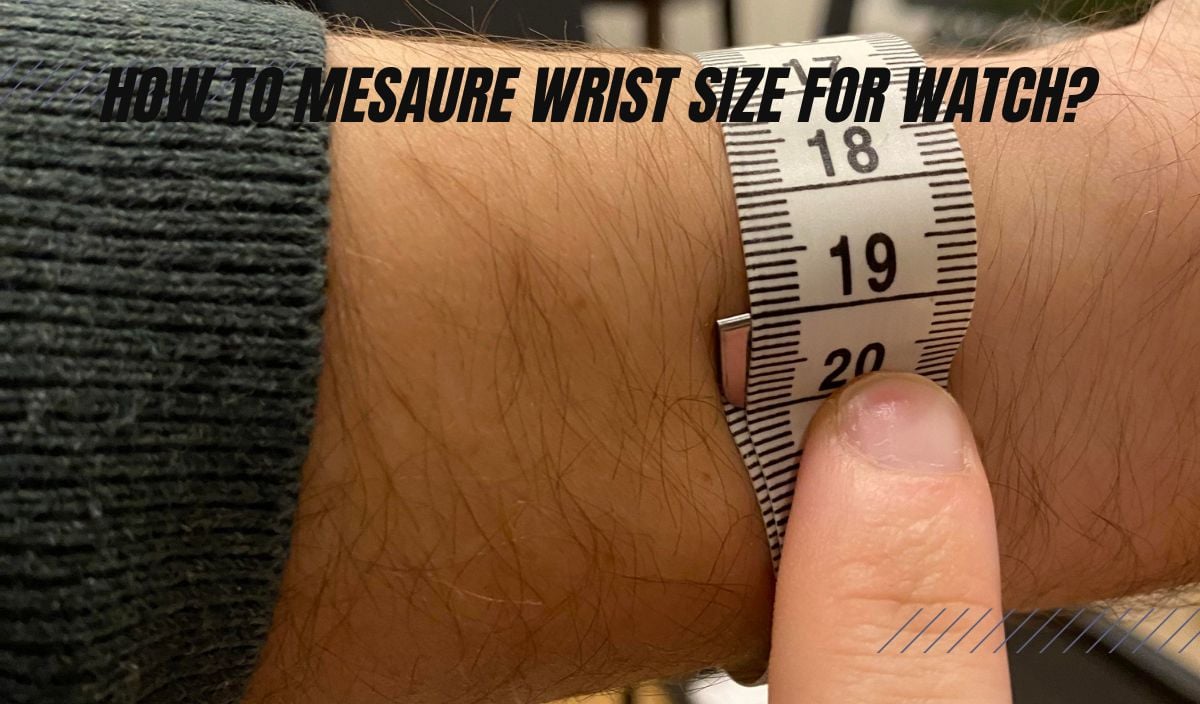
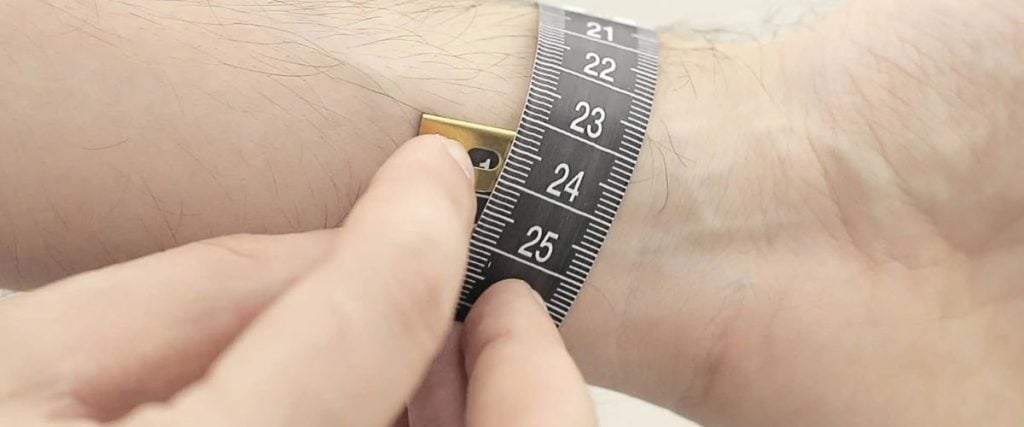
For a more accurate reading, use a soft measuring tape. No, not the metal kind you use in construction, but the soft, ribbon-like version that is used by tailors. This way, it’ll mold effortlessly around your wrist and give you a quick and easy reading of your wrist size.

Step 1: Grab a flexible measuring tape and wrap it around your wrist at the point where you would wear your watch.

Step 2: Note the measurement where the tape meets the zero point.

This option is great for getting your wrist size down to the millimeter. It’s precise, and there’s no need to worry about guesstimating or accidentally stretching anything.

Using an Online Watch Size Guide

Thanks to the magic of the internet, there are also plenty of watch size guides and tools available online. These guides often let you print out a ruler or a wrist measuring guide that you can wrap around your wrist for an accurate measurement.

Some websites even offer calculators where you can enter your wrist size, and they’ll recommend the perfect watch diameter for your wrist. But remember, tools like this are just guidelines, and they shouldn’t stop you from wearing oversized or undersized watches if that’s the look you like.

Step 1: Find an online watch size guide and print it out. Just make sure it’s printed to scale!

Step 2: Cut out the wrist-sizing strip and wrap it around your wrist, following the instructions.

Step 3: Record the measurement and compare it to their watch size recommendations.

The advantage of using an online guide is that they often provide not just wrist circumference but also suggest the ideal watch case diameter for your wrist size. This way, you get both the fit and the look that works for you.

How to Size Your Watch Bands

Just as the diameter and thickness of your watch’s case are important, the sizing of your watch band is essential to make sure your timepiece sits comfortably and looks the part. Watch straps come in different styles and materials and require a different approach to sizing depending on which one you choose. Here’s how to get the right fit for a few of the most popular watch band styles:

Leather and Fabric Straps

Leather and fabric straps usually come with a series of holes punched in the strap. To size these, simply adjust the buckle to a hole that feels snug but not tight. 

You should be able to fit a finger between your wrist and the band, but the watch shouldn’t be sliding around. If you find that none of the pre-punched holes give you the perfect fit, don’t worry. Many watch stores and jewelers can punch additional holes to customize the fit for you.

Metal Bracelets

Sizing metal bracelets is generally a little trickier than simply adjusting the buckle into the next hole on a leather or fabric strap. They often need to be resized by adding or removing links. 

If you’re not comfortable doing this yourself, you can always drop your watch off with a local jeweler who will be able to do it for you. Alternatively, you can try it yourself. It’s a good skill to learn, especially if you’re into your watches!

To resize your metal bracelet, try on your watch as it comes to see how it fits with all the links intact. If it’s too loose, you’ll need to remove some of the links. If it’s too tight, you’ll need to add in some extras. Every metal bracelet is different, so before you begin resizing, be sure to read the manufacturer’s instructions.

Typically, the bracelet’s links will be held together using small pins. These can be removed using a clever tool called a pin pusher. We recommend removing links evenly on both sides of the clasp to keep the watch balanced. The same goes for adding extra links. 

The goal is to have the watch snug enough that it doesn’t spin on your wrist but not so tight that it pinches or leaves marks when you take it off again. Again, a good rule of thumb is to be able to slip one finger comfortably between the band and your wrist.

Rubber or Silicone Straps

Rubber and silicone straps are popular watch bands for sports watches, and many of them come with the same hole-and-buckle system as leather straps. 

Some even allow you to trim the excess strap for a customized fit. Like leather straps, you want a snug but comfortable fit. And again, you should be able to slip a finger under the strap without it feeling too loose or too tight.

What Does a “Good Fit” Feel Like?

At the end of the day, finding the right fit is all about personal preference and personal comfort. But as with everything, there are a few key things to keep in mind to ensure your watch fits right. 

First, you want the watch to feel snug but never too tight. It should sit securely on your wrist without leaving deep marks or causing discomfort after wearing it for a while. A well-fitted watch should almost feel like it’s not even there. It should be secure but unobtrusive. If you take it off and find red indentations, that’s a sign the band is too tight and needs to be adjusted.

Another important factor to consider is to make sure there’s no slipping. The worst thing that can happen is your watch slides off entirely so that it becomes lost or damaged. Even having it slide upside down could lead the watch to hit something hard and become scratched or marked. 

A properly fitted watch should stay in place as you go about your day rather than spinning around your wrist or sliding up and down your arm. This is particularly true for heavier watches, where too much movement can be distracting and uncomfortable. You want the watch to feel stable, resting comfortably on the wrist but without any restrictive tightness.

Lastly, when it comes to watches with metal bracelets, balance is key. The weight of the watch should be evenly distributed across your wrist. If too many links are removed from one side of the bracelet, the watch can feel off-kilter, which not only looks awkward but can also affect comfort. Achieving that perfect balance will make the watch feel lighter and more natural on your wrist.

Getting the fit just right isn’t only about comfort, but it also prolongs the life of your watch. A band that’s too tight will wear down faster, and a loose watch is more prone to getting knocked or scratched. Sizing your watch correctly ensures you get the best possible wearing experience while keeping your timepiece in great shape for the long haul.

Conclusion

Your wrist size is one of those things you don’t think of first when shopping for watches. And rightly so! It’s much more fun to focus on things like the case material, dial color, and even the mesmerizing movement of working hard inside. But trust me, watch size also makes a difference, and it’s a detail you’ll have to consider at some point.

Wearing a watch that fits well is the difference between feeling polished and professional and constantly fiddling with your timepiece. 

We recommend starting your watch-collecting journey by measuring your wrist, whether that’s by using a piece of string, a measuring tape, or an online guide, so you can get a good idea of the kind of watch that will best suit your frame. Once you’ve got all that information and you know how to adjust the watch strap when it arrives with you, you have everything you need to enjoy your watch to its full potential.

To Top