Charlotte H, Author at Exquisite Timepieces - Page 16 of 18

Author: Charlotte H

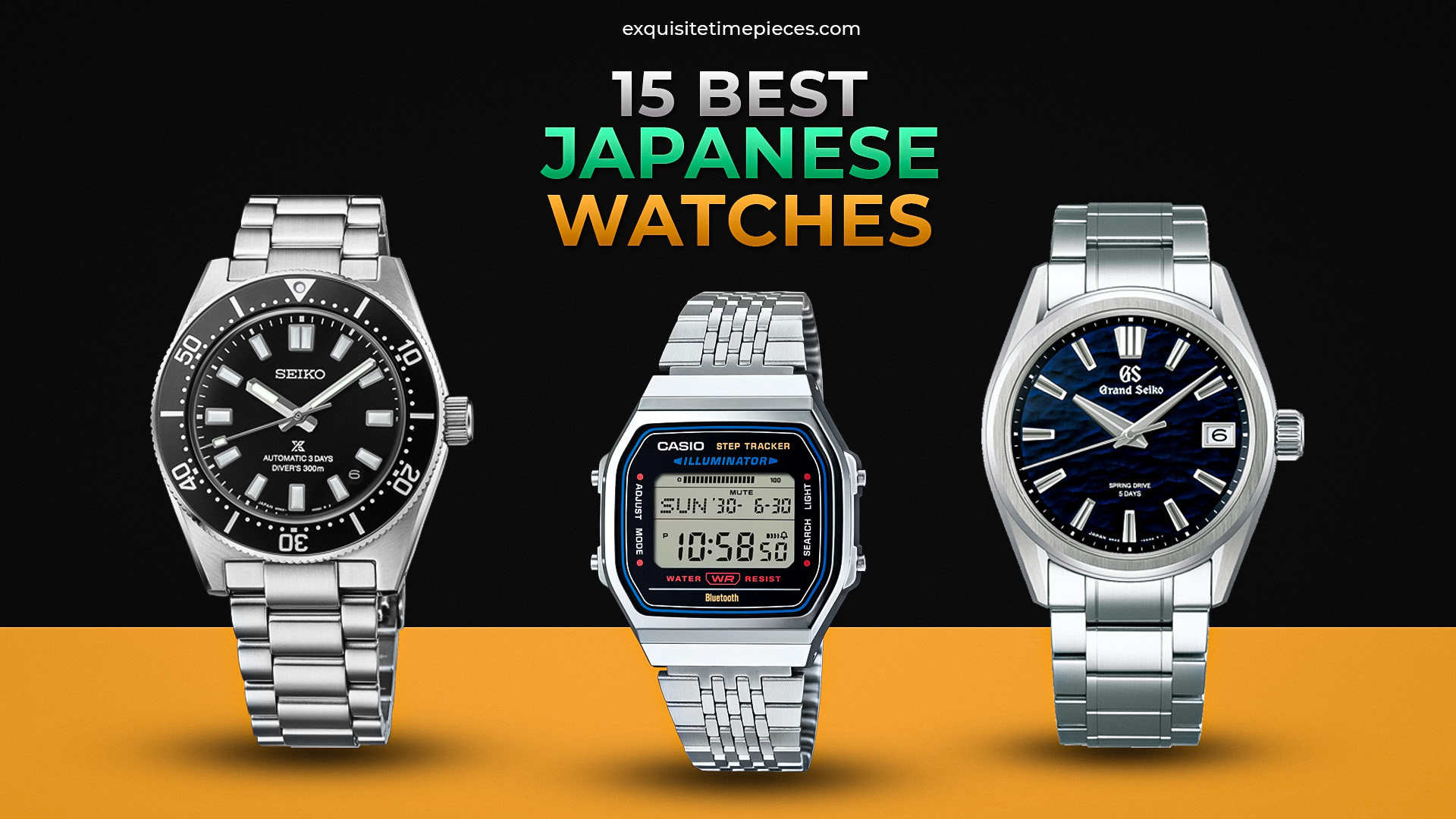
Top 15 Japanese Watch Brands

Charlotte H

September 18, 2024

In the great wide world of watchmaking, Switzerland is considered the country that takes the crown – and rightly so. They are well-known for their high levels of craftsmanship, luxury designs, and for setting standards in accuracy thanks to institutions like COSC (Official Swiss Chronometer Testing Institute). However, across the ocean lies another powerhouse in the world of horology: Japan. 

Slowly but surely, this country has gained a reputation for producing watches that match Switzerland in their cutting-edge technology and beautiful design while maintaining a remarkable level of affordability. 

bot-only-imagebot-only-image

Japanese watch brands like Seiko, Citizen, Casio, and Orient have become some of just a few household names to come out of the nation, carving out a unique niche that caters to both everyday wear and high-end collectors. 

Whether it’s Grand Seiko’s pioneering Spring Drive movement, Citizen’s eco-friendly Eco-Drive technology, or Casio’s rugged G-Shock series for outdoor adventurers, Japanese brands are proving that exceptional quality and functionality are available from somewhere other than the watchmaking capital of the world. Have I piqued the interest of your wrists? Keep reading to discover the 15 best Japanese watch brands…

About Japanese Watches 

Although it feels like Japanese watchmaking is still a fairly youthful entry into the horology world, it actually has a more storied history than you might think. It all started in 1913 when Seiko, a brand that still leads the way in Japanese watchmaking to this day, introduced the country’s first-ever wristwatch. The model was named the Laurel. 

At this point in time, pocket watches were still the most popular form of timekeeping while on the move. In fact, there was a real shortage of wristwatches in Japan altogether, with the rare few examples being imported from other countries. 

Then arrived Kintaro Hattori, the founder of Seiko. He was driven by a desire to always be ‘one step ahead’ and embarked on the task of creating Japan’s first-ever wristwatch. That was how the Laurel was born, a perfectly round watch – copying the shape of a pocket watch – with a crisp white dial and beautiful navy and red numerals. 

It really wasn’t until the 1960s, however, marked by the famous “Quartz Revolution”, that Japanese watchmakers truly began to make waves in the market. Brands left, right, and center introduced high-precision and amazingly affordable quartz watches. 

The first was the Seiko Astron, the world’s first quartz wristwatch. Brands like Citizen and Casio shortly followed suit, leveraging quartz technology to create accurate, low-cost timepieces. They certainly gave Switzerland a run for their money, as many mechanical watchmakers began to lose profit and, in some cases, closed completely. 

Today, Japanese watchmaking continues to thrive, and with a steady balance of both quartz and mechanical watches being offered on all sides of the world, the industry continues to prove that sometimes, a bit of healthy competition can drive innovation and elevate standards.

15 Best Japanese Watchmakers

As you’ve probably guessed from the title of this blog, Japan is home to many watch brands. It’s clear watch collectors have their favorites – including myself – but they’re all different, offering their own flair and level of expertise to the world of horology. Below, we introduce some of the most renowned and influential Japanese watchmakers that we believe have truly shaped the industry for the better.

Grand Seiko

Grand Seiko Logo

We’re starting off well because Grand Seiko might just be my favorite Japanese watchmaker of all time. Founded in 1960 as the luxury arm of Seiko (more on that powerhouse shortly), Grand Seiko quickly established a reputation for exceptional craftsmanship and precision. The company was created to produce the world’s “perfect” watch, one that had unparalleled levels of accuracy and a design that was both beautiful and functional. 

I can confidently say that Grand Seiko has achieved its mission. Models like the Grand Seiko Spring Drive are an example of their eye-opening technical prowess. It’s a watch that combines the best of mechanical and quartz technologies, using the mainspring of a mechanical movement with the regulation of a quartz crystal. 

The combination achieves almost near-perfect timekeeping. Their dedication to dial craftsmanship is also worth a mention, with Grand Seiko’s dials being known as some of the most intricate and beautiful in the watchmaking world. I urge you to look at their collections more closely to see what I mean.

Seiko
Almost like the baby brother of Grand Seiko, and yet a company that has a longer history, Seiko was founded in 1881 by Kintaro Hattori. As we mentioned earlier, Seiko was the inventor of Japan’s first ever wristwatch as well as the world’s first quartz wristwatch, so already, we know they’re coming from a place of ingenious innovation. 

The Seiko Astron, the first quartz wristwatch, remains a popular model in the Japanese watchmaker’s portfolio but now features solar-powered GPS technology so you can adjust your watch to whatever time zone you’re in with a simple click of a button. 

Another one of Seiko’s popular collections is its Prospex line. Those looking for rugged, high-performance, and affordable dive watches really ought to check this collection out. 

These are super durable watches with legible Lumibrite dials, adventurous water-resistant cases, and in-house automatic winding movements. I will always love the Seiko Prospex ‘Save the Ocean’ collection, which helps raise proceeds for charities working to protect our oceans. 

Casio

Possibly one of the best-known Japanese watch brands out there, Casio was founded in 1946 by Kazuo Kashio. He began by engineering calculators before eventually venturing into watchmaking in 1974. Since then, Casio has become something of an icon in the watch industry, predominantly launching highly robust and affordable digital watches

For me, the Casio G-Shock line is the company’s most significant contribution to horology. Launched in 1983, the G-Shock watch was born from Casio engineer Kikuo Ibe’s mission to create “a watch that never breaks”. 

Ever since, G-Shock has become synonymous with durability and shock resistance, attracting the adventurous wrists of outdoor explorers, athletes, and military personnel. They often feature digital displays with backlighting and robust water-resistant cases. 

Citizen

Another well-known Japanese watchmaker is Citizen. Founded in 1918, this brand is best known for the introduction of its Eco-Drive technology in 1976. In fact, it seems the rest of their history gets overshadowed because of how revolutionary this technology is. But it is a game-changer. 

Eco-Drive watches from Citizen are powered entirely by light, including the sun and artificial sources like your bedside table lamp. The battery is rechargeable, which means you never have to take your Citizen watch to your local jewelers for a replacement. 

The Citizen Eco-Drive Promaster series is a favorite for its durability and advanced diving features. It’s a watch I often recommend to those new to watch collecting and looking for something affordable and perfect for an action-worthy everyday timepiece. 

Another Citizen watch I have to mention, purely because I’m a proud owner of one, is the Tsuyosa. This is a standout collection offering automatic winding movements and strikingly colorful dials at insanely affordable prices.

Orient

Another Japanese watch brand I like is Orient. Founded in 1950, this watchmaker is another to prove that quality and craftsmanship can be accessible to everyone. They are best known for their dedication to mechanical watchmaking, consistently delivering stylish and reliable automatic and manual winding watches. 

For me, the Orient Bambino is a beauty. I was lucky enough to have recently reviewed one of the same, and I was pleasantly surprised by the high levels of craftsmanship found in a watch priced under $200. 

The Orient Bambino makes my wish list with vintage-inspired designs, super slim cases, and reliable movements. I should also mention the Orient AR00 Semi Skeleton, another beautiful dress watch with a unique small seconds overlapping a round skeletonized aperture revealing the movement below. A design like this isn’t a common sight in a watch brand working in this price range.

Lorus

If you prefer your watches with more of a modern, minimalistic look, then Lorus might be worth your time. It’s not a Japanese watch brand known by many, but they’ve been making waves in the horology world since its founding in 1982. 

As part of the Seiko family, you can feel confident knowing these watches are not only stylish but reliable and budget-friendly, using a mix of quartz and solar-powered in-house movements to fuel their dials. 

If it were me, I would head first to the Lorus Sport collection. Here, you’ll find a range of masculine sports watches with aggressive case styles, full metal bracelets, and chronograph movements. Alternatively, the Lorus Classic line opts for sleek lines and clean dials for those wanting something with a bit more elegance to it. Lorus is another perfect example of how you don’t need to spend a fortune to enjoy a high-quality piece.

Credor 

Credor is something of a hidden gem in the world of luxury watches. This is another one of Seiko’s children, but it focuses largely on high-end watch materials and movements. These watches represent some of the highest levels of artistry and engineering in Japanese watchmaking (alongside Grand Seiko), with every hand-finished dial and complex mechanical movement proving a commitment to excellence. 

One of Credor’s best-known collections is the Credor Eichi. It is celebrated for its minimalistic aesthetics, exceptional movement accuracy, and use of premium materials, including platinum and 18-carat gold. Another model worth mentioning is the Credor Spring Drive, which features the Japanese brand’s famous Spring Drive movement, which merges both mechanical and quartz technology for insane levels of accuracy.

Kuoe Kyoto

Compared to those mentioned previously, Kuoe Kyoto is a young Japanese watchmaker, having only left the womb in 2000. And yet, despite being a new contender to the luxury watch world, they’ve already distinguished themselves worldwide for their commitment to blending traditional Japanese craftsmanship with the needs of a modern audience. 

To put it into perspective, most of Kuoe Kyoto’s watches use Japanese stainless steel and enamel work that has been handmade in Japan. One of my personal favorite collections is the Kyoto Collection, which features delicate dial patterns that evoke traditional Japanese motifs.

Hajime Asaoka

It’s not often I come across a watch brand I’ve never heard of, but when it came to researching this article, the name Hajime Asaoka kept cropping up. And so, of course, I had to learn more. Established in 2005, it seems this watch brand – although not widely known – has mastered the art of handcrafted timepieces. 

Each model is thoughtfully designed by master watchmaker Hajime Asaoka, who has a clear appreciation for the balance of aesthetics and mechanical engineering. He cleverly combines traditional techniques with modern design to launch models like the Tsunami and Tourbillon Pura.

Kurono Tokyo

Another watch brand I’m not overly familiar with, although I have heard their name mentioned before, is Kurono Tokyo. After looking into the brand a little more deeply, I feel that their philosophy revolves around extremely well-made watches with top-notch construction and attention to detail but at an accessible price. Their collections are exactly that: accessible but exceptionally constructed, offering masterful complications and, in some cases, rare Urushi dials.

Minase

A Japanese watchmaker with a penchant for modern aesthetics blended with Japanese precision is Minase. Founded in 2005 in the heart of Japan’s watchmaking district, the company has become best known for its bold geometric stylings and titanium cases, which are lightweight and incredibly durable. 

Models like the Horizon and Windows are two of my favorites since they boast unique rectangular cases with captivating dial construction that’s both sleek and mesmerizing. The Uruga is another popular reference with a sporty five-row link bracelet and unusual claw-like tongs on the bezel.

Mirco

It’s not easy to make timepieces stand out in today’s market since there are so many watch brands. But somehow, Mirco managed to do it, creating a range of watches that can only be Mirco. By placing their logo untraditionally at the 6 o’clock spot and leaving the 12 o’clock area completely bare, it’s not difficult to spot one of their designs in a crowd. 

It’s still a new brand, having been founded in 2015, but they’ve already created some standout models, including the Type-02, which is undeniably retro, and the Type-03, a colorful diver’s watch.

Naoya Hida & Co.

A Japanese watch brand that has really surprised me, opting for the traditional fonts, colors, and stylings of Swiss-made timepieces, is Naoya Hida & Co. It makes perfect sense, though; since their founding in 2013, they have dedicated their history to traditional techniques, combining them with intricate dials and finely crafted cases. 

The NH Type 5A is an absolutely beautiful timepiece, marking the brand’s first dress watch with a rectangular case. It’s compactly sized with three-dimensional sapphire crystal and beautiful concave dolphin hands. It’s a must-have for those with a love of Japanese-made dress watches.

Future Funk

I love a watch brand that does things differently, and Japanese watchmaker Future Funk says it all in the name. They boast an exciting range of retro-inspired timepieces that bring the groovy vibes of the 1970s into the modern day. The unusual dial layouts and disco-esque cases capture the essence of the era’s bold fashion and funky beats. 

They are most definitely designed for those of us who love both nostalgia and unconventional watch design. The Future Funk Roller takes the number one spot for me, inspired by the space-age design of 1970s digital clocks with numbers that rotate vertically.

Kikuchi Nakagawa
Last but certainly not least, we have Kikuchi Nakagawa, a fairly unknown microbrand founded by duo Kikuchi and Nakagawa. The pair wanted to bring together the beauty of traditional Japanese aesthetics with the precision of Swiss watchmaking, and in doing so, they created a selection of timeless dress watches. 

These watches cater to connoisseurs who appreciate the finer things in life and those of you who value quality, artistry, and a touch of understated luxury. 

As it stands, Kikuchi Nakagawa only has two collections in their portfolio: Murakumo and Ichimonji. Both are fairly simple in their execution but surprise with handcrafted dials and cases and Vaucher Manufacture Fleurier movements (a movement maker known for supplying some of the world’s most prestigious watchmakers).

Conclusion

It’s clear there’s no shortage of incredible Japanese watch brands to choose from. Whether you’re after a durable diver’s watch, a shockproof digital timepiece for hiking, a classy dress watch, or something wholly unique and different, Japan has got you covered. 

With such a variety of designs and innovations, you’re bound to find the perfect watch to suit your style and needs. While Switzerland may officially be home to some of the biggest watchmakers in the world, I think Japanese watch brands give them a good run for their money.
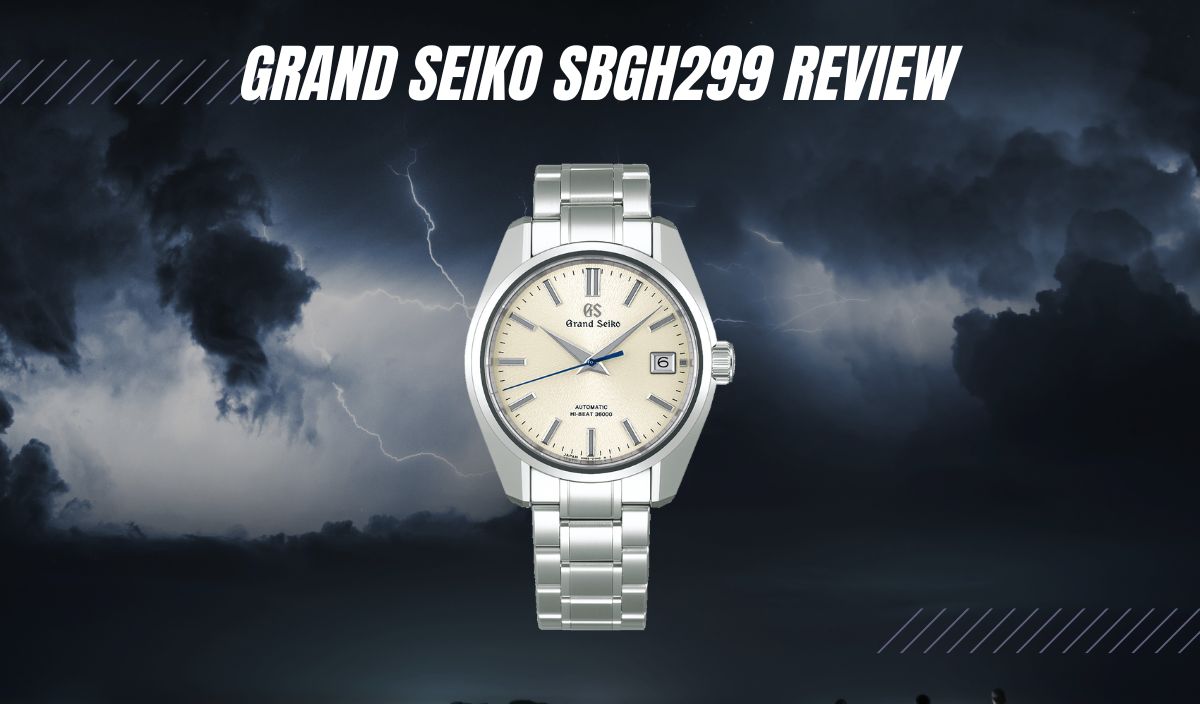
Grand Seiko SBGH299 Review

Grand Seiko SBGH299 Review – The Snowfall on Mt. Iwate

Charlotte H

September 18, 2024

There’s nothing better than a watch that seems rather simple and timeless in its aesthetic at first but in fact, has a whole lot more to offer upon closer inspection. The beauty of its design lies in its complexity, which can only be appreciated by those who take the time to explore its intricacies, whether that be the meticulous movement inside or the more outward displays of craftsmanship on the case and dial. Japanese watchmaker Grand Seiko has a number of designs that fall into this category, and one I’ve yet to truly explore up close is the Grand Seiko ‘Snowfall Mount Iwate’ SBGH299.

History of the Grand Seiko SBGH299

Grand Seiko SBGH299

If you’re already a fan of Grand Seiko, it’ll come as no surprise to you that model SBGH299 is inspired by an aspect of its country of origin. Most Grand Seiko watches take inspiration from their Japanese heritage in one way or the other, whether it be a dial color evoking the color of snow on a particular mountain seen outside Grand Seiko Studio’s Shizukuishi or a texture imitating the fabric of traditional Japanese attire.

bot-only-imagebot-only-image

The Grand Seiko ‘Snowfall Mount Iwate’ SBGH299 is one of the same. It’s a watch that is beautifully modeled after the look and texture of fresh snowfall in the winter mountain scenery seen outside the company’s factory windows. It was released alongside several other new 44GS Hi-Beat references back in early 2023, and although it was nothing groundbreaking in terms of technology and design, the collection made sure one of their best-selling models was kept up-to-date and refreshed.

The collection debuted five references in total, all replacing five existing models with some minor changes made to the case, bracelet, and dials. The series includes reference SBGH301 with a dark gray dial, SBGJ263 with a silver GMT dial, SBGJ265 also with GMT function on a black dial, and SBGJ267, a boutique-only edition with a blue GMT display. Then of course, there’s SBGH299, the model we’re reviewing today, a classic time-only model with an off-white dial.

An Ever-Brilliant Case

Like its brothers and sisters in the Grand Seiko 44GS Hi-Beat collection, the ‘Snowfall Mount Iwate’ SBGH299 model is designed after the iconic 44GS case. What is this? It’s a 1967 Grand Seiko reference that was pivotal in shaping the brand’s style and establishing its so-called Grammar of Design. The design philosophy emphasizes simplicity, precision, and beauty, with the cases often boasting flat surfaces and crisp, sharp angles for a clean and refined look. Similarly, they use their famous Zaratsu polishing technique to achieve a distortion-free mirror-like surface.

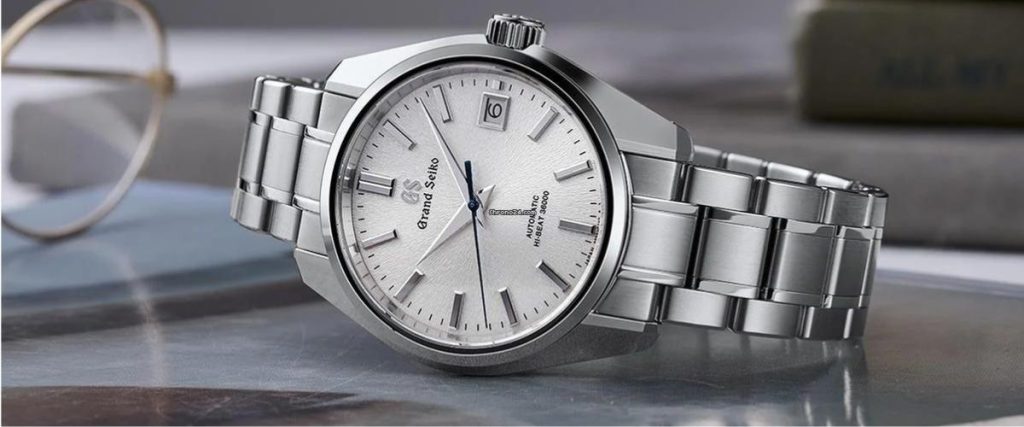
One look at the Grand Seiko ‘Snowfall Mount Iwate’ SBGH299 watch, and it’s clear these principles have been applied to the case. The almost barrel-shaped architecture has multiple facets and finishes that allow it to catch the light beautifully.  The strong, angular shoulders are vertically brushed for contrast against the Zaratsu polished flat surfaces found on the bezel, case sides, and lugs. It’s a beautiful example of how light play can make all the difference in how a watch wears.

The case of the Grand Seiko ‘Snowfall Mount Iwate’ SBGH299 watch is masterfully engineered from a material the Japanese watchmaker calls “Ever-Brilliant Steel.” It’s a high-grade, proprietary stainless steel alloy known for its exceptional durability, corrosion resistance, and almost bright white appearance. Its robustness is essential, of course, but the bright white finish of the metal is its standout feature. It gives the watch a more luxurious and refined look compared to traditional stainless steel watches.

As for dimensions, the Grand Seiko ‘Snowfall Mount Iwate’ SBGH299 is a relatively average-sized watch with a 40mm diameter, 13.3mm height, and a lug-to-lug of 46.2mm. I have to say, its lug-to-lug feels a little larger than that, in my opinion, and I think that’s predominantly down to the male end links (possibly one of the only features of this watch I would change – but more on that later.)

The watch arrives with dual-curved sapphire crystal glass on the front, treated with anti-reflective coating for a distortion-free view of the dial. The glass makes up much of the Grand Seiko ‘Snowfall Mount Iwate’ SBGH299’s thickness but does add a touch of vintage flair to the design. The case back also presents sapphire crystal glass, with a knurled pattern surrounding the round insert, drawing your eyes to the movement exposed in the middle. Like the case back, the crown is screwed down and decorated with the GS logo in relief. It provides a healthy water-resistant rating of 100 meters.

A Dial Worthy of a Close Up

You need to trust me when I say this is one of those watches where press shots and online imagery of the watch do not do the dial justice. When the light hits it just right, the Grand Seiko ‘Snowfall Mount Iwate’ SBGH299 watch showcases an absolutely beautiful sunburst pattern that has an almost silver-cream finish to it. It’s almost champagne in some lights before turning a cooler shade of silver in others. It isn’t just your standard sunburst pattern, either. It’s incredibly complex and looks almost like fur or the barbs of a feather.

I’m a huge fan of the texture here. It’s incredibly subtle, which to me, makes it all the more magical. It’s one of those watches you have to see up close to appreciate the complexities behind it, and if you’re like me and you prefer a watch with some hidden intricacies, you’ll love this, too. If it was me, I’d have taken out the date window placed at 3 o’clock so more attention could be placed on the dial, but I understand many watch wearers require the convenience of date complication and so, there it must remain.

Like the silvered border of the date window, the hardware of the Grand Seiko ‘Snowfall Mount Iwate’ SBGH299 is predominantly silver. The hour and minute hands are sharp and sword-shaped, paired with the faceted and brightly polished oblong hour markers sitting at each 5-minute interval. The minute track is printed in black, and the seconds hand, left perfectly straight and uniform, is blued for a beautiful contrast against its creamy silver backdrop.  

A High-Beat Movement

Unsurprisingly for a watch named the Grand Seiko 44GS Hi-Beat ‘Snowfall Mount Iwate’, reference SBGH299 is powered by one of Grand Seiko’s well-known 9S hi-beat calibers. The exact movement in question is the Caliber 9S85 which beats at an outstanding rate of 36,000vph or 5Hz. It has 37 jewels and promises simple time and date functionality. Be aware it doesn’t have a GMT complication like some of the other references in the 2023 collection.

Like all Grand Seiko watches, the caliber is tested to the highest standards, beating even the regulations required by COSC (Official Swiss Chronometer Testing Institute). It has been adjusted in six different positions and tested for an accuracy of -3/+5 seconds per day. Much of its reliability comes from its Spron 610 hairspring, which Grand Seiko argues offers three times more resistance to electromagnetic frequencies and two times the shock resistance of the previous generation Spron hairsprings.

We’re also promised a healthy 55-hour power reserve and when off the wrist, the movement is worth being admired thanks to its beautiful finishing. The use of Zaratsu polishing on the movement’s plates and bridges creates a mirror-like finish that works incredibly well with the finishing on the case. Equally, the Geneva stripes on the rotor and perlage on the mainplate add additional visual appeal.

A Full Metal Bracelet

The Grand Seiko ‘Snowfall Mount Iwate’ SBGH299 watch arrives on a solid Ever-Brilliant Steel bracelet with three-row links and a beautiful combination of polished and brushed finishing. It has a 19mm lug width which tapers down to 18mm at the folding clasp. The 19mm size is a little awkward for those hoping to find an array of straps to swap this bracelet out with, but its drilled lugs do make it a possibility.

The buckle is a standard Grand Seiko folding clasp that follows suit to the crown and shows off the GS logo in relief. Sadly, there is no micro-adjustment on the bracelet, but there is a half link on both sides, so you should be able to get a pretty snug fit.  As mentioned earlier, the strap does include male end links, which is something I’d love to swap out of the design. It makes fitting this model on smaller wrists a little harder as they stick out rather a lot, adding to the overall lug-to-lug width.

On-Wrist Experience

I have to be honest, of all the Grand Seiko watches out there, the ‘Snowfall Mount Iwate’ SBGH299 has never been one to pique my interest. There’s really no other reason than because the imagery I had seen online didn’t look all that enticing. But I should have known; no Grand Seiko photographs like the real thing. These are watches that have to be seen in person because the beauty is in the details you can only see up close. The subtle textures, the play of light on the dial, the meticulous finishing on the hands, and indices—all these elements come together in a way that photos simply can’t capture.

My favorite feature here has to be the dial. I was not expecting to love the creamy silver color or the finely textured sunburst finish as much as I do. It’s really beautiful, and I love how it changes and evolves in different lights. The case is also beautifully done; it’s a classic shape with a set of easy-to-wear dimensions. I have no doubt those of you looking for a daily beater or a formal dress watch will be happy with how the Grand Seiko ‘Snowfall Mount Iwate’ SBGH299 looks on your wrist.

My only irk, and it is a small one, falls to the male end links. The end links do protrude a little from the case, which makes wearing the watch on my five-and-a-half-inch wrists a little difficult. That said, I think this is more down to my distaste for having a small frame rather than the actual size of the watch. It’s worth noting though, that the Grand Seiko ‘Snowfall Mount Iwate’ is going to best suit wrists of 6.5 inches or above. Anything above 8 inches and the watch might appear too small.

Price & Availability

The Grand Seiko ‘Snowfall Mount Iwate’ SBGH299 is available to order new from authorized stockists like Exquisite Timepieces for $6,900. It can also be purchased from second-hand sites for around $4,200. It’s a non-limited edition and since its release in 2023, Grand Seiko has made no mention of removing it from their permanent collection.

Conclusion

The Grand Seiko ‘Snowfall Mount Iwate’ SBGH299 is a beautiful watch through and through. In fact, I’d say it’s something of a hidden gem in the Japanese brand’s collection. Online, it doesn’t look like anything overtly special or different, but in person, this is a stunning watch that perfectly embodies the high levels of craftsmanship Grand Seiko is renowned for. The crispness of the Ever-Brilliant Steel case is beautiful, but for me, it’s the dial that takes the cake. The intricate sunray decoration and the rich, creamy silver hue is worth taking an hour out of your day to see in person.

What is a Watch Crystal and Why Does it Matter

What is a Watch Crystal and Why Does it Matter?

Charlotte H

September 18, 2024

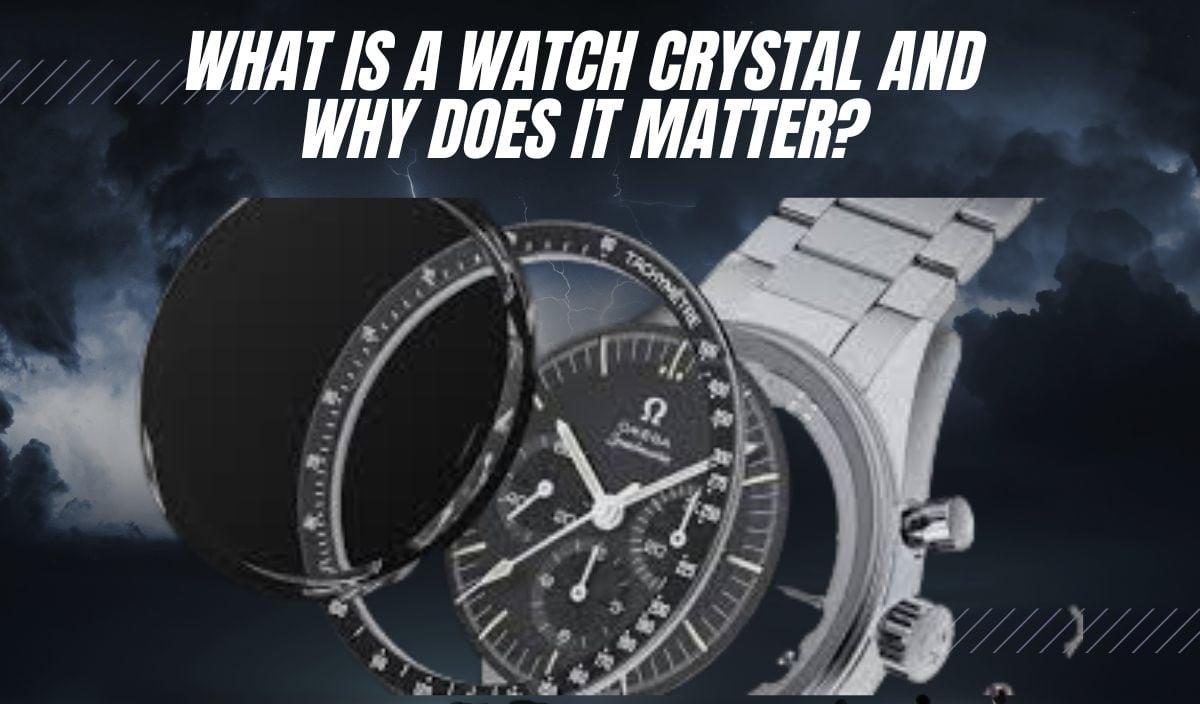
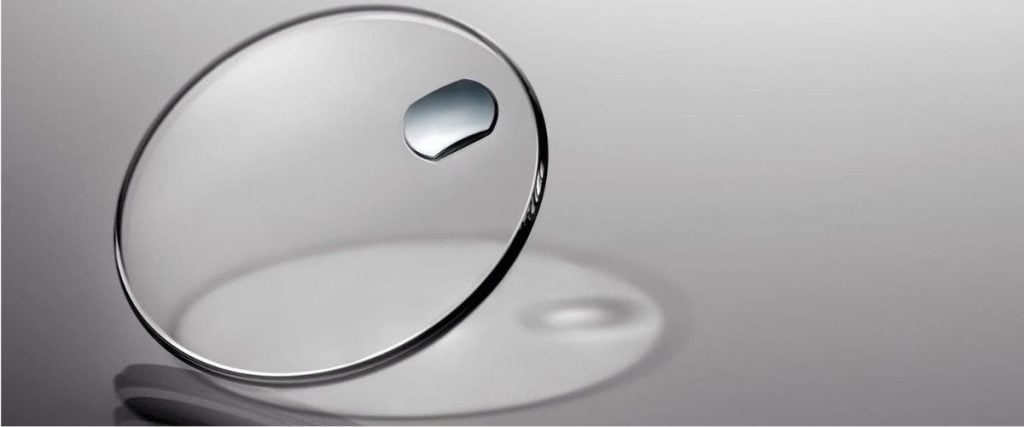
Have you ever wondered what the term “watch crystal” means? Me too. When I see the word crystal, I instantly think of some fancy gemstone. But it has nothing to do with any diamonds or gemstones set on your watch’s case or dial. Instead, watch crystal refers to the type of glass placed above the display, keeping you from accidentally scratching the face of your favorite timepiece.

It’s that transparent cover that protects the dial of the watch. It is usually made from a material like acrylic, mineral glass, or sapphire crystal. It’s a crucial component of your timepiece, even though, in many cases, it’s barely noticeable. Not only does it shield the inner workings from dust, moisture, and the occasional bump, but it also affects the overall look of your watch.

bot-only-imagebot-only-image

There’s more to watch crystals than you might think. There are a variety of watch crystal types, each with its own pros and cons, plus a myriad of reasons why your watch crystal is vital in the durability of your timepiece. Let us explain…

The Importance of Watch Crystals

Importance of Watch Crystals

I like to think of my watch’s crystal as a shield. It’s a clear cover that sits over the dial, and it’s got a relatively important job to do. Sure, the case material is also super important in determining the look and durability of my watch, but the glass has an equal amount of responsibility. 

It keeps those delicate inner workings of the watch safe from everyday wear and debris. I wear my watches all the time: out walking, traveling, and on formal occasions, so I need my watch crystal to protect it against everything. I’m talking scratches, dust, and even the occasional splash of water.

Watch crystal does exactly that; it keeps my watch looking good and ticking smoothly. Without a quality piece of crystal over the dial, my timepiece would be at risk of getting damaged, which is a pricey expense I want to avoid. 

The glass also plays a huge role in how your watch looks. You can find domed crystals, flat crystals, and cambered crystals, all giving your watch a sleek and modern finish or more of a classic vintage vibe. There are a number of different watch crystals to choose from, all coming in at different price points too – so your budget will also slightly determine which watch crystal you can get.

Watch Crystal History

Understandably, the materials we have used in the creation of pocket watches and wristwatches have evolved dramatically over the years. That applies to watch crystals, too. Some of the first watches used glass to protect watch dials, often cut from mineral quartz. These early crystals were simple but functional, offering a basic level of protection against dust and damage.

It wasn’t until the early 20th century that acrylic glass emerged as an alternative. The material was a game-changer, as it was lighter and more impact-resistant, making it perfect for those who wanted to wear their watches every day without worry. 

Acrylic glass was also a more affordable alternative than crystals made from mineral quartz, so wristwatches became not only more durable but also more accessible to the general public.

During the 1960’s, mineral glass became a common sight on watches. Made by adding various minerals to standard glass, this type of watch crystal offered the crisp look of glass but with improved scratch resistance and clarity. 

However, the real breakthrough came just twenty years later, with the introduction of synthetic sapphire crystals in the 1980s. Boasting extreme levels of hardness and scratch resistance, sapphire crystal provided better protection than before, with a crystal-clear view of the dial. This material has allowed watchmakers to create even more refined and durable watches, setting new standards in the creation of modern timepieces.

Most Common Watch Crystal Materials

As history attests, there are a number of different watch crystals suited to protecting our timepieces. Some are favored more than others, but each has its own set of benefits and disadvantages.

Before you go out and choose your next timepiece, it’s good to know the differences between the most common watch crystals so you have a complete understanding of the levels of durability, scratch resistance, and readability of the design.

Sapphire Crystal

Personally, I consider sapphire crystal glass to be the crème de la crème of watch crystals. It’s one of the newest materials used for watch glass and as such is considered the most durable and scratch resistant. As its name suggests, it’s made from synthetic sapphire and boasts a hardness second only to diamonds – the strongest material in the world. 

As someone who tends to bump my watch against things, sapphire crystal glass is the perfect choice for me. It keeps the lens clear, durable, and my watches look new for years.

However, with these high levels of durability comes a higher price tag. Sapphire crystal watches are more expensive to produce, which does mean they typically retail for more than those equipped with the two materials mentioned below. 

Another thing to keep in mind is that while sapphire is highly resistant to scratching, it is not immune to shattering. A hard knock in the wrong place could cause the sapphire crystal to crack. It’s difficult to do, but not impossible, so keep that in mind.

The other thing I love about sapphire crystal is how it looks. There’s something about the crispness of the crystal that gives the watches it adorns a luxurious feel. It also boasts a beautiful level of clarity, so reading the time, date, and any other complications is effortless – especially when the sapphire crystal is treated with an anti-reflective coating.

Mineral Crystal

Mineral crystal strikes a nice balance between durability and cost, making it a popular choice for many watch collectors. This type of crystal is made from standard glass that’s been chemically treated to enhance its hardness and scratch resistance. While it’s not as tough as sapphire, mineral crystal does do a pretty good job at resisting scratches from everyday use.

One of the main advantages of mineral crystal is that it’s more affordable than sapphire, which means watches with mineral crystals are generally more accessible to a wider audience. It’s also less likely to shatter compared to sapphire, making it a great option if you’re a bit clumsy. However, annoyingly, if you do manage to scratch your mineral crystal watch, those marks are there to stay, as they can’t be buffed out.

Acrylic Crystal

Finally, acrylic crystal, also known as plexiglass, is another popular watch crystal. It’s easily the most lightweight and affordable option out of the three, making it perfect for those restricted to a particular budget. 

It’s made from a type of plastic rather than glass, so consequently, you can expect it to be resistant to shattering. For this reason, you’ll often find acrylic crystal on sports watches or even vintage pieces.

One of the coolest things about acrylic crystal is that any scratches it picks up can often be polished out with a specialized cleaner and a bit of effort. This makes it a great choice if you want a watch that can handle a few bumps and bruises without looking worse for wear. 

However, it’s worth noting that acrylic is more prone to scratching than both sapphire and mineral crystals, so it will require more maintenance to keep it looking crisp and clear.

How to Distinguish Between Crystal Materials

When you know what to look for, identifying the type of crystal on your watch can be pretty straightforward. Each material has its own set of characteristics, both in its feel and appearance.

I’ve always found acrylic crystal to be the easiest to spot since, at the end of the day, this is basically a form of plastic rather than glass. It is most commonly found on vintage watches since it was the only watch crystal material until the 1960s, as well as sports watches since these designs need to be highly shatterproof.

Acrylic crystal typically has a slight domed appearance, adding to its vintage charm, and when you tap on it, it often feels and sounds like plastic – which makes sense since that’s basically what it is. This material would suit someone who enjoys a more laid-back style or even the nostalgic look of vintage timepieces. It’s also a good choice for anyone needing something affordable and shatterproof.

Mineral crystal is a step up in terms of scratch resistance, so it is commonly used in mid-priced watches. It’s usually flat, although it can sometimes be found in slightly domed designs. 

Unlike acrylic, it has a glass-like feel and appearance and is often thicker than your average watch glass. They tend to have a clear, clean look. It’s perfect for someone who wants a nice middle ground between durability and affordability.

Finally, there’s sapphire crystal. This watch crystal is the go-to for luxury and high-end watches. All the biggest luxury watch brands use this material since it has high levels of scratch resistance and clarity. It does look and feel luxurious. It’s hard to explain exactly why; it just does. Its exceptional clarity certainly helps, and it feels like a solid material when you tap it.

Because of its premium feel, sapphire crystal watches are coveted by those who value both style and substance. As I mentioned, sapphire crystal is my go-to since I tend to knock my watches regularly. It’s a material that holds up under pressure extremely well, and truthfully, it just looks incredible.

When Does a Watch Crystal Need Replacement?

It’s not uncommon for watch crystals to get damaged. At the end of the day, it’s there to protect your watch from accidental knocks and damage. And thankfully, it’s much easier and cheaper to replace the glass than it is to replace an entire dial or movement. 

It’s not uncommon to scratch, crack, or chip your watch crystal, especially if it’s one of the more affordable alternatives like acrylic or mineral glass. If the damage is severe enough, it will likely compromise your ability to read the dial and may even allow dust, moisture, and other debris from entering the dial. This can potentially harm the inner workings of your timepiece, so it’s important you get it fixed as soon as you can.

It’s certainly possible to change a watch crystal on your own, but please know it’s not an easy task – at least for us non-certified watchmakers! It requires precision and the right set of tools and can be a delicate process, especially if you’re using higher-end materials like sapphire crystal. You’ll need to carefully remove the old crystal without damaging the watch case and install the new one. The glass must sit perfectly flush inside the case above the dial, ensuring a tight seal to maintain water resistance.

If it were me, I’d leave a job like this to a professional. It’s not worth the risk, as an improperly installed watch crystal could seriously damage the dial, case, and movement. Exquisite Timepieces offers a fantastic watch repair service, so you feel reassured the job is done properly. They use only the best watchmakers, sending your watch to authorized service facilities where experts work on your timepiece with precision and expertise.

Conclusion

Hopefully you’re now feeling confident in all things watch crystal related. This protective component ultimately acts like a shield for your timepiece, protecting its face from scratches, dust, water, and all the little bumps we throw at it. 

You’ll most commonly find acrylic, mineral or sapphire crystal on the market, with each type boasting its own perks, allowing you to prioritize durability, style and cost the way you need. While the aesthetics of your watch crystal is important, be sure to choose one that best suits your lifestyle and budget.

What is a Watch Crown and Why it is important

What is a Watch Crown and Why is it important?

Charlotte H

September 18, 2024

Have you recently read the term “watch crown” as part of a timepiece’s specifications or review and wondered what this means? Or have you just found yourself staring at your watch, speculating what that little knob on the side is? 

Trust me, you’re not alone. We’ve all wondered what this component is called at some point. This charming feature is called a watch crown, and it’s not just for show.

bot-only-imagebot-only-image

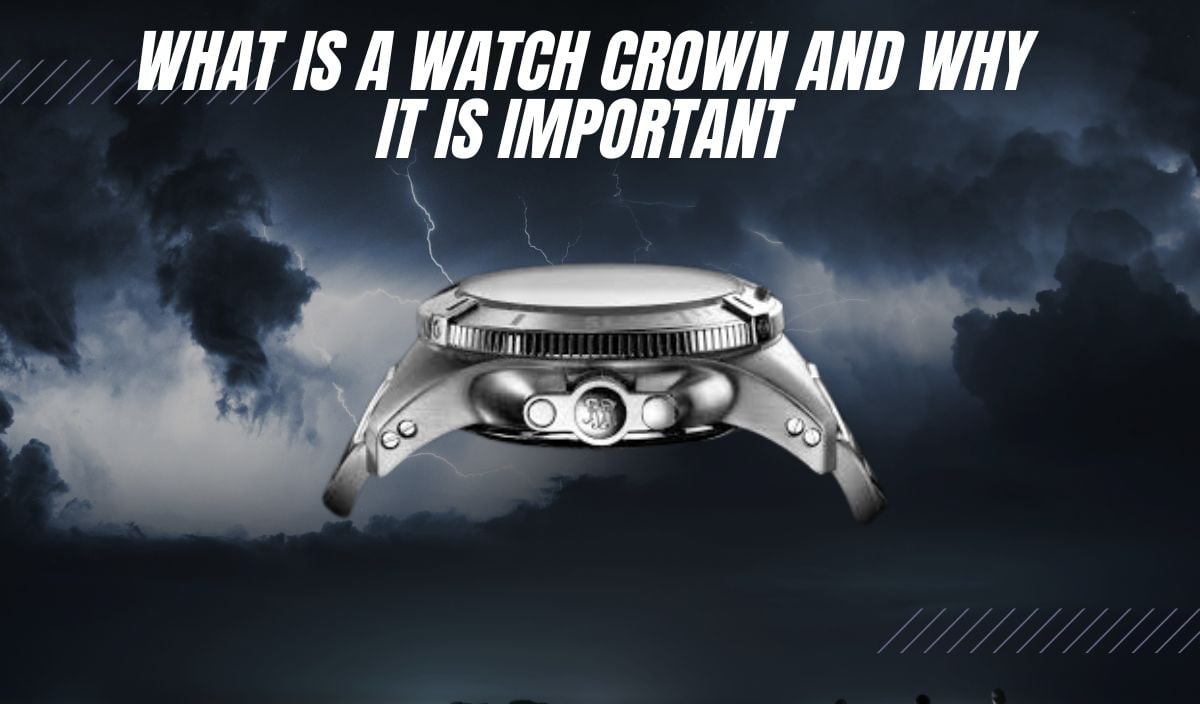
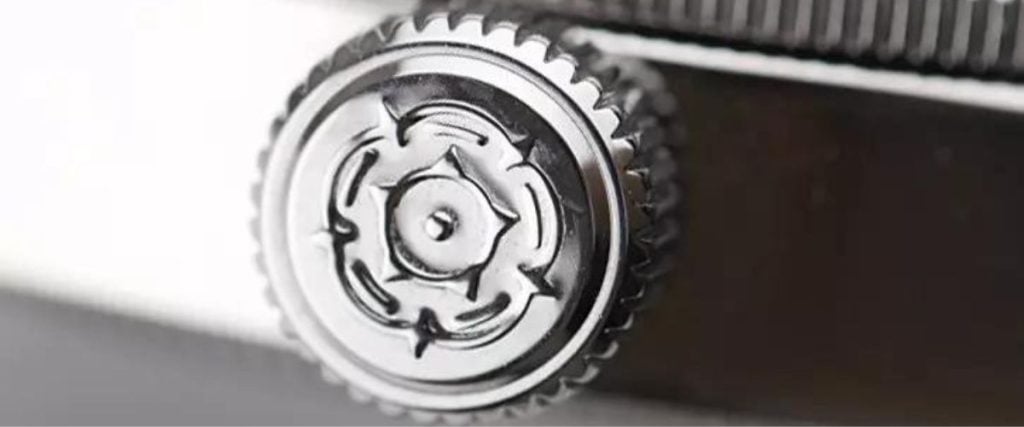
A watch crown is the often small, rounded button-like feature on your watch case’s side. Its primary job is to help wind the watch – if your watch has a mechanical movement – and to set the time on the dial. 

This information might be nothing new to you, but did you know that crowns offer more than just winding and setting? In today’s blog, we will be exploring all the intricacies of a watch crown, including the different types of watch crowns out there and why they are so important in the construction of your timepiece.

Why are Crowns so Important?

The humble watch crown might seem like a small, insignificant detail at first, but it actually provides a long list of benefits to your timepiece. Usually found on the right-hand side of the case but also sometimes positioned on the left (we’re looking at you U-Boat), the watch crown is predominantly used for setting the time and date on your watch. 

By popping it out to its correct position, you can turn the crown to adjust the hands and calendar. And, if your watch has additional complications—like a moon phase or GMT—the crown handles those settings too.

If you have a mechanical watch, the crown is also essential in winding the movement. Unlike quartz watches that are powered by an electronic battery, mechanical movements rely on a mainspring to store energy. When you turn the crown, it tightens this mainspring, gradually releasing energy that powers the watch.

Moreover, the watch crown plays a protective role in the functionality of your timepiece. Some crowns have a screw-down feature, creating a tight seal between the crown and case. This helps to protect the watch, and the movement inside, from things like water, dust, and dirt. It’s a particularly vital feature for those wanting a watch to use for diving or outdoor adventures.

History of Watch Crowns

Watch Crown

In the early days of watchmaking history, people had yet to experience the joy of wearing a wristwatch. Instead, they typically kept a pocket watch in their pocket and held it onto their clothing with a chain. 

With their manual winding movements, these devices required winding once or twice a day to keep their time. But they didn’t have a crown that could do that. Instead, the owner would have to carry around a small winding key, which was placed into a small hole in the side of the case. They would then have to turn the key to wind their pocket watch.

This was the case until the early 19th century when a clever chap named Adolphe Nicole introduced the first watch crown. His invention replaced those fiddly keys with a much simpler, integrated knob on the side of the watch case. It was a revolutionary innovation, allowing watch owners to wind their timepieces up on the go – with no more risk of losing those small winding keys!

Ever since, watch crowns have evolved to become more than just a winding tool. In the 20th century, watchmakers started adding features like screw-down crowns for better water resistance, and the integration of more complex complications like GMT and perpetual calendar allowed crowns to manipulate these features, too.

The look of watch crowns has also changed over the years. They were once large and onion-shaped but have now adapted to become smaller and sleeker. Their style is tailored to different types of watches, ensuring the crown not only serves its practical purpose but also complements the overall aesthetic of the watch.

Types of Watch Crowns

When it comes to watch crowns, there’s more variety than you might think! Each type of crown has its own unique set of features and serves specific functions, adding both style and practicality to your timepiece. Let’s take a look at some of the most popular types of watch crowns you might find…

Push-Pull Crown

Possibly the most common and straightforward type of watch crown you’ll encounter is the push-pull crown. As its name suggests, it uses a simple pull and push mechanism. To set the date or wind the movement, you simply pull the crown outward – often to different positions for each function. 

Then once the movement is fully wound and the time and date are set correctly, you push the crown back in to secure the settings. Push-pull crowns are found in most everyday watches, especially dress watches that don’t require high levels of water resistance.

Screw-Down Crown

Most often found on diving watches and adventure watches, the screw-down crown arrives with a clever threaded mechanism that literally allows the crown to be screwed into the watch case. This creates a tight seal against the two components so you can feel assured of enhanced water resistance and protection against dust and debris. 

To adjust the crown or manually wind the movement, you would unscrew the crown before screwing it back in. Screw-down crowns are essential for watches designed for extreme conditions, especially diver’s watches that need complete protection against water pressure.

Onion-Shaped Crowns

While the two types of watch crowns above reflect the functionality of the watch, the next few crowns are named as such for their looks. The onion-shaped crown is exactly what its name suggests: a crown that looks a lot like an onion. 

It has an almost bulbous appearance reminiscent of the shape of some of the first watch crowns. As such, they are a popular sight on vintage-inspired watches. They add a real nostalgic charm to watches, plus their large size and knurled detailing make them easy to grip and adjust.

Crowns with Cabochon

Cabochon crowns are a popular choice for those that want their watch to look elegant and stylish. It’s a style that sees the tip of the crown set with a cabochon gemstone, a gemstone that is smooth and rounded for a sophisticated look. 

The Cartier Tank is one of the world’s most famous watches known for boasting a cabochon crown on the right hand side of its rectangular case. The cabochon is usually made from materials like sapphire, ruby, or onyx and not only enhances the watch’s aesthetics but also provides a tactile, satisfying feel.

Recessed Crowns

The recessed crown is a type of crown that is fairly new to the watch world, spotted on modern watches. Unlike traditional crowns that protrude from the watch case, these knobs are embedded or set into a small cavity within the case. They are designed to enhance protection, so you are less likely to damage the crown should you knock it against a hard surface. 

Plus, it also helps to maintain a watch’s water resistance and gives the case a more streamlined appearance. You’ll most likely see recessed crowns in sports watches where durability and sleek design are key.

When Does a Watch Crown Need Replacement?

Hopefully, your watch crown will never need replacing, but if it becomes damaged, hard to operate, or the water resistance is compromised, it may require a replacement. Common signs of a broken watch crown include difficulty winding the watch, problems setting the time, or noticeable wear and tear on the exterior of the crown.


Replacing a watch crown yourself isn’t an easy task, as it’s an intricate process that requires a steady hand and plenty of precision. The method involves removing the old crown, selecting the correct replacement, and then carefully ensuring it fits perfectly against the case and attaches to the movement to ensure all functions operate correctly. It often requires specialized tools and expertise to avoid damaging the watch and the movement inside.

For the best results, we advise you to leave crown replacement to professional watchmakers. At Exquisite Timepieces, we offer a specialized watch repair service where we make sure only the top watchmakers handle and repair your timepiece. We securely package each watch and send it directly to authorized service facilities to ensure it’s treated with the utmost care.

Conclusion

If you couldn’t tell, we think the crown is a bit of a hidden gem. It may seem like a small, barely noticeable part of a watch, but it plays a critical role in its functionality. From winding the movement to setting the time to shielding the watch against water, dust, and debris, the crown is essential for your watch’s performance and longevity. 

And given its importance, it’s equally important to make sure you take care of your watch crown. If you suspect any damage or issues, we highly recommend having it inspected immediately to prevent any further harm coming to your precious timepiece.

What is a Chronometer

What is a Chronometer?

Charlotte H

September 18, 2024

The world of watches can be a confusing place. There’s a whole bunch of terminology that can be puzzling even to the most experienced watch collector, let alone those of us completely new to timepieces. From tourbillons to tachymeters, perpetual calendars to power reserves and bezels to balance bridges, know that it’s okay to feel overwhelmed by all these different terms. 

I guarantee all of us, at some point in our watch collecting journey, have had to Google what these words mean. And I’d bet my money that one of the most frequently asked questions is: “what is a chronometer?”

bot-only-imagebot-only-image

Think of a chronometer watch as an overachiever, the clever one in school. It’s a watch that has passed a super strict set of accuracy tests, typically by an official body known as COSC in Switzerland (although there are other bodies we’ll get to shortly). 

The watch has basically been to a boot camp to ensure it is super precise; the movement is tested in different positions and temperatures to ensure it keeps near-perfect time. People choose chronometer watches when they want undeniable reliability, whether that’s an essential lifestyle requirement or just a cool thing to boast about with their friends.

History of Chronometers

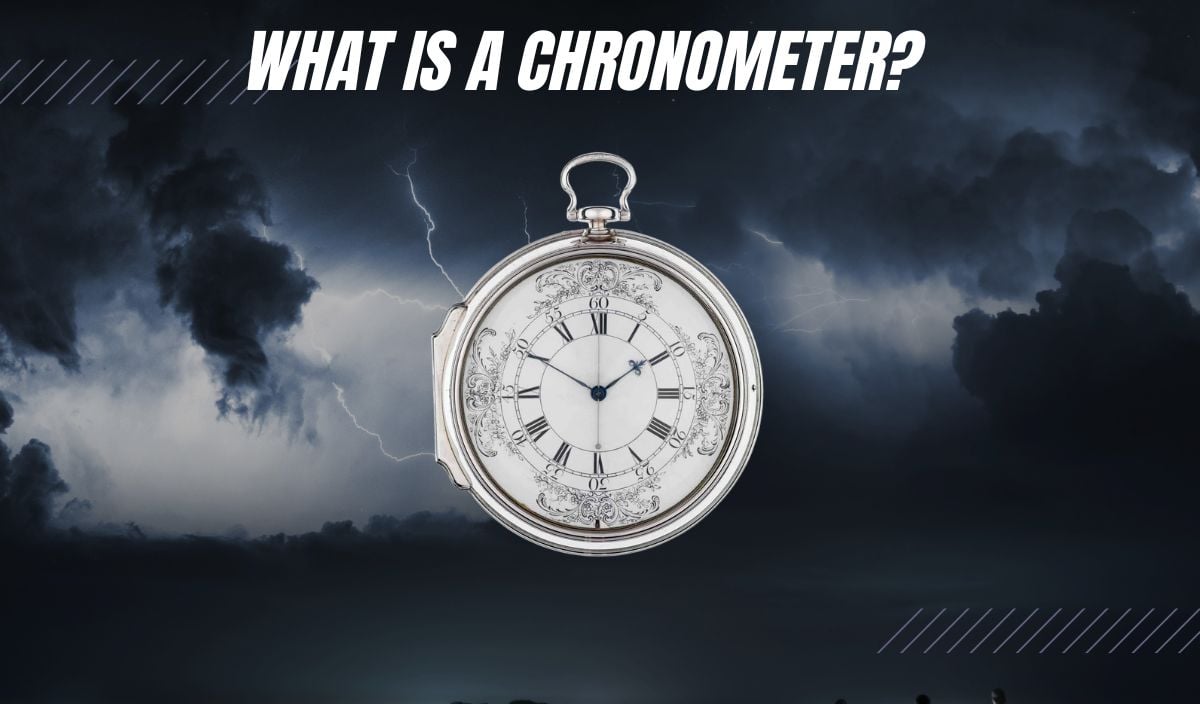
Like most inventions, the chronometer was created out of need. During the 18th century, a serious issue faced by sailors traveling out at sea was their inability to accurately determine their longitude, making navigation tricky and often dangerous. 

Enter John Harrison, a British clockmaker who, in 1735, created the first marine chronometer. His invention was a game changer, allowing sea-dwellers to navigate the ocean with incredible levels of accuracy. It was kind of like giving sailors a GPS long before satellites were even a thing. 

Over the years, chronometers got smaller and more precise, eventually moving from ship decks to wrists. Chronometer watches became popular during the early 20th century as the demand for accurate timekeeping skyrocketed. It was here when organizations like COSC were founded, created with the aim of certifying chronometer watches under a strict set of standards. Now, only the most precise timepieces earn the title “chronometer”.

Now, with GPS systems aboard, we don’t need chronometers to set sail, but the precision of a chronometer wristwatch is still necessary and impressive. They have become symbols of reliability and craftsmanship, with typically only the finest watchmakers in the world able to create chronometer-certified watches.

Chronometer Certification Standards

There are various chronometer certifications, each with its own testing method. So, if you’re looking for a chronometer watch for yourself, it’s good to know which certification your watch has passed. Even some watch brands, known for crafting their own in-house movements, have developed their own chronometer certifications to show their dedication to precision and craftsmanship. Let’s look at some of the best-known chronometer certifications and what is involved in each…

COSC Chronometer

The Contrôle Officiel Suisse des Chronomètres, abbreviated to COSC, is the most common standard of chronometer certification. The Swiss establishment was the first institution to certify watches as chronometers, demanding the best in accuracy and craftsmanship. Following its founding in 1973, it still demands a very specific set of specifications from a watch to earn its prestigious certification. Those that do pass receive a coveted COSC certificate. 

Watches that are assessed under COSC undergo a series of tests over 15 days. These assess a movement’s precision under different conditions, including temperature variations (8°C, 23°C, and 38°C) and positional changes (like crown up, down, and horizontal). The watch must maintain a daily rate within a tight range of -4 to +6 seconds to pass.

METAS Chronometer

METAS Chronometer certification is another respected standard, but one set by the Swiss Federal Institute of Metrology (METAS) in collaboration with Omega. It goes beyond traditional chronometer testing to ensure even higher levels of precision and durability. To achieve this certification, a watch must pass COSC certification before undergoing additional tests conducted by METAS.

These tests include exposure to magnetic fields up to 15,000 gauss, different temperatures, and even different water pressure levels to verify its robustness. Additionally, the watch’s accuracy is assessed in six different positions and at two different power levels—fully wound and with a 33% reserve. METAS-certified chronometers guarantee a daily precision of 0 to +5 seconds.

Superlative Chronometer

Superlative Chronometer certification is exclusively awarded by Rolex to its own timepieces. Like METAS, it goes beyond the standard of COSC chronometer testing, ensuring that every movement meets Rolex’s own stringent standard. Again, every movement must first pass COSC certification before then being handled by Rolex’s professional watchmakers, who take the fully assembled watch – not just movement – in-house for further testing.

These tests include placing the watch in multiple positions and in varying conditions such as freezing, hot and magnetic environments. They also test for waterproofness, power reserve, and automatic winding proficiency. To receive Superlative Chronometer certification, the watch must maintain a daily rate of -2 to +2 seconds, making Rolex Superlative Chronometers some of the most accurate in the world.

Grand Seiko Special Standard

As its name suggests, the Grand Seiko Special Standard is a certification exclusive to Japanese watchmaker Grand Seiko. Hoping to prove Japanese watchmaking can be just as precise and reliable as Swiss, the brand has created their own certification even stricter than COSC. 

To receive the Grand Seiko Special Standard certification, a movement must undergo rigorous testing for 17 days across six different positions and at three temperature settings. The movements are also tested in both horizontal and vertical orientations. The daily deviation allowed is between -3 to +5 seconds, exceeding the standards set by COSC.

German Chronometer Standard

The German Chronometer Standard is a certification similar to Switzerland’s COSC but one that is dedicated to testing the accuracy of German-made watches like those from Glashutte Original. The standard is found under certification DIN 8319, with specifications equivalent to those of the ISO 3159. 

It values a series of tests over 15 days, with the movement tested in five positions and at two different temperatures. Like COSC, it must also maintain a daily rate of accuracy within -4 to +6 seconds. However, unlike its Swiss counterpart, the German Chronometer Standard involves testing the fully cased watch, not just the movement.

Patek Philippe Seal

Patek Philippe also has its own chronometer certification unique to them. In 2009, they established a seal that represents the rigorous standards of their movement manufacture, once again going above and beyond the standards set out by COSC. 

To earn the Patek Philippe Seal, a watch must maintain a daily accuracy of -3 to +2 seconds in several positions and at different temperatures. Additionally, the watch’s durability, finishing, and overall craftsmanship are examined, so you’re guaranteed some of the finest levels of watchmaking in the world.

Qualité Fleurier Standard

The Qualité Fleurier Standard, also sometimes known as the FQF Quality seal, is a certification process for mechanical watches made entirely in Switzerland. This means every part of the watch must be 100% Swiss-made. 

Then, the movement must pass the tests of the COSC, followed by the FQF’s additional tests, including accuracy checks in different positions and temperatures, ensuring it maintains a daily deviation of -0 to +5 seconds.

Chronometers vs Chronographs

Chronometer and chronograph are two watch terms that are often confused with each other – understandably so since both begin with “chrono”. But in fact, chronometers and chronographs are totally different. 

As we now know, a chronometer is all about precision; it’s a watch that has been officially certified to keep time super accurate, passing rigorous tests. A chronograph, however, is a watch built with a stopwatch function, allowing you to measure elapsed time with separate sub-dials.

Fun fact: you can have a chronometer chronograph, a watch awarded chronometer certification equipped with a handy stopwatch complication.

Popular Chronometer Watches on Exquisite Timepieces

If you’re into precision timepieces, chronometers are where it’s at. At Exquisite Timepieces, we have a number of exceptional chronometer watches for you to enjoy. Here are some of the most popular, as rated by our customers:

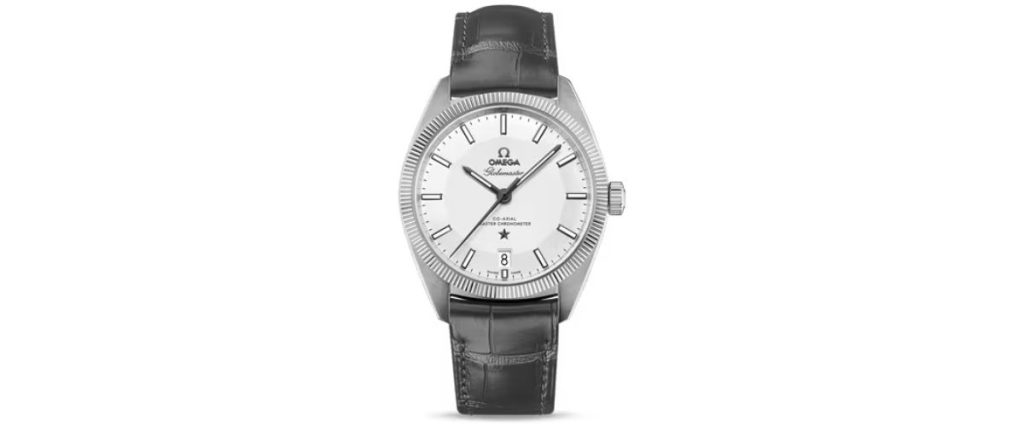
Omega Constellation Globemaster Omega Co-Axial Master Chronometer 39mm (ref. 130.33.39.21.03.001)

Omega Constellation Globemaster Omega Co-Axial Master Chronometer 39mm

Known as one of Omega’s Master Chronometer watches, a family of timepieces certified by METAS, this Omega Constellation Globemaster Omega Co-Axial Master Chronometer 39mm promises incredible levels of accuracy and reliability. The movement, with its co-axial escapement, is highly anti-magnetic and promises a healthy power reserve of 60 hours. 

It’s also a beautiful watch externally, featuring a 39mm stainless steel case with a scratch-proof fluted bezel and 100 meter water resistance. The dial is the star of the show for me, though, colored in blue with an unusual star-shaped dome finish set with Super-LumiNova infilled hands and indexes.

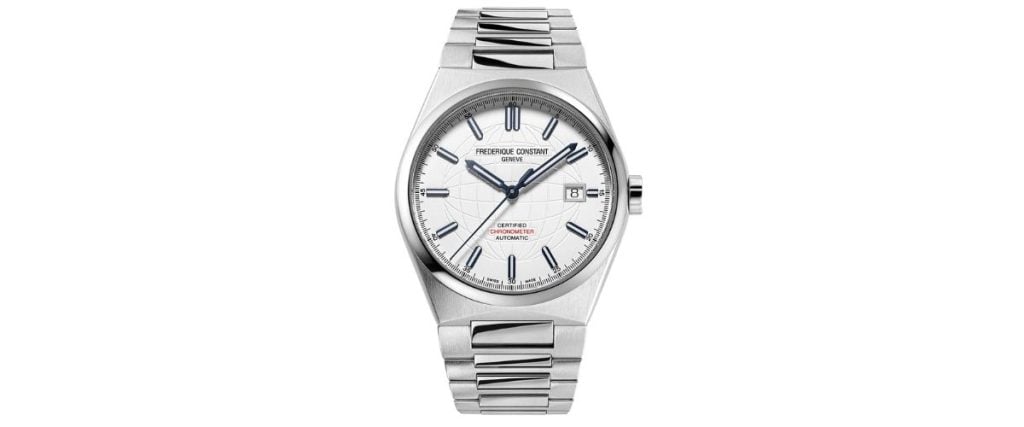
Frederique Constant Highlife Automatic COSC Silver Dial (ref.  FC-303S3NH26B) 

Frederique Constant Highlife Automatic COSC Silver Dial

Possibly one of the most affordable manufacturers of chronometer watches, Frederique Constant has truly reached their goal of making luxury watchmaking accessible to everyone. For less than $2,500, they offer a COSC-certified full-metal sports watch with their Frederique Constant Highlife Automatic COSC Silver Dial model, powered by the Caliber FC-303 with a 38-hour power reserve. 

It, too, has a 39mm stainless steel case, but one with a sporty, integrated architecture that flows into the brushed and polished H-link bracelet. The dial is crisp white and uniquely embossed with a globe motif across the center.

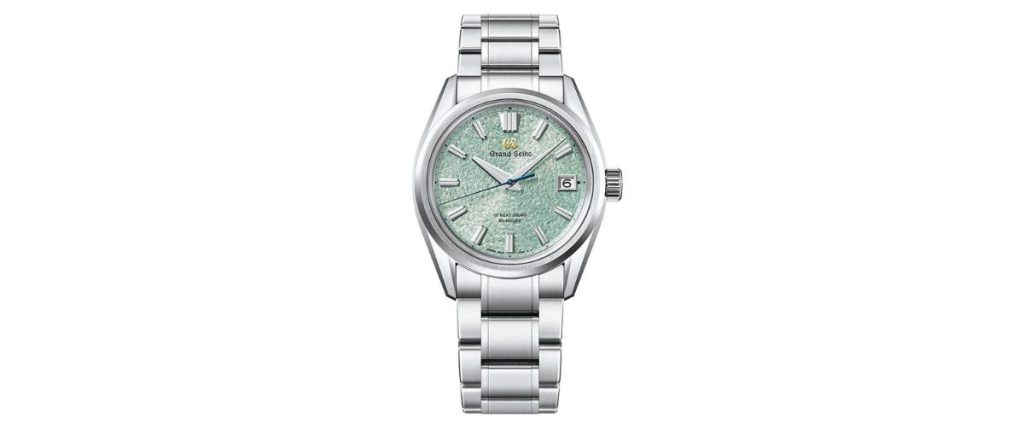
Grand Seiko SLGH021

Grand Seiko SLGH021

Grand Seiko has a number of impressive in-house movements worth mentioning, but their Caliber 9SA5, found inside the Grand Seiko SLGH021 Limited Edition, is one of their Grand Seiko Special Standard movements. With a daily rate of +5 to -3 seconds per day, a power reserve of 80 hours, and a frequency of 36,000 vibrations per hour, it becomes one of the most impressive chronometer movements on the market. 

The watch is also absolutely breathtaking, featuring an intricately detailed, mosaic-like mint green dial inspired by the colors of the Genbi Valley landscape and a 40mm wide Ever-Brilliant steel case polished using the brand’s famous Zaratsu technique.

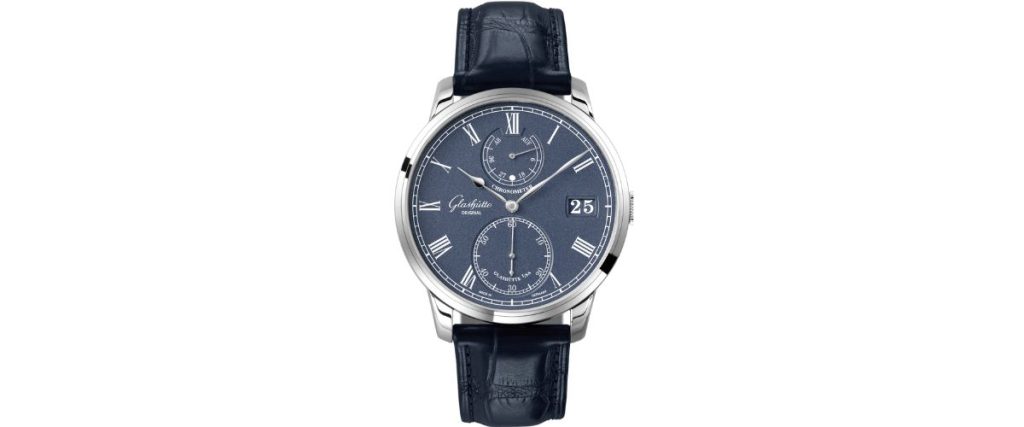
Glashütte Original Senator Chronometer (ref. 1-58-01-02-05-30)

Glashütte Original Senator Chronometer

Offering a more traditional aesthetic, one that harks back to some of the world’s first chronometers, the Glashütte Original Senator Chronometer watch is powered by the in-house Caliber 58-01, a manual winding movement with a 44-hour power reserve and chronometer certification. 

The movement is housed within a luxurious 18ct rose gold case, measuring to 42mm wide and just 12.6mm tall, strapped to the wrist by a dark brown alligator leather strap. The dial is silver-grainé and decorated with blued hands, a black railroad chapter ring, an oversized date window and timeless Roman numerals.

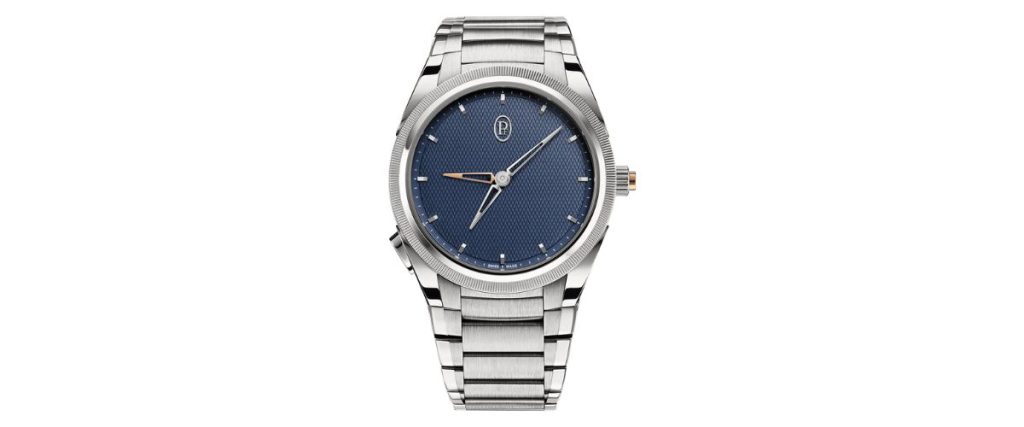
Parmigiani Fleurier Tonda PF GMT Rattrapante (ref. PFC905-1020001-100182)

Parmigiani Fleurier Tonda PF GMT Rattrapante

Finally, the Parmigiani Fleurier Tonda PF GMT Rattrapante is an exceptional chronometer watch with an opulent integrated case and bracelet, guilloche dial, and GMT complication. The soft lines of the case are engineered from stainless steel, while the bezel, with its detailed knurled finish, is machined from 950 platinum. 

It sits on the wrist at 40mm wide and 10.7mm thick, secured by a three-row link bracelet with brushed and polished finishing. The blue grain d’Orge hand-guilloché dial presents two skeletonised hands for the hours and minutes and a rose gold hand for the GMT, all powered by the chronometer certified Caliber PF051.

Conclusion

We hope you now have a solid understanding of what a chronometer watch is and why these timepieces are so highly coveted. If precision and accuracy aren’t high on your list of priorities, a chronometer might be a little wasted on you. 

However, if you value precision and reliability, especially if you have a job or lifestyle that requires high levels of timekeeping accuracy, then a chronometer watch would be a worthy investment. Or maybe you’re just like me, and you simply appreciate the intricate technology that goes on inside these watches. If so, a chronometer watch will no doubt enhance your daily life too.

To Top