News Archives - Page 25 of 54 - Exquisite Timepieces
iconHome Blog / News / Page 25

Category: News

srp777 vs srpe93

Seiko SRP777 vs SRPE93: Which is the Superior Turtle?

Charlotte H

March 27, 2025

The Seiko Turtle is one of the most recognizable dive watches in the world. It has a storied history, a distinctive design, and a reputation for being both durable and reliable.

So no, the Seiko Turtle isn’t some rare breed of turtle—if that’s what you’re looking for, you might want to check out the National Geographic website instead.

bot-only-imagebot-only-image

No, this is the nickname given to one of Seiko’s most iconic dive watches, and it’s called the Turtle because of its distinct, cushion-shaped case that resembles a turtle’s shell. 

Seiko first introduced the Turtle back in the 1970s with the legendary 6306 and 6309 models, and since then, the watch has seen multiple reissues, each staying true to its roots while incorporating subtle but necessary modern improvements.

Today, the Seiko Turtle lineup includes a variety of models, all sporting the signature case shape, bold dials with plenty of lume, impressive water resistance, and reliable in-house automatic movements.

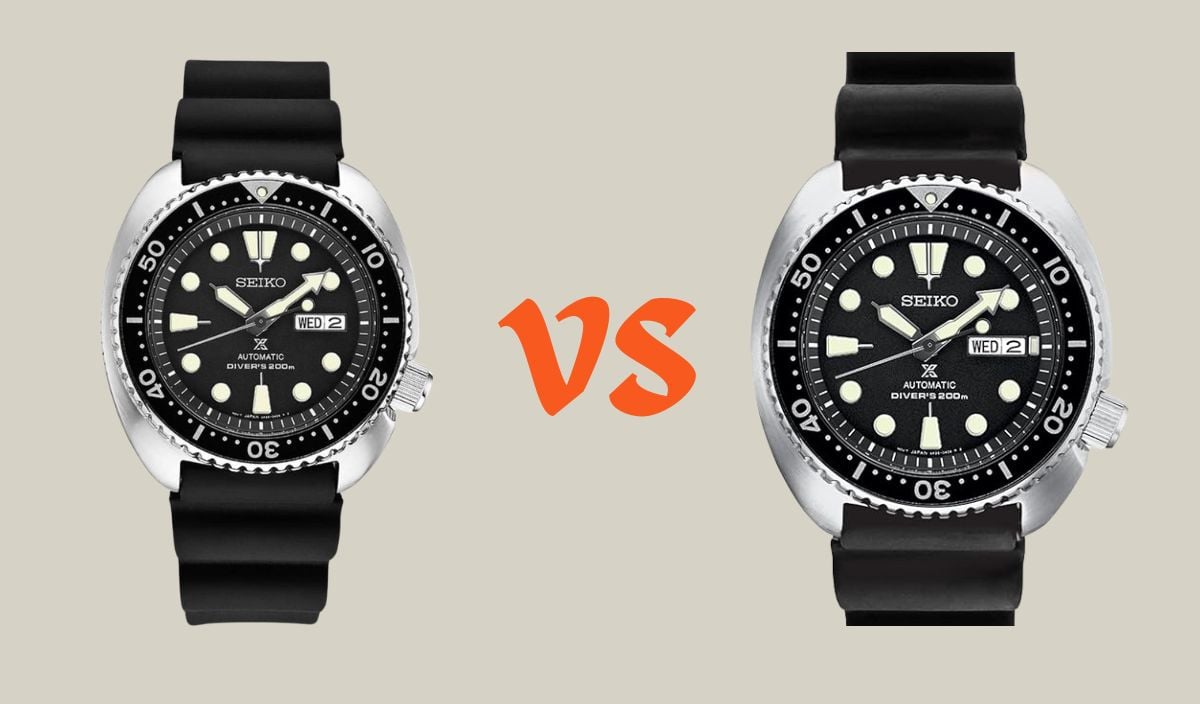
While most of these variations have obvious differences, whether it’s case size, dial colors, bezel inserts, or added complications, there are two models that look almost identical: the Seiko Turtle SRP777 and the Seiko Turtle SRPE93. 

If you’re not super familiar with these two watches, you’d be forgiven for struggling to spot any differences between them at all.

Seriously, if you can pick them apart in just a few seconds, you deserve some serious brownie points. But yes, there are subtle differences, and as any watch collector will tell you, even the smallest differences in a watch can have a big impact, whether it’s on how a watch wears, how it looks, or just how it feels on the wrist. 

So today, we’re putting the Seiko Turtle SRP777 and SRPE93 head-to-head, breaking down every little detail, so you’ll know exactly which one is the better choice for you.

The Seiko Turtle SRP777
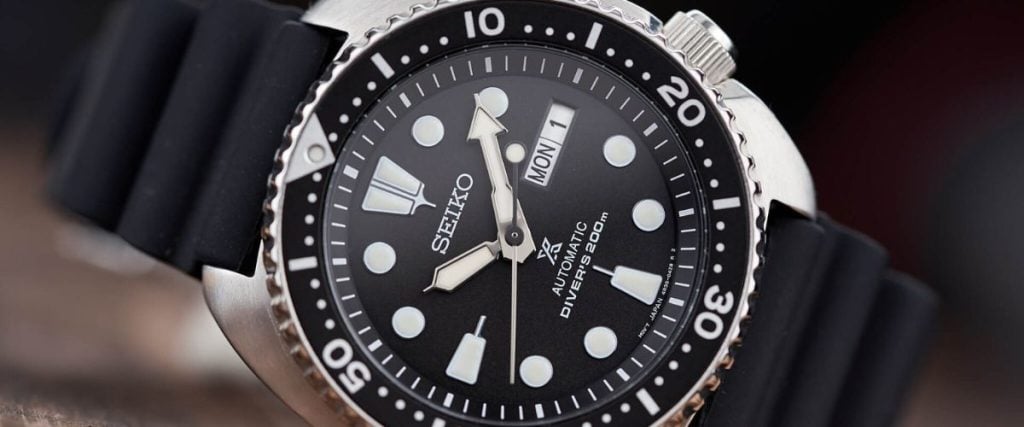
Seiko Turtle SRP777

Starting with the older of the two, the Seiko Prospex Turtle SRP777 is a modern reissue of the legendary Seiko 6309, a famous dive watch that the Japanese watchmaker first launched during the late 1970s.

This modern-day SRP777 reference however arrived in early 2016 but still retained many of the signature Turtle features including the cushion-shaped case, bold dial design, and robust diving capabilities that made its predecessor such a hit. 

At first glance, the SRP777 appears nearly identical to its vintage inspiration, measuring to 44.3mm in diameter with a lug-to-lug of 47.25mm. The stainless steel case features a brushed finish on the top and polished sides, maintaining the classic Seiko diver aesthetic.

Again, it’s the unusual shape of the case that gives the Turtle its nickname with a rounded, ergonomic, and undeniably comfortable profile. Despite its large dimensions, the watch wears smaller than expected due to its short lugs, making it surprisingly wearable on a variety of wrist sizes. 

One of the standout features of the SRP777 is its day-date window. Unlike more modern Seiko divers like the SRPE93, the SRP777 retains a beveled day-date window as a direct homage to the original 6309.

This small yet significant detail enhances the vintage appeal of the watch and is one of the main components that sets it apart from its younger sibling. For collectors and enthusiasts who appreciate the little nuances that make a watch special, this beveling adds a layer of depth and nostalgia. 

The dial is a rich matte black, offering excellent legibility in various lighting conditions. Large, well-defined hour markers are generously coated with Seiko’s proprietary LumiBrite, ensuring that the watch remains highly readable even in low-light environments.

The hands follow a classic Seiko diver design, with a broad arrow-style minute hand and a sword-shaped hour hand, making it easy to distinguish the time at a glance. The seconds hand features a lumed lollipop tip, another nod to traditional Seiko diver aesthetics. 

The bezel is a unidirectional 120-click mechanism with a fully indexed aluminum insert. The action is smooth with firm, precise clicks, making it a joy to operate. Seiko’s bezels are known for their reliability, and the Seiko Turtle SRP777 is no exception, providing an essential tool for divers to monitor elapsed dive times. 

The case back of the SRP777 is another area where Seiko has paid tribute to its past and offers another slight deviation from the SRPE93. The SRP777 features the iconic tsunami wave motif, deeply engraved and prominently displayed, alongside lettering that reads “Air Diver’s 200m”. 

Inside the watch beats Seiko’s in-house 4R36 automatic movement, a workhorse caliber that offers hacking and hand-winding. It also operates at 21,600 vibrations per hour and provides a respectable 41-hour power reserve.

It’s a reliable and robust movement, designed for longevity and ease of maintenance. It’s so reliable that Seiko still uses it in many of the dive watches today. Completing this model is a 22mm black silicone strap that is soft, flexible, and comfortable straight out of the box.

The Seiko Turtle SRPE93
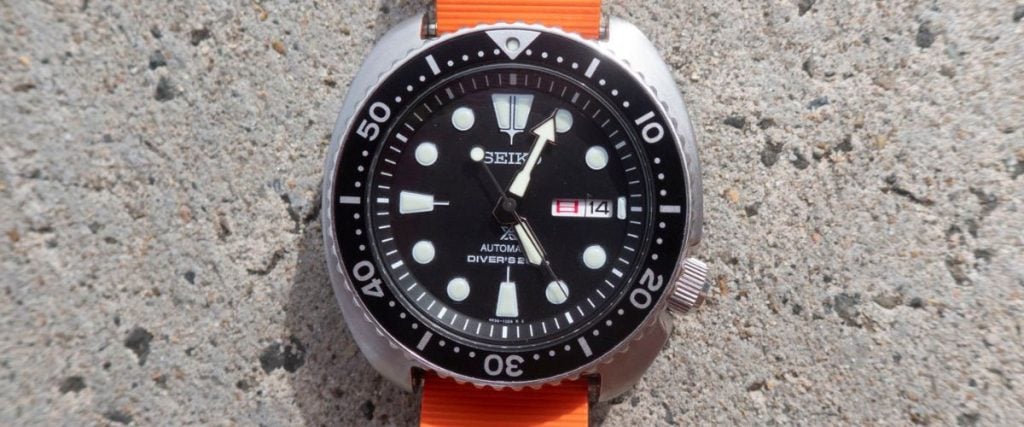
Seiko Turtle SRPE93

Arriving a little later in 2021, and a watch still in production now, the Seiko Prospex SRPE93, is unsurprisingly another modern take on the Seiko Turtle design.

Much like its predecessors, this model stays true to the core identity of the Seiko Turtle, offering a cushion-shaped case, robust dive watch capabilities, and a timeless aesthetic. 

At 45mm in diameter with a thickness of 13.42mm, the Turtle SRPE93 is slightly larger than the SRP777 but still retains an ergonomic and well-balanced profile on the wrist.

Thanks to its rounded case and relatively short lug-to-lug length, the watch again wears smaller than its dimensions might suggest, making it comfortable for a wide range of wrist sizes. The case is engineered from classic stainless steel and features a brushed finish on the top with polished sides. 

The dial of the Seiko Prospex Turtle SRPE93 is also deep matte black, ensuring excellent contrast and legibility. At the centre are the same large and highly visible hour markers coated with Seiko’s LumiBrite. But peeking out just to the right of the dial is one of the subtle but notable differences between this model and the Turtle SRP777. 

Here you can see the addition of a lume block at the 3 o’clock marker. This lume pip was added to retain the ISO certification, as it is part of the new requirement.

In addition, to accommodate this change, the Seiko Turtle SRPE93 does not have the beveling on the day/date window that was present on the SRP777.

Another update lies in the case back. While it still features the iconic tsunami wave motif, the text has been updated to again reflect the new ISO diving specifications. Instead of the previous “Air Diver’s 200m” marking found on the SRP777, the case back of the Turtle SRPE93 now reads “Diver’s Watch 200m.”

This subtle change may go unnoticed by casual observers, but for Seiko enthusiasts, it represents an important update that aligns with modern dive watch standards. 

Other than that, the SRPE93 retains all the same spec as its older sibling. It has the same unidirectional rotating black aluminium bezel, Seiko’s reliable in-house 4R36 automatic movement with a 41-hour power reserve and a comfortable black silicone strap, secured with a pin buckle.

Seiko SRP777 vs SRPE93 – How to Choose 

The Case Size 

While both watches share the signature Seiko Turtle design, the SRPE93 comes in slightly larger at 45mm compared to the SRP777’s 44.3mm diameter.

The difference might seem minimal on paper, but on the wrist, even a fraction of a millimeter can impact the overall feel. The SRP777’s more compact dimensions make it a great option for those who prefer a slightly more manageable fit without sacrificing the iconic cushion-shaped case.

On the other hand, if you like the presence of a slightly larger case, the SRPE93 will give you that extra bit of wrist real estate while maintaining excellent wearability thanks to the short lug-to-lug distance. 

The 3 o’clock Lume 

One of the most notable updates in the Seiko Prospex Turtle SRPE93 is the addition of a lume pip at the 3 o’clock marker. This was introduced to meet the latest ISO dive watch standards to ensure enhanced visibility in low-light conditions.

However, this adjustment led to the removal of the beveling around the day/date window, which remains intact on the SRP777. If you appreciate the vintage-inspired detail and added depth that the beveling provides, the SRP777 might be the more appealing option.

However, if you prioritize lume and low light legibility, then the SRPE93’s additional Lumibrite pip will no doubt serve you better. 

The Case Back Decoration 

Both watches feature the classic Seiko tsunami wave motif on the case back, a signature design element in the Prospex series. However, the text has been updated in the SRPE93 to reflect modern ISO certification requirements. The SRP777’s case back reads “Air Diver’s 200m,” while the SRPE93 now simply states “Diver’s Watch 200m.”

While this change does not impact performance, some collectors might prefer the original wording as a nod to Seiko’s long-standing dive watch heritage. 

Which One Is Right for You? 

Choosing between the Seiko Prospex Turtle SRP777 and SRPE93 ultimately depends on what you prioritize in a dive watch.

If you appreciate subtle vintage aesthetics and small nostalgic details like the beveled day/date window and original case back text, and prefer a slightly more compact fit, the SRP777 is a fantastic choice.

However, if you’re looking for a more modernized version with updated ISO compliance, superior lume at the 3 o’clock position, and don’t mind the lack of beveling, then the SRPE93 is the way to go.

Conclusion

At the end of the day, choosing between the Seiko Prospex Turtle SRP777 and the SRPE93 comes down to personal preference. If I had to pick, I’d go for the Seiko SRPE93 simply because I believe you can never have too much lume on a dive watch.

The additional lume at the 3 o’clock marker ensures even better visibility in low-light conditions which is a key factor for me. 

That said, I completely understand why many collectors are drawn to the Turtle SRP777. It carries a piece of Seiko’s history with its vintage-inspired design elements, including the beveled day-date window, which adds a nostalgic charm. For those who appreciate subtle nods to classic models, the SRP777 is an appealing option. 

Practicality is another consideration. The SRPE93 is still in production and can be ordered easily, typically retailing for around $495. It offers a lot of watch for an affordable price, making it a solid choice for those who want a brand-new, readily available timepiece.

On the other hand, the SRP777 has been discontinued, meaning you’ll need to explore the second-hand market for this one. While pre-owned models are generally more affordable, averaging around $400, they may be harder to find in good condition. 

Ultimately, these two watches are incredibly similar in both aesthetics and specifications. To the untrained eye, it would take a keen collector to spot the differences when one is on your wrist.

But in the end, what matters most is what you value in a watch, whether it’s modern practicality or vintage charm. No matter which you choose, both are excellent examples of Seiko’s dive watch prowess, proving that the Turtle remains a true icon in the world of horology.
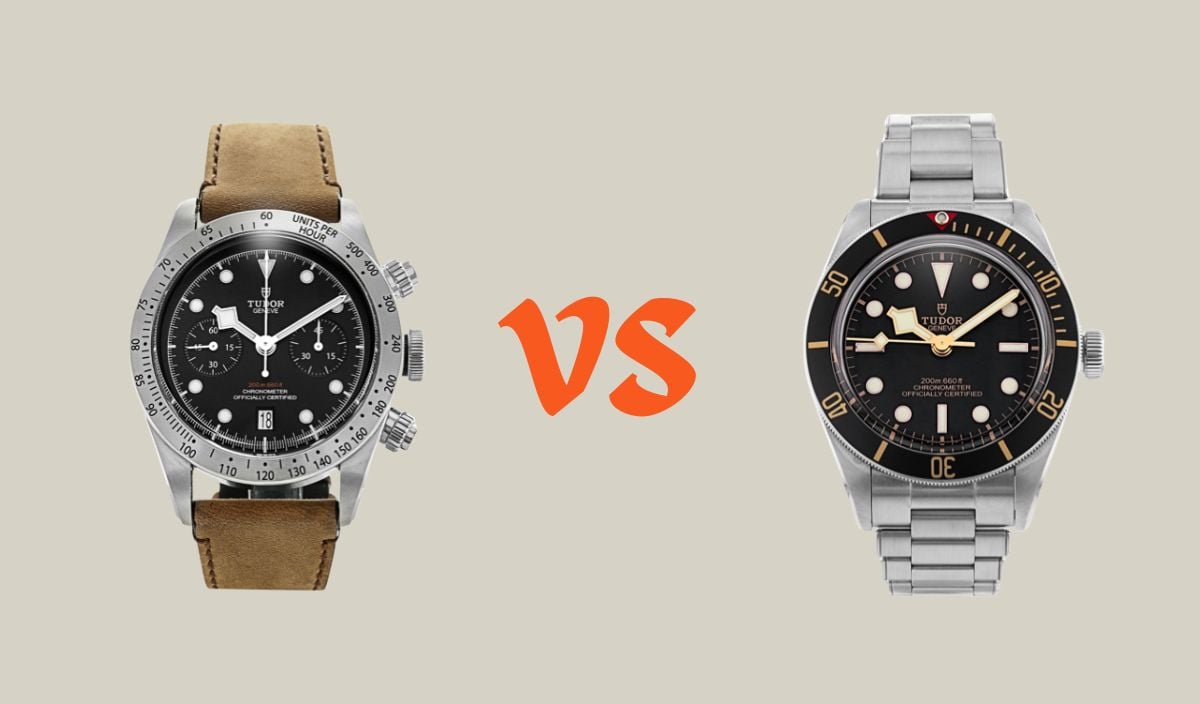
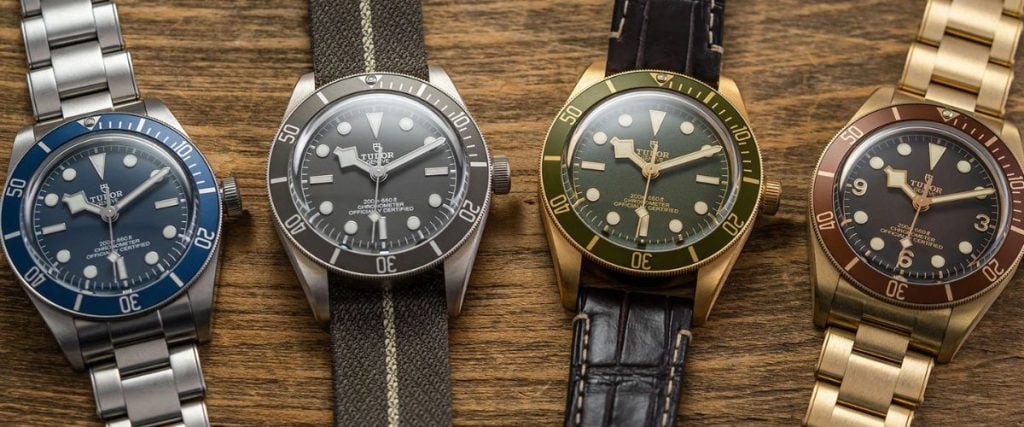
tudor black bay vs black bay 58

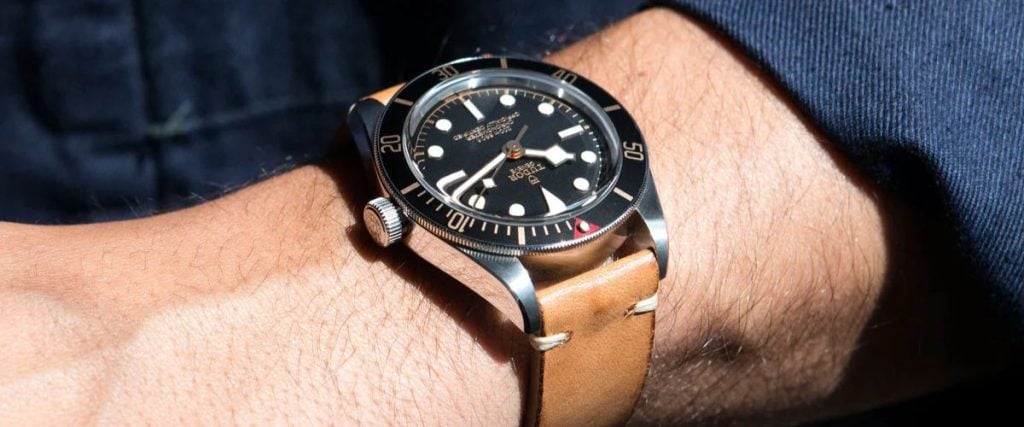
The Tudor Black Bay lineup is one of the most versatile collections in the world of luxury watches, offering countless variations in case metal, dial color, and even complications.

But two of the most iconic models are the original Black Bay, the 41mm flagship, and its smaller sibling, the Black Bay 58, which sports a more compact 39mm case. 

bot-only-imagebot-only-image

While they might seem similar at a glance, there are some key differences that go beyond just size. Certain dial colors and case materials are exclusive to one model, and how these watches wear on your wrist can vary dramatically depending on the configuration you choose. 

Ultimately, the decision between these two heavy hitters comes down to your style preferences, wrist size, and how you want the watch to feel day to day.

The larger Black Bay has a bolder, more commanding presence, while the Black Bay 58 leans into vintage proportions and a more understated look. Both have their unique charm and of course their own price tag too, so it’s worth taking a closer look at what sets them apart before you pull the trigger. 

In this guide, we’ll break down the key differences and help you figure out which Tudor Black Bay is the perfect match for you. 

A Quick Background on the Tudor Black Bay Collection As A Whole

Tudor Black Bay collection

The Tudor Black Bay collection is one of the most compelling line-ups in modern watchmaking. It’s a testament to Tudor’s ability to draw on its rich history while offering something distinctly contemporary.

For decades, Tudor was long seen as Rolex’s younger sibling, sharing much of the same DNA but with its own more affordable, no-nonsense approach to tool watches.

When the Black Bay launched in 2012, it was clear that Tudor wasn’t just following trends, or in the footsteps of its better known brother anymore but redefining its place in the modern watch landscape. 

On its release, the Black Bay clearly took inspiration from Tudor’s early Submariner models, particularly references from the 1950s and 1960s. You’ll notice the signature “snowflake” hands, a design Tudor introduced in the late 1960s for better underwater visibility, as well as the oversized crown and domed crystal, both nods to vintage dive watches.

But while the design leaned heavily into heritage, the execution was undeniably modern bringing together classic aesthetics with contemporary build quality and robust in-house movements. 

Since its debut, the Black Bay collection has expanded significantly, catering to nearly every preference. There’s the original Black Bay with its 41mm case, available in multiple bezel and dial color combinations, from the iconic burgundy bezel to a more understated blue or black.

The proportions are bold, making it an ideal statement piece while still maintaining the versatility that dive watches are known for.

Then there’s the Tudor Black Bay 58, a model that’s quickly become a favorite among enthusiasts. Named after Tudor’s first dive watch, released in 1958, this version scales things down with a 39mm case and slimmer profile, closer to the vintage proportions of mid-century dive watches.

The Black Bay 58, or Black Bay Fifty-Eight as it’s sometimes called, is perfect for those who prefer a more discreet, wearable option that retains all the charm of the original without the added heft. 

Beyond these core models, the Black Bay family includes more specialized variations. The Black Bay GMT is a standout, with its blue-and-red bezel and dual-time functionality which is a direct nod to Tudor’s shared aviation heritage with Rolex.

Meanwhile, the Black Bay Chrono combines dive-watch ruggedness with motorsport-inspired styling, offering both versatility and technical complexity.

The Black Bay Ceramic is arguably the most modern interpretation, with an all-black case and METAS-certified movement, bringing cutting-edge technology to the collection’s vintage-inspired roots. 

Tudor has managed to strike the perfect balance between tradition and innovation, evolving the Black Bay line without losing its identity.

What makes the collection so compelling is how it captures the spirit of classic dive watches without feeling stuck in the past. Each model offers something unique while staying true to the utilitarian ethos that defines Tudor. 

Today, we’ll be focusing on two core sub-collections within the Black Bay family: the classic 41mm time-only Black Bay and its smaller, vintage-inspired sibling, the Black Bay Fifty-Eight. Both are strong contenders, but they cater to different tastes and needs. Let’s take a closer look at how they compare. 

The Tudor Black Bay Collection 

The Tudor Black Bay 41mm models are the cornerstone of the Black Bay collection, staying true to the original design DNA that put Tudor back on the map in 2012.

These watches are classic in their execution, with a design rooted in vintage dive watches but built to modern standards. At 41mm in diameter and 13.6mm thick, they wear confidently on the wrist without being overpowering, offering a balance of bold presence and everyday versatility. 

The core models feature a stainless steel case with polished and satin finishing, paired with a unidirectional 60-minute dive bezel made from stainless steel with an anodized aluminum insert.

These aluminum bezels give the watch a distinctly vintage feel, while the domed sapphire crystal and clean dial layout emphasize legibility.

The dials are primarily matte black, with applied hour markers and Tudor’s signature snowflake hands, an unmistakable feature dating back to the brand’s military dive watches of the late 1960s. Water resistance is rated to 200 meters, making these watches as functional as they are stylish. 

Inside the Tudor Black Bay 41mm watches is the Tudor Manufacture Caliber MT5602, a self-winding movement with a bidirectional rotor system. It’s built for durability and accuracy, boasting a 70-hour power reserve, which means you can set the watch down for the weekend and still pick it up on Monday with power to spare.

The movement is also COSC-certified, ensuring precise timekeeping, and it’s protected by a stainless steel screw-down crown adorned with the Tudor rose. 

The 41mm Black Bay range offers a surprising variety of configurations to suit different tastes. The classic option is the black dial and black bezel combo; it’s understated and timeless.

For something with a touch of warmth, there’s the red bezel paired with a black dial and gilt hands, which give off a distinctly retro vibe.

Then there’s the green bezel variant, which has gained a lot of attention for its bold yet versatile look. The green bezel is paired with a black dial and gilt accents, creating a color combination that feels both vintage-inspired and fresh. 

For those looking for a more contemporary take, the Black Bay Ceramic is a standout. This model reimagines the Black Bay design with a full ceramic case and bezel, offering a stealthy, ultra-modern appearance.

Ceramic is not only lightweight but also highly scratch-resistant, giving this model exceptional durability while maintaining a sleek, matte-black finish. It’s a watch that feels entirely different from its steel siblings with an edgy, minimal, and almost futuristic touch. 

Then we have the Tudor Black Bay S&G (Steel & Gold) models, which introduce a touch of luxury to the Black Bay family.

These two-tone watches feature a mix of stainless steel and yellow gold, with gold accents on the crown, bezel, and bracelet center links. You can opt for a black dial and bezel for a sporty-yet-refined look or go full vintage glamour with a champagne dial paired with matching golden hardware. 

When it comes to pricing, the 41mm Tudor Black Bay models remain incredibly competitive in the luxury watch world.

The stainless steel models start at $3,950 for versions on leather or textile straps, while those on steel bracelets are priced slightly higher. The S&G models, with their combination of precious metal and sporty design range from $5,550 to $6,300, depending on the configuration.

The Tudor Black Bay 58 Collection

Tudor Black Bay 58

The Tudor Black Bay 58 has quickly become one of the most beloved sub-collections in the Black Bay family, offering a vintage-inspired design in a more compact 39mm case.

It’s named after the year 1958, which saw the release of Tudor’s first 200m water resistant dive watch, the Oyster Prince Submariner Ref. 7924, a watch that serves as the clearest ancestor to today’s Fifty-Eight models.

With its modest size, slim profile, and vintage proportions, the Black Bay Fifty-Eight feels like a sweet spot between heritage aesthetics and modern watchmaking. 

At the heart of the Black Bay 58 is the Tudor Manufacture Caliber MT5402, a COSC-certified movement specifically designed for smaller cases. Like its larger sibling, it offers a robust 70-hour power reserve and features a bidirectional rotor system.

This makes it a reliable choice for daily wear, as you can take it off for the weekend and still have it ticking when you pick it up on Monday.

The case is only 11.9mm thick which is a nice bit slimmer than the 41mm Black Bay models making it extremely comfortable on the wrist, especially for those who prefer a more traditional size. 

The steel models are the core of the collection. There’s the timeless black dial and black bezel version with gilt accents, which harks back to early dive watches with its warm, vintage tones.

For something a bit fresher, the navy blue version swaps out the gilt details for white and silver, offering a more contemporary look that’s clean and sporty. Both models come with a riveted steel bracelet, textile strap, or leather option, giving you some flexibility in styling. 

While the classic Tudor Black Bay 41 comes in steel, bronze and S&G, the Tudor Black Bay 58 has some very cool case metals that are exclusive to the collection.

One of the most eye-catching is the Black Bay 58 925, which features a case made entirely from sterling silver, something of a rarity in the watch world.

The case is satin-finished, giving it a warm, almost matte appearance, while the taupe dial and matching bezel keep things understated and elegant. Unlike traditional silver, Tudor’s proprietary alloy resists tarnishing, so you won’t need to worry about the watch developing a patina over time. 

Then there’s the Black Bay 58 18K, which takes things to a whole new level. This version is made entirely from solid 18k yellow gold. It’s definitely a bold statement piece but one that still manages to maintain the Fifty-Eight’s vintage charm.

The dark green dial and bezel contrast beautifully with the gold case, creating a rich and luxurious aesthetic. It currently comes on either a green fabric strap, a brown leather band or a full gold bracelet. 

In terms of pricing, the Black Bay 58 again remains competitively positioned in the luxury watch market. The stainless steel models start at $3,850, offering incredible value for a watch with an in-house movement and 200m water resistance.

The 925 silver version is priced at $4,800, reflecting its unique case material and understated elegance. Unsurprisingly, the 18k yellow gold model with the full gold bracelet tops the range at $33,700.

Tudor Black Bay vs Black Bay 58 – How to Choose 

When deciding between the Tudor Black Bay 41mm and the Black Bay 58, the choice can feel overwhelming at first.

Though these two models share much of the same DNA, their differences in size, materials, and overall aesthetic mean they cater to different preferences and wrist sizes. Understanding these distinctions will help you determine which one is the right fit for you.

The most obvious difference between the two is size. The Black Bay has a 41mm case with a thickness of 13.6mm, giving it a bolder and more substantial presence on the wrist.

It wears confidently and is perfect for those who appreciate larger dive watches. Its proportions strike a balance between modern sportiness and vintage-inspired design, making it a versatile piece that can command attention without feeling over the top.

The Black Bay 58, on the other hand, is more compact with a 39mm case and a slim 11.9mm profile. These vintage proportions make it feel more like a classic dive watch from the 1950s, an intentional nod to Tudor’s first 200m water-resistant dive watch from 1958. Its smaller size makes it more discreet, ideal for those who prefer a lighter, more wearable timepiece that transitions effortlessly from casual to formal settings. While the Black Bay has an undeniably bold wrist presence, the Black Bay 58 leans into subtlety and vintage charm. 

Beyond size, the two models also differ in terms of available case materials. The Black Bay offers a broad range of options, from classic stainless steel to two-tone steel and gold (S&G) models, as well as the ultra-modern Black Bay Ceramic.

The two-tone S&G models bring a touch of luxury with their mix of stainless steel and yellow gold, while the Black Bay Ceramic reimagines the classic dive watch with a matte-black case that is both scratch-resistant and modern. 

The Black Bay 58 takes a more creative approach with its exclusive case materials. While the core models are available in stainless steel, there are also versions in sterling silver, 18k yellow gold, and bronze.

For those that want something arguably flashy, you’ll no doubt love the Tudor Black Bay 58 18K with its full 18kt gold case paired with a green bezel and dial for a luxurious yet vintage-inspired aesthetic.

In terms of performance, both models are powered by Tudor’s robust in-house movements. The Black Bay uses the Caliber MT5602, while the Black Bay 58 is equipped with the Caliber MT5402, which is specifically designed for smaller cases.

Both movements offer an impressive 70-hour power reserve and are COSC-certified for accuracy, meaning they’re equally reliable whether you choose the larger or more compact model.

The main difference lies in how the movements contribute to the overall wearability of the watches. The MT5602 supports the larger, thicker case of the Black Bay, while the MT5402 helps keep the Black Bay 58 slim and lightweight. 

Aesthetically, the Black Bay and Black Bay 58 deliver very different experiences. The Black Bay is bold and contemporary, with broader proportions and a more commanding presence.

It feels modern while retaining some vintage-inspired design cues, like the domed sapphire crystal and snowflake hands. This makes it a great choice for someone who wants a watch that stands out and pairs well with casual or sporty attire. 

The Black Bay 58, by contrast, fully embraces vintage proportions and mid-century dive watch aesthetics. Its smaller case, warm gilt accents (on some models), and understated design give it a nostalgic charm that appeals to enthusiasts who appreciate heritage watches. Its slim profile and refined look also make it easier to dress up, giving it more versatility for formal occasions.

Conclusion 

Ultimately, the decision between the Tudor Black Bay and the Black Bay 58 comes down to personal preference. If you prefer a larger, bolder watch with strong wrist presence, the Black Bay is likely the better choice. Its broader range of materials and configurations also makes it an appealing option for those who want to experiment with two-tone designs or more modern aesthetics.

On the other hand, if you’re drawn to vintage proportions, heritage-inspired details, and unique case materials like sterling silver or solid gold, the Black Bay 58 will be hard to resist.

Whichever model you choose, both the Tudor Black Bay and Black Bay 58 offer exceptional build quality, reliable in-house movements, and timeless designs that stay true to Tudor’s history while delivering modern performance.

Tissot vs Bulova: Swiss vs American Made Timepieces

Charlotte H

March 24, 2025

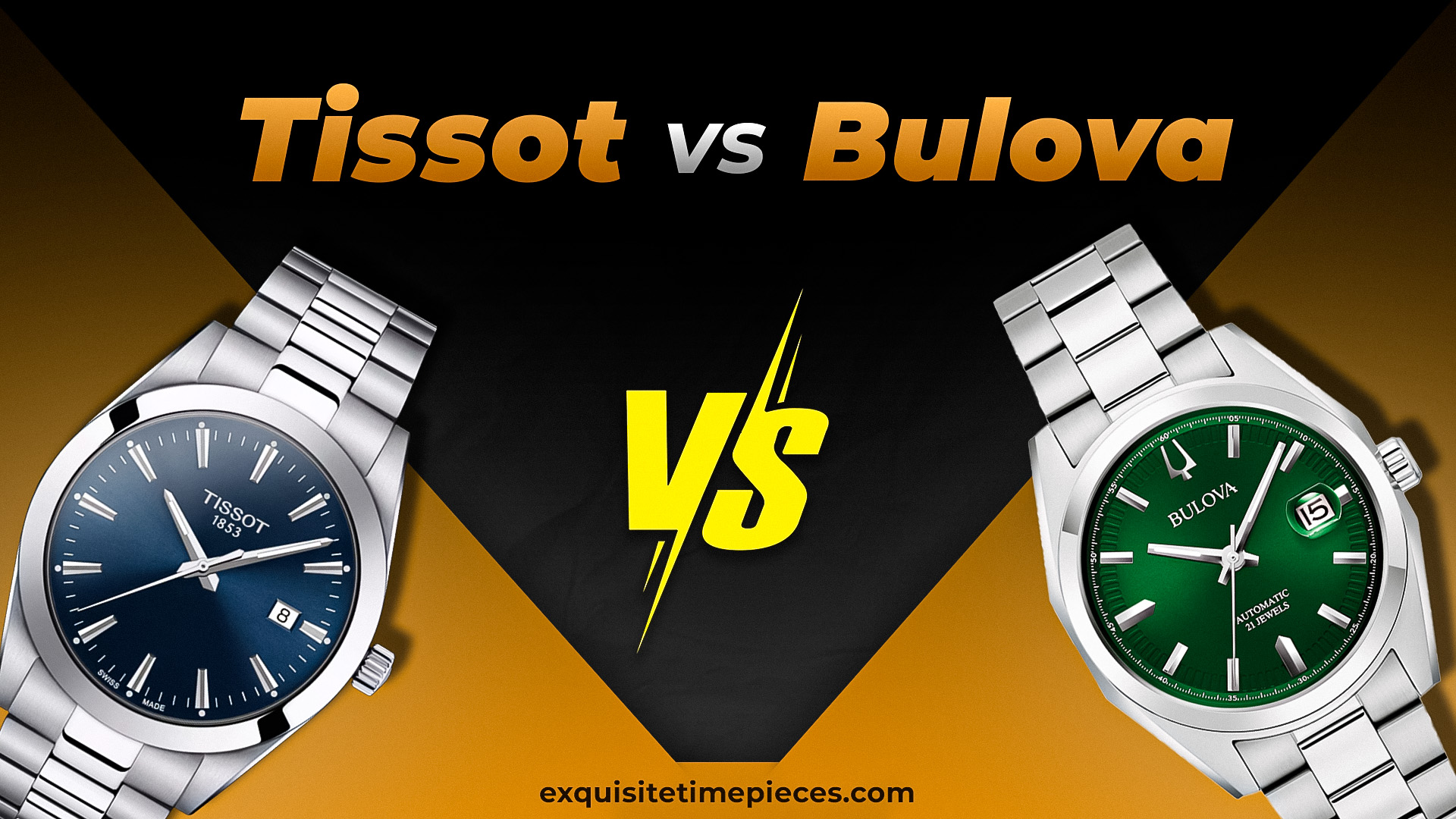
Two brands that I wouldn’t typically choose to compare are Tissot and Bulova. Not because they have nothing in common, but because they’re so different in terms of heritage, style, and the types of timepieces they offer.

The only real link is that both are well-known for offering affordable, high-quality watches. Beyond that, Tissot is a Swiss brand with deep roots in precision and sports timekeeping, while Bulova is an American brand with a history that includes innovation, military use, and even time spent in space.

bot-only-imagebot-only-image

But despite their differences, Tissot and Bulova are often compared by watch enthusiasts and collectors. Perhaps because they both occupy a similar space in the market; they’re known for being reliable, stylish, and affordable.

Both brands have also built strong reputations over the decades, balancing heritage and innovation in their own unique ways. They also share a loyal following and offer a wide range of collections, appealing to different tastes and lifestyles.

So, if you’ve ever found yourself wondering which is the better brand out of Tissot and Bulova, you’re not alone. While there may not be a single answer, we’ll dive into their history, signature collections, and what makes each unique so you can decide which affordable watchmaker is best suited to your wrist.

Brand Heritage 

When it comes to watch brands with rich histories, it’s easy to focus on the big luxury names like Rolex, Omega, and Patek Philippe. But dig a little deeper, and you’ll find two brands with equally fascinating pasts: Tissot and Bulova.

Both have been around for well over a century, playing pivotal roles in watchmaking history. Their stories may not always overlap, but they offer plenty of reasons to admire each one. 

A Quick History of Tissot

Tissot watch history

Tissot was founded in 1853 by Charles-Félicien Tissot and his son Charles-Émile in the charming Swiss city of Le Locle, an area considered the beating heart of Swiss watchmaking.

To this day, Tissot remains headquartered there, a testament to its deep connection to traditional Swiss craftsmanship. Early on, the brand gained recognition for its reliable, gold-cased pocket watches, which found eager customers across Europe and even as far as Russia and the United States. 

In 1930, Tissot made headlines by merging with Omega, forming the first Swiss watchmaking association. Decades later, the company became part of the Swatch Group which remains home to brands like Longines and Breguet.

But despite merging with other companies, Tissot’s focus on innovation and precision never wavered, especially in relation to the world of sports timekeeping. The brand has been the official timekeeper for major events in cycling, basketball, and ice hockey, showcasing its reputation for accuracy and reliability. 

What makes Tissot truly special is its ability to blend tradition with modern technology. Collections like the Tissot T-Touch introduced touch-sensitive sapphire crystals and advanced functions long before smartwatches were popular.

At the same time, Tissot still produces classically styled timepieces that harken back to its roots like the retro-inspired Tissot PRX. 

A Quick History of Bulova 

Bulova History

Bulova’s story is equally compelling but takes a very different path. Founded in 1875 by Joseph Bulova, a Czech immigrant, the brand began as a small jewelry store in downtown New York City.

By 1912, Bulova had set up the first plant dedicated to the standardized mass production of watches. Precision and innovation were always at the forefront for Bulova, and it wasn’t long before they made their mark on history. 

In 1926, Bulova produced the world’s first radio advertisement with the iconic line: “At the tone, it’s eight o’clock, Bulova Watch Time.” A few years later, they also became pioneers in television advertising, creating the world’s first-ever TV commercial.

Their association with legendary aviator Charles Lindbergh, who famously wore a Bulova watch after his transatlantic flight, cemented their place in popular culture. 

But perhaps Bulova’s most significant contribution to horology was the Accutron, introduced in the 1960s. It was the world’s first fully electronic watch, powered by a tuning-fork mechanism that made it far more accurate than traditional mechanical watches.

Bulova was also deeply involved in NASA’s space missions. Although Omega became the official Moonwatch, Bulova watches still went to the moon. In fact, a Bulova chronograph worn on the Apollo 15 mission famously sold for $1.6 million at auction in 2015. 

In more recent years, Bulova has kept pushing boundaries with innovations like the Precisionist, one of the most accurate quartz watches in the world, and the CURV, the first curved chronograph. While now owned by Citizen Watch Co., Bulova’s spirit of bold design and technological innovation remains stronger than ever.

Model Variety

When it comes to model variety, both Tissot and Bulova offer a vast range of timepieces that cater to different tastes, lifestyles, and purposes.

Whether you’re looking for a Swiss sports watch with precision movement or a pilot’s chronograph with a vintage edge, these brands have something for everyone. Let’s explore how they compare when it comes to collections and versatility.

Tissot 

Tissot stands out for its blend of Swiss heritage and modern design, offering a diverse selection of watches that range from timeless classics to advanced smartwatches. Their collections are designed with different lifestyles in mind, ensuring there’s something for everyone. 

The Tissot PRX collection is a personal favourite of mine – I own two watches from this line-up, and I could easily buy more.

The series is a tribute to the original 1978 PRX and has gained significant popularity for its integrated bracelet and textured dials, a look reminiscent of high-end luxury sports watches like the Audemars Piguet Royal Oak, but at a fraction of the price.

Available in both quartz and automatic Powermatic 80 movements, the PRX combines retro aesthetics with modern technology, appealing to those who want an affordable Swiss sports watch with serious style. 

For those seeking a classic and elegant everyday watch, the Tissot PR 100 is a perfect option. Originally launched in the 1980s, it remains true to its name: Precise (“P”), Robust (“R”), and water-resistant up to 100 meters (X being the Roman numeral for 100). Its sleek design, featuring a large dial and a narrow bezel, makes it a go-to choice for professionals who want something understated yet stylish. 

When it comes to innovation, the Tissot T-Touch Connect Sport leads the charge. This high-tech collection blends traditional Swiss craftsmanship with smartwatch capabilities.

Features like heart-rate monitoring, fitness tracking, and solar-powered technology make it ideal for fitness enthusiasts who prefer a more sophisticated alternative to standard smartwatches. 

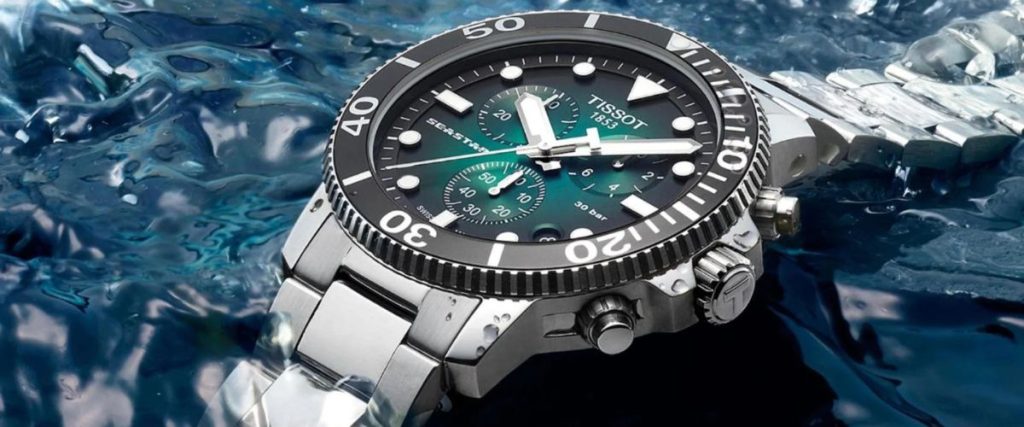
Finally, Tissot’s flagship dive watch collection is the Seastar Collection. These combine high-performance functionality with elegant design. The Seastar 1000 boasts 300-meter water resistance and a robust build, making it a trusted companion for underwater sports. 

Bulova 

While Tissot is a little more focused on sporty and modern aesthetics, Bulova has a penchant for retro. The Archive Series Collection is a perfect example of how Bulova taps into its rich history. This collection reimagines some of the brand’s most iconic models, blending retro designs with modern elements.

The standout is the Lunar Pilot, inspired by Bulova’s chronograph that landed on the moon during the Apollo 15 mission. It’s a highly collectible timepiece and a strong competitor to the more expensive Omega Speedmaster Moonwatch

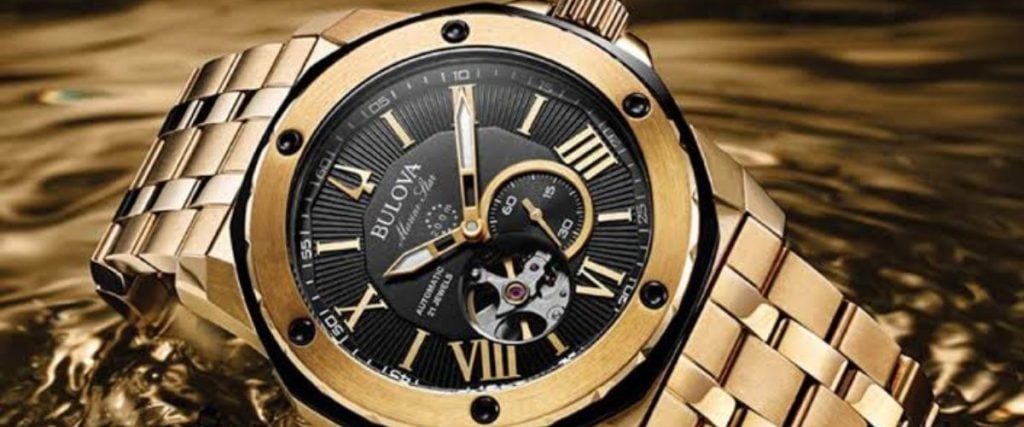
For those who love maritime-inspired style, the Marine Star Collection offers water resistance up to 100 meters, along with bold accents and durable materials. These watches are built for adventure while maintaining a polished, sporty look. 

A more contemporary contender is the Bulova CURV, a marvel of modern engineering. Featuring the world’s first curved chronograph movement, these watches are designed to hug the wrist for superior comfort and ergonomics. The ultra-high-frequency quartz movement provides extraordinary precision, and the sleek design makes it a favourite for those who want something both futuristic and fashionable. 

Finally, the Series X Collection showcases Bulova’s expertise in blending bold aesthetics with advanced functionality.

These watches feature complex chronograph dials, high-performance quartz movements, and eye-catching designs that include Damascus steel bezels and translucent dial apertures. It’s the ultimate collection for those who want a statement-making timepiece with precision engineering.

Design

Tissot 

Tissot’s design language leans heavily toward modern, sporty aesthetics with clean lines, contemporary materials, and minimalist detailing. The brand focuses on creating versatile timepieces that blend functionality with style, making them suitable for both casual and professional settings. 

Collections like the PRX highlight retro-inspired designs with a modern twist such as integrated bracelets and textured dials reminiscent of luxury sports watches.

Meanwhile, the Seastar collection combines high-performance dive capabilities with a sleek, polished look that’s perfect for both underwater adventures and daily wear. 

Even in their more classic models like the PR 100, Tissot maintains a minimalist, modern approach, emphasizing elegance without unnecessary embellishments.

And of course, Tissot is one of only a few Swiss watchmakers that have dipped their toes in the smartwatch game. Because of that, the T-Touch Connect Sport stands out with its futuristic design and smartwatch features. 

Bulova 

In contrast, Bulova draws heavily from its rich history, creating designs that exude vintage charm with a modern edge. The Archive Series is a prime example, reviving iconic models with contemporary updates. The Lunar Pilot, inspired by the original watch worn during the Apollo 15 mission, combines historical significance with bold chronograph details. 

But Bulova aren’t afraid of futuristic aesthetics either, as is evident in collections like Series X and CURV. Here eye-catching details, innovative materials, and high-tech movements come together. In short, Tissot appeals to those who prefer modern, understated sophistication, while Bulova is perfect for fans of bold, vintage-inspired designs that stand out from the crowd.

Build Quality & Materials 

When it comes to build quality and materials, Tissot and Bulova offer impressive standards for their price ranges, with a lot of overlap in what you can expect. Both brands aim to deliver accessible luxury, which means they focus on durability and high-quality materials that you might not find in less reputable watchmakers. 

Both brands rely heavily on 316L stainless steel for their cases, a material known for its durability and corrosion resistance. You’ll also find gold plating on select models for a more elegant touch, and both offer a select few titanium options for those who want something lightweight yet strong.

In terms of crystals, sapphire crystal is the go-to for most models from both Tissot and Bulova, ensuring excellent scratch resistance and clear visibility, but Bulova does have a select few mineral glass options too to keep prices low. 

For straps and bracelets, they share a similar range. You’ll come across stainless steel bracelets, genuine leather straps, and rubber bands designed for sportier watches. Each brand’s finishing is well-executed for this segment of the market too, with brushed and polished surfaces that create a refined, high-end look. 

If there’s a difference to point out, it might be in their stylistic choices when it comes to finishing. Tissot leans toward a more refined and minimalist look, with clean edges and a focus on smooth, uniform brushing.

Bulova, on the other hand, isn’t afraid to get a little bolder with their designs and textures, sometimes incorporating intricate patterns and unique materials, especially in collections like the Archive Series or Series X. 

Movements 

Tissot has a bit of an advantage when it comes to movements, after all, this is a Swiss watch brand with some of the world’s top movement manufacturers right on its doorstep. Being part of the Swatch Group, Tissot has direct access to ETA, one of the largest and most reputable movement manufacturers in Switzerland. This means Tissot can offer high-quality mechanical and quartz movements at very competitive prices. 

One of the standout examples is the Powermatic 80 movement, a Swatch Group-owned caliber also used by brands like Hamilton and Rado (although sometimes under different names).

The Powermatic 80 is a superb automatic movement for its price, offering an impressive 80-hour power reserve, which is significantly more than many competitors in the same price range. 

Meanwhile, Bulova’s movements lean in a different direction. The brand does offer some mechanical watches, although they don’t go into great detail on their website about the calibers used. It’s likely that most of these movements come from trusted manufacturers like Sellita or Miyota (part of the Citizen Group). While their mechanical watches are solid, Bulova truly excels in quartz innovation. 

One of Bulova’s proudest achievements is its High Precision Quartz (HPQ) technology, most famously found in the Bulova Precisionist line.

This Ultra High Frequency (UHF) quartz movement features an oscillator that vibrates at 262,144 times per second, which is eight times faster than a standard quartz crystal. The result is incredible accuracy with a deviation of just a few seconds per year, and a smooth-sweeping seconds hand that mimics the look of a mechanical movement. 

Price Point 

When it comes to price, Tissot and Bulova are surprisingly similar, offering a range of options that cater to different budgets.

Tissot’s pricing reflects its status as an entry-level Swiss watch brand. The most affordable Tissot model starts at around $285, with the average price for most models sitting at about $500. For this price, you’re getting a Swiss-made timepiece backed by generations of watchmaking expertise. 

Tissot’s most expensive models, which retail around $2,900. are limited to a select few watches crafted from 18-karat gold, making them the exception rather than the norm. The vast majority of Tissot’s collection remains highly accessible, especially considering the quality and heritage associated with the brand. 

Bulova is just as accessible. Their most affordable watches start around $275 while the average price point is slightly higher than Tissot’s, at around $700. What you get for that extra cost is often a more unique design or advanced quartz technology, especially with models from collections like the Precisionist or CURV. 

Bulova’s most expensive watches are typically limited editions, like special Archive Series models or the Lunar Pilot Meteorite, and they max out around $2,000. In terms of overall affordability, Tissot has a slight edge, especially when it comes to entry-level pricing. That said, both brands deliver excellent value for the price.

Conclusion

When comparing Tissot and Bulova, it’s clear that both brands offer excellent value, rich history, and a range of well-crafted timepieces. However, your choice ultimately depends on what you prioritize in a watch.

Tissot appeals to those who want Swiss precision, timeless design, and quality mechanical movements at an affordable price. As part of the Swatch Group, Tissot benefits from access to high-quality ETA movements like the Powermatic 80, giving them a significant edge in the mechanical watch market.

They also prioritize modern, sporty design over vintage aesthetics, so Tissot watches will be favoured by those tempted by such styles. 

Bulova, on the other hand, is perfect for those who love bold designs and cutting-edge quartz innovation. Known for its groundbreaking High Precision Quartz (HPQ) movements, Bulova offers some of the most accurate quartz watches in the world. Collections like the Precisionist and Archive Series are ideal for those who want something unique, retro, and steeped in American watchmaking heritage.

If mechanical movements and Swiss craftsmanship are high on your list, go for Tissot. But if you prefer technological innovation, bold designs, and unmatched quartz accuracy, Bulova will likely suit you better. Ultimately, you can’t go wrong with either brand as they both offer something special for watch lovers at every level.

cartier tank vs panthere

Cartier Tank Vs. Panthere

Alex DeVane

March 18, 2025

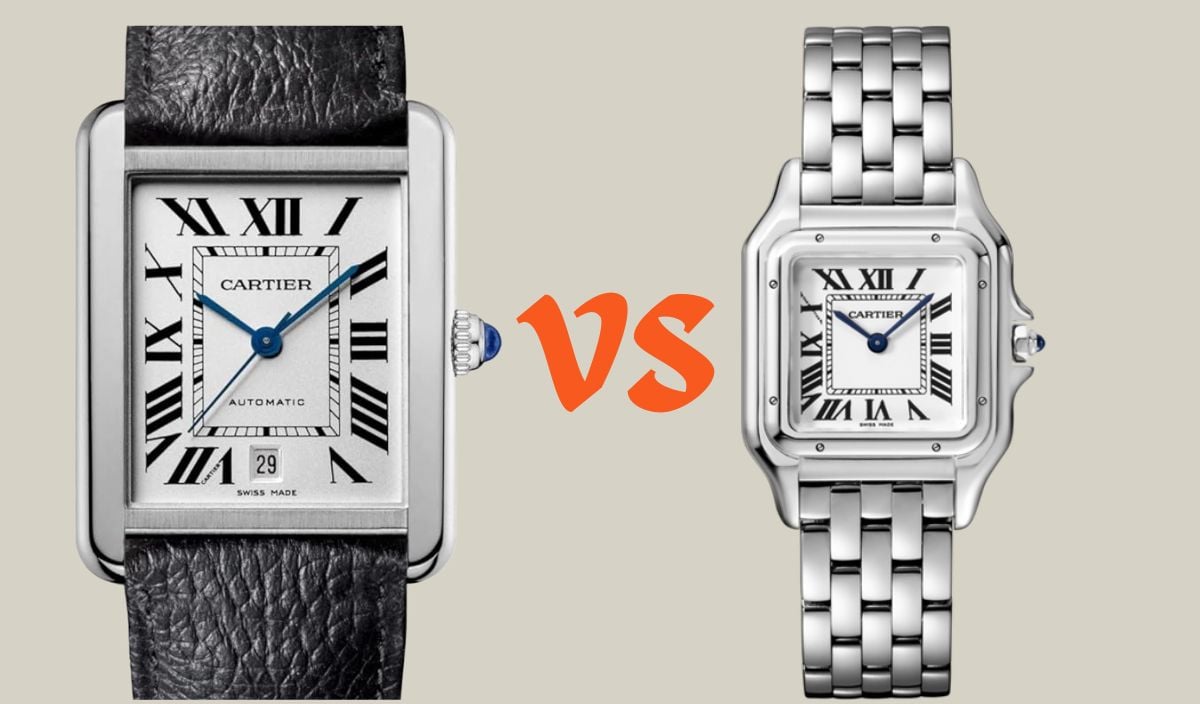
Both the Cartier Tank and the Panthere fully embody the timeless elegance and flawless craftsmanship that Cartier has emulated throughout their lifespan. Both watches are highly coveted and are widely considered two of the most renowned luxury pieces available on the market.

Their sleek, aesthetically focused designs leave little to be desired, but they differ in how they appeal to the market.

bot-only-imagebot-only-image

While both derive from the same watchmaking principles, there are unique features that set them apart from the other and will make one stand out depending on what the consumer desires. Today, we will explore how these two masterpieces differ and what makes them so coveted while giving you a clear picture so you can more accurately decide which one suits you best. 

The Cartier Tank

The Cartier Tank

The Cartier Tank can trace its roots back to 1919 when it first released its six tanks to the public. Throughout the 20s, Cartier released many different variations of the iconic design—the ultra-thin, the curved Cintree, the Chinoise, the Louis, and the Guichets.

Because of the renowned luxury of the brand, at the time, Cartier was leading the world when it came to jewelry and watches. It was quite popular among celebrities to wear the Tank, which naturally reinforced their reputation as one of the most coveted brands in the United States. 

Over the years, many more Tank variations were released, including the Basculante in 1932, the Asymetrique in 1936, the Tank Americaine in 1989, the Tank Francaise in 1996, the Divan in 2002, and the Anglaise in 2012. As of right now, the Tank models include The Must, the Americaine, the Asymetrique, the Chinoise, the Cintree, the Francaise, the Louis, and the MC. Each variant takes a new shape, incorporating different designs or materials while staying true to the primary focus of the Tank aesthetic. 

The Must 

The Tank Must stays extremely faithful to the original Tank design. The stainless steel finishing and silver dial give it that sleek, subtle feel, and the blue, sword-shaped hour and minute hands sit alone in the center of the piece.

Like all Cartier pieces, the Roman numerals are big and bold, signifying their trademark design and breathing a distinguished level of quality into the dial that captures the feel of an authentic Cartier.

The Must’s crown has an embedded design with a sapphire cabochon, and you can either purchase a calfskin leather strap or a traditional stainless steel bracelet—both compliment the case magnificently. The Must comes in three sizes: Small (29.5mm), large (33.7mm), and extra large (41mm). The extra large Must’s feature an automatic movement, while the smaller models have quartz movement. 

The Louis 

The Tank Louis offers a little bit more variety within the range. Again, like the Must, there are three different sizes—Small, large, and extra large—but one of the major differences is that nearly every Louis has hand-wound movement, with the small exception of the entry-level small and large sizes, which have quartz movement.

The two quartz Louis models are the only ones that feature yellow gold on the cases. The rest of the collection uses rose gold or white gold as the primary case material.

As Cartier has a reputation for making fine leather goods, the alligator straps that the Louis can come in are of the highest quality, but you can also opt for rose gold or metal bracelets. Unlike the Must’s, none of the Louis models feature a secondhand or a date. 

The Americaine

The Americaine updates the original Tank design, making the piece slimmer, thinner, and curvier. The Tank Americaine comes in pink gold and steel with the option of adding additional diamonds or a bracelet.

The Americaine comes in three different sizes: the large (44.4mm), the small (35mm), and the mini (28mm). Again, like the Louis and the Must, the smaller sizes come with quartz movement, while the large is automatic.

Changes to the case and sides make the model slimmer, which is Americaine’s primary selling point. This particular version of the tank is arguably the most luxurious. I tend to enjoy slimmer watches more, and when the cases are curvier, they give off a more elegant appearance. 

The Asymetrique 

The original Tank Asymetrique was introduced to revolutionize Cartier’s legibility for their watches. In order to maximize simplicity, the numerals reside horizontally across the dial to prevent wearers from straining their necks. The new Asymetriques come in platinum, pink gold, or yellow gold with the Cartier cabochon-set winding crown.

This is a very classical watch, succeeding in a way that you wouldn’t expect. It’s playful and unique, but it is also very detailed, and it seeks to perfect the odd nature Cartier is emulating in a way that is highly respectable. As for the measurements, the Asymetrique measures 47.15mm x 26.2mm and is 6.38mm thick.

The Caliber 1917 MC ticks at 21,600 vph, and it has a power reserve of 38 hours. Probably one of the most unique pieces I’ve seen from any brand, this watch certainly does deliver, but because of its niche taste, it’s easy to imagine someone going another direction when picking out a Cartier. Still, you have to respect the vision they had when designing every curve. It’s pieces like this that make you respect the creative minds behind these masterpieces. 

The Chinoise

The original Tank Chinoise had a square case with revolutionary brancards that formed on the side of the case and extended beyond to also form the lugs. At the time, this kind of innovation was unheard of, making the Chinoise game-changing in its own right.

Nowadays, the Chinoise doesn’t get as much attention as the other tank variants, but after a long dry spell, the Cartier Prive collection is the new host of Chinoise models measuring 39.5mm with a hand-wound Caliber 430 MC.

The Chinoise can come in yellow gold, rose gold, and platinum. The popular consensus is that the Prive Chinoise is much lighter than the original version, faring far better on your wrist, offering more comfort while also improving upon the aesthetic. 

The Cintree 

The Tank Cintree is one of the most desirable vintage Tanks available today. From its materials to its very shape, this piece is drenched in elegance. The case measures 46.3mm x 23mm, twice as long as it is wide, with a subtle arch that’s meant to communicate how thin the body is.

The case has a linear brushed finish, which blends with the curves to make it all feel authentic. The dial has simple Arabic numerals that have been elongated to fit the slim and curvy build with tiny hands that silently do their part, stealing no attention from the rest of the piece. The Caliber 8971 MC that resides inside ticks at 21,600 vph with a power reserve of 38 hours. 

The Francaise

The Francaise is a unisex design that has become a staple in pop culture. In the 2000s, it became quite a popular choice for young girls seeking to enter the world of luxury watches.

Of course, this partially had to do with the wave of ’90s nostalgia that the Francaise provokes. There’s something about it that tugs at the heartstrings of all who remember the golden days of this piece.

As for the aesthetic, it’s one of Cartier’s most iconic designs. With bruised satin finishing on the bracelet, newer models of this piece tone down the bright reflection of the gold, giving it a more subtle flare. It measures three sizes, small, medium, and large, now featuring a champagne dial with a sunray finish.

The small and large feature quartz movements, while the large is automatic. There is a gold and stainless steel version, but I would have to wholeheartedly recommend the gold due to the fact that it is impeccably finished, and the stainless steel version leaves a little to be desired. 

The MC 

The last Tank variant that we will be looking at is none other than the Tank MC. The MC gives the classic style of the tank a sportier feel. It’s a fairly large watch, measuring 44mm in diameter and 9.5mm thick; it offers a far heavier presence on the wrist, one that is welcome and not overpowering.

The most notable feature of the tank is the thicker side flanks. They are more square than usual and have a curved top that appears to wrap around the wrist. There is a stainless steel version as well as an 18K rose gold variant, both finished to perfection and complementing their respective aesthetics.

The classic silver dial is paired with blue steel hands to match the body. Overall, the watch appears very masculine, which will attract the right crowd. Another thing that sets the MC apart is its in-house movement. MC stands for “Manufacture Cartier” and refers to the in-house Caliber 1904 MC’s automatic movement that powers the piece. It operates at 4 Hz, offering a 48-hour power reserve. 

The Cartier Panthere

The Cartier Panthere

About a month ago, I did a deep dive into the Cartier Panthere, studying the rich history of the piece and exploring the different sizes and shapes it has taken over the years. If you are in the market to buy one and are curious about sizing, by all means, check it out.

Because of this, our time with the Panthere will be somewhat brief, but don’t think I’m glossing over it today because there is nothing to talk about. The Panthere to this day, remains one of the most bedazzling pieces Cartier has ever produced. There’s a reason popular demand fueled its triumphant return.

It remains a fan favorite among Cartier brands. As the name suggests, this model is inspired and named after the panther, an animal known for its strength and elegance. While you will notice the Panthere doesn’t come in as many variations as the tank, the faithful design has gone through its fair share of refurbishes and improvements, demonstrating the care Cartier has for this particular piece.

The Panthere has a square case with rounded edges that are far more subtle than the parallel sidebars of the tank. Because of this, the Panthere appears smaller and more elegant, reinforcing a demure stature that is more appealing to women.

This is why many get confused and deem the Panthere as an exclusive woman’s watch. It’s not, but it is rare that you will see a man sporting the Panthere despite larger sizes being produced to appeal to a larger audience.

The Panthere indeed offers a more complicated design than the tank. When dealing with this kind of elegance, it’s often the more detailed pieces that stand out, and the Panthere oozes with a pristine level of class that puts into perspective just how much sheer talent was needed to design something like this.

The materials seem to be more extravagant, and the colors more bold, which could draw some fans closer while deterring others away. When comparing these two, many factors are involved, but, like always, most of it comes down to personal taste.

Which is the right for you?

When deciding which watch best suits your style, gender may come into play. Simply put, the tank is going to appeal to more men because it’s engineered for larger-sized wrists, and the Panthere will appeal to more women because of its slimmer stature. This is obviously extreme speculation as neither of these pieces are gender-locked, but in terms of proportion and sizing, these are the objective facts.

Subjectively, if you crave something elegant and pristine, the Panthere will tug on your ear much harder than the Tank, though as we’ve discussed, a few of the tank variants could scratch that itch as well, and if you want something bolder with more masculine features, the tank might be the way to go.

One thing I do recommend is to look at every version of the Tank and make sure you know what you prefer before looking at the Panthere. It has a wider variety because the tank line has been in production for much longer.

It also might be a more attractive pick for beginners who are looking to purchase their first Cartier because the smaller tanks come in quartz, and many Tanks are a tad bit cheaper than Panthere variants, but do with that as you will.

Both watches will be expensive because we are dealing with precious metals, but because the Panthere is more expensive, it has a slight edge over the tank regarding the quality of materials, so if you’re a stickler for the finer things, the Panthere is unarguably the best. 

Conclusion

Overall, both of these pieces continue to defy what can be done in watchmaking. Quality is an undeniable virtue that Cartier seeks to implement into every piece, and they have hit it out of the park, perfecting both of these watches over the years.

These pieces are not cheap by any means; that’s why my best advice, as always, is to do your own research. What works for someone else may not work for you, and while neither of these watches is objectively a “bad pick,” you don’t want to drop a fortune on something that you aren’t 100% satisfied with.

cartier panthere small vs medium

For a long time now, the Cartier Panthere has been widely considered more than just a timepiece but a little piece of luxury. It’s beloved by collectors, celebrities, and style enthusiasts, spotted on some of the world’s most famous wrists. For this reason, many will confidently argue it as one of those rare watches that deserves to forever live in the jewelry watches hall of fame.   

From afar, it’s instantly recognisable for its sleek square-shaped case, feline-inspired design and air of prestige. There’s no denying that the Panthere embodies everything Cartier stands for. But if you’re thinking about adding one to your collection, there’s one decision you’ll need to make first and that’s picking a size. 

bot-only-imagebot-only-image

You might think size is just about fit, but trust me, it goes way beyond that. The size can completely change how the watch looks and feels on your wrist, and to make things even more interesting, certain styles and finishes of the Cartier Panthere are exclusive to specific sizes. That means your choice isn’t just about preference; it can shape the entire buying experience. 

In this guide, we’ll break down the differences between the Cartier Panthere Small and Cartier Panthere Medium, so you can choose the one that fits your style and wrist.

The Cartier Panthere Collection 

Cartier Panthere Collection 

Cartier has no shortage of exceptional luxury watches. Many of you will likely be familiar with the Cartier Tank, a watch shaped like the tracks of a military tank, embodying timeless elegance and clean, geometric lines.

There’s also the famous Santos de Cartier, which holds the distinction of being one of the first wristwatches ever created, originally designed for aviator Alberto Santos-Dumont to provide practicality and sophistication in flight.

Joining these iconic collections is the Cartier Panthere collection, a line that exudes femininity and glamour, characterized by its sleek, jewelry-like design and a bracelet that flows as smoothly as liquid metal. 

With its origins in the glamorous 1980s and a celebrated revival in 2017, the Cartier Panthere collection has solidified its place as one of Cartier’s most enduring and iconic designs. From its unmistakable bracelet to its feline-inspired elegance, it’s a watch with a brilliant history and an equally brilliant range of variations in today’s line-up to choose from. 

A Quick History of the Cartier Panthere

 The history of the Cartier Panthere interestingly doesn’t start with the release of the watch. In fact, it began way before in 1914 when Louis Cartier commissioned artist George Barbier to create a piece called “Lady with a Panther” for a jewelry exhibition. That same year, the first ever panther motif appeared on a Cartier piece, a wristwatch adorned with onyx and diamonds in a panther-spotted pattern. 

From that moment on, the panther became a legendary symbol of the fine jewelry brand. Jeanne Toussaint, Cartier’s creative director at the time, further cemented the panther’s legacy by launching the “La Panthere,” a feline-inspired jewellery collection which featured everything from panther-shaped rings to intricate brooches.

The Panthere de Cartier watch, however, took a subtler approach. Named for its fluid, graceful bracelet that mimics the animal’s movement, the Panthere watch was designed to embody the panther’s spirit in form rather than imagery. 

When Cartier unveiled the Panthere watch in 1983, it was an instant hit. The design balanced sophistication and versatility, appealing to both men and women.

Available in various sizes, from the petite Mini to the bold Jumbo, the Cartier Panthere offered something for everyone. Its square case, reminiscent of Cartier’s earlier Santos design, was softened with rounded edges and paired with a five-link bracelet that gave it an undeniable jewelry-like quality. 

During the 1980s and 1990s, the Panthere became synonymous with luxury, gracing the wrists of celebrities like Madonna and Pierce Brosnan. Its quartz movement, cutting-edge at the time, kept the design sleek while ensuring practicality.

From all-gold versions to two-tone styles and diamond-set models, the Panthere was as much about individual expression as it was about timeless glamour. 

Design Characteristics of the Cartier Panthere 

  • A Square Case and Bezel: With eight small rivets, the bezel’s symmetry adds a subtle edge to the otherwise fluid design.
  • Roman Numerals and Blue Sword-Shaped Hands: The classic Cartier dial layout, with its secret signature hidden within the Roman numeral X, maintains tradition although there are several new dial variations that are now also available.
  • The Five-Link Bracelet: This ultra-flexible, silky bracelet is the heart of the Panthere collection, transforming it into a piece that seamlessly straddles the line between watch and jewelry.
  • Quartz Movement: The slim quartz mechanism keeps the watch lightweight and functional, allowing the bracelet to remain the centerpiece.

Cartier Panthere Medium vs Small – The Right Size for You

Cartier Panthere Medium vs Small

When it comes to the Cartier Panthere collection, there is a wealth of variety to explore. Cartier offers several sizes within this iconic collection, catering to different preferences and styles.

While the focus of this comparison is the Small and Medium models, it’s worth noting that the collection also includes a Mini (or Very Small) model and a Large model, each with unique characteristics. 

The Cartier Panthere Mini is the most petite of the collection, measuring to just 25 mm by 20 mm with a thickness of 6 mm.

This model currently comes in a single, highly luxurious variation inclusive of a quartz movement and a breathtaking rhodium-finished white gold case covered entirely in brilliant-cut diamonds.

Its crown is also adorned with a brilliant-cut diamond, and the silvered dial features blued-steel sword-shaped hands under sapphire crystal. This Mini model is truly a jewelry piece as much as it is a watch, offering an unmatched elegance in its diminutive size. 

On the other end of the spectrum is the Cartier Panthere Large, available in three variations: full stainless steel, two-tone stainless steel and 18kt gold, and full 18kt gold. The Large model measures 31 mm by 42 mm, with a thickness of 6.71 mm. It provides a bold statement on the wrist while retaining the refined sophistication Cartier is known for.

Between these extremes, the Small and Medium Panthere models stand out for their versatility and broader range of options. Here’s all you need to know about these two popular sizes. 

The Cartier Panthere Small 

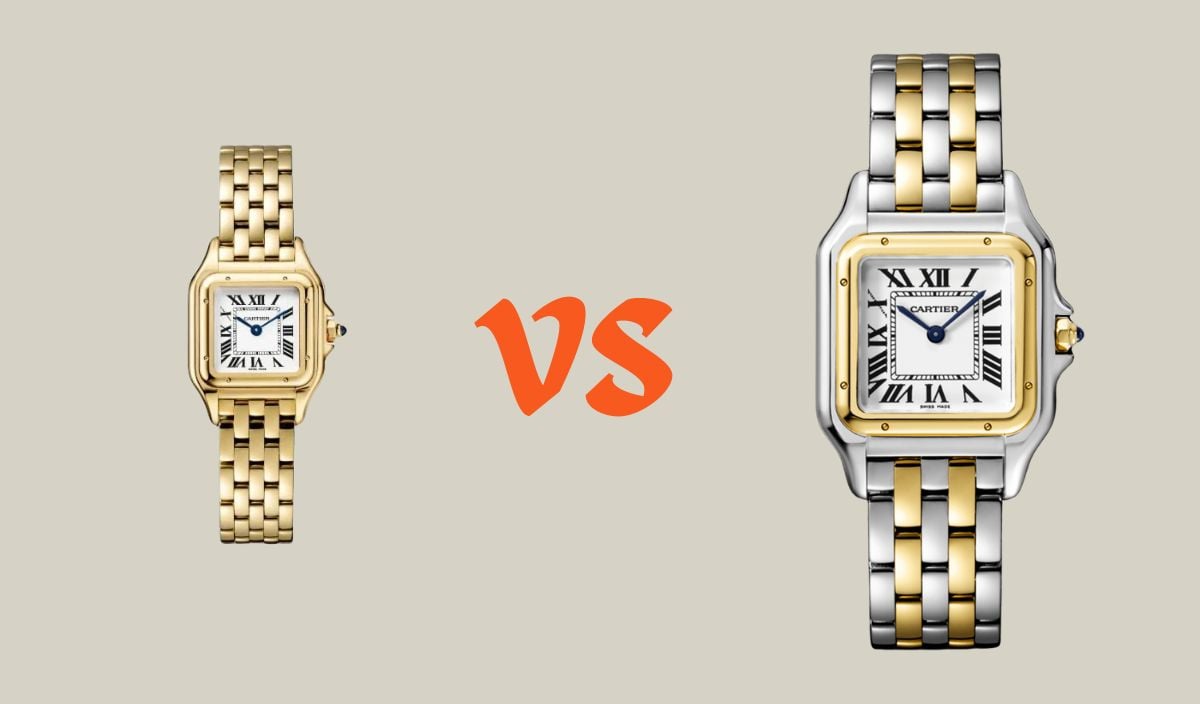
The Small model measures 30.3 mm by 22 mm, with a thickness of 6.3 mm. It strikes a perfect balance between the delicacy of the Mini and the presence of the Medium or Large models. The Small Panthere offers more options compared to the Mini and Large collections, making it a favourite among those looking for variety. 

Currently, there are six references in the Small size. These include two two-toned gold and steel variations with silvered dials decorated with black Roman numerals and the traditional blued-steel hands. Additionally, there are four stunning solid gold models.

These gold variants can be ordered with a black lacquer dial, a golden grained dial, a rose gold-colored grained dial and a special brown dial. The latter is particularly beautiful, utilizing graduated shades of gold and golden brown to form a diagonal pattern in the center. 

The first three gold models feature diamond-set bezels and the iconic diamond-tipped crown. The fourth, with its brown dial, features a crown set with a blue sapphire and a simple, unadorned bezel.

This latter option is particularly unique within the Panthere collection, offering a more understated elegance and a distinctive look. As one of my personal favourites, it’s a reference that could easily sway a decision for those torn between sizes. 

The Cartier Panthere Medium 

The Medium Panthere comes in a little larger at 27 mm by 37 mm with a thickness of 6 mm, making it more prominent and a little more of a statement piece than the Small model. It also offers the most extensive range of variations within the entire Cartier Panthere collection, providing options to suit almost every taste. 

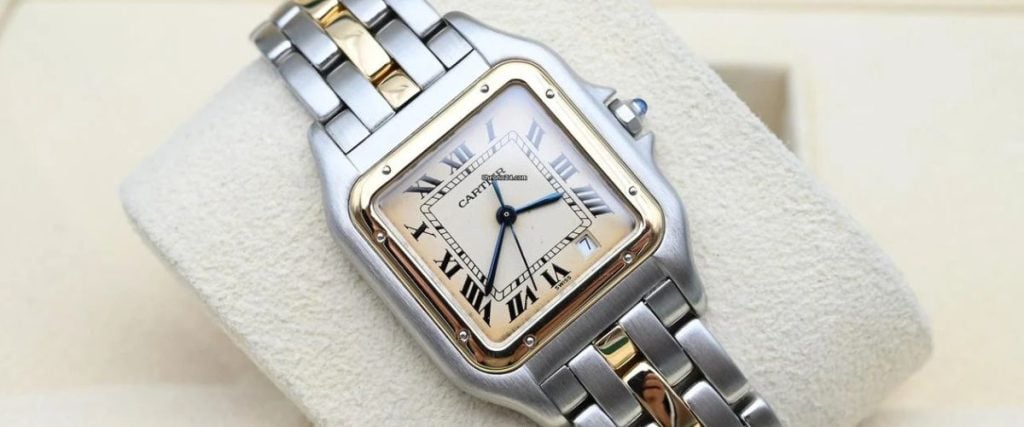
Currently, the Cartier Panthere Medium comes in steel, two-toned gold, and full gold cases. These are complemented by a variety of dial and bezel combinations, including silvered dials with black Roman numerals and blued hands, black lacquer dials with gold hands, plain bezels and diamond-set bezels and diamond-set dials and non-diamond-set dials.

There’s also one model entirely encrusted with diamonds, featuring 415 brilliant-cut diamonds across the dial, bezel, crown, case, and bracelet to total a whopping 7.80 carats. 

This impressive variety ensures that the Medium size can cater to those seeking subtle sophistication as well as full-on opulence. 

Which Cartier Panthere Is Right for You? 

When deciding between the Cartier Panthere Small and Panthere Medium models, several factors come into play, including wrist size, personal style, and intended use. 

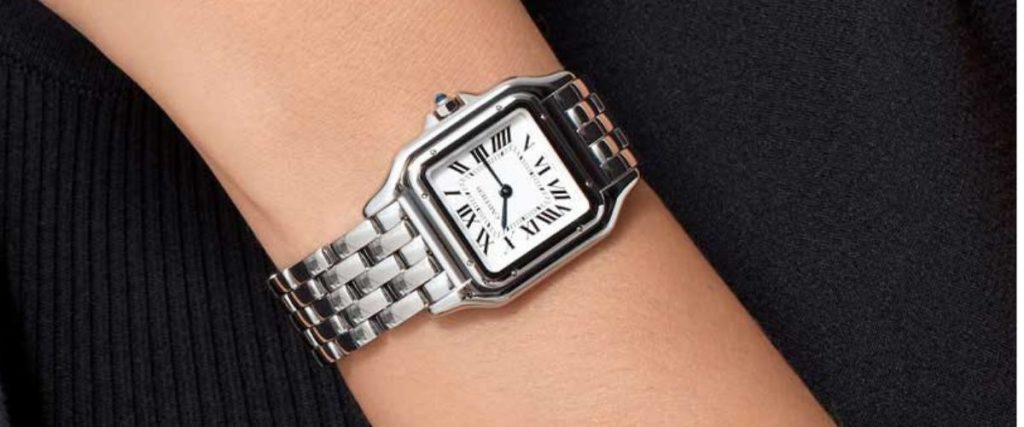
For those with petite wrists, the Cartier Panthere Small may be the ideal choice. Its dimensions ensure it sits comfortably on smaller wrists while maintaining a chic and elegant appearance.

The variety of designs, especially the solid gold options with unique dials, provide ample opportunities to find a model that matches your personality. 

Those with larger wrists or those wanting something a little more versatile, the Cartier  Panthere Medium will likely be the more tempting of the two. It offers a slightly larger presence that’s perfect for making a statement without feeling oversized.

Plus, it’s extensive range of variations allows you to choose a model that transitions seamlessly from day to night, whether you prefer understated steel or the glamour of diamonds. 

For lovers of luxurious details, you can’t go wrong with either. Both sizes offer exquisite craftsmanship, but if you’re drawn to more unique dial designs, such as the diagonal gold-and-brown pattern in the Small model, that might tip the scales in its favor. Conversely, if you’re looking for sheer extravagance, the fully diamond-encrusted Medium model is unparalleled.

Conclusion 

Ultimately, the choice between the Cartier Panthere Small and Panthere Medium comes down to personal preference and lifestyle. If you have a petite wrist or prefer a watch that feels daintier, the Small model’s refined elegance and unique dial designs, such as the stunning diagonal gold-and-brown configuration, make it an excellent choice. Its slightly smaller presence exudes sophistication without overwhelming the wrist, making it perfect for those seeking understated glamour.

On the other hand, the Medium size offers unmatched versatility and variety compared to the other sizes, with options ranging from sleek steel designs to dazzling diamond-encrusted models.

If you’re after a watch that can transition effortlessly from casual chic to full-on evening luxury, the Medium size is hard to beat. Its larger case also makes a stronger style statement, ideal for those who love a bolder accessory or just have slightly larger wrists.

No matter which size you decide on, we have no doubt you’ll love the Cartier Panthere. It’s a masterpiece of design and craftsmanship and one of those rare watches that continually turns heads.

From the fluid bracelet to the exquisite dial options, every detail has been thoughtfully designed to catch the eye and spark admiration. So which Cartier Panthere will you choose?

To Top