News Archives - Page 41 of 46 - Exquisite Timepieces
iconHome Blog / News / Page 41

Category: News

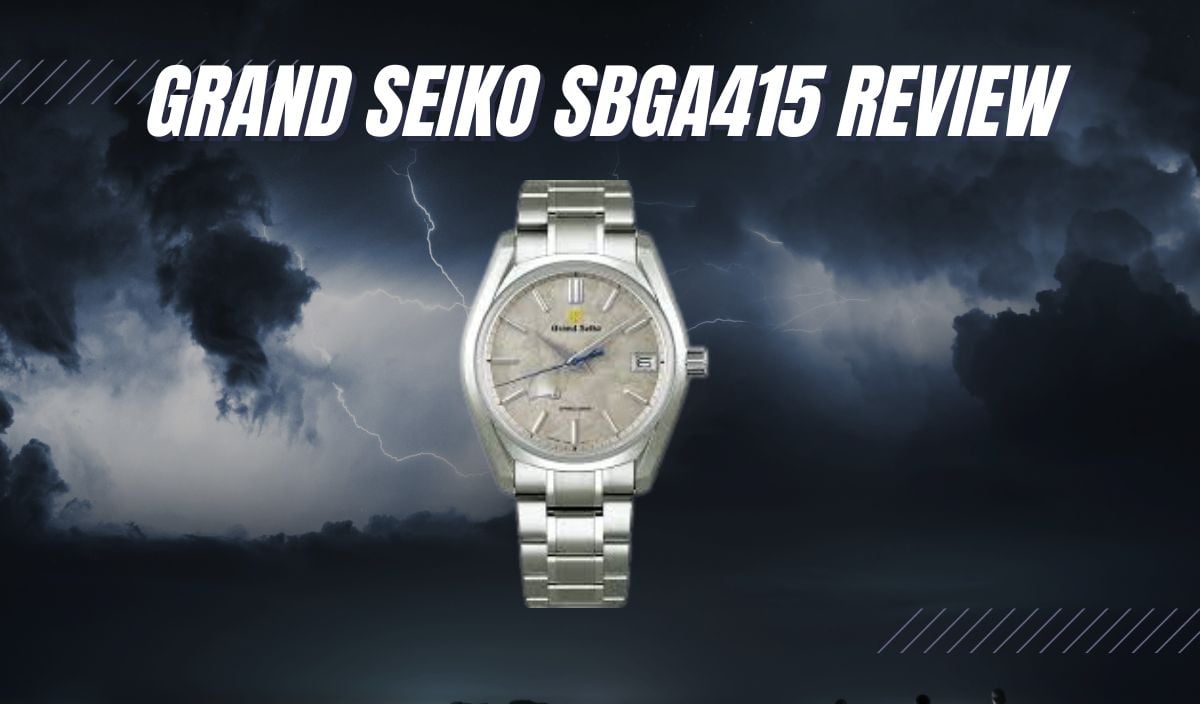
Grand Seiko SBGA415 Review

I typically try to avoid words like “iconic” and “legendary” when reviewing watches because I think they’re often overused. But, sometimes, there are models that are deserving of those labels. 

For me, The Grand Seiko Snowflake is one of the same. It’s one of those watches that instantly sparks conversation among enthusiasts, coveted for its intricate textured dial that captures the beauty of fresh snow. Myself included, the GS Snowflake is a holy grail watch for many collectors, but as is often the case with such a sought-after piece, getting your hands on one can be quite the challenge. 

bot-only-imagebot-only-image

So when Grand Seiko releases a watch that echoes the essence of the Snowflake, it’s no surprise so many of us sit up and take notice. One such watch is the Grand Seiko Heritage “Winter” or “Taisetsu” SBGA415. Like the Snowflake, it’s a watch that draws inspiration from the snow and frost, in particular the snows of Taisetsu, the twenty-first of Japan’s twenty-four sekki, or seasons. It’s a design that brings a familiar sense of awe, nodding to the Snowflake and yet having a unique expression of its own.

History of the Grand Seiko Snowflake
When I think of the Grand Seiko Snowflake, I typically think of the popular SBGA011 or the SBGA211 references that were launched in 2005 and 2017, respectively. But, fun fact: the Snowflake dial was introduced many years before that. 

The design dates back to the 1970s when Grand Seiko’s modern watchmakers discovered a sample dial with a texture reminiscent of freshly fallen snow. The discovery sparked the idea to create a dial that could capture the serene beauty of Japan’s winter landscapes. 

Then in 2005, the first Grand Seiko Snowflake, reference SBGA011, was born. This remains a must-have model for many collectors as it was the very first to feature the iconic dial texture. It was housed in a 41mm titanium case and powered by one of the brand’s signature Spring Drive movements (sounding familiar?). It was exclusive to Japan for a number of years before later being introduced to the global market in 2010. 

From that moment, the Grand Seiko Snowflake has become one of – if not the – most coveted models by the Japanese watchmaker. Several models have joined the “Snowflake” family, including the SBGA407, affectionately known as the “Skyflake,” which brought a pale blue dial into the mix to evoke the clear winter sky, and SBGA413, the “Cherry Blossom” Snowflake. This model introduced a soft pink dial that captures the color of cherry blossoms with the Snowflake texture.

Now don’t get me wrong, the Grand Seiko Heritage “Taisetsu” SBGA415 watch I’m reviewing today doesn’t fall into the Snowflake family exactly, but it’s a watch that cleverly captures the same essence, with a design that beautifully reflects the spirit of winter and the meticulous craftsmanship that the Snowflake is known for. 

A 40mm Titanium Case 

The Grand Seiko Heritage “Taisetsu” SBGA415 watch is part of the company’s popular Seasons collection and was originally released in 2019 exclusively to the US market but is now available to the wider global market. 

Like the others in this collection, it measures to 40mm wide, 12.8mm tall, and has a lug-to-lug width of 46.5mm. They’re relatively standard dimensions for a sports watch and allow the model to suit almost all wrist sizes. 

As for the case’s shape, the Grand Seiko Heritage “Taisetsu” SBGA415 watch is inspired by the 62GS from 1967. The 62GS wasn’t just Grand Seiko’s first automatic watch, it was also, along with the 44GS released that same year, the model that introduced the design language we now know as the Grand Seiko Style, which continues to influence all their watches today. 

This modern re-interpretation stays true to its roots, featuring those signature sharp edges and flawless, distortion-free surfaces that only Zaratsu polishing can achieve, along with a wide dial opening made possible by its bezel-free design. 

I always find the benefits of the 62GS-inspired case are most apparent when you strap it onto the wrist. It has this slightly curved architecture that allows it to sit beautifully against the skin, and while I see this model as a sports watch largely down to its full metal design, it could also easily be placed within the dress watch genre for its low profile that would sit beneath a shirt cuff nicely.


Also working in the Grand Seiko Heritage “Taisetsu” SBGA415 watch’s favor is the grade 5 titanium case, a material that is super lightweight and durable. The finishing of the metal is exceptional. It has this wonderful bevel along the case side that is polished using the brand’s famous Zaratsu technique. 

This part contrasts nicely with the other satin-brushed surfaces. Details like this help the otherwise sporty watch gain some elegant, dressy appeal. Angular faceted lugs also help with wearability, conforming nicely to the wrist.

On top, the Grand Seiko Heritage “Taisetsu” SBGA415 watch displays domed sapphire crystal glass, which, since it falls to the very edges of the case with there being little to no bezel in sight, creates this vintage aesthetic that feels like there’s almost no crystal at all. 

The glass is treated to an anti-reflective coating for added legibility on the front end and is left bare on the case back, where it exposes the Spring Drive movement housed inside. The only other element of the case left to note is the crown, which is recessed into the case with knurled detailing and screw-in functionality, allowing for a 100-meter water resistance.

Dial

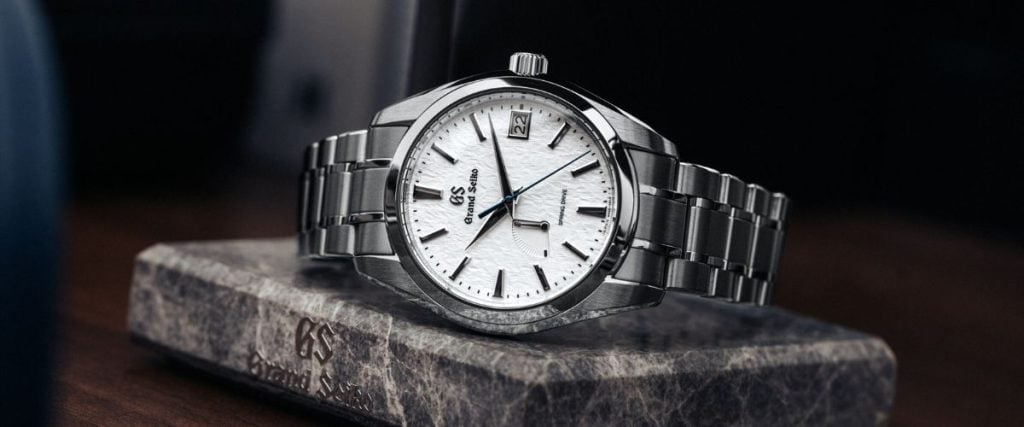
Now, we move on to the real centerpiece of the Grand Seiko Heritage “Taisetsu” SBGA415 watch: the dial. As mentioned in the introduction, this particular display is inspired by the snow of Taisetsu, the twenty-first of Japan’s twenty-four sekki. It has a much darker hue compared to the pure powder white color of some of the first Snowflake watches or the Spring variation of this Seasons model. 

The color is supposed to mimic the color of pine trees encrusted with snow, and that certainly feels like the case, with the off-white hue having this almost gray or even slightly greenish tint in certain lights. 

Honestly, I think this is one of my favorite Grand Seiko dials available under $10,000. It’s always the case that the dial you see in press photos looks different from what arrives with you in person, but this watch takes that sentiment one step further. 

The awe-inspiring texture of the dial cannot be appreciated unless it’s in front of you, in person. It has these unique alternating brushed strokes that almost look like the strokes of a paintbrush on a canvas. It’s a finish that offers a truly beautiful and one-of-a-kind look, and still, one that, as Grand Seiko promises, is reminiscent of freshly fallen snow. 

It’s also a dial that changes dramatically depending on the light. In lower lighting conditions, the texture of the dial becomes almost invisible, and the dial appears darker and more moody. 

But then, in direct light, the texture comes to life, and the light bounces off the different finishes, including the brushed and brightly polished hardware used for the hands and markers. The hour markers are faceted with polished surfaces, while the dauphine-shaped hands are kept sharp and brushed. The seconds hand adds a nice touch of color to the design in heated blue, while the GS logo at 12 o’clock is presented in warm gold.  

You’ve also got added complications like the date window at 3 o’clock and the power reserve indicator at 7 o’clock. The latter is nicely done with its own recessed aperture and ribbed finishing to mark the power reserve’s scale.

Movement

This is a Grand Seiko, after all, so you can expect just as much magic under the hood as you find on the outside. The Grand Seiko Heritage “Taisetsu” SBGA415 is powered by the Caliber 9R65 Spring Drive movement, a movement that blends the best of both mechanical and quartz technologies. 

What makes the Spring Drive so special is its ability to offer the precision of quartz while maintaining the soul and craftsmanship of a mechanical watch. The result is a movement that’s both incredibly accurate and visually stunning in its operation. 

One of the standout features of the Spring Drive movement is the perfectly smooth sweep of the seconds hand. It has this elegant, continuous glide that is enchanting to watch on the wrist. Another perk is the Grand Seiko Spring Drive’s remarkable accuracy, guaranteed at +/- 15 seconds per month or +/- 1 second per day. 

That’s better than any chronometer-certified mechanical watch. Plus, with an impressive 72-hour or 3-day power reserve, you can take off the SBGA415 watch on Friday and confidently put it back on Monday, knowing it will still be keeping near-perfect time. 

And when you’re not wearing it, the exhibition case back lets you admire the movement at work. While the Grand Seiko emblem partially obstructs the view, you can still enjoy the hollowed-out rotor, the Geneva-inspired stripes across the bridges and rotor, and the mesmerizing glide wheel in action. It’s a subtle reminder of the craftsmanship and innovation packed into this watch. 

Straps 

The bracelet of the Grand Seiko Heritage “Taisetsu” SBGA415 watch comes in matching titanium, with most surfaces brushed and the outer section of the central links polished. Turning the model upside down, you’ll see the typical Grand Seiko folding buckle with a twin trigger release system and the GS logo presented in relief.

I usually find that it’s the bracelet that lets Grand Seiko down when I review their watches, just ever so slightly. I’m hoping they’ll one day upgrade their bracelets to compete with other luxury offerings. For example, this bracelet has a pin system rather than screw-in links, plus there’s no micro adjustment. 

There are two half-links, though, so you can obtain a relatively close fit if needed. This bracelet also has an odd lug width of 21mm, which will make changing straps a little complicated since you’ll usually find 20mm or 22mm straps on the market.  

But don’t get me wrong, the bracelet does look great, especially in how the links meet up with the lugs and case, forming this almost seamless silhouette of lightweight, beautifully finished titanium.

On-Wrist Experience

As someone with wrists just under six inches, I’m always a little apprehensive when a watch measures more than 39mm wide because it’s then that they start to feel a little too oversized for my frame. 

But that wasn’t the case with the Grand Seiko Heritage “Taisetsu” SBGA415 watch at all. I’d say the proposed dimensions wear less than what they suggest, and they’d happily suit wrists as small as mine and any up to seven and a half inches. 

The lightness of the titanium case certainly helps; it feels almost weightless and yet not flimsy in the slightest. I understand not everyone loves titanium because some like to “feel” their watch’s weight, so if that’s you, you might be better off checking out one of the steel variations in the Seasons collection. That said, it’s definitely worth trying for yourself when you visit your next authorized Grand Seiko retailer, as you might surprise yourself. 

As for when I’d wear this, this is one of those watches that perfectly straddles the line between a sports watch and a dress watch- which is the perfect recipe for a daily beater. It’s going to effortlessly suit all occasions, with its durable case and 100-meter water resistance, and it happily survives daily wear. Its beautiful case and dial finishing will attract a fair bit of attention at formal events. 

Price & Availability

Brand new at authorized retailers like Exquisite Timepieces, the Grand Seiko Heritage “Taisetsu” SBGA415 watch retails for $6,600.  Honestly, I think this is a fabulous price for a watch of this caliber. 

It’s not often you’ll find a titanium mechanical watch with a price tag this low, so to find one with an in-house Spring Drive movement, a 72-hour power reserve, a full titanium bracelet, and, of course, an immaculate dial is good going. You might also find it on the second-hand market for around $4,000 and $5,000. Just be sure you’re ordering from an authorized retailer – we’d hate for you to lose out. 

The Grand Seiko Heritage “Taisetsu” SBGA415 watch isn’t a limited edition and remains a permanent fixture in the Japanese watchmaker’s collection. It has been on the market for over three years, though, so whether that will stay the case for much longer is hard to say.

Conclusion 

In conclusion, the Grand Seiko Heritage “Taisetsu” SBGA415 has quickly become one of my favorite Grand Seiko watches I’ve had the pleasure of reviewing in recent years. The case design, while not overly flashy, really won me over with its impeccable finishing and thoughtful details. The curved profile and sloped lugs make this 40mm case fit comfortably on even smaller wrists like mine, which is a huge plus.

But let’s be honest—the real star of the show here is that dial. I’m not sure I can properly put into words just how stunning it is. The unique, erratic texture and that grayish-white hue are simply breathtaking. 

It’s one of those things you have to see in person to fully appreciate. Is this technically a Grand Seiko Snowflake? No. But is it just as beautiful? Absolutely. I hate to admit it, but I think another Grand Seiko just made it onto my wish list. Pray for my bank account, folks!
Omega railmaster review

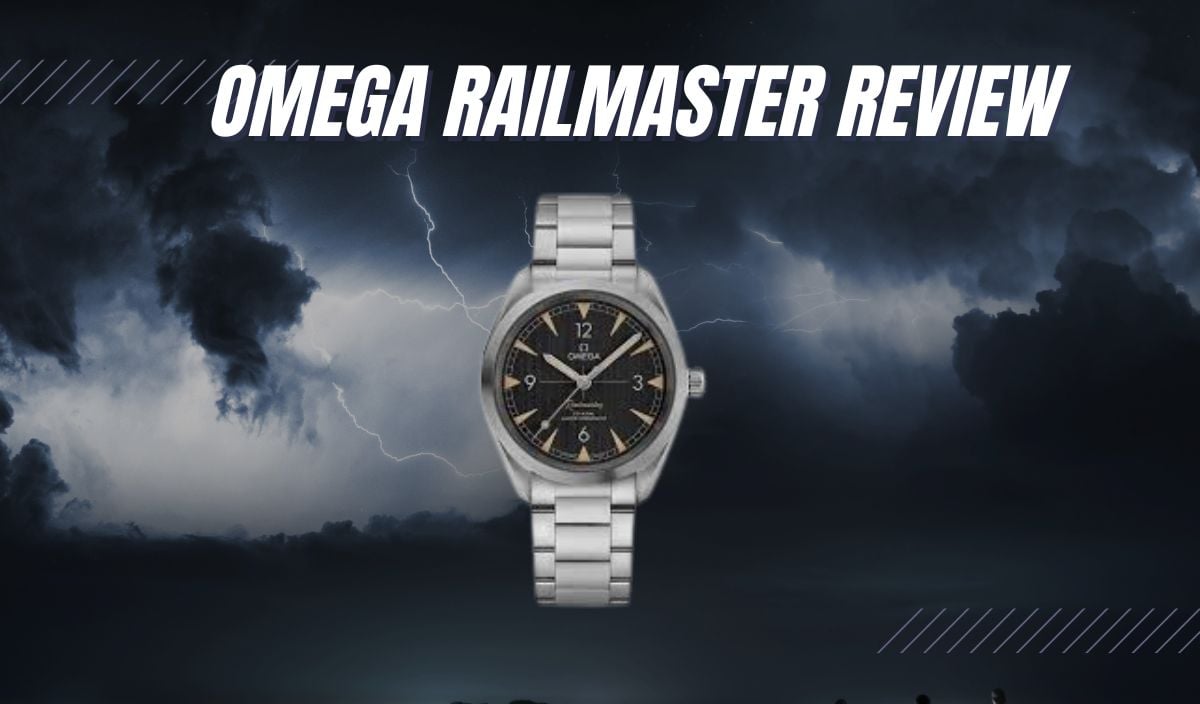
Omega Railmaster Review – An Underrated Everyday Option

Michael Brown

October 4, 2024

In the wide, wild world of hype, steady performers who show up, clock in, get the job done, then wake up and do it all over again are often overlooked.

If watches had feelings and could talk, the Omega Railmaster would probably sigh and say, “Yeah, tell me something I didn’t already know.”

bot-only-imagebot-only-image

The Omega Railmaster has been on the scene since 1957, reliably tracking time and looking good while doing it. Yet it’s gained so little fanfare that many watch enthusiasts aren’t even aware it exists.

Why? This review will aim to answer that question and demonstrate that “the little watch that could”, while overshadowed by its sexier Speedmaster and Seamaster siblings, still remains a prime option for those seeking a watch with both rich history and modern watchmaking technology.

About the Omega Railmaster

The Railmaster, technically the “Omega Seamaster Railmaster”, is an industrial tool watch with a stainless steel case and strong anti-magnetic protection, making it especially suitable for railway workers (hence the name), scientists, healthcare workers, and others who might be exposed to strong magnetic fields on the job which might disrupt the performance of a typical mechanical watch.

The Railmaster evolved over the years into contemporary references with enhanced anti-magnetic shielding, appealing modern interpretation of vintage design cues, and the powerful and precise timing of a METAS-certified Co-Axial Master Chronometer movement.

History of Omega Railmaster Watches

The Railmaster was born in 1957, the “middle child” of the “Master” triplets that included the iconic Speedmaster and Seamaster 300. Sometimes referred to as the “Holy Trinity” (as if the watch world needed yet another to confuse matters), the broad-arrow hour handed trio are pictured in early print ads with the Railmaster sandwiched between its siblings; ironic, considering the difficulty it would face competing for elbow room with watches that would end up on the wrists of James Bond and Apollo astronauts.

In the heyday of the mid-20th century “Atomic Age”, when the promise of a hover car in every garage and a jetpack on every back seemed close at hand, a robust 38mm diameter stainless steel outer case with a soft iron inner core (essentially, a “Faraday cage”) protecting the movement against up to 1,000 gauss of magnetism probably seemed like a must-have feature for the “watch of the future”. It was also a means to compete with the Rolex Milgauss and IWC Ingenieur, which provided similar safeguarding.

But by 1963, the Seamaster and Speedmaster were soaring in popularity, and the Railmaster had failed to capture the hearts and imaginations of the public, so Omega discontinued it. Today, the relatively rare CK2914 references from that six-year period are highly sought after in the vintage watch market.

In 2003, Omega reintroduced the Railmaster and moved the broad arrow to the minutes hand, and added a sapphire display caseback to showcase George Daniel’s co-axial escapement movement the brand started using in 1999. In 2008, Omega released the ginormous 49.2mm XXL reference, but their seemingly disjointed attempts to revitalize the Railmaster ultimately stalled, and the model was discontinued for a second time in 2012.

In 2017, Omega released limited edition Railmasters, which were part of a 60th anniversary celebration of the 1957 “Masters” models, along with several Seamaster Heritage model Railmaster references characterized by a mix of vintage and modern styling elements. All 2017 novelties included improved 15,000 gauss anti-magnetic protection and a METAS-certified Co-Axial Master Chronometer movement.

Omega Railmaster: In-Depth Review

Let’s look at the exterior and under the hood of the Railmaster and gain further appreciation for a traditionally underrated but extraordinary watch.

Case Size and Material

Both the 60th anniversary limited Railmasters and ongoing Seamaster Heritage model references have improved stainless steel cases with screw-down crowns that eliminate the need for an inner core and provide an amazing 15,000 gauss of anti-magnetic protection and a very respectable 150 meters/500 feet of water resistance.

The 1957 references have a 38mm diameter in keeping with the original CK2914, a thickness of 12.7mm, a lug-to-lug width of 48mm, and a lug width of 19mm. The Seamaster Heritage Railmaster references are 40mm in diameter and have a thickness of 12.7mm, a lug-to-lug width of 47mm, and a lug width of 20mm, which makes them quintessential “strap monsters”. Both diameters fit essentially true to size and are suitable for most wrists.

The cases have a round shape with similar design elements such as smooth integrated bezels, the familiar Omega twisted lugs, anti-reflective sapphire crystals, and solid casebacks with the “NAIAD LOCK” feature that ensures the engraved Omega hippocampus and print are vertically aligned.

There are some aesthetic differences between the various models in terms of polished versus brushed finishing, caseback designs, and crown shape that I’ll cover in later sections of the review.

Dials

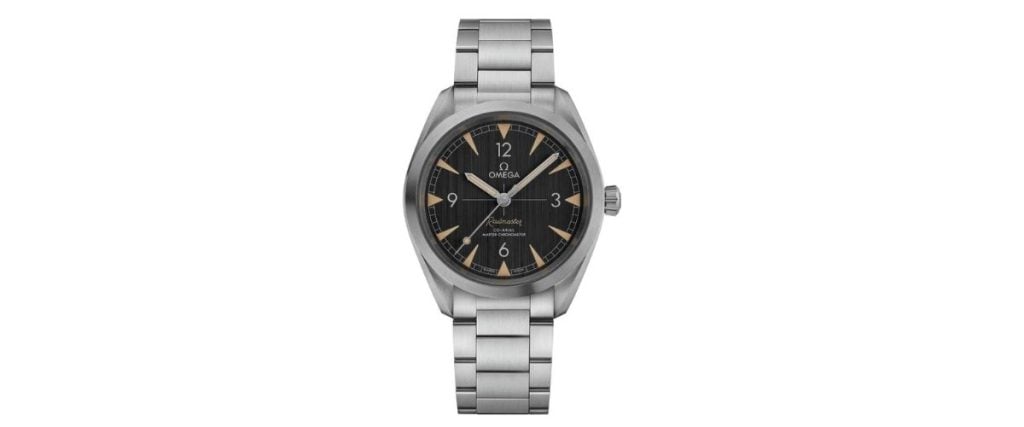
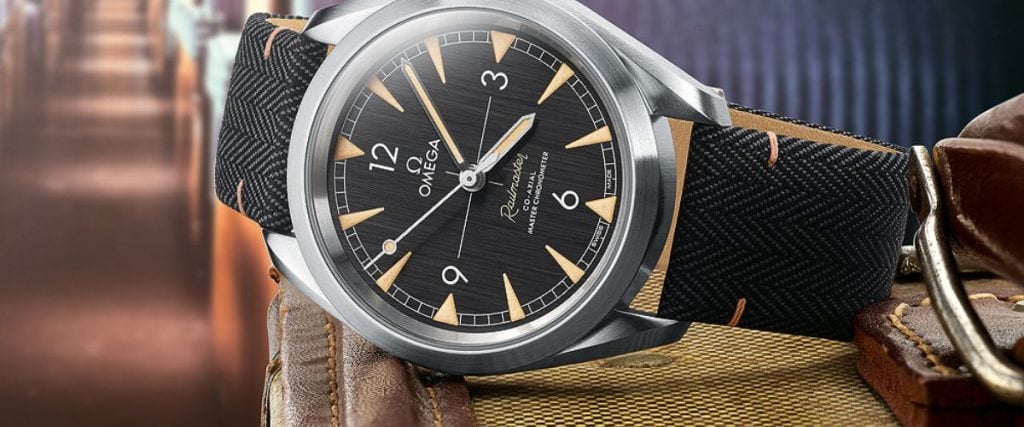
The limited edition Railmaster references exude a 1957 vintage vibe with tropical black dials and white 3,6,9,12 positioned Arabic numerals and recessed, triangular hour indices filled with SuperLuminova the color of faux patina or “old radium” which glows green in the dark. 

The handset includes a lumed broad arrow hour hand and dagger minute hand with an un-lumed needle seconds hand. There are slight differences in dial print between the two throwback references I’ll discuss in a bit.

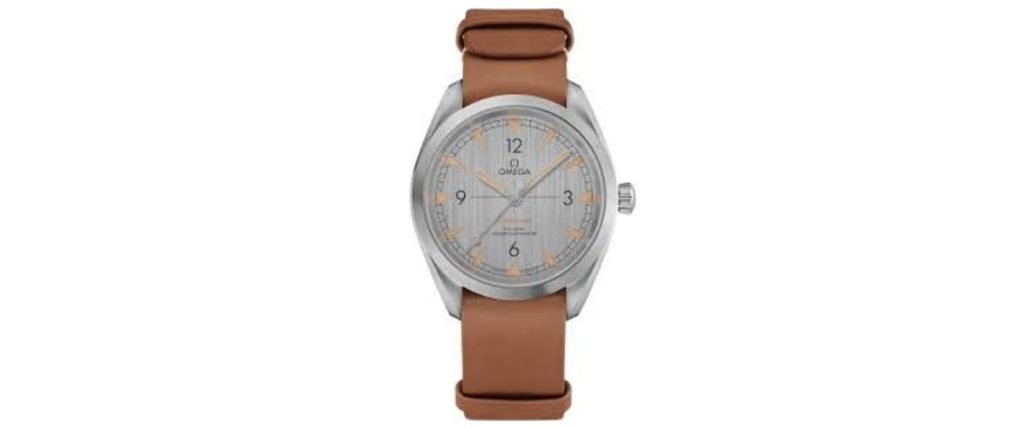
Several Heritage model Railmaster references retain the Arabic numeral positioning, triangular indices (not recessed, though), and faux patina lume, while the 2 blue denim dials use white indices and lume. All offer more modern styled stick hour and minute hands and a “lollipop” seconds hand. 

The minute indices are cleverly designed to appear like a railroad track (Woo woo!), and there is a central “crosshair” that segments the dial for additional vintage effect. The dial is printed with the Omega name and logo in the upper half, and a script “Railmaster” and printed “Co-Axial Master Chronometer” in the lower. 

Dial colors include black, gray, and blue “denim” with a vertically brushed finish. The Omega website currently shows only a black dial reference available for sale, but all colors are still obtainable through the Exquisite Timepieces website.

Movement

All modern Railmaster references share a powerful and accurate engine—the automatic METAS-certified Co-Axial Master Chronometer Caliber 8806 . The movement has bi-directional winding and a rated accuracy of +5/0 seconds per day, a free-spring balance wheel and magnetic-resistant silicon balance spring, a frequency of 25,200 vibrations per hour, 35 jewels, and boasts a 55-hour power reserve.

Strap options

The stainless steel bracelets for the 1957 references are 19mm in lug width with a wide, fold over brushed clasp with a signed “Ω”. The chunky clasp has been panned by some reviewers for its relative lack of comfort. On the bright side, the clasp does have what Omega calls a “comfort setting”, which is an “on-the-fly” micro adjustment activated by a button on the inside of the clasp. The 3-link bracelet design features wide center links with a vertically brushed finish and narrower, polished outer links to match the polished lugs.

The Heritage Railmaster stainless steel bracelet is also a 3-link design featuring wide center links with narrower outside links but is completely brushed to complement the all brushed finish of the case and lugs. 

Another difference is the narrower butterfly clasp (no micro-adjustment) which is signed with both the Omega name and logo. All modern Railmasters feature screw-in links with half links for easier and more precise sizing. Some Heritage Railmaster references also come with herringbone black fabric pin buckle and NATO-style blue denim and brown leather straps.

Most Popular Omega Railmaster Models

Here are 5 noteworthy and popular Omega Railmaster models:

Omega Railmaster Co-Axial Master Chronometer 40mm on Bracelet (ref. 220.10.40.20.01.001)

This all-stainless steel Heritage Railmaster has a sporty, all-brushed finish case and bracelet. Still, it creates an almost “faux-polished” look due to the brushed bracelet and varying directions of brush lines on the case sides, bezel, facets, and lugs. 

The vertically brushed finish of the black dial seems to emit different shades of black, gray, or dark blue depending on the light and rotation of the watch. The guilloché facets on the medallion caseback provides a contrasting backdrop for the Omega hippocampus and logo. And let’s not forget the easy-to-grasp, “cupcake” shaped, screw-down crown which opens with a satisfying “Snap!”

Omega Seamaster Railmaster 1957 (ref. 220.10.38.20.01.002)

This 60th Anniversary 1957 reference is part of a 3,557 piece limited edition and is slightly different from the one in the 557 piece “Trilogy” boxed set. It features an old school broad arrow hour hand, case with mixed polished and brushed finishes that flash impressively when the watch is rotated in the light, and a polished caseback with the engraved limited edition number of the watch. 

A cool vintage detail is the naiad “Mercedes”-like symbol, which originally signified enhanced water resistance, inside the Omega logo on the crown. It’s not shown on the Omega website, but Exquisite Timepieces has you covered.

Omega Railmaster Blue Dial Denim Co-Axial Master Chronometer NATO strap (ref. 220.12.40.20.03.001)

This playful and colorful Heritage collection Railmaster reference evokes visions of the blue denim-clad railroad workers who needed an anti-magnetic watch like this back in the day. The vertically brushed dial finish also provides varying shades of blue when rotated in the light. 

White indices and lume are used instead of faux patina. It comes with a matching denim-blue colored fabric NATO strap. The keepers on the strap, as well as the seconds hand and script “Railmaster” signature on the dial, are a bronze color, providing a refreshing pop of contrast.

Omega Railmaster Co-Axial Master Chronometer 40mm on NATO strap (ref. 220.12.40.20.06.001)

Similar in style to the previous model, this Railmaster model has a brown leather instead of denim-blue cloth NATO strap. In addition, the dial is vertically brushed with streaks of variable gray and has faux patina lumed hands and triangular indices, and script “Railmaster” printed on the dial, along with contrasting black “railroad” track minute indices, 3,6,9,12-positioned Arabic numerals, “Omega” name/logo, and “Co-Axial Master Chronometer” branding. The case is also available with a steel bracelet (ref. 220.10.40.20.06.001)

Omega Seamaster Railmaster Trilogy Limited Edition (ref. 220.10.38.20.01.003)

The 1957 “Trilogy” reference was sold along with sibling 1957 Seamaster 300 and Speedmaster models in a limited edition boxed set of 557 pieces and is nearly identical to the ref. 220.10.38.20.01.002. The “Trilogy” sets are available on the secondary market but hard to find and often exceed $20,000. 

What’s different between the two 1957 references? This model has the word “Trilogy” engraved on the polished caseback and printed near the top of the tropical black dial, plus numerals beneath the dial “Trilogy” that indicate which numbered piece it is in the series.

Should You Buy An Omega Seamaster Railmaster?

You don’t have to be a railroad worker or scientist to appreciate the experience of owning a Railmaster. Despite its relative anonymity, it’s a performance beast with a simple but handsome face that you should definitely check out if a blend of rich heritage and modern specs is what you’re after.

Omega Railmaster Pricing & Availability

Once again, Omega appears to be phasing out this interesting watch, but new models ranging from $5,400 to $7,500 are still available from some dealers, including 7 references on the Exquisite Timepieces website. Secondary market prices of many models are in the $4,500 and under range.

Conclusion

Like many “parents”, Omega has sometimes had a hard time explaining and supporting a child that lags behind its siblings. As a result, the Railmaster, despite high performing specs and elegant but simple good looks, has toiled in the shadows and beneath the radar of many watch enthusiasts.

Still, the Railmaster is a vital piece of Omega and horological history, and with it potentially on the chopping block again, now may be the time to show your support and “adopt” a very deserving “middle child” of a timepiece that just might end up being among the favorites you ever own.

Grand Seiko SBGX347 Review

Grand Seiko SBGX347 Review: The Details in the Design

Lucas M

September 18, 2024

Grand Seiko SBGX347

If you’re a fan of simplistic designs that don’t skimp on quality, then the SBGX347 from Grand Seiko’s Elegance Collection might be for you. With plenty to choose from, this watch has generated so much attention for more than one reason. The precise movement is a big selling point for quartz lovers, on top of a professional look with rich engineering.

For myself, the SBGX347 is a go-to watch for any professional setting. The look of the watch is subtle, but when it comes to the fine details, Grand Seiko shines through every single time. Every aspect of this watch is built for a slim fit, and its design is neutral enough for many casual styles as well.

bot-only-imagebot-only-image

Grand Seiko manufactures every one of their watches with a purpose. The SBGX347 is a great example of Japanese minimalism, quality, and simplistic beauty. This review of the SBGX347 will break into the components of the watch and its styling to help point you in the right direction.

Roots of the Grand Seiko SBGX347

Hailing from the world-renowned Grand Seiko Elegance Collection, the SBGX347, also referred to as “Gekka,” was unveiled in Q4 of 2021. Gekka refers to the vibrancy of moonlight and the deep hue of the night sky. Even several years later, the watch is easily a personal favorite over many newer GS releases.

While this watch was revealed alongside the SBGX349, that’s a conversation for another time. For the most part, the Elegance Collection focuses on simple to more grandiose designs. The SBGX347 sits on the more neutral side, which is always a perfect choice from my standpoint. I have nothing against a luxury look, but I don’t want it to look like a mirror on my wrist.

It’s important to note that this design does stem from the SBGX341 but promises to deliver something unique among the rest. Grand Seiko has taken inspiration and crossed design features before, but they always find a way to give each timepiece its own personality.

Overall, the Grand Seiko SBGX347 is as classic as it gets. From the design choices to how it feels on your wrist, you’ll know you’re wearing quality. The crown, movement choice, and slim look of the watch give it a universal play in professional and casual wear. Although many watches look stellar with a surface-level view, the real quality can be seen in the inner workings.

The Case of the Watchface

More than anything, the design of the SBGX347 case promotes a classic look that’s timeless, to say the least. I find neutral and elegant to be one of the best looks on anyone, which is partly what makes this watch so versatile.

The 34mm case diameter is a well-fit size for most people, and its 10.7mm depth adds to the overall slim look from every angle. You won’t ever get tired of the Grand Seiko stainless steel polish, which delivers a sleek and eye-catching experience.

A few other important specifications include a 41.5mm lug-to-lug, a narrow, low-set bezel, and an anti-reflective coating inside the sapphire. The watch may be water resistant, but it’s definitely not suitable for any kind of deep water.

Although this may not be a Grand Seiko sports watch, it acts as an elegant styling addition for men and women alike. The watch also features a standard push-down crown that’s anchored at the three-hour mark on the dial.

Once again, it’s important to remember the intentionally simple design of this watch. It isn’t meant to be extremely flashy, with tons of intricacies blended into it. I find it more than suitable for everyday wear, and the design of the Grand Seiko name always lands a positive reaction from those who notice.

There are other unique details about this watch design you might find interesting. A leading example is that the case pays homage to the original 1960 Grand Seiko 3180. The sapphire crystal use is quite thick and does well to emulate plexiglass crystals made popular in the 1960s. 

Although the caseback is relatively standard, it still boasts the traditional Grand Seiko logo. When I look at the case, I truly get lost in the engineering that makes the dial so simultaneously functional and beautiful.

Dial It In and Enjoy the Show

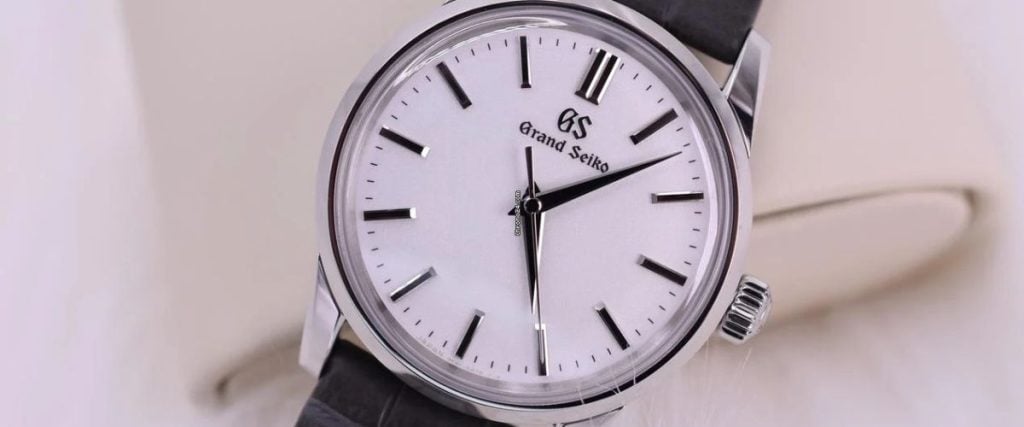
Crafted through inspiration derived from bright moonlight, the SBGX347 offers a vibrant face that pops against the darker band. Numberless hour markers circle the dial with uniformity, only adding to the fine precision of each passing second of the sharp hands.

Looking at the dial and every intricate detail, you’ll notice a uniformity among the simplistic approach to the design. Every aspect falls into place and compliments the engineering surrounding it.

Although it looks relatively plain from a distance, the SBGX347 actually has a fine texture up close. When moving the watch in direct or indirect light, the alternating satin and polished surfaces make themselves known. As with any Grand Seiko watch, it’s this small attention to detail that leads to so much praise for the brand.

From the logo to indices and every hand on the dial, it all comes together for a light and simple look. The watch face may be a bit too bright for certain styles, but it can also act as the perfect contrasting accessory if you want to make a statement. Regardless of the simple approach to its overall design, the depth found in the finer details is what really paints the big picture.

By no means is this next feature jarring, but you can also find a very faint text of “Made in Japan” just below the six-hour marker. In short, the dial does a great job of showcasing elegance without having to do much to achieve such a look. Of course, part of the beauty that ties into the dial can be found in the efficacy of the watch movement.

Marching to the Beat of Quartz Movements

There may be strong opinions about quartz movements, but Grand Seiko’s quality doesn’t diminish in the slightest. For a little more detail, it’s a caliber 9F61 quartz movement, delivering an accuracy of ±10 per year. It’s understandable why someone might go for a much quieter watch, but I personally love to be able to hear time tick with this movement.

Even though you can find valid concerns about the potential inconsistencies with quartz movements, Grand Seiko provides a solution. Thanks to a backlash auto-adjust mechanism, the quartz movement can guarantee a smooth motion soft tick.

From a style point of view, I’m pretty happy Grand Seiko decided to leave the date window out on this one. I feel like it would be completely jarring to the overall minimalist tone of the rest of the watch. Nevertheless, the movement included in the SBGX347 should be seen as any other quartz design.

There are several smaller points that should be highlighted, such as the double pulse motor system. Providing ample support to move the sizable watch hands, it is still able to maintain energy efficiency. 

You may not be able to see it through the case back, but the movement features several purple jewel accents. More impressively, the movement uses aged quartz crystal with an IC. This enables it to adjust to temperature changes to maintain accuracy and consistent motion no matter where you go.

Speaking for myself, I have never been too picky about movements, although I do have respect for high-quality engineering. Considering the nuanced detail that goes into an entry-level luxury watch, the SBGX347 is nothing to overlook. 

No need to worry about design quality, of course, as this watch is built with an in-house movement. That ensures the Grand Seiko quality inside and out, which makes the watch feel even better considering its notably low price.

From the satisfying slight tick, bright dial, classic look of the case, and steel inner markings, it has quickly become a vital part of my wristwatch rotation. The movement of this watch isn’t your standard quartz, and this can be determined by the look and feel of its movement and consistent accuracy.

Any good timepiece delivers an ensemble of an experience. From a distance, the Grand Seiko SBGX347 strap may not look like much, but it happens to be much more impressive up close. The watch wouldn’t look or feel as good if the strap wasn’t comfortable and form-fitting for most wearers.

The Wrap Around the Wrist

Not to be confused with the blue strap on the SBGX349, the SBGX347 features real black crocodile leather. A key distinction here is that it isn’t stamped just for show, which means it feels extremely durable to the touch. 

I love glancing at the GS logo on the buckle, and the slight shine is a fantastic contrast to the dark leather hue. On top of that, the high quality of the crocodile leather ensures a soft look without any kind of distracting sheen.

The band as a whole is 175mm, making it more than adjustable for wrist sizes that are small or large. My favorite detail is the 2.5mm thickness. I’m a huge fan of thinner bands as my wrist is already on the small side, and the SBGX347 looks snug and form-fitting. This tends to be a challenge for me personally, but it’s a testament to the versatility of the strap dimensions.

Keep in mind that it’s the calfskin that truly makes this an all-day wear, as it won’t conflict with your wrist or feel too stiff at varying angles. Considering my relatively thin wrists, that means I’m also not a huge fan of very wide bands. 

This might look fine on larger wrists, but the 18mm band width on the SBGX347 doesn’t try to compete with the other components. I think that’s what makes this such casual wear for me: the watch’s dimensions look uniform from every angle. 

While it’s evident several design details play into this, the size, positioning, and quality of the strap are equally important. I can break down this watch piece by piece, but it can be helpful to look at it from a style and live-in experience as well. 

At the end of the day, I’m a fan of how the strap looks and feels, but that doesn’t mean you can’t always change it. The drilled lugs in this watch make for an easy swap if you prefer a different strap.

What You Can Expect Wearing the SBGX347

I would say that this is one of the best mid-range neutral watches from Grand Seiko. The black leather is a clear choice for any business setting, but the classic black and white is fitting for more casual fits, too. 

However, I feel it’s important to mention that I am more inclined toward dark brown bands and wouldn’t mind switching them every now and then. The contrast of shiny steel, a bright white dial, and a deep brown color is a match for me.

Aside from the strap and case size, weight is another big deciding factor for many. If it feels like it’s pulling my wrist down in the slightest, it’ll more than likely be a no-go. When you combine the 47g weight of the watch and the comfort of the inner band calfskin leather, you’ll almost forget it’s on your wrist. 

Another minor detail I’ve noticed about this watch over time is the consistent durability of the band. It doesn’t feel like it’s losing its form-fitting feel and look, something I really appreciate about the quality of the leather.

Moreover, the grain finish of the white dial helps minimize unwanted reflections and makes for a more muted white dial. We feel this is an excellent choice with such a bright color that could potentially be too jarring. On top of that, the white grain finish allows the stainless steel accents to break through in visible glory. 

I feel like I’m a bit biased due to my smaller wrist size, but it should be mentioned that wrists 6.5 inches or more might not be as comfortable. Then again, those who are more prone to wear a snug fit might be just fine within the 6”-7” range in wrist size. Now that you’re equipped with a manufacturer and user perspective, it’s time to praise the watch’s affordability.

No Need to Break the Bank

Many people love the idea of owning a luxury watch, but this is commonly associated with a high price tag. That’s definitely a true reality, but that isn’t the case with every high-end watch on the market. 

I easily fall into this category, as I cherish affordability like anyone else, but that can be challenging to find alongside quality. The bullet list below offers a quick look at retail and general pre-owned pricing you can expect for the GS SBGX347. You can find the watch for $3,300 at retail, but it drops down to the $2,200 to $2,500 range for pre-owned.

On another note, where you find your luxury timepiece is another consideration. Not only is industry experience important, but you want to work with someone who understands watchmaking inside and out. We select every watch in our catalog at Exquisite Timepieces with intention, ensuring our customers are educated on the ins and outs along the way.

Let’s Wrap Up

For veteran enthusiasts and newcomers alike, choosing your next favorite luxury watch can be a mind-wracking experience. I’m all too fond of this feeling, but this review can act as your guide when you put all the pieces together.

The details always matter, and the Grand Seiko SBGX347 makes you look twice from every angle. You’ll likely miss its true beauty at a glance, only seconding the clever yet classic design of the GS Elegance Collection watch. After reviewing the design specs and considering the cost, I believe this is a viable choice for many.

What wrist does a man wear a watch

What Hand Do You Wear a Watch On?

Ricky Dagand

September 18, 2024

When does wearing a watch stop being just part of a man’s wardrobe and become more a part of his being? This burning question has many layers, starting with the type of watch one chooses. Diver or field watch? Leather strap or NATO? Perhaps the first essential question any budding watch enthusiast asks is, “Which hand is the correct one to wear my watch on?” While the question is valid, the answer is very much subjective. 

One must consider practicality and comfort when wearing a watch, so choosing the wrist to wear your timepiece is not only an aesthetic decision but also one of functionality. So fret not! There are no complex rules in this wide world of watches—the person wearing the piece decides which hand it goes on. Left wrist, right wrist, even double wrist—the choice comes down to what’s comfortable and stylish for you.

bot-only-imagebot-only-image

What Wrist Does a Man Wear a Watch On?

History shows that, due to the majority of the population being right-hand dominant, watches “should” be worn on the left wrist. Whether it be 18th-century aristocrats or fountain pen connoisseurs of the 20th century, the notion has been passed down that wearing a watch on your dominant hand will get in the way of daily activities and risk potentially damaging the watch.

Considering the fact that 90% of the world is right-handed, it’s no surprise that the “norm” is to wear the watch on the left wrist. But “norms” aren’t rules, and when it comes to watches, one must wear them in a way that best suits them. I’m right-handed and wear my watches on my left wrist since I’m typing, writing, or using a mouse during my workday. 

On the other hand, my dad, who works on plane engines, wears his watch on his dominant right hand. He’s always found it more comfortable for reasons I’ll never fully understand.

Things to Consider When Choosing Which Wrist to Wear a Watch

Most watches are made with right-handers in mind, meaning that the crown and other controls are on the right side of the watch, making it easier to wear on the left wrist. Setting the time with your watch on your right hand could force you into an uncomfortable position while trying to use the crown. It’s important to remember that a watch is also a tool. 

If you wear a watch daily, you should wear it efficiently and according to your surroundings. Wearing a watch on your dominant hand increases the risk of it bumping into something or getting scratched, whereas the non-dominant hand is typically used less, reducing that risk.

Best “Destro” Watches for Lefties

The watch market has traditionally catered more to its right-handed audience. That was until companies started thinking of the 10% of left-handed watch lovers who dreamt of a more comfortable watch-wearing experience. Left-handed watches, or “destro,” which is Italian for “right,” were designed for those who prefer wearing their pieces on the right wrist by placing the crown and functions on the left. Here are the best “destro” watches for lefties.

Rolex GMT-Master II (ref. 126720VTNR)

Rolex’s contribution to the “destro” community debuted in 2022, leaving audiences in awe. Quickly nicknamed the “Sprite,” this left-hand-drive watch comes with a green and black bezel and everything else you’d expect from a Rolex GMT II: an automatic 3285 movement with a 72-hour power reserve. The main difference is that the crown and date display are placed at 9 o’clock for better access when wearing them on the right hand. It’s an absolute gem of a watch, especially when paired with a jubilee bracelet, with prices starting at around $18,000 after retail.

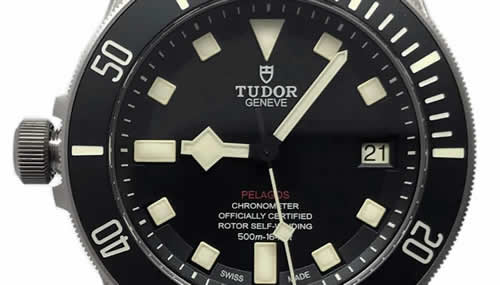
Tudor Pelagos LHD (ref. M25610TNL-0001) 

An essential dive watch for lefties, the Tudor Pelagos LHD features a 42-mm titanium case, a unidirectional rotating matte black ceramic bezel with 60-minute markers, a black dial, and Tudor’s signature snowflake hands. Starting at $5,000, this watch includes a special clasp that adjusts on the wrist depending on the depth, a helium escape valve, and 500 meters of water resistance.

TAG Heuer Monaco Lefty (ref. CAW211P.FC6356)

We can never be as cool as Steve McQueen, but you can come close by getting the limited-edition TAG Heuer Monaco Lefty worn by McQueen himself in the 1971 movie Le Mans. This 39mm square-cased chronograph is a unique marvel in racing watches. It has a beautiful blue dial with silver and red accents, held together by a black leather strap. It’s available on the TAG Heuer website for $8,100.

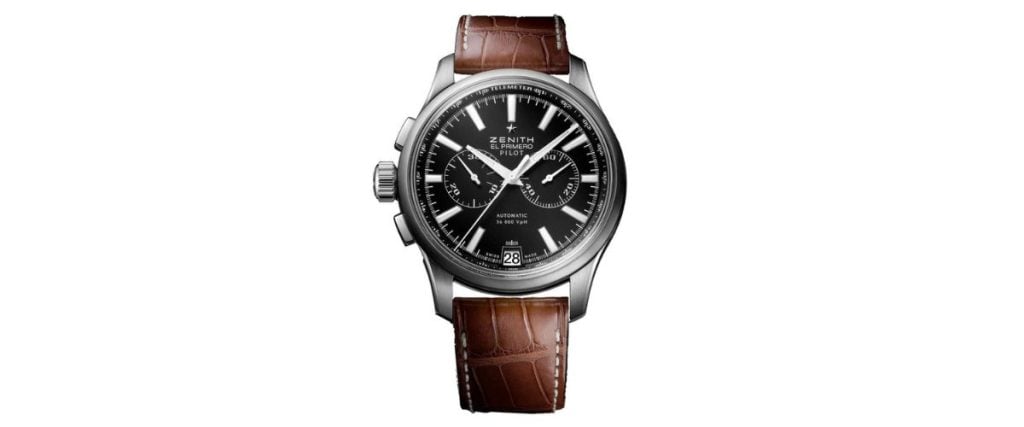
Zenith El Primero Pilot Lefty Chronograph (ref. 03.2117.4002/23.C704): 

Like lefties themselves, Zenith El Primero Pilot Lefty Chronograph watches are rare. In fact, finding a price online for this limited-edition piece is nearly impossible. It’s a 42mm Pilot edition of the El Primero series with a large black dial and a date marker at the 6 o’clock position. The El Primero Pilot Lefty was the first of its kind for Zenith, released in 2011, and hasn’t been re-released since. But it’s still a sought-after watch that has critics and fans yearning for Zenith to revive it.

Oris Aquis Red Limited Edition (ref. 01 733 7653 4183-Set RS): 

Oris has a philosophy that reads, “Swiss watchmaking for everyone,” and they doubled down on that statement by releasing the Aquis Red Limited Edition. This special edition watch was made for left-handed dive watch lovers at a modest price of $2,000. The Aquis Red Limited Edition comes in a 43mm stainless steel case with a unidirectional rotating black ceramic bezel with red accents, a black dial with white and red markers, and a bright lume that solidifies its status as a dive watch. With 300-meter water resistance, Oris has had collectors clawing at the chance to add this now-discontinued piece to their collections.

In Short

The watch itself is a personal preference, and the hand on which you choose to wear it is also up to you. The unwritten rules are just that—unwritten. There’s no point in following a guide on wearing a watch if it doesn’t feel comfortable on your wrist. Let your personality shine through the watch. Perhaps you’re the classic man who wears it on his left hand. Maybe you want to break the mold and rock the watch on your right wrist. There will be no gasps or nasty looks, I promise. For the lefty community, there are some fantastic watch options. But remember this: no watch is exclusive to a specific hand; wear your watch as you please.

ALL Parts in a Watch

(Timepiece Glossary) ALL Parts in a Watch

Jacob Strong

September 18, 2024

There are few documents that can titillate the senses quite like a glossary. Hard not to have your heart pound out of your chest as you excitedly turn the page, waiting to move onto another technical description, full of words you now need to look up just to grasp the full understanding of what you are reading. 

THIS is not that glossary! For one, I am not nearly smart enough to write THAT type of glossary, and more importantly, I only have 1500 words to catch your attention, define 14 fundamental aspects of a watch, and wrap a pretty bow on all of it. 

bot-only-imagebot-only-image

Someone once told me that it takes a very smart person to describe a complex subject matter in a simple way that anyone can understand, and I am writing this post with the full intention of proving them wrong!

Why There Are So Many Watch Parts

Watch Parts

Why is the world of watchmaking so complex? To put it simply, because it can be. One of the aspects of a watch that pulls on our heart strings (and purse strings) the most is complexity. 

Does a watch need a chronograph? Nope, but it’s cool! Dive bezel? Nope, but we sure do love them! At the end of the day, these tiny mechanical marvels on our wrist earn our hard-earned watch enthusiast dollars because of their complexity, whether it is how the dial plays with the hands or how the minute repeater helps us flex to our watch nerd friends.

All Watch Parts Explained

Let’s take a look at 14 of the basic components of a timepiece as I try my very best to keep it brief.

Case

The case of a watch is the component that houses the dial and movement of the timepiece. It can be made of an almost limitless variety of materials, although stainless steel is by far the most common. The case provides the structural rigidity of the watch and helps to aid in the robustness of the timepiece. 

Caseback

Working in conjunction with the case, the caseback seals up the back of the watch and protects the movement. The caseback is generally made of the same material as the case, but a sapphire crystal has become a popular style, allowing the user to enjoy the view of their new mechanical marvel in action. 

There are different ways for a caseback to attach to the case, with more basic watches utilizing a pressure fit, or snap-on, mechanism, while more robust watches utilize a screw-on method to help aid the water resistance.

Bezel

Almost every watch has a bezel, but there are 2 different types. The first is a plain bezel. This style of bezel almost appears to be a continuation of the case but is removed while replacing the crystal. The second type of bezel is a functional bezel. 

These bezels vary in function, with the divers style being the most popular, followed by the 12-hour GMT and Tachymeter scale for a chronograph. These bezels, whether fixed or rotating, serve a function for the timepiece.

Bezel Insert

If you have a functional bezel on your watch, it is very likely that you have a bezel insert. This insert is a replaceable component that provides the information that gives the bezel its functionality. 

This could be the 60-minute countdown scale on a dive bezel or the 12-hour markers for a GMT. These come in several different materials, with aluminum bezel inserts prevalent on watches prior to the 2010s and more durable ceramic bezels becoming a staple of both luxury and spec monsters alike.

Lugs

The lugs of the watch are what connect the case of the watch to the strap or bracelet. Although some watches have a lugless design, such as the ever-popular Apple Watch, most watches utilize lugs in their design. 

Although many consider lugs to simply be an aspect of the watch case, they deserve some attention as their own element. Watch lugs can strongly influence the wearing experience of your timepiece. A small diameter watch with long lugs will wear much larger than the case dimension suggests, think Nomos, while the opposite is also true, think Seiko.

Crown

The crown of the watch is often the part that we interact with the most on our timepiece. Often composed of the same material as the case, the crown is our direct connection to the watch movement via a watch stem. 

The crown presents itself as a small bump, often shaped like a crown with ridges, that will hang over the edge of the case. By pulling the crown, you will be able to set the time and, depending on the movement powering your watch, provide power to the movement of your watch.

Crystal

The crystal of a watch is our window to the dial, allowing us to tell the time. These are made of several transparent materials such as mineral glass on less expensive watches, sapphire on modern higher-end watches, or plexiglass on vintage or vintage-inspired watches. 

All of these materials have their different benefits, but they all serve the same purpose of allowing us to actually see the time while simultaneously protecting the dial from dust, debris, and impact (damn doorknobs!).

Dial

The dial of the watch is the plate that displays the information of the timepiece. These vary from very simple, such as the Tudor Ranger,  to breathtakingly beautiful, such as the Grand Seiko Snowflake. The watch dial is the backdrop to all of the information displayed on the watch, regardless of how simple or complex it is.

Hands

The simplest way to think of watch hands is that they are what tell the time. In reality, it’s not quite that simple. The hands are responsible for giving us information. That information is determined by the regulation of the movement but can come in many forms. 

By way of a pinion through the dial to the gears in the movement, the watch hands allow us to see what our watch is actually doing. Hands can vary from basic to beautifully finished and are often a calling card of a given brand or model.

Hour Indices

The hour indices are what give meaning to the hour and minute hands on a dial. These help to mark certain increments of time around the dial and give context to what these hands are actually pointing to. Hour indices can be printed, applied, or even cut out depending on the style of the watch. While applied indices are often sought after, when done right, any style can help elevate a timepiece.

Minute Track

While not present on every watch, a minute track can help to aid in the precision of a timepiece. A minute track follows the circumference of the dial and marks off 1-minute increments. This allows all of us watch nerds to properly set our timepieces to the exact minute as opposed to a guess. While not necessary for a timepiece, these, like the indices, help give further context to what the hands are presenting.

Subdials

More complex watches will feature information beyond just the time. Subdials are a simple way to present additional information to the user. These are generally cut out of the dial, or at least marked with a color change, and will feature their own hands, indices, and markings to help define the information being presented. These can vary from sub seconds counters all the way to chronographs or GMT indicators. 

Date Window

Love em or hate em, many watches have a date function on them. This date function allows their user to not only tell the time but the date as well. The date window is a cut out on the dial that allows the date wheel, which is attached to the backside of the movement under the dial, to display itself to the user. 

There are few triggers that will set off a watch nerd, I mean enthusiast, like the placement of a date, and is best to avoid bringing up while at watch meetups or in forums.

Strap

The strap is responsible for securing the case of the watch to your wrist. The strap can be integrated, such as the AP Royal Oak, or secured through the lugs. Many sports watches will come fitted with a bracelet composed of the same material as the case, while dress watches often come paired with a custom-crafted piece of leather. 

While many people will keep a watch on the original strap, the watch came on for its entire life, one of watch enthusiasm’s great joys comes in the form of swapping from one to another. While I love my watches on their original bracelet, I can’t help but throw them on a NATO strap occasionally.

Conclusion

So there it is; 14 definitions of common watch components. Are watches complex? Absolutely, but you don’t need to know everything about them to have fun. If you are just getting into the hobby, this list here is enough to make you dangerous. Happy watch hunting!

To Top