Watch Reviews Archives - Page 49 of 54 - Exquisite Timepieces
iconHome Blog / Watch Reviews / Page 49

Category: Watch Reviews

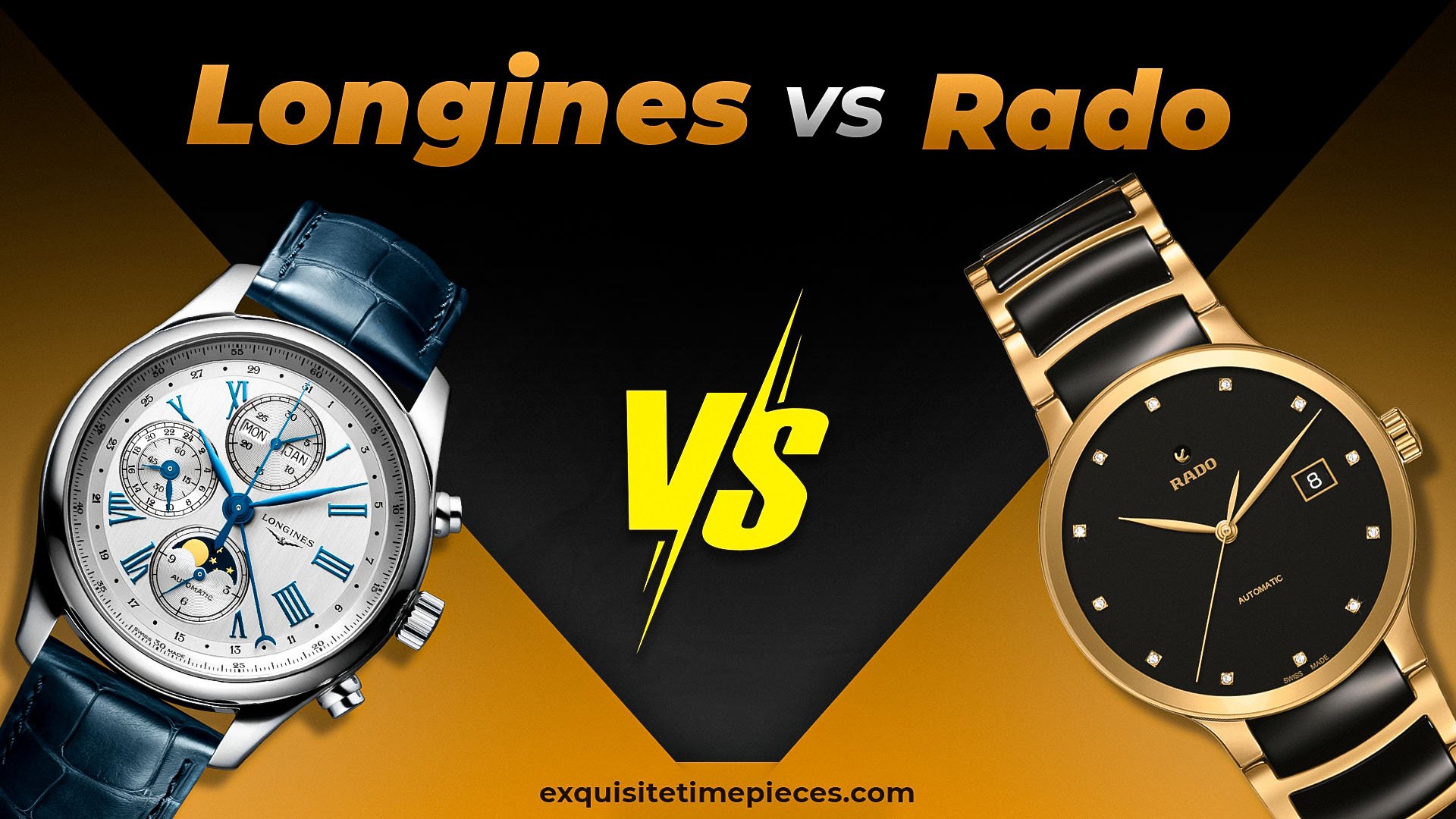
Logines vs Rado

Longines Vs. Rado Watches (EVERYTHING You Should Know)

Jacob Strong

November 30, 2022

A Battle of mid-tier SWATCH group brands
If you are anything like me, the mention of the SWATCH group conjures up 2 extremes to Swiss watchmaking. There is the premium luxury led by flagship brand Omega, a legitimate rival to industry powerhouse Rolex in providing robust luxury watches with real history and brand cache.

And then there is the actual Swatch Watch, a seemingly disposable, and incredibly collectible, entry point into Swiss watchmaking. What about the area in between these extremes? That’s where the 2 brands we are comparing today both reside. Longines Vs. Rado: Both of these brands provide exceptional value for watch enthusiasts, with unique histories, innovations, and styles, but which one is right for you?

bot-only-imagebot-only-image

History of Longines

There are few brands (not just watch brands) that date back as far as Longines. Originating back in 1832, the company was founded by Auguste Agassiz in the small Swiss village of St-Imier. From there the brand exploded in popularity and was a pioneer in Swiss Watchmaking. From the first wristwatch with a chronograph in 1913 to the first watch with a rotating bezel in 1931, Longines developed many of the technologies that have become commonplace by today’s standards.

Although their current placement in the brand hierarchy has them pegged a notch below fellow SWATCH group brand Omega and their chief competitor in Rolex, there was a time when Longines was viewed as an equally luxurious brand. After being acquired by the future SWATCH group in 1971, many feel that Longines lost a lot of its allure.

The innovation that carried them to greatness in the early 1900s was replaced by a “play it safe” mentality, relying solely on their name to separate them in an inflated marketplace. If this was the way the story ended for Longines, it would be a tragic tale of another once-great manufacturer losing its way in the face of adversity. Fortunately for all of us, this story has a very different ending.

Longines Today
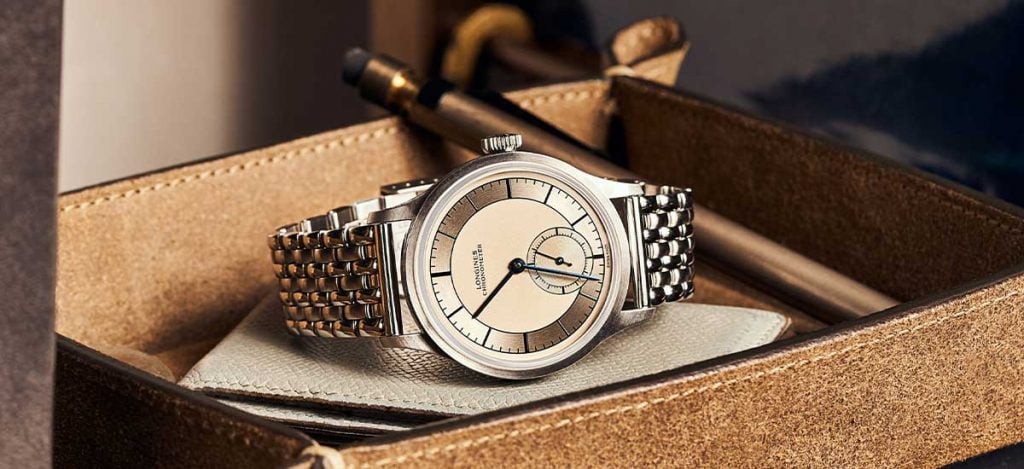
Longines Watches

Today, Longines is a brand that caters to both watch enthusiasts and average consumers alike. There are two sides to Longines as a current manufacturer. They specialize in creating value-packed, albeit safe, entry-level luxury watches, such as the Hydroconquest. Then there is the other side to Longines. One that digs back into its historical catalog and creates beautiful vintage reinterpretations.

In my opinion, there are few, if any, companies that can do this as well as Longines. From one of the first examples of the modern vintage diver craze, the Longines Legend Diver, to the newly released Record Heritage Diver, these beautiful reinterpretations have all the appeal of their vintage counterparts without the inherent risk of a vintage timepiece.

Are Longines Watches a good investment?

Like any Swiss watch brand, the value retention of a watch is tied closely to the product’s overall allure. On average a Longines watch is going to drop in value by 30-50% from its original retail value. Before you swear off the brand and march to your closest Rolex AD to get on a nonexistent waitlist for a watch that you’ll probably never get, let’s look at the whole picture.

Longines, like any other SWATCH group brand, presents an opportunity for significant value. Depending on the popularity of the model you are after, you might be able to negotiate a discount off of the MSRP. Although it is far from a guarantee, it is at least a possibility, unlike that other AD with a nonexistent waitlist. Another factor in play with this equation is the tremendous value Longines watches present preowned.

After allowing someone else to take the initial depreciation, a Longines watch will continue to strongly retain its value. In fact, I would argue that many of the pieces we are going to discuss later will not only maintain value but also have the opportunity to gain value while inching closer to closing that initial depreciation gap.

History of Rado

There is no doubt that Longines packs a very serious punch for both your everyday consumer and watch enthusiast, but how does the other dog in this fight fare? The Rado watch company is a relatively newbie at just over 100 years old, with an origin story beginning in 1917. 100 years is impressive by any standard, but keep in mind Longines was already 85 years young when Rado was first conceived.

The Rado watch company didn’t really begin developing its own timepieces until 1957. Their first couple of decades designing their own timepieces resulted in some classically designed timepieces with some minor design aesthetics to help differentiate from the crowd. The Golden Horse and Captain Cook models from this time are very great examples of classic watchmaking of their respective eras.

Classic design and watchmaking are not the first two words I would associate with Rado from the 1970s on. The 1970s were an experimental time for a lot of Swiss watch designers. Where most companies like Tudor and Heuer got creative with their color pallet, Rado went in another direction altogether.

They earned themselves the reputation of the Master of Materials with their use of ceramic, sapphire, and even a 10,000 Vickers V10K high-tech diamond. Their willingness to take a risk was not limited to just the materials that they used in their construction as their case designs are distinctly Rado and very unconventional.

Rado Today
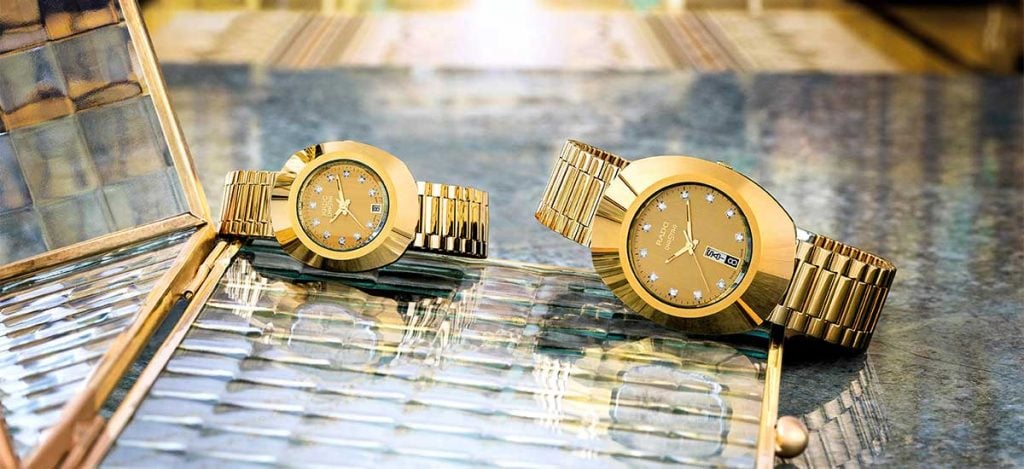
Rado watches

Today, Rado still inspires by their use of unconventional materials and designs. Like Longines, and several other once-independent Swiss watch companies, Rado was acquired by the SWATCH group in 1998. Despite still having this modern and futuristic ethos to the design language they recently released some charming recreations of their earlier timepieces, such as Captain Cook.

Personally, I am a sucker for a well-done vintage recreation, but I can’t help but feel that this does not exactly line up with the identity Rado has forged over the last 40 years. At the end of the day, every watch company needs to sell watches and vintage recreations of 1960’s dive watches will always have a greater consumer demand than a modern designed ceramic piece.

Is Rado watches a good investment?

Do Rado watches hold their value? Much like Longines, certain models will retain their value to a fair extent. Their popular models will lose roughly 30-50% once you purchase them. Discounts are certainly a possibility for these models which would help close some of that depreciation gap. In terms of Value, preowned will be the best option available.

If you can find an excellent condition preowned model you can save roughly 50% of the retail price and your money will be relatively safe. One thing to keep in mind compared to Longines is that Rado is significantly less popular in terms of units sold and therefore you may need to be patient as availability is less abundant.

Some of the less desirable, more futuristic-looking Rado watches, will generally depreciate at a higher percentage. Despite this value depreciation, if I had to bet on which of these would have the potential to increase in value over time, I would go for the most Rado looking Rado I could find!

Head-to-head

When it comes to the most popular watches to compare between these brands, Rado is easy, it is Captain Cook. Longines are a little more difficult to pinpoint. They have 2 models that meet these criteria the Hydroconquest and the Legend Diver. Since I am weak and could not choose a definitive option, I will compare Captain Cook to each of these models and even pick which one would get my hard-earned money.

Longines Hydroconquest Vs Rado Captain Cook

The 43mm Longines Hydroconquest, ref. number L3.782.4.96.6, is a beautiful dive watch made of stainless steel with a sapphire crystal and ceramic bezel insert. The watch is powered by the L888, which is a modified ETA movement and features a 72- hour power reserve. On paper, this watch checks a lot of boxes for the everyday consumer and also sports a pretty attractive price of roughly $1700.

Despite having many of those sought-after features that we watch enthusiasts demand, I feel that this watch is missing something. It feels very “safe” and I can’t help but feel uninspired when I it in pictures. Once on the wrist, however, this watch has the ability to be under the radar and blend into almost any situation.

Even while lacking the spark of more unique timepieces in the price segment, you’d be hard-pressed to find a more versatile piece to start or round off your collection. The 42mm Rado Captain Cook, ref. number R32505203 appears very similar to the Longines Hydroconquest on paper. This watch features a stainless steel case, ceramic bezel insert, and sapphire crystal, and is powered by the ETA C07.611, which is another modified ETA movement featuring a lower beat rate and extended power reserve.

The price on this piece however is slightly higher coming in around the $2000 mark. For this extra monetary investment, you will have to appreciate the more unique aesthetic drawing inspiration from their 1960s-era design. This design will not be for everyone, but it is certainly more unique than that of the Longines. Although there are a few strap options available on this model, the unique beads of the rice bracelet help elevate this watch to another level.

Verdict

Although this battle may seem like a comparison of two perfectly matched competitors, there are some differences that help make this an easy decision for me. Despite the extra roughly $300, the Rado runs away with this match-up. They are both great options for someone not quite ready to step up to Omega territory but who want a quality dive watch.

The Rado, in my opinion, provides a cleaner and more unique execution of a dive watch. The concave bezel, beads of rice bracelet, and large arrow hand help this watch stand apart from their sister company Longines and justify the extra investment.

Longines Legend Diver Vs Rado Captain Cook

The Rado came away with a pretty decisive win in round one, but how does Captain Cook compare to the Longines Legend Diver? In 2007 Longines tried something that would soon grow into the hottest watch trend of recent years when they reintroduced the Longines Legend Diver.

This watch has gone through a few minor tweaks over the last 15 years, but the current 42mm Longines Legend Diver, ref. number L3.774.4.50.6, at roughly $2400 still retains a lot of the charm that has allowed this watch to stand the test of time…..twice. This watch also features a stainless steel case, sapphire crystal, and reliable L888 (ETA) movement, but takes a sharp turn with the inner rotating unidirectional bezel.

This style was popularized with compressor watch cases of the 1960s that earned their water resistance from the increased pressure of water at greater depths. Thankfully, this watch has only carried on the design of this style and not the functionality, as modern water resistance methods will afford this watch a much more reliable construction.

Verdict

How does the Longines Legend Diver compare to the Rado Captain Cook? Again on paper, we are presented with two pretty comparable timepieces, but this time there is a price difference of roughly $400 toward the Longines. For this extra investment, the differences will once again mostly be aesthetic. I love both of the designs of these watches personally, but there is a reason that Longines has had this recreation in production for 15 years.

I have to give a slight advantage to Longines, even after factoring in the price difference. The Legend Diver presents itself as a more unique option in a very overpopulated market segment of vintage recreation dive watches. Each brand was able to score a victory over the other in these head to heads and in many ways, this is representative of how these brands compare overall.

Pros and Cons

Let’s take a look at some of the pros and cons of each of these respectable brands. Longines is a brand that carries some serious name recognition and they have a history that rivals any prestigious watch brand in the industry. Their recent resurgence in the eyes of enthusiasts is proof that this brand is paying attention to its customers and willing to take a chance to improve its standing within the community.

On the flip side of this, before their recent push, Longines seemed to be a little lost. They struggled with their position within the SWATCH group and released some pretty questionable watches that appeared to try and capitalize on their name recognition with the average consumer. Thankfully, those days are mostly behind us, and Longines is primed to rise in the ranks of the SWATCH group hierarchy.

Rado is a company that most people outside of the watch community would fail to recognize. Depending on how you look at it, that could be seen as a pro or a con. Rado does have a pretty strong following among enthusiasts and is known for stepping outside of the box and taking a chance, with both its designs and materials.

Unfortunately, the watches that seem to gain traction for Rado are not the best representation of their brand ethos. Captain Cook, which is their most popular model, can be seen as just another vintage recreation dive watch in an already flooded market. The biggest con that I can think of for Rado is that despite their best efforts to stand out from the crowd, they still appear to be somewhat invisible unless you know exactly what you’re looking for.

That being said, I am a big fan of how they have incorporated some of their unique materials into the Captain Cook line. If there is a way for Rado to come out from the shadows of more recognized brands from the SWATCH group, like Omega and Longines, this is exactly how they will do it. With two brands as storied and unique as Longines and Rado, I am sure that there are many questions we have not been able to answer in this article.

Please take a look at our FAQ section for even more information. If I had to put my money down on one of these brands today, I would be walking away with a Longines. Not that I feel that they are better in any inherent way, just that their design aesthetic speaks to me a little more clearly.

Both of these brands offer a great entryway into the world of luxury watches, and I would be proud to wear either of these brands on my wrist. If this comparison proves anything, it is the value that exists within the SWATCH group. Omega receives a lot of attention from watch enthusiasts, and deservedly so, but mid-tier brands like Longines and Rado present tremendous value to watch enthusiasts and average consumers alike.
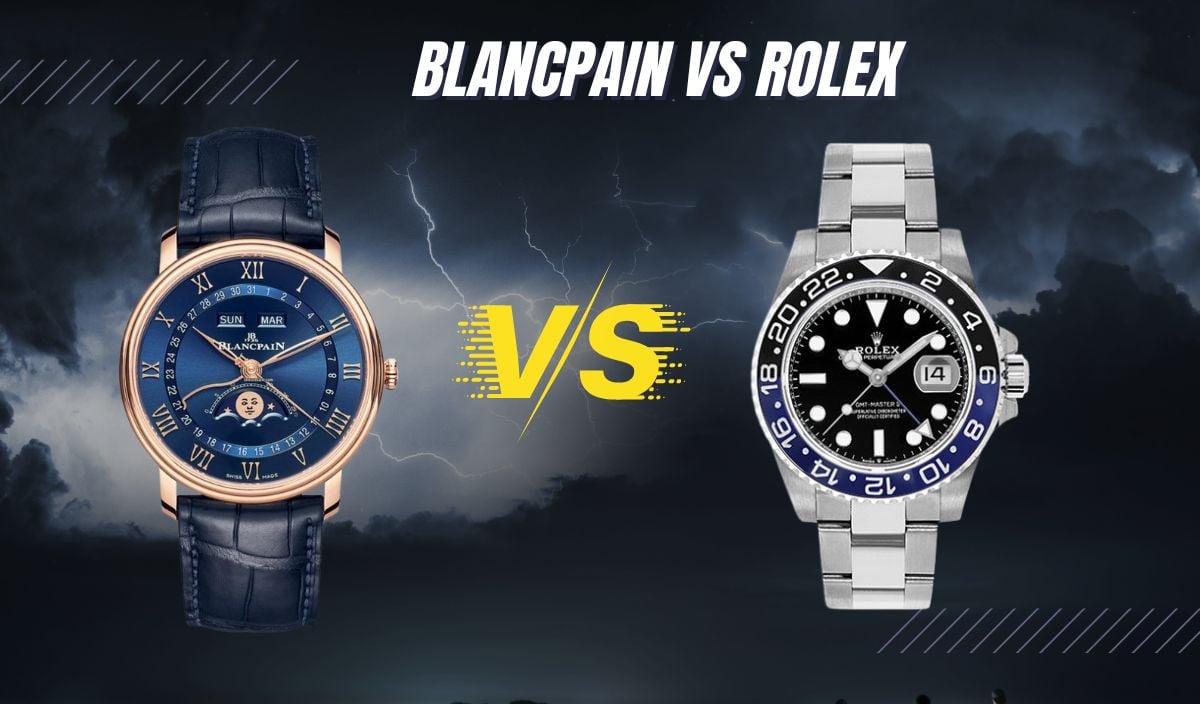
Blancpain vs Rolex

In this article, I will take as deep a dive into these two iconic brands as possible to help answer some of the questions you might have concerning the purchase of either a Rolex or Blancpain timepiece. Along the way, you will get an overview of what makes these two brands tick, as I will share a brief history of each brand and then expound on a few of each company’s popular models, their movements, and what makes each brand iconic among watchmakers.

Blancpain- World’s Oldest Swiss Watch Brand

Blancpain watches

Blancpain was established in Villeret, Switzerland in 1735 by Jehan Jacques Blancpain. It is considered the oldest Swiss watch brand that is still in operation today. In 1825, Blancpain’s grandson Frederic Louis Blancpain improved the original workshop and developed a modified watch escapement design. This along with the pursuit of ultra-thin construction became the foundation for the brand.

bot-only-imagebot-only-image

In 1830, Frederic Emile Blancpain, son of Frederic Louis, sets up the largest watch manufacturer in Villeret and renames the company Fabrique d’Horolgerie Emile Blancpain. In 1859, Louis Elysee Piguet opens a world-class watchmaking shop in Vallee de Joux and is commissioned by several high-end Swiss brands to create watches with various complications.

1932 saw the passing of Frederic Emile Blancpain. With his passing, the company was left to his longtime assistant Betty Fiechter. Fiechter became the first women CEO of a swiss watch brand. Due to Swiss laws, this presented a dilemma since there was no longer a member of the original founding family involved in the business. The name had to be changed to accommodate these laws and Rayville S.A. succ. Blancpain was established.

For the next twenty years, Betty comanaged the brand with her nephew, Jean Jaques Fiechter. By the end of the 1950s, the company was manufacturing about 100,000 watches per year. Due to the growing demand for their watches, Rayville was purchased by SSIH (Societe Suisse pour l’Industrie Horlogerie). By 1982, SSIH was purchased by Jacques Piguet and the company name changed once again to Blancpain S.A. Today the brand is owned by the Swiss watch conglomerate SMH (the Swatch Group).

Several milestones in the history of Blancpain are as follows:

  1. 1983- created the world’s smallest moon phases display.
  2. 1987- developed the thinnest self-winding chronograph and the smallest minute repeater movement at the time in the world.
  3. 1988- created the thinnest split-seconds chronograph at the time.
  4. 1991- introduced the 1735 Grande Complication (one of the most complicated watches in the world with a tourbillon, minute repeater, perpetual calendar, and split chronograph).
  5. 2000- first self-winding tourbillon and perpetual calendar with an 8-day power reserve.
  6. 2008- introduced the world’s first movement with a one-minute flying carousel and 100-hour power reserve.

An interesting fact is that Blancpain has never offered a watch with a quartz movement. In fact, the brand’s motto is “Blancpain has never made a quartz watch and never will.” Following the success of the Fifty Fathoms collection, Blancpain has made a commitment to supporting the preservation of the oceans and the seas worldwide through various initiatives.

The company has established a three-prong approach to achieving these goals by raising awareness of the beauty of the ocean, contributing to scientific research, and implementing efficient ocean conservation measures.

Rolex’s History

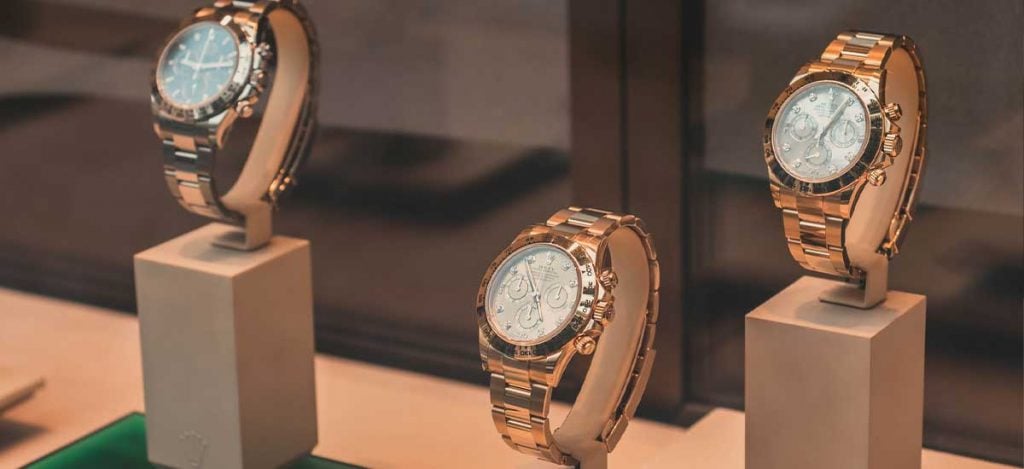
3 Rolex watches on display

Rolex, surprisingly, has been around for a far shorter time than most other luxury Swiss brands (like Richard Mille and Hublot). This is an even greater testimony to the success of the Rolex brand and the reputation the company enjoys today. Much of this success is attributable to Hans Wilsdorf, the English entrepreneur responsible for the creation of the brand.

Though conceived in England, Wildorf created the Rolex brand in 1908 and would ultimately move the entire operation to Geneva, Switzerland where he would create the first water-proof self-winding wristwatch with a perpetual rotor. In fact, a patent was issued to Rolex in 1926 for the world’s first waterproof watch, which today is the oyster case.

Rolex has filed for over 500 patents over the history of its existence for innovations that range from its movements to its exclusive Cerachrom bezels and bezel inserts. Cerachrom is a ceramic material that is virtually impervious to scratches and its color is unaffected by the sun’s ultraviolet rays. Rolex today is a completely vertically integrated company with every step of the watch’s conception to completion performed by the Rolex team.

To ensure continued success and commitment to producing the highest quality timepieces, Rolex has an exclusive training center that educates, trains, and acclimates every employee to their culture of excellence as well as one of the most rigorous testing labs to ensure the integrity of every watch.

There is even a department of tribology where the scientific study of friction, wear, lubrication, and how moving parts interact in every aspect of a watch’s movement and physical parts exists in order to continue Rolex’s constant perfection in watchmaking.

Another attribute of the Rolex collection is its commitment to precision and accuracy. Every Rolex is not only a certified chronometer but a superlative chronometer as reflected by the certificate and green seal that accompanies each wristwatch. The parameters of accuracy exceed those required by the COSC, which are -4/+6 seconds per day. The superlative identification reflects a deviation of -2/+2 seconds daily.

Blancpain Fifty Fathoms vs. Rolex Submariner

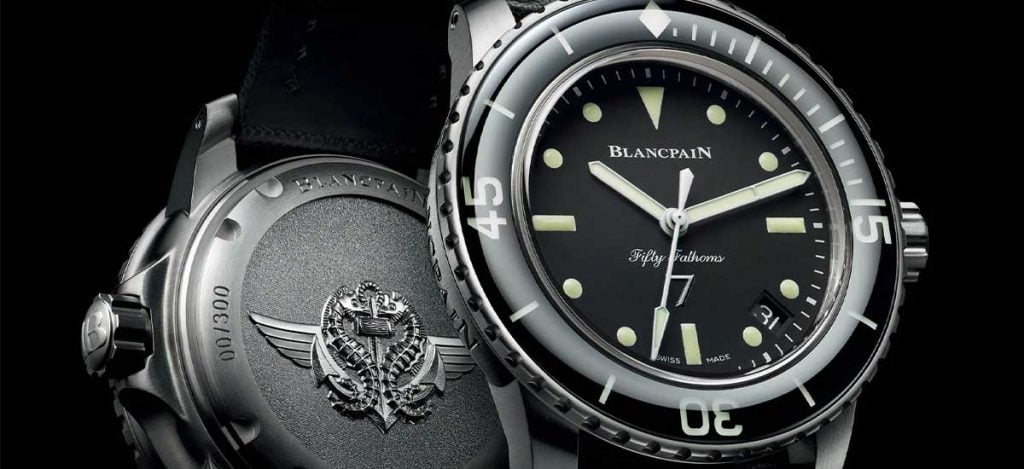
The iconic Blancpain Fifty Fathoms was launched in 1953 and was the first real deep-sea scuba diving watch. Shortly thereafter, the Rolex Submariner was brought to market in that very same year but Blancpain was first to the party. The watch was birthed out of the efforts of Captain Robert Maloubier and LT. Claude Riffaud of the French navy.

The two were commissioned to pioneer underwater special operations which required a timepiece that could withstand great depth and with great water resistance. There were four features that the two desired to have incorporated into the watch. High water resistance, a black dial, an external bezel to track time, and luminous markers so that it was easily readable in the dark and underwater.

Then Blancpain CEO Jean-Jacques Fiechter, also a fellow diver, took the mandate of these French naval officers and the Fifty Fathoms was created and launched. The Fifty Fathoms has a stainless steel case that measures 45 mm. in diameter. It is 15.5 mm. thick and is 23 mm. between each lug. The watch is available in either a black or blue dial with an interesting smaller circle on the dial as if the markers were perched on it, and a date window between the four and five o’clock markers.

It has Arabic numerals at the three, six, nine, and twelve positions with triangular-shaped indexes in between the Arabic markers. All are treated with luminous for easy readability. The watch is protected by a sapphire crystal. The watch has an in-house Blancpain caliber 1315 mechanical automatic movement featuring 227 components, and 35 jewels, and vibrates at 4 Hz with a 120-hour power reserve.

The movement is shielded by an antimagnetic cage. The approximate retail price of the three base models are as follows:

  1. Stainless steel case with a sail canvas strap with buckle             $14,500.00
  2. Titanium case with a sail canvas strap and buckle                       $15,700.00
  3. Stainless steel case and bracelet                                                 $17,200.00

The Submariner is one of the Rolex collection’s most popular watches. For comparison, I will elaborate on the base model’s features, which are available in 904L stainless steel in either a date or non-date version. In keeping with a more accurate comparison with the Blancpain Fifty Fathoms watch, I will elaborate on the Rolex date model.

The dimensions of the case are 41mm. wide and 48 mm. from lug to lug. The lug width is 20 mm. and the case is 12.5 mm. thick. The heartbeat of this watch is an automatic mechanical caliber 3235 in-house manufactured Rolex movement.

It consists of 201 components, and 31 jewels, and vibrates at 28,800 V/h. The watch employs a bidirectional rotor, a paramagnetic blue parachrom hairspring, high-performance paraflex shock absorbers, Chronergy escapement (Rolex patented, combining high energy efficiency and superior dependability), and a paramagnetic oscillator balance staff.

The virtually scratchproof Cerachron ceramic bezel is sixty clicks and unidirectional The watch has a power reserve of 70 hours. The timepiece is outfitted with a scratch-proof sapphire crystal and a cerachrom bezel with markings filled with platinum PVD coating. There is a cyclops magnifier over the date window, a common characteristic of Rolex watches.

To round out its appearance the dial has “Blue” chroma light lume markers for easy visibility in the dark or underwater and, according to the company, last for up to eight hours. The rugged oyster steel bracelet with oyster lock clasp compliments the appearance of the Submariner.

Water resistance is rated at 300 meters. The approximate retail for the non-date model is $8950.00 with the date model running about $10,100.00.

Conclusion

In comparing the movements in each of the watches, I would give the edge to the Fifty Fathoms for its power reserve feature, but the new Rolex caliber 3235 movements is no slouch. As per Rolex, the caliber 3235 movement replaces the caliber 3135 movements in previous Submariner date models. This movement is constructed with 90% newer components and is covered by fourteen patents.

Great improvement has been made in efficiency and dependability, and as always, the Submariner enjoys a solid reputation among watchmakers as being easy to service and maintain. One advantage of the Fifty Fathoms is that it is available in a strap model, unlike the Submariner, and you do have the choice of a titanium case if that is your preference.

On the subject of price, the Rolex appears to be a better purchase choice. The Rolex is equally as comfortable worn in the office and for diving and there is always the cache of wearing a brand that is equally recognizable and prestigious. I would go with the Submariner.

Rolex Submariner vs. Blancpain Fifty Fathoms No Radiation

The technical information for the Rolex Submariner is found in the previous paragraphs. Now I will dive into the features of the Fifty Fathoms No Radiation model. The Fifty Fathoms No Radiation watch is a limited edition tribute to the original model that was introduced in the 1960s. At that time awareness of the harmfulness of radioactive materials to the human body was rising.

Many of the lume used in watches at the time employed radioactive materials. Blancpain set out to create a “no radioactive” luminous treatment for their indexes, hands, etc. This model is easily recognizable by the yellow and red no radiation stamp on the dial right above the six o’clock position. This is on a stark black dial with a date window at the three o’clock position.

The luminous is colored super-luminova which recreates the patina of the original “old radium” look that was retired. The case is 40.3 mm. In diameter and 13 mm. Thick. The distance between the lugs is 20 mm. And the case is polished as opposed to brush finished as in other Fifty Fathom variations. The mechanical automatic caliber 1151 movement measures 27,4 mm and 3.25 mm. Thick.

It is a 28-jewel movement with 210 components, vibrating at 3 Hz, and possessing a silicon balance spring. The power reserve capacity is 100 hours. It has a sapphire bezel which is unidirectional and sixty clicks. The diver is water-resistant to 300 meters and comes with a black rubber strap. Another aspect of this particular timepiece is that it is considered one of Blancpain’s “ultra-thin” models. One of these 500 limited edition pieces will cost approximately $14,100.00.

Conclusion

I will stick with my recommendation, and choose the Rolex Submariner over the Fifty Fathoms No Radiation timepiece. For reasons set forth in the previous conclusion in this article, I believe for the price, you get a fuller package with The Submariner. Appearance, utility, rugged construction, and an easy-to-use watch. The allure of the Fifty Fathoms No Radiation being a limited edition piece will attract its share of potential customers, but for the most part, I believe the Submariner has the edge.

Blancpain Fifty Fathoms vs. Rolex Sea Dweller

I refer you to the characteristics and technological aspects of the Fifty Fathoms watch mentioned earlier in this article. I will now delve into the Rolex Sea Dweller and its features. The Rolex Sea Dweller was introduced in 1967, and quickly became a classic amongst deep-sea diving enthusiasts. The Sea Dweller is water resistant to 1220 meters or 4000 feet.

The deep sea features were amped up to include a 60-click unidirectional ceramic bezel with a Cerachrom (Rolex patented) bezel insert that was scratchproof. The dial features a chromalight display with a distinctive blue glow luminescence that lasts for up to eight hours and makes the watch very easy to read in the depths of the sea. The hands and indexes were also enlarged for easier readability.

The case measures 43 mm. in diameter and is constructed of 904L stainless steel which is highly durable and non-corrosive. The crown is a screw-down type that features Rolex’s Triplock triple waterproof system. The Sea-Dweller also comes equipped with a helium escape valve that operates automatically. When the difference in pressure between the inside and the outside of the watch reaches three to five bars, the valve opens allowing the built-up helium to escape the case.

The Caliber 3235 mechanical automatic movement is the latest incarnation from Rolex and is the same movement found in the new Submariner. For all the improvements and descriptions of this movement, I refer you to the Rolex Submariner information written earlier in this article.

The Sea Dweller in all 904L stainless steel sells for approximately $12,950.00. You can opt for an oyster steel and 18-carat model (Featuring Rolesor- the Rolex patented name for the combination of these two materials) for approximately $17,000.00

Conclusion

I give the advantage to the Rolex Sea Dweller. The watch has superior water resistance to the Blancpain Fifty Fathoms and the added security of the helium escape valve keeps the watch intact. The Rolex Sea Dweller is also available for approximately $4000.00 less than the Fifty Fathoms.

For my taste, I prefer the look of the Sea Dweller. Coupled with all the advancements and enhancements of the current caliber movement, I believe this is a solid choice.

Blancpain Caliber 1315 Movement vs. Rolex Caliber 3135 Movement

The Blancpain Caliber 1315 movement measures 30.6 mm. in diameter and is 5.65 mm. Thick. The mechanical automatic is comprised of 227 components, 35 jewels, and vibrates at a speed of 4 Hz. For an excellent deconstruction and explanation of this movement.

The Rolex caliber 3135 movement is regarded as one of the most well-known and recognized automatic self-winding movements within the Rolex brand. The COSC-certified automatic self-winding movement measures 28.5 mm. In diameter and has a height of 6 mm. The in-house manufactured movement is made up of approximately 200 components and 31 jewels.

The movement operates at 28,800V/h. Standouts of the movement include a Parachrom blue hairspring, a Swiss lever escapement, a bidirectional winding Teflon-coated rotor, and a Glucydor balance wheel. The power reserve is 48 hours.

Note: Parachrom blue is a combination of niobium and zirconium / Glucydor is a combination of beryllium and copper.

Conclusion

Both are excellent movements The Rolex caliber 3135 has been upgraded to a caliber 3235 which has been discussed at length in this article. The biggest and most obvious difference is in the power reserve features for both movements. With the Blancpain, you get a 120-hour power reserve as opposed to the Rolex which is 48 hours.

If this is an important trait of the watch you wish to wear then the Blancpain would be your choice. The Blancpain may be more elegant in its finishes, but this model comes with a steel back so you can not enjoy the artistic nuances. Since Rolex has never offered a skeletal back, finishes have taken a back seat to precision and durability.

Best Alternative to a Rolex

There are several alternative watch brands that offer timepieces that have the appearance and features of many Rolex models such as IWC. They range in price from very affordable to Rolex-level prices. I have assembled an extensive list of timepieces that are comparable to the basic oyster gent’s watch. Their approximate retail prices are reflected on the list. Many of the models even exceed the features available in the basic oyster perpetual watch. They are as follows:

  1. Tissot Gentleman Powermatic 80 Silicium                              $  775.00
  2. Longines Conquest 39 mm.                                                    $1250.00
  3. Sinn 5561                                                                                $1530.00
  4. Monta Noble                                                                          $1795.00
  5. Ball Engineer lll Marvelight                                                      $2350.00
  6. Tag Heuer Carrera Date                                                          $3000.00
  7. Tudor Black Bat 36                                                                  $3050.00
  8. Omega Seamaster Aqua Terra                                                $5700.00
  9. Grand Seiko SLGA009                                                            $9100.00

Three other alternatives to popular Rolex models are the following:

  1. For the Rolex Submariner, the Omega Seamaster Diver 300 m. @$5400.00
  2. For the Rolex Daytona, the Zenith Chronomaster Sport @$11,000.00
  3. For the Rolex GMT Master 2, the Tudor Black Bay GMT @$4175.00

FAQ’s

Who has a better warranty, Rolex or Blancpain?

Rolex offers a five-year international warranty whereas the Blancpain watches come with a standard two-year warranty that is extended an additional year if you purchase your Blancpain watch at one of their boutiques.

Better value, Rolex or Blancpain?

Rolex watches retain their value probably better than any other Swiss luxury watch brand except Patek Philippe. Blancpain watches do appreciate over time due to their limited quantity produced yearly and because of their reputation for complications and longevity. Over longer periods of time, and maintaining the watch’s condition, you should experience appreciation in value over time.

FP Journe vs Patek Philippe

FP Journe Vs. Patek Philippe [The ONLY Comparison to Read]

Jacob Strong

November 30, 2022

In watch enthusiast circles there is never a shortage of details to obsess over. Whether it is the dial and bezel combo of a new Oris Divers Sixty-five you have been lusting after for months or which ultra-luxury brand between FP Journe or Patek Philippe is the king of the mountain, we always have decisions to make. As we begin to ascend through the luxury tiers in this hobby, the pros and cons tend to become less objective allowing for personal preference and style tend to shape our decisions.

If you are lucky enough to be one of the watch enthusiasts saving up for that brand new Oris, let me first say congratulations and second inform you of one of the unfortunate truths of watch collecting. No matter how blessed you are in your ability to enjoy a timepiece, there will always be someone who has more. There are fellow watch enthusiasts who see your grail investment as nothing more than a beater, something to knock around on the weekend while giving their “Haute Horlogerie” watches a rest.

bot-only-imagebot-only-image

While I am sure that many owners of these pieces would be quite happy to wear something from entry or mid-level luxury brands, there is no doubt that they feel the difference when they put it on their wrist. Let’s look at two of these illustrious brands that help make up the ultra-luxury subset of watch collecting. One an enthusiast crowned member of the Holy Trinity of watchmaking in Patek Philippe and the other a relative newcomer with an eccentric owner and namesake in FP Journe.

If you are lucky enough to be deciding between these two elite watchmakers, well done, you have made significantly better life choices than myself! If you make up the other 99% of readers to this article, let’s play a fun game called “If I won the Lottery”! Either way, we are going to see these two heavyweights slug it out as FP Journe Vs. Patek Philippe. Let’s decide which watchmaker of near-horological perfection is right for you.

History of Patek Philippe

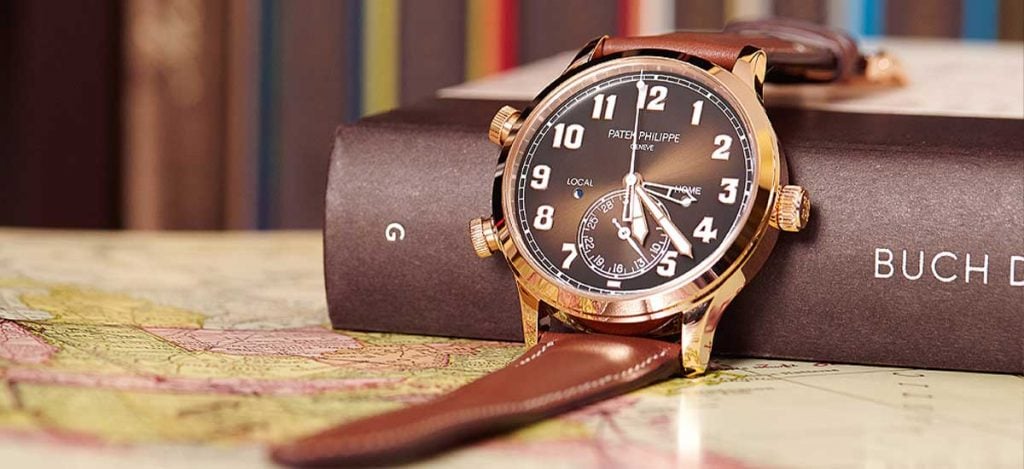
Patek Philippe watch

The history of Patek Philippe is one of the most illustrious of all luxury brands dating back to 1839. Starting as Patek, Czapek & Cie by Norbert de Patek and Francois Czapek. They were later accompanied by Jean-Adrien Philippe resulting in the brand as we recognize it today in Patek Philippe.

Specializing in complicated timepieces such as the “Duke of Regla” in 1910, which was a Westminster chime pocket watch, the company secured its place among the most prestigious Swiss watchmakers of the time. Following the universal challenges of the Great Depression, Patek Philippe found refuge in the form of two brothers willing to invest in the company in Jean and Charles Henri Stern.

If that Stern surname sounds familiar it is likely due to the fact the family still remains in control of the brand today, or you have an XM subscription and a thirst for shock jock radio. Considering you are this deep into the article already, I would be willing to bet the former.

Throughout this investment and ultimate transition to ownership of the Stern family, Patek Philippe has released some real bangers! Take for instance the Calatrava, the literal gold standard of circular dress watches. So simple, yet objectively perfect. Then there are the grand complications! Watches so complicated that I get an actual headache just trying to think of how the mechanics inside work.

I think there may have even been some weird 70’s style of watch designed by some guy named Gerald Genta. I am sure someone has heard of it before, I think it is called the Nautilus. This history of success and portfolio of some of the most iconic watches to ever grace the wrist (albeit a very well-off wrist), has helped to cement Patek Philippe as one of the Holy Trinity.

This enthusiast-crowned title was given to the three most sought-after and illustrious watchmakers in many a watch enthusiast’s eye Audemars Piguet, Vacheron Constantin, and the one and only Patek Philippe. Although many agree on these three as top of the horological mountain, there are those who feel it might be time to inject some new blood into the mix. Perhaps a company like our challenger FP Journe.

History of FP Journe

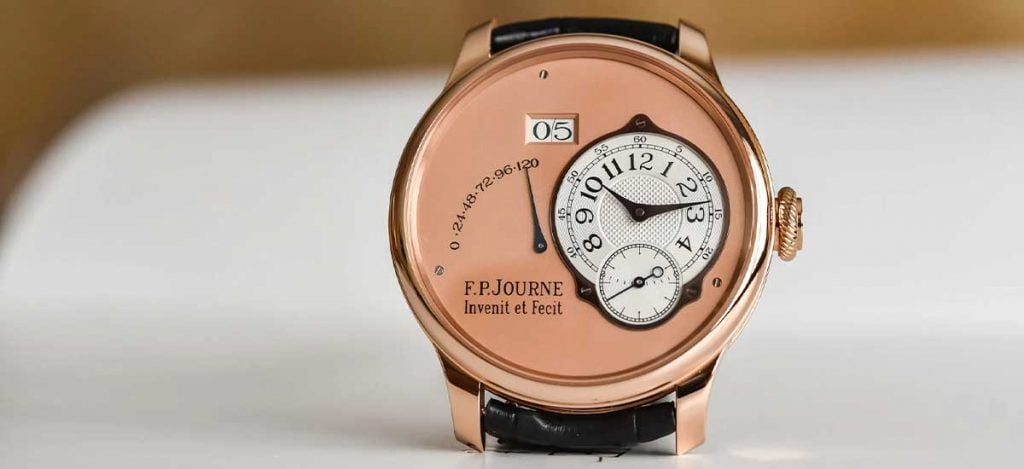
FP Journe watch

In terms of the history of the Swiss watch industry, FP Journe is a fresh-faced baby. Officially founded in 1999, FP Journe is the brainchild of the one and only Francois-Paul Journe. While most ultra-luxury brands are on the 5th or more regime, FP Journe is still operated by the watchmaker that founded it. In an industry built upon tradition and slow but steady innovation, Francois-Paul Journe is a breath of fresh air.

It is impossible to separate the brand from the watchmaker, but who exactly is Francois-Paul Journe? To put it simply, Francois-Paul Journe is a watchmaking savant. He attended watchmaking school in Paris at the tender age of 14. After a few years, he would later graduate and begin to develop all sorts of complicated watches such as a planetarium mechanism at just 22 years old.

To anyone with an understanding of the complexities of watchmaking, this is no small feat no matter how much time you have dedicated to the craft. After furthering his development with his uncle and a mentorship with the one and only George Daniels, the horological legend that created the Co-Axial escapement that powers many of Omegas modern watches and most of them holds their value, Journe opened his first workshop in 1985.

After several awards and achievements in the world of watchmaking FP Journe the brand as we know it today would officially begin in 1999. FP Journe quickly grew a cult following of dedicated collectors that were inspired by their genius and creativity of Mr. Journe. The next several years saw him opening boutique locations throughout Asia, the UK, and the United States.

The bespoke watchmaker grew into a brand capable of producing close to 1000 watches annually. Despite a minority ownership by luxury brand Chanel, FP Journe has secured its place among the most prestigious of all independent watchmakers. The history of these two great brands is very different. Patek Philippe is steeped in tradition and history.

The traditional watchmaking legacy is only recently being overshadowed by their “new” watch, the Nautilus. A watch that was released when Francois-Paul Journe was fresh out of watchmaking school. The legacy of FP Journe on the other hand is still being written. Time will tell how the brand is perceived in the next 50 or 100 years, but with Francois Paul Journe still at the helm, there are several directions this story could go. 

If you are deciding between these two brands with your hard-earned money, their histories do little to help make the decision easier. With Patek Philippe you get a brand that encompasses classic watchmaking and traditionalism but with FP Journe there is an element of excitement since their history is still being made.

Since I am forcing myself to pick, I am going to award this point to Patek Philippe. I am a traditionalist! As much as I wish I could pick the more exciting option, I’d be pretending to be cooler than I actually am. Now that we have looked at the history of these 2 brands, let us dive into some of their more iconic watches and see how they compare.

Patek Philippe Nautilus 5711 – It’s the King for a reason

You can’t mention Patek Philippe watches without taking a closer look at their iconic Nautilus line. Are Patek Philippe watches the most expensive? No, there are watches from many independent brands that exceed what Patek Philippe produces, but nobody can mark up a time-only watch like Patek Philippe.

Admittedly this pricing is fueled much more by the hype associated with these models, but when a roughly $35K watch can be found on the grey market for as much as $150K, something is up. And don’t even get me started on the limited production models. $500K for a green dial, sure seems like a great deal. $6.5 million for a Tiffany Blue dial, what in the actual F@*$! What is this watch that could make people lose their minds over the slightest of variances?

The Patek Philippe Nautilus was designed by famed watch designer Gerald Genta to help compete with the Audemars Piguet Royal Oak, which Genta also designed a few years previous, which popularized the idea of a luxurious stainless steel luxury watch.

The reference 5711 is a 40mm time-only watch, sporting a signature case shape and integrated bracelet. The watch is powered by an in-house caliber 26-330 S C and finished to a standard that only Patek Philippe can achieve, The Patek Philippe Standard. sarcasm aside, the Patek Philippe standard rivals that of the previously used Geneva Seal and for those in the know, is a big deal.

So, what’s not to love about the 5711? For starters, the prestigious movement which although absolutely beautiful and finished to the prestigious Patek Philippe standard is still just a time-only movement without a hacking second. As trivial as it seems, this lack of a pretty standard feature tends to ruffle quite a few watch enthusiasts feathers.

Add to this the fact that the bracelet uses a pin and collar system that will require a trip to the watchmaker for most owners and you’re left with what feels like an outdated luxury watch. I guess the good news is that if you have enough money to afford one of these at their current prices, especially the green or Tiffany variants, you could probably afford to keep a watchmaker on staff to make adjustments as needed.

FP Journe Chronometre Bleu- Are FP Journe watches any good?

Much like the Nautilus to Patek Philippe, the FP Journe Chronometre Bleu is often the first watch that comes to mind when people think of the brand. With a comparable MSRP of roughly $37K, this watch seems like a relative bargain to the Nautilus only commanding around $80-90k on the grey market. As insane as it seems, this watch still may even have some room left before it hits its value ceiling.

What exactly will your meager $80K bring you in the world of FP Journe? The Chronometre Bleu, reference CSBLEAU TA 39 A BL, is a 39mm time-only watch made of tantalum and matched with a beautiful alligator strap. The real showstopper here is the blue chrome dial. It demands your attention, unlike any other blue dial I have ever had the fortune of glancing at.

The watch is powered by a hand-winding caliber 1304 movement crafted out of 18k gold. The off-centered sub seconds and signature handset help to give this watch a look that is distinctly FP Journe.
As beautiful as the Chronometre Bleu is, it is not a watch for everyone. The alligator strap, while looking dapper when paired with a suit, would have a hard time with a more casual look.

In addition to that, the 30m of water resistance does not do much to instill confidence that this watch is welcome outside of its role as a stand-alone dress watch. The case features a very durable material in tantalum, but based on what we see with the rest of the watch, it appears that this is not intended to be put to the test.

The flagships from both of these watches are about as good as it gets within the watch industry. They both feature finish and construction that separate them from the pack, while also being definitive examples of their respective offerings. How do you pick a winner when the alternatives are this exceptional? Throw away all logic and reasoning and go with your gut of course!

For me, it’s the FP Journe Chronometre Bleu. I love both of these watches, but when I compare them head to head the Nautilus seems like a futuristic design that is slightly hampered by some outdated components, while the FP Journe sports a classic design with some intentional artistic flare. Not to mention, with the money left over I could easily afford almost any luxury sports watch for men in production to help fill that need.

Now that we have taken a look at the history and each of these brands’ respective icons, let’s look at the brand identity or the X factor if you will. Both of these brands present classically designed options in the ultra-luxury segment, but it’s how they differ that helps give them their distinct identity and fuel the passion of their collectors.

What makes FP Journe so special?

When looking at the design cues from FP Journe it doesn’t take long to pick up on the hallmark features. The watches are classically designed but do not come across as vintage reproductions. I have always thought that they looked like a watch designer from the 1950s who was asked to design a complicated watch from the 2000s.

The use of sub-dials is there, in and of itself a very classical feature of a timepiece, yet the use of asymmetry and multiple sub-dials, helps give the watch that futuristic feel. When I try to put my finger on what makes an FP Journe such a unique timepiece it is the design. The watchmaking and complication are top-notch.

The finishing is right up there with any other ultra-luxury independent watchmaker. The design, however, is in a league of its own. There are few watches that have a design identity so strong that you can identify them from across the room, but if you are lucky enough to be in the same room as someone with an FP Journe, you’ll know from that first glance of their wrist.

What makes Patek Philippe so special?

If you are a watch enthusiast, at one time or another, Patek Philippe was the brand that was presented to you as the pinnacle of watchmaking. You may have expanded your knowledge and started to view other brands as worthy of that place, but there is no other brand in the watch world as deserving of the title as the most luxurious.

In my opinion, it is this brand cache that makes a Patek Philippe so special. When you walk into a room and notice someone with a Patek Phillipe on their wrist, you know that you probably walked into the right room. These watches are synonymous with people of power and influence and that is a quality that brands can’t pay for, not even Patek Philippe, it needs to be earned.

The X factor is always a hard category to award a point to. This is in many ways the most subjective of any of these categories. If I am honest with myself, however, I am going to have to give the point to FP Journe. Even though a Patek Philippe will carry with it such respect and heritage, it is the strict adherence to a design ethos with FP Journe that captures my attention.

Patek Philippe has a vast catalog and in many ways doesn’t always stand out as Patek Philippe watches. The same can not be said of FP Journe. Sure, there is some variance between models, but that design is always there.

Value

It’s almost laughable at this price range, but the final category that we need to compare between these two brands is value. With the current hype surrounding Patek Philippe and FP Journe we need to accept that when we look at the list price for these models we are looking at fake numbers. These watches are not available at their list prices and these price figures are less useful than a glass hammer.

Do Patek Philippe watches hold their value?

Patek Philippe watches are one of the safest bets in the watch industry. That wasn’t always the case, but due to the popularity of models such as the 5711 Nautilus selling for 400% of its list price, all of their models have seen a nice bump up in residuals.

Models that you may have been able to score a discount on in years past are now reselling for over-list price and have waitlists of their own. All boats certainly do rise and Patek Philippe may be the best example of this in the watch industry over the last 5 years.

Do FP Journe watches hold their value?

FP Journe watches are considerably less common than what you find with Patek Philippe. Add to this their incredibly loyal and passionate collector base and FP Journe watches are very safe investments as well. While they may only trade today for up to 200% of their list price, due to the lower production, I expect these watches to have a higher ceiling.

I can only imagine what will happen to the value of these watches when FP Journe is no longer here to produce them himself. I am sure we will all see that 200% markup as the deal of a lifetime in the decades to come.

FP Journe’s Collectability Factor (Speculation on future scarcity)

Over the last two decades, FP Journe watches have appeared frequently at auctions right next to centuries-old legends like Patek Philippe and Rolex. Even though Journe only dates back to 1999, they have swiftly become one of the most sought-after collector’s items on the market, and for very good reason. FP Journe is able to flawlessly draw inspiration from the horological traditions of the 18th and 19th centuries, perhaps better than anyone I’ve ever seen.

They then add their own layer of modern interpretation, delivering something truly distinct to the market that is rooted in a tremendous amount of heritage and defined by mechanical innovation. In 2024, the Journe turned 25, still producing less than 1,000 pieces per year, well below the average of other big-name brands.

Naturally, these pieces are quite rare, especially since collectors are eager to jump at the gun and scoop up any new model that comes out, further solidifying Journe’s reputation as a high-end brand for only the most prestigious collectors and enthusiasts. In the watch market, it’s quite difficult to make any solid speculations.

With an excessive amount of change that seems to hit us out of nowhere every year, it’s difficult to say what kind of pieces will steal the show. With that being said, FP Journe has given us a fair amount of consistency over the years in terms of how they release their pieces, and I don’t see that changing anytime soon.  Journe relishes in the prestigious market that they’ve created for themselves, so I don’t see them making a significant effort to increase how many pieces they release, especially if it would harm the brand’s overall collective value. 

These brands both benefit from some of the strongest growth potentials in the watch industry. There are 2 different ways to approach this point for value.

In terms of the value of the watch that you get for the list price, I feel that FP Journe is able to offer more value for what they are asking. When it comes to the overall value of the brand, on the other hand, nobody can compete with the Patek Philippe and specifically the 5711 Nautilus. As I mentioned earlier, however, the list price is irrelevant to these brands.

If there was a snowball’s chance in hell that you could get either of them at least this point may have gone a different direction, but I have to give this one to Patek Philippe. After a grueling battle of back-and-forth action between these two great brands we stand tied at two points apiece. I don’t believe in ties, so lucky for you, a guy full of opinions and without the potential to ever actually put my money where my mouth is will make the final decision on this one.

The stakes have literally never been lower as you are guaranteed an exceptional watch no matter which one you choose. Patek Philippe pulls ahead when we look at the brand cache, history, and overall value. FP Journe showed its strength in design, both with their overall lineup and their Chronometre Bleu in particular. This truly was a close battle, but if I have to choose its FP Journe.

I really appreciate both of these brands and the unique value propositions that each of them presents in this ultra-luxury category. If I was actually in the position to purchase a watch from one of these brands, I would probably get one from both. They are very different from each other and if I am spending that type of money on a watch, I am sure that the hypothetical version of myself can afford both and deserves it (He works hard for his money, don’t judge!).

The reason I went with FP Journe over Patek Philippe, however, is actually pretty simple. Despite awarding the point in value to Patek Philippe, there is a very real possibility that there will come a day when not even hypothetical me can afford an FP Journe. I am not sure that there is a ceiling for this brand. Patek Philippe on the other hand, while growing in value every year, should always be available, even if you need to reach deeper in your pocket every year to get it.

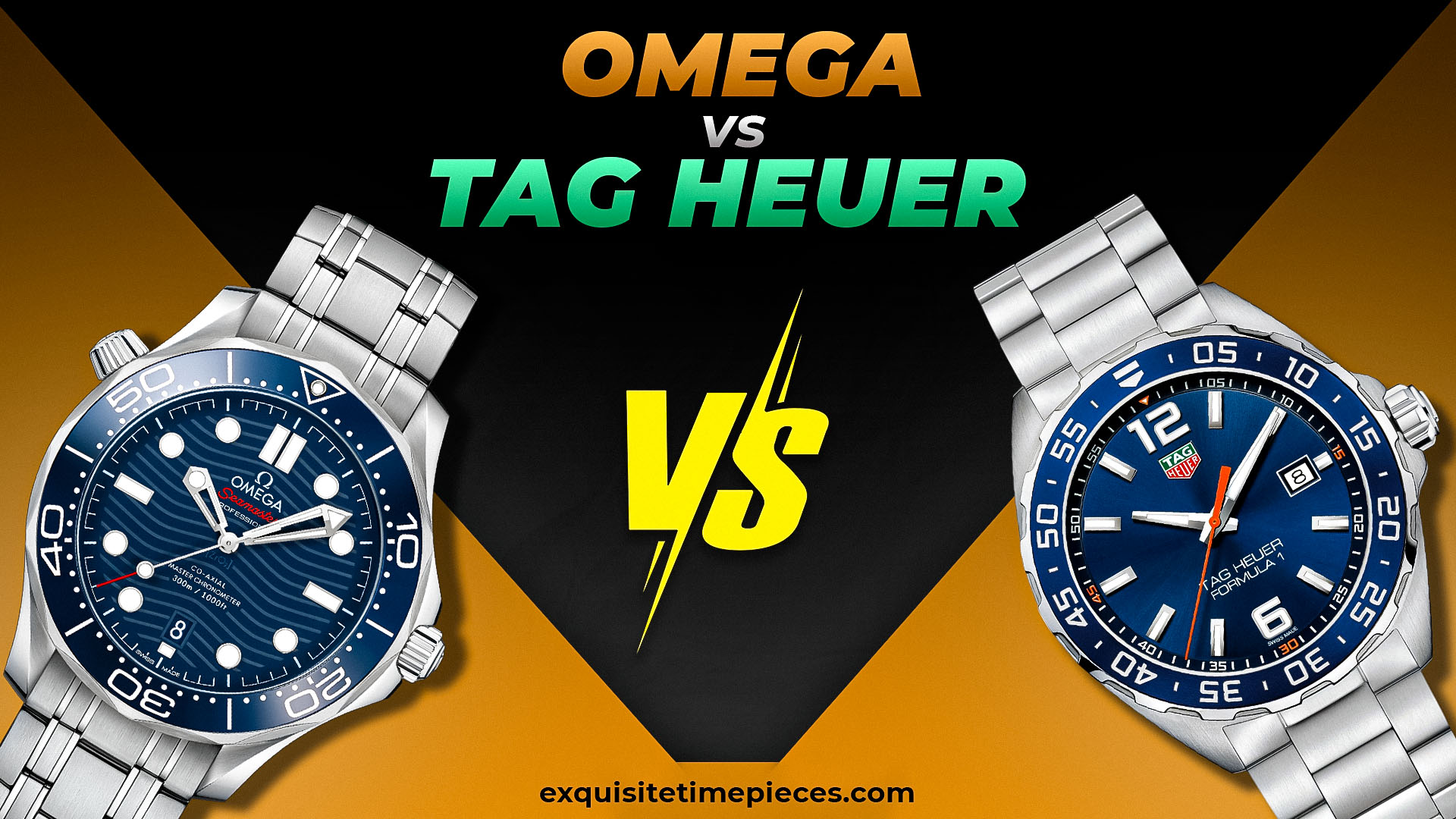
Omega…the 2nd most recognized Swiss watch brand in the world, with approximately 70% international brand recognition goes head to head in this epic comparison with Tag Heuer; the holy grail watch brand that is known for its mechanical precision and modern super complications. Which is the better luxury watch brand? Easy question, complicated answer.

In the world of luxury watches, brands like Rolex, Patek Philippe, Audemars Piguet, and of course, Omega have often stayed on the top ranks thanks to their timepieces coming with a skillful blend of bold design and classic elegance. But TAG Heuer…there’s something about this brand. Apart from often being seen as an anomaly, it seems to just be in a league of its own with its collections boldly illustrating the quintessence of Swiss know-how.

bot-only-imagebot-only-image

Whether you’re a collector or you’re a newbie in the watch market who is wondering “What’s better, an Omega or a TAG Heuer watch?” You have come to the right place as this in-depth comparison of Omega and TAG Heuer watches will provide you with enough data to allow you to determine for yourself if Omega or TAG Heuer is the best brand for you. Let’s begin, shall we?

Which brand is better, Omega or TAG Heuer?

Omega and TAG Heuer use different approaches to watchmaking but some similarities ought to be appreciated between both brands. For instance, both Omega and TAG Heuer produce some of the world’s most famous accurate timepieces and have both been the official timekeepers for the Olympics due to their high-precision timepieces and both watches have been to space.

Though a lot of people know that about Omega’s Speedmaster ref. CK 2998 getting to space when astronaut Walter Schirra wore the watch during the ‘Sigma 7’ mission of the Mercury Programme in 1962, it’s interesting to note that in the same year (1962), TAG Heuer became the first Swiss watchmaker in space when John Glenn wore a Heuer stopwatch as he piloted the Mercury-Atlas 6 spacecraft on the first US crewed space flight to orbit the earth.

When it comes to sports, Omega served as the Official Timekeeper at 29 Olympic Games throughout the 20th and 21st centuries while TAG Heuer has been the supplier of chronographs for the Olympic Games and official timekeeper of three games during the 1920s as well as timing motorsports, athletic and sailing events.

From NASA to the Olympics, Omega has been a world leader in advanced watch design for over 150 years with a record of building iconic timepieces for diving, timing, and resisting electromagnetic fields. TAG Heuer has also followed closely and established itself as an industry expert in timing sporting events.

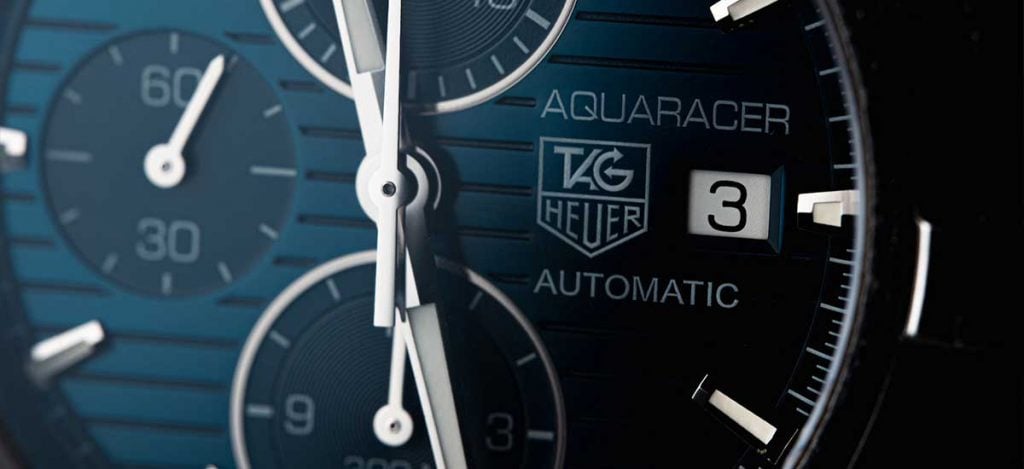
For instance, if we compare Tag Heuer Aquaracer vs Omega Seamaster, both automatic dive watches with similar functions, you’ll find that the only discrepancy is the price, movement/caliber, and the fact that the Seamaster has better accuracy because of its outstanding mechanical features. So both are quality brands with Tag being more affordable and readily available!

Omega vs Tag Heuer

Tag Heuer’s Story

Tag Heuer watch brand

It’s remarkable how closely the histories of the two brands mirror each other. Tag Heuer was founded in 1860 by Edouard Heuer just twelve years after the establishment of Omega. The name TAG Heuer combines the initials of “Techniques d’Avant Garde” (This is a French term for an art movement that breaks boundaries, innovates on techniques, or challenges the norm with radical ideas) and the founder’s surname.

It began in a workshop where Edouard Heuer used to manufacture silver pocket watches in La Chaux-de-Fonds Switzerland. TAG Heuer started as Heuer Watchmaking Inc. with Edouard Heuer patenting unique mechanisms that are still being used by major watchmakers of mechanical chronographs today. After his first chronograph, the patented oscillating pinion followed in 1887 and five years later Charles and Jules Heuer took over the family business.

With their administration came a new focus on the production of specialty watches so from 1911, Heuer began manufacturing timepieces that could be mounted on the dashboards of automobiles, aircraft, and boats including timing devices for ski and motor racing events.

The watches would show the time of day, as well as the duration of the trip and in 1914, the first wrist-worn chronograph by the brand was launched, followed by the “Semikrograph”, a stopwatch that offered 1/50 of a second timing, as well as a split-second function and the “Mikrograph”, the first stopwatch accurate to 1/100 of a second.

It was a super timer, ideal for measuring the flight time of artillery projectiles with a balance wheel that vibrated at an unbelievable frequency of 360,000 vibrations per hour. During World War II, the brand began producing watches for the Luftwaffe, known as “Flieger” or pilot’s chronographs, and following the success of the Flieger, It expanded Its chronograph offerings to those with multiple sub-dials, triple calendar chronographs that came in stainless steel and karat gold cases.

By the 1960s, Heuer’s timepieces were so thoroughly intertwined with auto racing and aviation that it was hard to find a timepiece linked to racing from that era in which his logo wasn’t visible. His chronographs boomed in popularity from the 1950s to the 1970s and had become popular among automobile racers, both professionals and amateurs with models like the Carrera, Autavia, and Monaco quickly earning followership.

Following the Quartz Crisis of the 1970s, Heuer Watchmaking Inc. was acquired by the TAG Group, Techniques d’Avant Garde, manufacturers of high-tech items such as ceramic turbochargers for Formula One cars adding the name TAG in 1985. Its ownership again changed when it was bought in 1999 by LVMH for a staggering $740 million.

TAG Heuer Milestones;

1860: Edouard Heuer founded the business and named it Uhrenmanufaktur Heuer AG.
1882: The first Heuer stopwatch ever is introduced.
1887: Heuer invents the oscillating pinion
1911: Heuer receives a patent for the “Time of Trip” dashboard chronograph.
1916: Charles-Auguste Heuer, the son of Edouard introduces the Mikrograph and Semikrograph taking stopwatches from 1/5 second to displays of 1/50 and 1/100 second.
1920: Official timekeeper of the Antwerp
1962: John Glenn flies the Mercury “Friendship 7” mission with a Heuer 2915A stopwatch on his wrist.
1962: Release of the Autavia wristwatch
1963: Release of the Carerra collection after the Carerra Panamericana road race.
1969: Heuer launches the Caliber 11 movement, the first automatic winding chronograph caliber.

Omega’s story

Omega Brand Overview

Omega had been on the scene a decade before Tag Heuer showed up. Known for Its sporty chronographs, professional dive watches, and co-axial movements, the Swiss luxury watchmaker was founded in 1848 by Louis Brandt in La Chaux-de-Fonds, Switzerland, and boasts of many award-winning timepieces.

It started with Louis Brandt assembling key-wound precision pocket watches from parts supplied by local craftsmen and marketing them under La Generale Watch Co. He aimed to create highly accurate timepieces, and this desire passed on to Louis-Paul and César his sons, who picked up from where he left off following his death in 1879.

In 1892, Louis Brandt produced the world’s first-minute repeating wristwatch, followed by the first tourbillon wristwatch caliber in the world. During the First World War, Omega established itself as an innovator in timekeeping and was used by Britain’s Royal Flying Corps for its combat units. Its reputation was solidified after this and in 1918 the U.S. Army followed the actions of the Brits making Omega a go-to brand when high precision in timekeeping was needed.

Just like Tag Heuer, Omega shifted its focus to making wrist and pocket watches in 1940, and in 1947, It created the first tourbillon wristwatch caliber in the world Its prowess in designing and regulating movements was largely a success because it had incorporated new chronometric innovations. Today, OMEGA continues to innovate and develop highly accurate timepieces and has been the official timekeeper of the Olympics since 1932.

OMEGA’s Milestones;

1848: Louis Brandt founded the company and named it La Generale Watch Co.
1892: World’s first-minute repeating wristwatch is produced.
1900: First serial production of wristwatches begins.
1903: Company is renamed Omega, a Greek word depicting ‘finality’ in accuracy and reliability, following the success of the 19-ligne caliber,
movement.
1999: The first wrist chronometer with a co-axial escapement is launched.
1932: Omega begins timing all of the events at the Summer Olympic Games in Los Angeles.
1948: 1st place at observatory trial in Neuenburg for 30mm caliber
1950: 1st place for tourbillon Cal. 30I at Geneva Trials.
1965: Omega’s Speedmaster is declared Flight Qualified for all Manned Space Missions.
1969: NASA Astronaut Buzz Aldrin wears the Omega Speedmaster mechanical chronograph to the moon, making it the first watch to land on the moon.
1974: Omega Marine Chronometer certified as the world’s first Marine Chronometer wristwatch that is accurate to 12 seconds per year.
2013: Development of timepieces with high resistance to magnetic fields such as the Seamaster Aqua Terra.

Reputation

Both brands come with a rich legacy across the technological, luxury, and sports industries but when it comes to recognition, Omega is a brand that is recognized worldwide and is coveted for its precision and quality with the largest production of luxury watches in Switzerland (Omega creates over 240,000 luxury watches every year).

While TAG Heuer produces decent, iconic watches like the Carrera and Monaco, they do not invoke the image of luxury like Omega and are not officially recognized as a luxury watch brand. When it comes to ranking, Omega has claimed the top second spot in the watch model ranking just behind Rolex, thanks to the Seamaster and Speedmaster, and has enjoyed massive recognition, status, and respect for over 50 years.

TAG Heuer on the other hand is the 12th most recognized watch brand from Switzerland and currently holds the 34th most popular and valuable Swiss brand in the top 50 according to a report by Morgan Stanley with an estimated brand value of 76 Million CHF.

Accuracy

In the watch world, the COSC certification has been the standard for judging the accuracy of watches. To be COSC Certified, a watch has to be accurate to -4 to +6 seconds a day, in addition to being Swiss-made and manufactured from the highest quality materials. Omega’s watches are COSC certified with its Master Chronometer timepieces having an accuracy of up to -0/+5 seconds per day.

Some TAG Heuer’s mechanical watches also have a COSC certification and are accurate enough to be one of the world’s most accurate timing instruments in motor racing. The Calibre 5 accuracy for instance is +/- 12 seconds per day. Omega also pulled through the Swiss Federal Institute of Metrology certification process, which Tag Heuer failed to achieve.

Since magnetic fields have always been known to interfere with a watch’s movement and reduce a watch’s timekeeping accuracy, Omega accomplished a great stride by pioneering the use of non-magnetic silicon in Its Si 14 balance so even with Tag Heuer’s technical advancement, Its best watches cannot resist a magnetic field of 15 000 gauss like OMEGA’s Seamaster Aqua Terra

Style and Craftsmanship

Both brands offer a variety of styles. While Omega offers a luxe gait with classic retro designs, TAG Heuer is very influenced by racing and motorsports and many of its watches come with a sturdy and sporty aesthetic. Omega is a trailblazer when it comes to craftsmanship and materials, as it offers numerous models in its proprietary gold alloys.

The Canopus and Moonshine gold are iconic examples. From stylish and elegant dress watches in the Aqua Terra line to Omega’s most popular flagship model namely the Speedmaster Professional Moonwatch, Omega is famous for crafting highly shock-resistant timepieces with innovative materials such as Canopus gold and O-Megasteel which do have a timeless style but Omega’s designs are not as ‘eye-catching’ as Tag Heuer’s.

Movements and Complications

OMEGA produces watches with both quartz and mechanical movements and offers timepieces with annual calendars, world time displays, tourbillons, and skeletonized movements. After launching its first watch with the co-axial movement in 1999, the co-axial escapement is being incorporated into almost all of its timepieces. Many of Tag Heuer’s best-selling non-chronograph watches (Aquaracers and Carrera) have Tag Heuer’s Caliber 5 movement which is all based on ETA and Sellita movements.

Depending on the model and price, different movements apply. TAG Heuer Monaco for instance uses a modified Sellita SW300 or ETA 2892 with an added chronograph module while the new Autavia features a modified ETA 2824 movement that TAG Heuer equips with their proprietary Isograph balance made from a special anti-magnetic composite material.

Omega goes further than Tag to beautify its movements with different fittings such as extra jewels, Coaxial escapement, free-sprung balance, etc making Its timepieces more accurate but also more expensive to repair, and a bit problematic.

Popularity and Pricing

TAG Heuer as a brand appeals to various segments of the market and caters for different classes of people. As a result of a huge commercial presence and numerous media endorsements, they are popular but do not share Omega’s popularity as Omega is renowned for maintaining high-quality standards for all the products it creates, and its catalog is home to many of the world’s most famous wristwatches.

When it comes to prices, the Aqua Terra collection is the most affordable entry-point Omega model watch with prices starting from around 4,000 USD. Popular chronographs from the Speedmaster collection can be gotten for 6,000 USD while top Omega models like the rose-gold De Ville Tourbillon command as high as 120,000 USD.

The price range for TAG Heuer timepieces varies greatly by model and year of production, but TAG Heuer is generally more affordable than Omega. Quartz calibers from the late 1980s can be gotten from 250 USD, while prices for a Carrera range from around 1,200 USD to over 71,000 USD for a chronograph with the tourbillon caliber Heuer 02T and a diamond-studded bezel.

Omega vs Tag Heuer Quality

TAG Heuer is especially known for chronographs, and it’s a giant in the watchmaking world but Omega watches are considered to be of higher quality. The quality of an Omega watch is easily demonstrated by the amount of time it takes to create one. The Tourbillon luxury watch for instance is a work of art that takes 500 hours to craft. If you are searching for quality smartwatches, TAG Heuer is your best bet.

From built-in GPS, heart-rate monitor, accelerometer, compass, and gyroscope to TAG Heuer’s golf watch that comes with a custom-built app that tracks each shot and displays distances to greens and hazards, TAG Heuer has stepped boldly into quality tech watches but not Omega. Omega remains the top luxury watch with a timeless classical aesthetic and robust movement that has not ventured into Tech.

Resale Value

Though many variables such as the make and model, condition of the timepiece, rarity, demand, and so on contribute to determining the resale value of a timepiece, high-end luxury watches often tend to hold a high resale value over time. Thus brands like Omega will typically see a higher average resale value than TAG Heuer.

Warranty

Shortly after Omega introduced Co-Axial escapement into its movement, the brand extended its warranty period to 5 years. TAG Heuer still offers a 2 years warranty on all its timepieces as do most watch brands.

Omega Speedmaster vs Tag Heuer Carrera

TAG Heuer is known for three main chronograph models. They are the Carrera, a sleek and compact option, The Autavia, a contraction of AUTomobile and AVIAtion, designed to service passion from both worlds, and the Monaco. An instantly recognizable square chronograph watch famously worn by Steve McQueen in the 1971 film “Le Mans”.

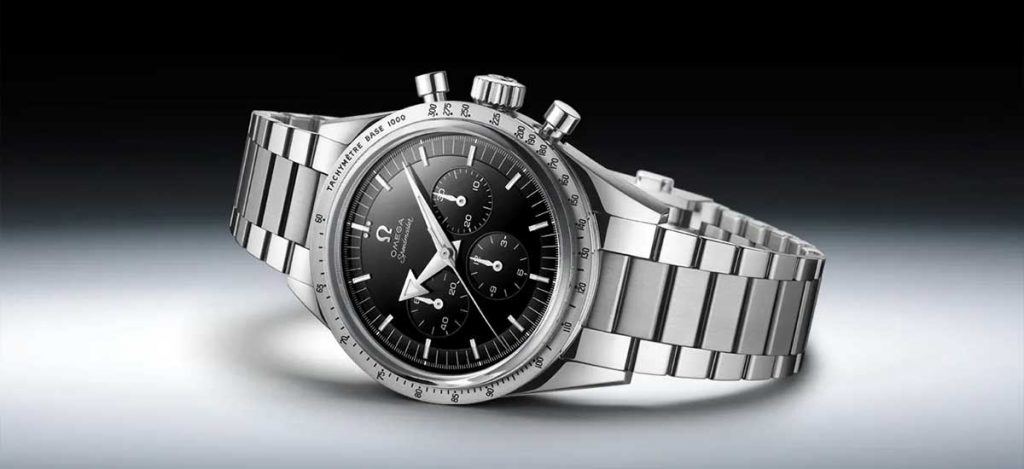
The first watch that comes to mind when mentioning OMEGA is the Speedmaster also known as the Moonwatch or the first omega in space and the only watch approved by NASA for manned space flights after a grueling series of tests. Tag Heuer Carrera and Omega Speedmaster are one of the best models of these respected brands and both come with unique features.

A major difference is that Carrera has timepieces that bring more appeal to the eye with better-looking bezels while Omega Speedmaster sticks to a timeless elegance and design that has not changed for over 60 years. Tag Heuer Carrera was designed by Jack Heuer, the great-grandson of Edouard Heuer in 1963, six years after the Speedmaster was introduced.

Closely associated with the world of racing, the Carrera was named after an extremely dangerous race, “Carrera Panamericana” that ran on public roads in Mexico from 1950 to 1954. Both collections are extraordinarily vast, and so too is their pricing.

The most expensive Carrera is the Plasma Tourbillon Nanograph, which sold for about 375 000 USD, powered by the Nanograph movement, and boasts a dial made completely of polycrystalline, lab-grown diamonds. While the most affordable Speedmaster model is the Date Automatic, which can be gotten for around 2,600 USD.

Tag Heuer Carrera Pros

  • Iconic watches with a cutting-edge legacy. 
  • In-house Heuer 02 or Calibre 1887 chronograph movement powers the watches.
  • Many designs and material options with numerous coveted vintage models that have the potential to appreciate in value.
  • Some of the models are waterproof up to 100 meters.
  • Dials are presented with proper legibility and melded sporty elements
  • Parallel and elongated lugs that feel solid and sturdy on the wrist, allowing for a more compact feel, plus metal crowns for an elegant yet sporty look 
  • 42-hour power reserve ( the Carrera Calibre Heuer 02 Automatic Chronograph has a stunning power reserve of 80 hours, an in-house caliber and tourbillon Caliber 7 Twin-Time with a GMT function)

Cons

  • When it comes to comfort, the Speedmaster offers more comfort to the wearer. The Carrera is thick and somewhat heavy and isn’t recommended for everyday use.
  • TAG Heuer Carrera watches come with well-beveled lugs that slant downwards, giving them a bulkier look.
  • Extremely sharp clasp.

Omega Speedmaster Pros

  • Legendary chronograph series with a cult status that will never lose its charm.
  • Co-Axial Master Chronometer with magnetic resistance of up to 15,000 gauss.
  • Limited editions with the potential to increase in value.
  • Power Reserve of 48 hours.
  • Better accuracy and build quality than the Carrera.
  • Timeless design. (It is the only sports chronograph that looks exactly like the original model)

Cons

  • No micro-adjust on the bracelet clasp so the watch bracelet cannot be modified to fit your wrist.
  • Lackluster bracelet.
  • Hesalite crystal scratches easily.

FAQ

Is Omega more expensive than TAG Heuer?

Yes. Omega watches tend to be more expensive than TAG Heuer because they are a more luxurious brand. In addition to being a more dominant brand in the luxury timepiece industry, , OMEGA watches are highly popular and come with a respected history.

Are Tag Heuer and Omega overpriced?

Both Tag Heuer and Omega offer value for their timepieces and their watches come with impeccable quality made with some of the most expensive and valuable metals and stones, so you simply get what you pay for.

Longines Vs. Rolex Watches (Which holds more value?)

James Ede

November 30, 2022

If you’re new to the luxury watch scene, it’s easy to quickly say “Longines or Rolex” is a brain-dead comparison. See it this way. Rolex is the number one watchmaker in the world, and any timepiece from the brand is synonymous with wealth, craftsmanship, and engineering wonder.

Longines is also a prestigious watchmaker with a long and successful history. It’s been one of the top 5 swiss watchmakers for centuries and produces precision watches that appeal to a mass audience. But how do they compare with the King, Rolex?

bot-only-imagebot-only-image

Folks come in asking about these two brands, so we’ve shared this guide to explain all you need to know. Whether you’re trying to choose between buying a vintage Longines or considering if a Rolex is worth saving up for, you’ll find answers. This article explains their history, craftsmanship, watch quality, popularity, and price to help you make an informed decision.

Similarities and Differences Between Longines And Rolex

It’s always a long read to cherish the culture of a watchmaker, so here’s a summary of their similarities and differences before we dive in.

Similarities

  • Both are Swiss watchmakers
  • They are both older than a century
  • Both make precise mechanical watches
  • Both started with a different name
  • Both created their masterpieces with outside help
  • Both offer COSC-certified watches

Differences

  • Longines is an entry-level luxury watch brand, while Rolex is both a luxury and ultra-luxury brand.
  • Rolex has a 5-year warranty, whereas Longines offers a 2-year limited warranty. 
  • It’s cheaper and more convenient to buy replacement straps for a Longines watch than a Rolex

Now let’s dive deeper into the history of these prestigious watchmakers to unearth the values and traditions that kept them in business.

Longines’ Long and Rich History

Longines Watches

Longines was established in 1832 by Auguste Agassiz in the mountains of St Imier, Switzerland.
Because of Auguste’s partnerships with two lawyers, Henri Raguel and Florian Morel, the company was initially called Raiguel Jeune & Cie. After the duo retired fourteen years later, Auguste assumed sole ownership.

Auguste then set the wheel of success and prestige in motion when he brought in his nephew, Ernest Francillon, as a mentor years later. His mentee made a bold first impression of producing only crown-wound pocketwatches in an era of key-wound pocket watches (time flies!). So Auguste ultimately passed on the company to Ernest when he retired from weary health.

Under Ernest Francillon, the swiss watch manufacturer focused on mass production in the 1860s. He built a solid reputation for Longines, but they soon became the target of counterfeiters, who stole business and nearly tarnished that image (crucial for a luxury watch company). So he patented the company name in 1880 and registered the oldest valid trademark, Longines’ iconic winged hourglass logo, in 1889.

They survived and flourished well into the 1980s with constant innovative designs while still affordable. Longines joined the 35 billion dollars valued Swatch Group – which includes big wigs like Omega SA, ETA, and Tissot – in the 1980s. The Saint-Imier-based watchmaker now uses movements from ETA (a prestigious conglomerate of swiss movement manufacturers). It’s not the best look for a luxury brand to outsource movement making, but it is perfect for Longines’ dedication to mass production.

Mass-Production Marketing

Longines’ quick transition to mass production started under Ernest Francillon when he built the factory in 1867. But we must credit the genius of his Technical Director, Jacques Davido, who ran the factory and created its first in-house movement in the same year – the 20A. Since then, they’ve sealed their place in history books as one of the largest watch brands with retailers and distributors worldwide.

Fun fact: Longines is named after the field its factory has sat on since 1867. It was called Es Longines, meaning the “Long Meadow.”

Rolex’s Century-Old Quest for First

3 Rolex watches on display

Rolex entered the watchmaking industry relatively late but came in with a bang in 1905. The brand was first known as Wilsdorf and Davis but changed to Rolex SA in 1920 (and moved to Geneva, Switzerland).

A 24-year-old, Hans Wilsdorf, and his brother-in-law, Alfred Davis, established the company in London. It all started as a hustle. They imported Hermann Aegler Swiss movements, fit them in Dennison watch cases (all iconic watchmakers in their right), and sold them to Jewelers (without branding).

Rolex released many firsts, but the creation of the renowned oyster case – still used in most Rolex watches – put them on the trajectory of world domination in 1926. Hans Wilsdorf’s innovation was sparked by an issue of water and dust damaging watch movements. So he hired a case maker to build the world’s first waterproof and dustproof watch. He bought the patent from the innovators and marketed aggressively and exclusively – a tradition Rolex has held on to.

Exclusivity Marketing

Rolex’s founder, Hans Wilsdorf, believes, “Only marketing is needed to make a company successful.” Some of his many striking campaigns include displaying Rolex oyster watches in aquariums at their point-of-sale stores. But Hans’s genius 1927 marketing put Rolex on the map, as we hinted earlier. He gave an oyster-cased necklace watch to Mercedes Glietze as she prepared to become the first British woman to swim the English Channel.

The neck watch remained accurate and completely dry after the 10-hour swim in murky waters. In typical Rolex fashion, Hans Wilsdorf brilliantly advertised the historic feat on Daily Mail’s front page for a month straight. Since its inception, the brand has used this strategy of gifting pioneers appropriate Rolex watches to test in the field.

The first people to summit Mount Everest, Sir Edmund Hillary and Tenzing Norgay, for example, wore Rolex watches and were honored with the release of the Explorer models. Today, Rolex combines aggressive marketing, sponsorships, and limited supply to seal its place as one of the most valuable watchmakers in history.

If you didn’t know, Tudor is a Rolex subsidiary targeting enthusiasts who want a “cheap” Rolex – they use similar cases and bracelets but use off-the-shelf movements. Rolex has continued the tradition by sponsoring prestigious events, signing artists and sports icons, and testing timepieces in historic expeditions.

Fun fact: Rolex is a private firm operated through the Hans Wilsdorf Foundation (no public shares).

Prestige And Popularity

Longines and Rolex control half of the Swiss watch market shares along with Omega and Cartier. So we know they both sell like crazy, even though Longines has to achieve this with more units sold. In recent research, they dropped to fifth but remained a force to reckon with. Rolex, however, is in a different league and more in competition with brands like Richard Mille and Audemars Piguet for prestige for world domination.

I won’t be surprised if anyone knew about Rolex watches since they were teenagers, but it will amaze me if they know Longines. Rolex outshines Longines mainly because they not only market to high society circles but also target mainstream media. As a result, Rolex is present in the entertainment, sports, arts, exploration, technology, and even the wildlife scene, with sponsorships, endorsements, and loyal fans doubling as influencers.

Longines And High-Life Sponsorships

The St-Imier-based watchmaker, started supplying prestigious New York sporting officials as far back as the 1800s. With such early momentum, you’d already expect Longines to be a behemoth in mainstream sports. But instead, they only dominate elegant sporting events like horse racing, archery, and equestrianism.

Longines is the official timekeeper of the FEI Show Jumping World Cup, Archery World Cup, French Open, and Commonwealth Games. They even sponsored Formula One during the 1980s and continue to support other international skiing and horse racing events.

Rolex And Planet Domination

Rolex’s official sponsorships go deeper than sports into sea and space exploration, wildlife and arctic research, motorsports to yachting, and equestrian sports. They are also timekeepers for multicultural organizations and political leaders.

The Swiss luxury brand boasts o durability by regularly giving explorers, researchers, and astronauts Rolex watches on their expeditions. As a result, Rolex watches have survived space, the deepest ocean dives, arctic regions, and the highest mountains.

Rolex doesn’t fail to leave a mark in sports. Almost every sporting legend has at one time been a Rolex ambassador. In addition, they’re official sponsors of all four grand slam (U.S, Wimbledon, French, and Australian Open) tournaments and the Paris, Monte-Carlo, and Shanghai Masters. It’d take a long-form blog post to capture the depth of Rolex’s reach in sports, arts, and exploration.

See the list of superstars and celebs who’ve worn either watch brand to compare:

Most Iconic Rolex Wearers

  • Paul Newman – his Rolex Daytona (Ref. 6239) is the most expensive watch Rolex sold at an auction
  • Roger Federer
  • British Royal Family
  • Too many notable figures to mention

Most Iconic Longines Wearers

  • Charles Lindbergh
  • Albert Einstein
  • Jennifer Lawrence
  • Humprey Bogart
  • British Royal Family
  • Andre Agassi

Hopefully, you’ll notice a trend of how Rolex attracts only the best of the best. As a result, it’s not fair fighting ground regarding who’s more famous between both brands. So, let’s see who fairs better in craftsmanship.

Craftsmanship

Avid horologists know it’s not just telling time that makes a luxury brand but its prestige, complications, and attention to detail, among others. Look at it this way, the Swiss industry is known for world-class watchmaking, and Rolex and Longines use the best crop. While Longines and Rolex employ world-class artists, the quality of their timepieces varies as much as we want to think Rolex is overpriced. Here’s an overview of how they craft watch parts.

Cases

The most common case material both swiss watchmaking behemoths use is stainless steel. The Longines steel is known to be durable and reasonably scratch-resistant, simply as durable as a Rolex. But Rolex uses a patent steel material, Oystersteel, which is exclusive to the brand and has been field-tested in the harshest conditions, as you’ve learned earlier.

Movements

The two brands produce mechanical movements in-house, but Rolex makes it a tradition. The Swiss watchmaker stopped all production of quartz movement in 2001 after 30 years of experiments. The dedication to in-house production and obtaining COSC accuracy certifications could take a year to produce one Rolex timepiece.

Nevertheless, the traditional craftsmanship of the Geneva-based watchmaker is what many watch lovers, enthusiasts, and collectors value over any Longines. That’s not to say Longines movements are inferior. However, they also produce Quartz movements that are cheaper and unartistic to most connoisseurs.

But the dealbreaker is that Longines’ mechanical movements also come from their sister company ETA SA, not in-house. Nevertheless, they are still reputable watchmakers, with an output of only 20 percent quartz watches and 80% mechanical movements. But the attention to detail and finishing of Rolex is unmatched.

Bracelets

We see a similar trend of functionality and exclusivity in making Longines and Rolex bracelets. The former makes durable watches that are readily available for replacement. But Rolex bracelets combine durability, exclusivity, and function.

These qualities justify the price gap between both brands that you’ll see soon in this article. For one, Longines sells replacement stainless steel, leather, rubber, and NATO straps that you can swap for under $300. In addition, you can have a collection of watch bands to dress different occasions.

Meanwhile, only Rolex Cellini models use a leather strap, and you must contact their service center for a replacement bracelet (of any Rolex watch). Also, Rolex’s Oysterflex rubber bracelet is only available in 18-carat gold editions of the Yachtmaster, Daytona, and Sky-Dweller. Finally, Rolex’s celebrated stainless steel bracelets, the Oyster and Jubillee, are highly scratch-resistant and comfortable with on-the-fly micro-adjustments.

Here’s the thing. A typical Rolex strap replacement costs anywhere from $1,000 to about $5,000 and could take weeks. You must have the corresponding watch model as proof, plus Rolex keeps the old band. It’s this exclusive in-house servicing that makes Rolex more valuable. But Longines gives the owners to buy straps online or at an authorized local watch repair shop.

Ultimately, Rolex bracelets are one of the best in – if not the best – industry. Longines can only be proud that its straps are durable and comfortable, not compete with Rolex.

Price Is A Big Rolex Win

Rolex is unsurprisingly out of Longines’ league for watch price points. The cheapest new or used Rolex costs more than 10x the price of a Longines. To put it in perspective, a Rolex Datejust (the brand’s most affordable collection) costs around $5,000 to $6,000, and a Longines Conquest V.H.P. (their most inexpensive model) for under $1000.

It looks unfair to compare a Longines’ quartz watch to a Rolex. So we’ll size up Longines flagship line, the HydroConquest, which costs anywhere from $1200 to around $2,500. That’s still less than two times the price of a Rolex Datejust.

Although some critics appeal that Rolex watches are overpriced, they’re clearly in different luxury brand categories. Longines (entry-level luxury) has focused on mass production for nearly 200 years, but Rolex becomes more exclusive by the year (ultra-luxury brand).

Value for Money: Is Rolex Worth the Premium Over Longines?

When comparing prices, the average Rolex starts at about $5,700, which, off the bat, is already about 7 times more than the cheapest Longines watch. Most Longines pieces use cost-effective battery-powered quartz movement to cut down on cost, unlike Rolex, which prioritizes authentic, in-house, automatic movements that ramp up the price even more.

Because of this, it is a bit unfair to directly compare prices as quartz watches will always come cheaper than automatic, but there are some other factors to consider. Resell value plays a big part as both of these brands hold exceedingly high power in the resell market. Rolex is obviously the king of reselling, but it would be unfair to count out Longines, who holds a very big portion of value themselves.

When you compare the price at which you initially bought the watch to when you go to resell, there is a fair amount of profit to be made on both of these brands; it just depends on how much you are willing to spend. Overall, Longines are much more affordable, which will already make them more appealing to the average customer, but Rolex is Rolex, and sometimes, it doesn’t matter how cheap you go when you are dealing with a brand whose name alone carries most of their worth.

Comparing Longines HydroConquest To The Rolex Submariner

Coming off a price revelation, it’s only practical you see what makes the difference with a side-to-side comparison of both watchmakers’ watches. For this, we use pit Longines HydroConquest against Rolex’s flagship diver’s watch (this is a hot debate among watch connoisseurs).

HydroConquest ref. L3.883.4.96.9 Vs. Submariner

This won’t be an apples-to-apples comparison. It will take an entire post to cover. But you’ll understand why Longines might appeal to you and not just drool over Rolex’s glaring value. That’s why the price difference is the first thing that jumps at you between the two watchmaker’s diver’s watch collections.

The HydroConquest ref. L3.883.4.96.9 (the most expensive model) costs around $3,000, and a Submariner No Date ref. 114060 (one of the cheapest models) costs anywhere from $11,000 to about $15,000. What makes Rolex more expensive? Do they have superior features to Longines’? Or are they overpriced, as rumored?

Diving

The HydroConquest can reach depths of 300 meters, while the Rolex Submariner is field tested for 300 meters. Of course, most wearers won’t take a swim to talk less of a dive with either, but it’s refreshing to know they’re equal in dive capacities.

Steel Casing and Bracelet

Both watches have corrosion-resistant ceramic bezels for underwater use and stainless steel case and bracelets. But the Submariner dorns Rolex’s famous and more functional oyster bracelet. Also, unlike the HydroConquest or any Longines steel strap, you can adjust the Submariner’s bracelet to 5mm without using tools to remove links.

In-House Movements

The Longines HydroConquest uses a self-winding automatic caliber that beats at 25,200 vibrations per hour. It’s built in-house and has a 40-hour battery reserve. On the other hand, Rolex’s Submariner No Date also uses a self-winding, in-house movement, the 3235 caliber. However, it’s two steps ahead of the HydrConquest, with its magnetic field resistance and 42-hour battery reserve feature.

Whether these features are worth the $12,000 value difference and hassle is up to you. If you are searching for a functional diver’s watch, the HydroConquest is well-qualified. But a connoisseur, wealthy fanboy, or diver would prefer a Submariner to stack his collection, enjoy the symbol status, or the battery edge.

Does Longines Retain Value?

Like any luxury watch brand, you may wonder if buying a Longines watch would prove a good investment. Of course, many folks buy a Rolex to hedge against inflation, but you may see a different value in a Longines.

Rolex is hailed as the King of Resale Value for a good reason. It’s basic economics. Demand for Rolex watches outstrips supply straight from the factory, so authorized dealerships are always out of stock or carry older models. So instead, determined investors or buyers shop from trusted online dealers, preferably with a verifiable store, but pay more than the official retail price.

Exquisite Timepieces, for instance, sells authentic, pre-owned, and unworn Rolex watches online and in-store in Florida. The only way you’re getting a Rolex effortlessly is if you’re an ambassador or notable figure who received one as a gift. Conversely, Longines has an official online store, and many trusted stores and distributors worldwide.

Read that again. Yes, distributors too. So you see how Rolex is the king of resale? Ultimately, the resale value – for any watch – depends on the previous owner’s status, model, and condition. Typically, a Rolex could see a 16% to over 100% increase in two years, but only a mint-condition Longines will scratch this value.

Pros of Longines

  • Affordable
  • Prestigious Swiss watchmaker
  • Micro-adjustable leather straps
  • Can be bought without a “wait list” in stores
  • Oldest active trademark logo
  • COSC-certified

Cons of Longines

  • No micro-adjustment in stainless steel bracelets
  • ETA-made caliber

Pros Of Rolex

  • Most valuable swiss watch manufacturing brand
  • One of the best bracelets in the watch industry
  • King of resale value
  • Exclusivity
  • All watch parts are made in in-house
  • COSC certified chronographs

Cons of Rolex

  • Time-consuming after-sale service due to exclusivity
  • Overwhelming replicas and fakes

Frequently Asked Questions

Is Longines Considered A Luxury Watch?

Yes, Longines is a luxury brand established in the 1800s. Although they use quartz movements, they also build mechanical movements in-house at their St-Imier factory. However, Longines is an entry-level watch brand offering watches that cost around $1,500 to about $7.000.

Is Longines an Entry Level Watch?

Yes, Longines carries many entry-level watches that cost anywhere from $1,000 to $2,000. Their best-selling models, Flagship Heritage and Conquest, sell for around as low as $1,500 and $800, respectively. However, some of their more pricy models with precious metals and complications, like the 47.50MM Longines Weems Second Setting Watch, sell for over $20,000.

Longines Vs. Rolex: Final Thoughts

In the end, Rolex is a better luxury watchmaker than Longines. As the largest swiss brand, it produces all its parts exclusively in-house, sponsors all walks of life, signals success, and is the king of resale value.

If you don’t fancy the attention and time-consuming after-sale service, Longines will appeal to you. And prefer a prestigious yet affordable vintage or modern timepiece. But if I had to pick between a Rolex and Longines (with no budget), I’d grab a Rolex model without a second thought.

What do you think? Was the Longines vs. Rolex comparison a fair battle? If you found this comparison interesting, share it with other watch lovers and collector friends in your circle. Check out the Exquisite Timepiece store for authentic, new, and pre-owned Rolex and Longines masterpieces.

To Top